
SUMMARY
[Self-Improvement] Decode Native Speakers: A Developer’s Guide to Mastering Language Listening Skills in 2026
Are you struggling to comprehend native speakers at full speed? This guide for developers outlines effective strategies and tools to enhance your language listening comprehension and improve your fluency.
Keywords: language learning, listening comprehension, native speakers
TABLE OF CONTENTS
1. Why Mastering Listening Skills Matters for Developers
2. Core Methods: Deconstructing Native Speech
3. Practical Application: Building Your Listening Lab
4. Common Pitfalls & Mistakes to Avoid
5. Frequently Asked Questions (FAQ)
6. Wrapping It Up: Your Journey to Fluency
1. Why Mastering Listening Skills Matters for Developers
Hello, Kwonglish community! Have you ever found yourself nodding during a virtual meeting, pretending to understand every detail of your international colleague’s rapid speech, while your mind is screaming “syntax error!”? If you’re a developer aiming for global collaboration, career growth, or simply a richer cultural experience, you know the challenge of understanding native speakers is real. In 2026, as remote work and international teams become standard, mastering language listening skills is not just beneficial; it is essential for developers who wish to decode native speakers and truly excel.
As developers, we are used to logical frameworks, clear documentation, and predictable results. However, human language, especially when spoken at native speed, can feel chaotic – filled with idioms, slang, reduced speech, and accents that can leave even the most proficient learner feeling lost. Yet, similar to debugging a complex system, enhancing your listening comprehension demands a systematic approach, pattern recognition, and regular practice. It involves training your ear to process information in real-time, much like optimizing an algorithm for quicker execution.
Consider the benefits:
✓ Enhanced Collaboration: Participate effortlessly in discussions with international colleagues, grasp project requirements without confusion, and foster stronger relationships.
✓ Access to New Knowledge: Unlock a treasure trove of technical content – conference talks, podcasts, tutorials – in other languages, expanding your learning opportunities beyond English-centric resources.
✓ Career Mobility: Open up international job prospects, client-facing roles, or positions in companies with diverse global footprints.
✓ Personal Growth: Experience cultures more profoundly, make new friends, and enjoy media in its original form, enriching your life beyond the codebase.
KEY POINT
For developers, strong listening skills are not merely about communication; they are about broadening your technical knowledge, enhancing collaboration, and unlocking significant career opportunities in a globalized 2026.
The path to mastering listening skills is often the most daunting part of language acquisition, especially for those of us who excel in reading and writing. But don’t worry! This guide is tailored specifically for the analytical mindset of a developer, providing practical, step-by-step strategies to enhance your comprehension. We will dissect the complexities of spoken language into manageable parts, much like refactoring a tangled piece of code into clean, modular functions.
2. Core Methods: Deconstructing Native Speech
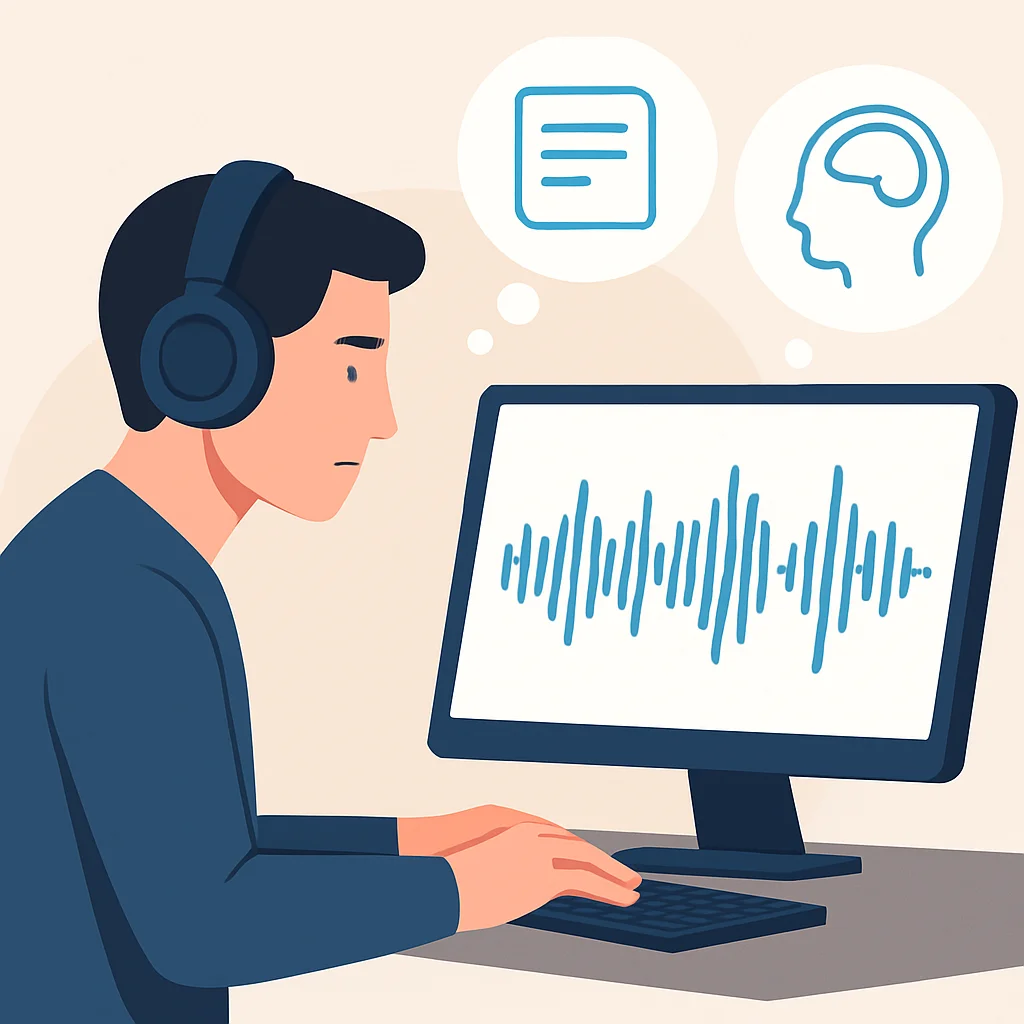
Understanding native speakers is not magic; it is a skill developed through recognizing patterns, predicting context, and quickly processing sound. For developers, this can be approached with the same systematic rigor we apply to our code. Let’s explore some core methods.
Method 1: Active Listening and Transcription
Step 1
Choose Short, Engaging Audio
Begin with 30-60 second clips from podcasts, YouTube videos, or brief interviews. Ensure the topic captivates you – perhaps related to tech, gaming, or a hobby. This keeps your motivation high.
Step 2
Listen Actively, Without Subtitles
Listen multiple times, focusing on the general meaning first. Don’t worry about every word. Try to identify the main idea and any familiar vocabulary. This builds your “gist comprehension.”
Step 3
Transcribe What You Hear
Play the audio sentence by sentence, pausing and rewinding as necessary. Write down every word you hear, even if you have to guess. This compels your brain to focus on individual sounds and word boundaries. It’s akin to unit testing your ear!
Step 4
Check Against the Official Transcript/Subtitles
Compare your transcription with the official one. Highlight any discrepancies. Pay close attention to words you misheard, contractions, connected speech (e.g., “gonna,” “wanna”), and pronunciation changes. This is where the real learning occurs – identifying your “bugs.”
Step 5
Review and Re-listen
After reviewing the correct transcript, re-listen to the audio several times. Now that you know what’s being said, your brain will start to connect the sounds with the correct words. This builds stronger neural pathways for understanding.
This method, often referred to as “dictation” or “transcription practice,” is highly effective because it forces you into deep, active listening. It’s a high-effort, high-reward strategy. Platforms like Language Reactor → (for Netflix/YouTube) or dedicated podcast apps with transcript features can streamline this process.
KEY POINT
Active transcription practice is akin to debugging spoken language. It helps you pinpoint precisely where your understanding falters, allowing you to specifically target pronunciation, connected speech, and unfamiliar vocabulary.
Method 2: Phonetic Training and Accent Exposure
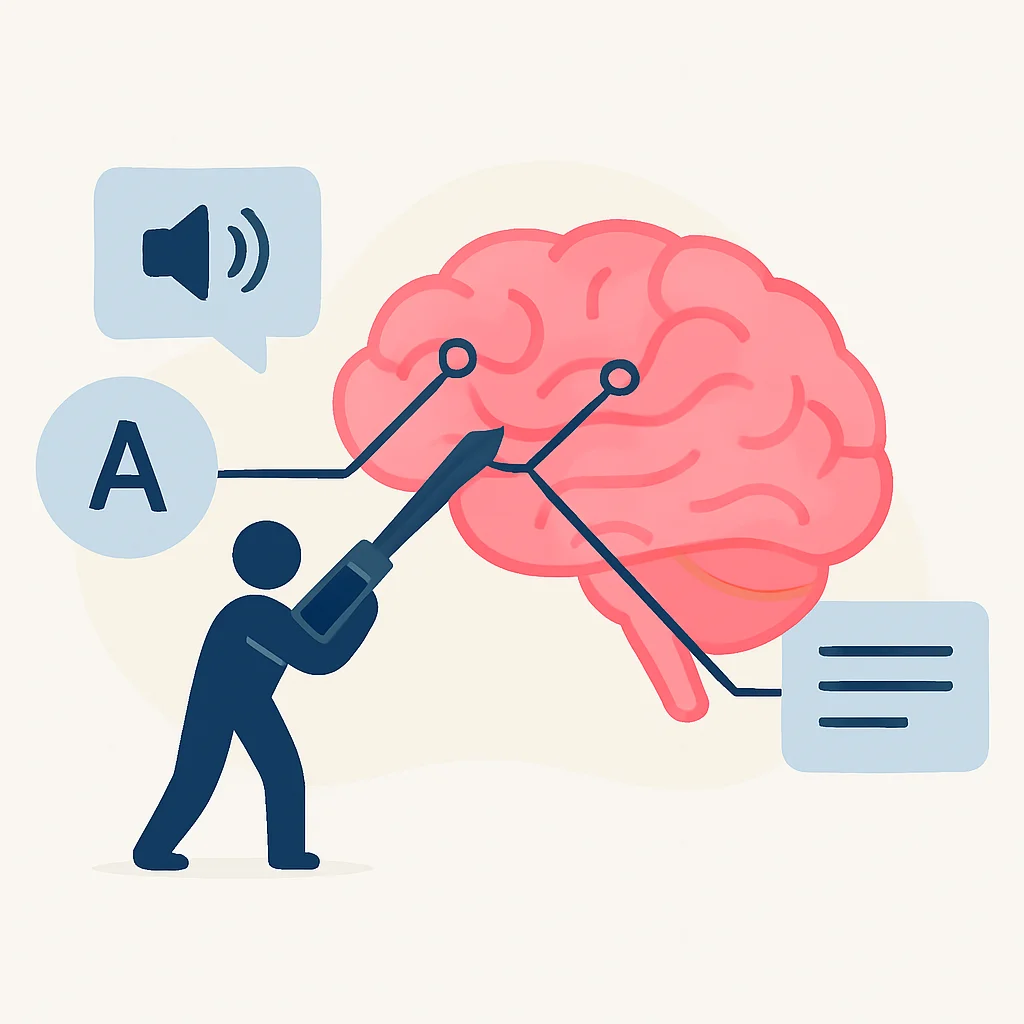
Just as different programming languages have unique syntax, spoken languages possess distinct phonetic inventories and intonation patterns. Native speakers frequently blend words, drop sounds, or alter pronunciations in natural speech, a phenomenon known as “connected speech.”
To address this, you need to:
✓ Understand Phonetics: Get acquainted with the International Phonetic Alphabet (IPA) for your target language. This provides a universal mapping of sounds, aiding you in distinguishing subtle differences that can alter meaning. Many online dictionaries now feature IPA transcriptions.
✓ Mimic and Shadow: Listen to native speakers and attempt to imitate their pronunciation, rhythm, and intonation as closely as possible. This “shadowing” technique trains both your mouth and ear simultaneously, enhancing both your speaking and listening skills.
✓ Vary Your Exposure: Don’t limit yourself to one type of accent. If you’re learning Spanish, expose yourself to Castilian, Mexican, Colombian, and Argentinian accents. For English, listen to British, American (various regions), Australian, etc. Each accent serves as a new “data set” for your brain to process.
CODE EXPLANATION
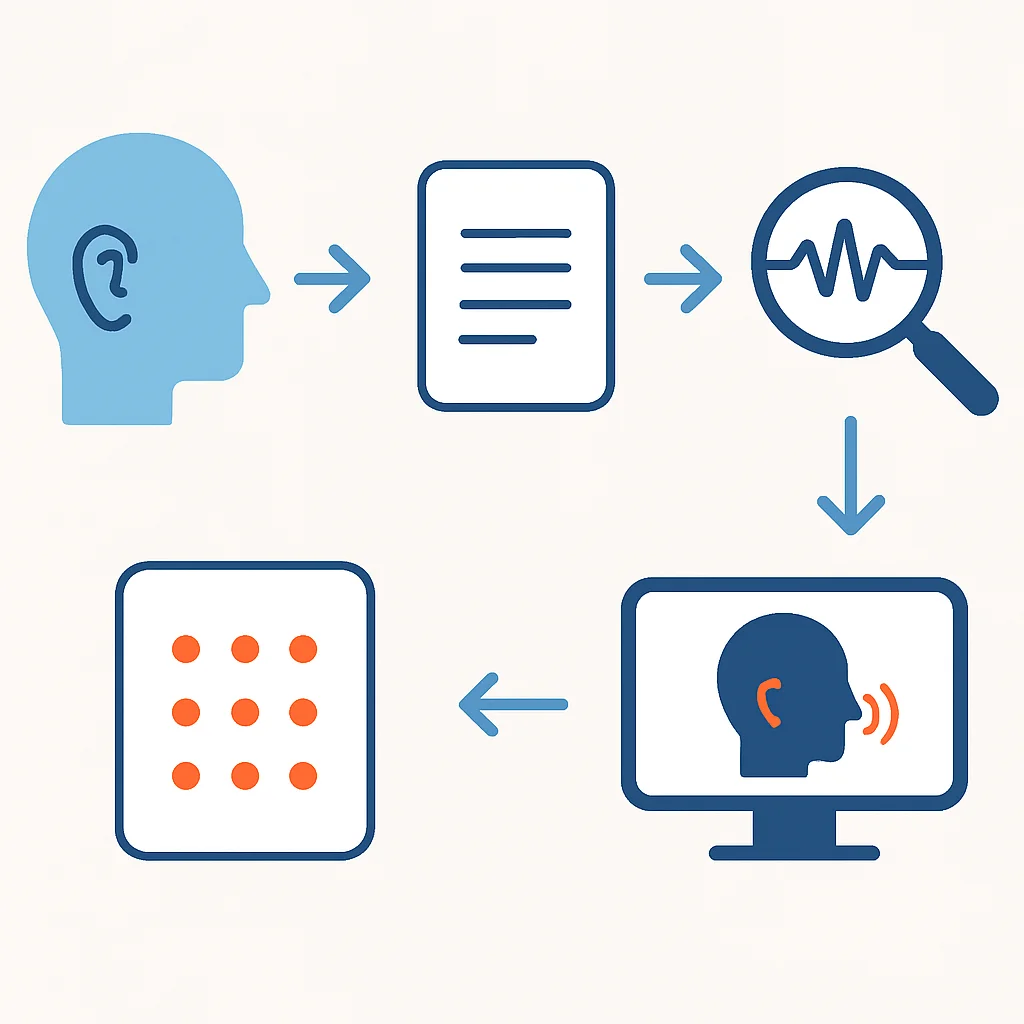
This pseudo-code illustrates how a language learning application might process audio input, identify phonetic patterns, and suggest targeted practice based on common connected speech phenomena. It simulates breaking down an audio stream into phonemes and identifying potential areas where a learner might struggle, such as assimilation or elision.
# Pseudocode for a phonetic analysis module
function analyze_audio_for_phonetics(audio_segment):
    phonemes = audio_to_phonemes(audio_segment) # Convert audio to IPA phoneme sequence
    problem_areas = []

    for i from 0 to length(phonemes) - 2:
        current_phoneme = phonemes[i]
        next_phoneme = phonemes[i+1]

        # Detect common connected speech patterns
        if is_assimilation(current_phoneme, next_phoneme):
            problem_areas.add("Assimilation detected: " + current_phoneme + " + " + next_phoneme)
        if is_elision(current_phoneme, next_phoneme):
            problem_areas.add("Elision detected: " + current_phoneme + " + " + next_phoneme)
        if is_linking_R(current_phoneme, next_phoneme): # For languages like English
            problem_areas.add("Linking R detected: " + current_phoneme + " + " + next_phoneme)

    return problem_areas

function suggest_practice(problem_areas):
    if "Assimilation detected" in problem_areas:
        print("Practice identifying sound changes when words blend, e.g., 'ten minutes' sounds like 'tem minutes'.")
    if "Elision detected" in problem_areas:
        print("Focus on dropped sounds in rapid speech, e.g., 'fish and chips' sounds like 'fish n chips'.")
    # ... more suggestions based on other patterns

# Example Usage
audio_clip = get_user_audio_input()
issues = analyze_audio_for_phonetics(audio_clip)
suggest_practice(issues)
This systematic approach to phonetics helps you understand why words sound different in natural speech compared to their isolated dictionary forms. It’s akin to understanding the underlying assembly code of spoken language.
3. Practical Application: Building Your Listening Lab
Now that we have explored the core methods, let’s discuss how to incorporate these into your daily routine. As developers, we appreciate tools and structured environments. Let’s create your personal “listening lab.”
Tool Kit for Your Listening Lab
Podcast Apps with Speed Control
Apps like Pocket Casts or Overcast allow you to slow down audio (e.g., to 0.75x or 0.5x speed) without altering the pitch. Start slow, then gradually increase the speed as your comprehension improves. This serves as your “debugger” for fast speech.
YouTube with Dual Subtitles (Browser Extensions)
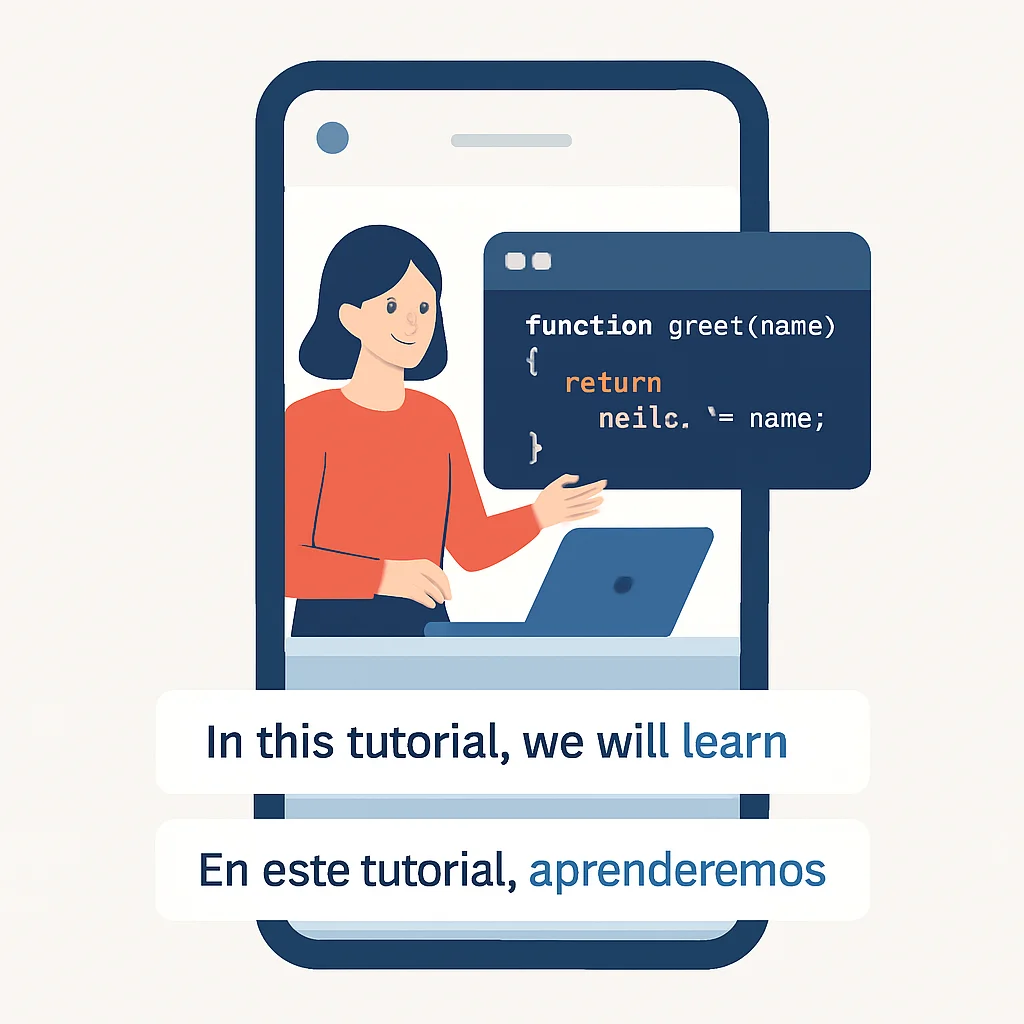
Extensions like Language Reactor for Chrome/Firefox display subtitles in both your native language and the target language simultaneously. This is invaluable for connecting spoken words to their meaning and seeing how native speakers express concepts.
Anki (Spaced Repetition System)
Create flashcards with audio snippets of challenging words or phrases. Use a screenshot of the context (e.g., from a transcript) and include the native audio. Anki’s spaced repetition algorithm will ensure you review them at optimal intervals.
Language Exchange Apps
Platforms like Tandem or HelloTalk connect you with native speakers for conversation practice. The real-time interaction, even if challenging, is the ultimate test of your listening skills. Don’t hesitate to ask them to repeat or slow down!
Remember, consistency is crucial. Aim for at least 15-30 minutes of dedicated listening practice daily. It’s more beneficial to do a little each day than a lot once a week.
KEY POINT
Create a diverse “listening lab” using technological tools for speed control, dual subtitles, and spaced repetition (Anki) to systematically expose yourself to authentic speech and reinforce learning.
Content Selection: Make It Relevant
As a developer, you have a unique advantage: you can find content related to your field in your target language! This makes the learning process more engaging and directly applicable.
Consider these sources:
✓ Tech Podcasts: Look for podcasts about programming, AI, web development, or specific technologies in your target language. For example, if learning German, search for “Entwickler Podcast” or “Programmierung Podcast.”
✓ Developer Conferences/Talks: YouTube is a treasure trove of conference talks from around the globe. Search for conference names (e.g., “Devoxx,” “FOSDEM”) followed by the language. Many provide slides and even transcripts.
✓ Technical Tutorials: Watch coding tutorials in your target language. Observing the code being written while hearing the explanation can provide essential context.
✓ Documentation & Blogs: While primarily reading, many technical blogs and documentation sites include embedded video explanations or linked podcasts. This gives you a native context for technical vocabulary.
4. Common Pitfalls & Mistakes to Avoid
Even with the best intentions, learners often fall into common traps that impede their listening progress. Being aware of these can help you navigate your language journey more effectively.
WARNING
Passive listening alone (e.g., background music or podcasts you don’t actively try to understand) is largely ineffective for improving comprehension. It creates familiarity but rarely builds understanding.
PROBLEM 01
Only Listening to “Easy” Content
While starting with beginner content is crucial, remaining there indefinitely hinders your development of the skills necessary for authentic, fast-paced native speech. You’ll encounter a plateau.
SOLUTION
Gradually increase the difficulty. Once you’re comfortable with slowed-down content, try native speed. Introduce content with different accents or more complex topics. Aim for content that’s about 70-80% comprehensible without assistance, then work on the remaining 20-30%.
PROBLEM 02
Over-reliance on Subtitles
While dual subtitles are beneficial for initial understanding, constantly reading them prevents your brain from genuinely processing the audio. It turns into a reading exercise, not a listening one.
SOLUTION
Use subtitles strategically. First, listen without any subtitles. Then, use target language subtitles. Only resort to native language subtitles as a last option for specific phrases. Gradually reduce your dependency on them, treating them like “training wheels.”
KEY POINT
Avoid the pitfalls of purely passive listening and excessive subtitle reliance. Actively challenge yourself with progressively more difficult content and gradually wean yourself off visual aids to truly train your ear.
PROBLEM 03
Fear of Imperfection
Many learners feel discouraged when they cannot understand everything. This fear leads to avoidance of challenging listening situations, which is precisely what you need to progress.
SOLUTION
Embrace the “messy middle” of language learning. It’s alright not to grasp every single word. Focus on getting the gist, identifying keywords, and understanding the overall context. Just like in coding, debugging is part of the process, not a sign of failure.
Frequently Asked Questions (FAQ)
Q. How long does it take to significantly improve listening comprehension?
A. Significant improvement can be observed within 3-6 months of consistent, active practice (at least 15-30 minutes daily). However, achieving near-native comprehension is an ongoing journey that may take years, much like mastering a complex programming language.
Q. Is it better to listen to content I enjoy or content specifically designed for learners?
A. A combination of both is ideal. Learner-focused content typically has clearer pronunciation and simpler vocabulary, making it suitable for building foundational understanding. However, authentic content you enjoy (like tech podcasts or shows) is essential for exposure to natural speech, idioms, and maintaining motivation.
Q. What if I still can’t understand anything even after slowing down the audio?
A. If slowing down isn’t sufficient, try shorter clips (5-10 seconds), focus on just one sentence at a time, and rigorously apply the transcription method. Your vocabulary might also be a limiting factor, so concentrate on learning high-frequency words and phrases from the content you’re listening to.
Q. How can developers leverage their analytical skills for listening practice?
A. Developers can approach listening like debugging: breaking down complex audio into smaller units, identifying patterns (connected speech, intonation), using tools for analysis (speed control, transcripts), and systematically testing their understanding through active transcription. Treat language rules as “syntax” and pronunciation as “runtime behavior.”
5. Wrapping It Up: Your Journey to Fluency
Mastering language listening skills is a marathon, not a sprint. It requires patience, persistence, and a readiness to embrace imperfection. However, as a developer, you possess the analytical mindset and problem-solving skills ideally suited for this challenge. By applying systematic methods like active transcription, phonetic training, and utilizing modern tech tools, you can significantly enhance your ability to decode native speakers in 2026 and beyond.
Remember, every misheard word is a learning opportunity, and every challenging conversation is a chance to grow. Don’t hesitate to step out of your comfort zone, engage with native speakers, and immerse yourself in authentic content. The reward is not only improved comprehension; it’s a deeper connection to other cultures, expanded professional opportunities, and the immense satisfaction of truly understanding and being understood.
So, put on your headphones, launch your favorite language app, and start debugging those sounds. Your journey to fluency, one decoded word at a time, begins now!
Thanks for reading
We hope this guide empowers you to tackle the exciting challenge of understanding native speakers. Keep practicing, keep learning, and enjoy the journey!
Got questions or your own favorite listening tips? Drop a comment below or connect with Kwonglish on social media!