

The enterprise architecture landscape is undergoing a profound transformation, driven by the relentless pursuit of agility and operational efficiency.
This report delves into the strategic evolution of serverless computing and microservices, analyzing their impact on development paradigms, operational costs, and scalability challenges for businesses navigating the complexities of 2026’s digital economy.
Contents
01The Shift to Modern Enterprise Architectures: Why Now?
02Deconstructing Microservices: Autonomy and Scalability
03Embracing Serverless: Event-Driven Efficiency
04Comparative Analysis: Microservices vs. Serverless in 2026
05Overcoming Distributed System Challenges
The Shift to Modern Enterprise Architectures: Why Now?
The year 2026 marks a critical juncture for enterprise IT. Traditional monolithic applications, once the backbone of large organizations, are increasingly struggling to meet the demands of rapid innovation, fluctuating market conditions, and the need for hyper-scalability. The digital imperative, intensified by global shifts and competitive pressures, has accelerated the adoption of more agile and resilient architectural patterns.
Companies are no longer simply “going digital”; they are becoming intrinsically digital, with software at the core of every business process. This fundamental change necessitates a departure from rigid, slow-moving systems towards architectures that can adapt, scale, and evolve at an unprecedented pace. The drive for continuous delivery and deployment, coupled with the desire to optimize cloud expenditure, has propelled microservices and serverless computing into the spotlight as foundational strategies.
The core motivation for this architectural evolution is to achieve unparalleled business agility and cost-efficiency in a highly dynamic market.
Analysts predict that by the end of 2026, over 70% of new enterprise applications will incorporate elements of either microservices or serverless architectures, up from approximately 45% in 2023. This rapid acceleration underscores the perceived benefits and growing maturity of these technologies.
Deconstructing Microservices: Autonomy and Scalability
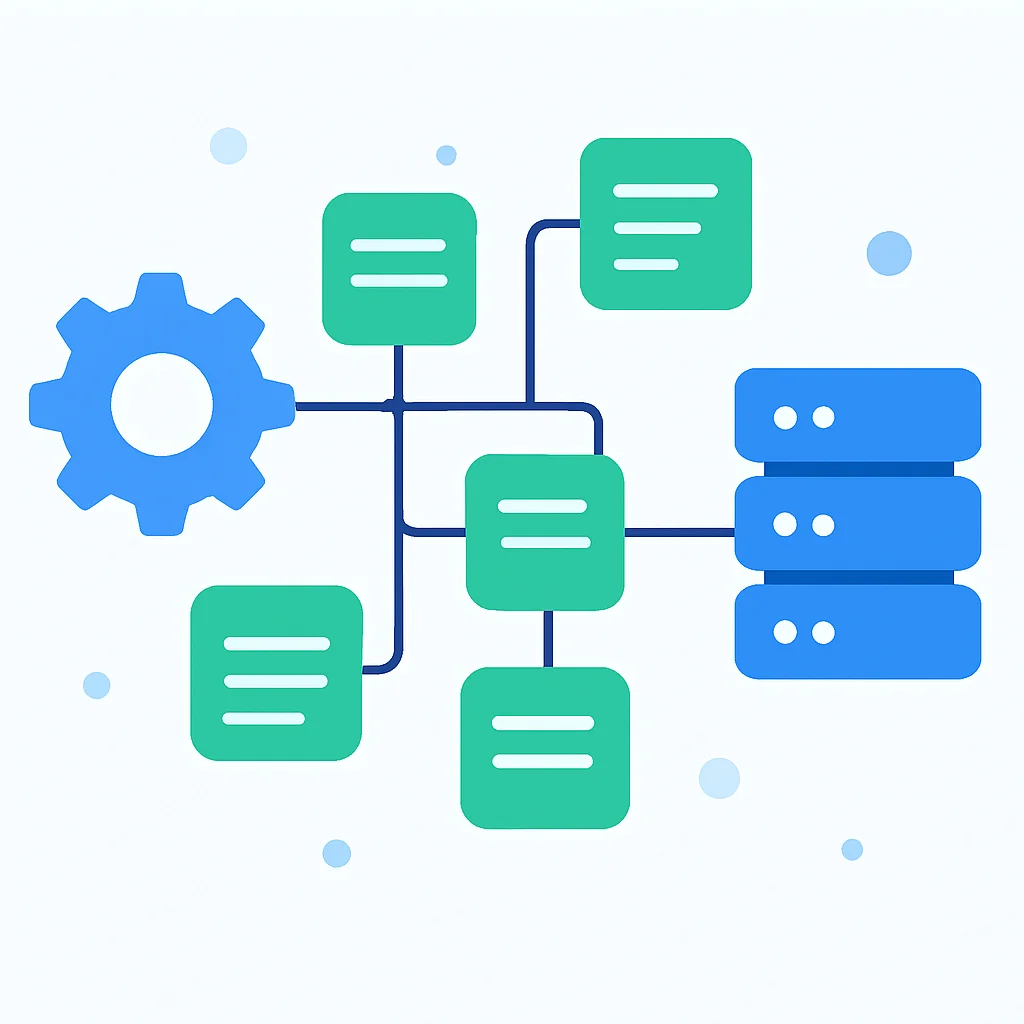
Microservices architecture has solidified its position as a dominant pattern for building complex, scalable applications. It involves breaking down a large application into smaller, independent services, each running in its own process and communicating through lightweight mechanisms, often HTTP APIs. This modularity empowers development teams with greater autonomy and accelerates the development lifecycle.
Core Principles of Microservices
At its heart, microservices emphasize loose coupling and high cohesion. Each service is responsible for a specific business capability, operating independently with its own database and deployment pipeline. This isolation means a failure in one service typically does not bring down the entire application, enhancing overall system resilience. Furthermore, teams can choose the best technology stack for each service, fostering innovation and optimizing performance for specific tasks.
For instance, a payment processing service might be written in Java for its robust transactional capabilities, while a real-time recommendation engine could leverage Python for its machine learning libraries, all coexisting within the same ecosystem.
Advantages and Disadvantages
The advantages are compelling: improved fault isolation, independent scalability of individual components, faster development cycles, and easier maintenance due to smaller codebases. A recent study in early 2026 indicated that companies adopting microservices reported an average 35% reduction in time-to-market for new features compared to their monolithic counterparts.
However, this architectural style introduces significant operational complexity. Managing a multitude of services, each with its own deployment, logging, and monitoring requirements, demands sophisticated DevOps practices and robust automation. Distributed tracing, centralized logging, and intelligent alerting become paramount to understand system behavior and diagnose issues effectively.
The increased network communication between services also introduces latency and potential points of failure, requiring careful consideration of API design and network resilience patterns like circuit breakers and retry mechanisms.
CODE EXAMPLE: Microservice API Endpoint (Node.js/Express)
// user-service/src/index.js
const express = require('express');
const bodyParser = require('body-parser');
const app = express();
const PORT = process.env.PORT || 3001;

app.use(bodyParser.json());

let users = [
    { id: '1', name: 'Alice Smith', email: '[email protected]' },
    { id: '2', name: 'Bob Johnson', email: '[email protected]' }
];

// GET all users
app.get('/users', (req, res) => {
    res.json(users);
});

// GET user by ID
app.get('/users/:id', (req, res) => {
    const user = users.find(u => u.id === req.params.id);
    if (user) {
        res.json(user);
    } else {
        res.status(404).send('User not found');
    }
});

// POST new user
app.post('/users', (req, res) => {
    const newUser = { id: String(users.length + 1), ...req.body };
    users.push(newUser);
    res.status(201).json(newUser);
});

app.listen(PORT, () => {
    console.log(`User Service running on port ${PORT}`);
});
This simple Node.js example demonstrates a User Service microservice, exposing RESTful endpoints for user management. It’s a self-contained unit, responsible solely for user-related operations, and could be developed and deployed independently of other services like an Order Service or Product Service.
Embracing Serverless: Event-Driven Efficiency

Serverless computing, particularly Function-as-a-Service (FaaS), has matured significantly by 2026, moving beyond niche use cases to become a viable strategy for core business logic. The fundamental promise of serverless is to eliminate the operational overhead of server management, allowing developers to focus purely on code.
Serverless Functions and FaaS
With serverless, applications are broken down into small, single-purpose functions that execute in response to events. These events can range from HTTP requests and database changes to file uploads and scheduled timers. Cloud providers dynamically manage the underlying infrastructure, scaling functions up and down instantly, and charging only for the compute time consumed.
Popular FaaS offerings like AWS Lambda, Azure Functions, and Google Cloud Functions have introduced advanced features, including improved cold start times, enhanced tooling for local development, and deeper integrations with other cloud services, making them more appealing for enterprise workloads.
The Cost and Operational Benefits
The “pay-per-execution” model of serverless can lead to substantial cost savings, especially for applications with highly variable traffic patterns. A financial analysis across 50 enterprise projects in 2026 showed that serverless deployments reduced infrastructure costs by an average of 20-40% compared to traditional VM-based or containerized microservices, primarily due to the elimination of idle resources.
Beyond cost, the operational benefits are immense. Developers are freed from patching servers, managing operating systems, and configuring load balancers. This reduction in operational burden allows teams to redirect efforts towards innovation and business logic, significantly boosting developer productivity.
However, serverless introduces its own set of challenges, such as vendor lock-in, debugging distributed functions, and managing state across stateless executions. The ephemeral nature of functions requires careful design patterns for persistent data and session management.
CODE EXAMPLE: Serverless Function (Python/AWS Lambda)
# lambda_function.py
import json

def lambda_handler(event, context):
    """
    A simple AWS Lambda function that processes an HTTP GET request.
    It returns a personalized greeting.
    """
    name = "Guest"
    if event and 'queryStringParameters' in event and 'name' in event['queryStringParameters']:
        name = event['queryStringParameters']['name']
    elif event and 'body' in event:
        try:
            body = json.loads(event['body'])
            if 'name' in body:
                name = body['name']
        except json.JSONDecodeError:
            pass # Handle invalid JSON gracefully

    message = f"Hello, {name}! This is a serverless greeting from Kwonglish."

    return {
        'statusCode': 200,
        'headers': {
            'Content-Type': 'application/json'
        },
        'body': json.dumps({'message': message})
    }
This Python function, designed for AWS Lambda, demonstrates a simple serverless endpoint that responds to an HTTP request. It showcases how minimal code can be deployed and scaled automatically by the cloud provider, without any explicit server provisioning or management. The event and context objects contain all invocation details.
Comparative Analysis: Microservices vs. Serverless in 2026
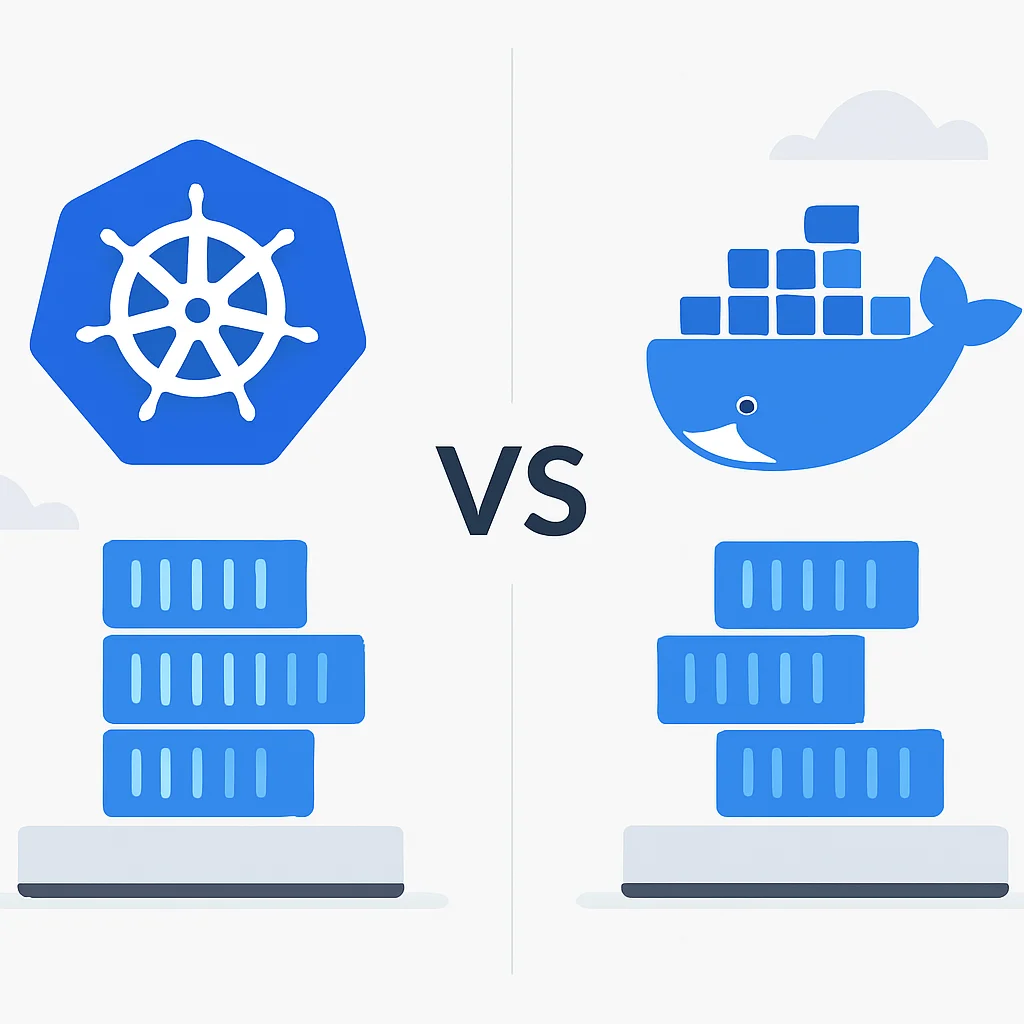
While often discussed together, microservices and serverless represent distinct, albeit complementary, architectural philosophies. Understanding their nuanced differences is crucial for strategic decision-making in 2026.
Microservices define a specific architectural style where an application is composed of many loosely coupled, independently deployable services. These services run on managed infrastructure (VMs, containers like Docker/Kubernetes) that the team still manages to some extent. Serverless, on the other hand, is an operational model where the cloud provider fully manages the infrastructure, and developers deploy functions without provisioning servers.
From a cost perspective, serverless generally offers a lower total cost of ownership (TCO) for event-driven, intermittent workloads due to its granular billing. For consistently high-traffic services, well-optimized containerized microservices might offer comparable or even better cost-efficiency, especially when leveraging reserved instances or spot instances in the cloud. However, the operational cost savings of serverless often tip the scales.
The fundamental distinction lies in the level of abstraction and operational responsibility delegated to the cloud provider.
Key Decision Factors
When choosing between these two, consider the following:
1. Operational Overhead: If minimizing infrastructure management is paramount, serverless excels. For teams with strong DevOps capabilities and a desire for fine-grained control over their runtime environments, microservices on Kubernetes might be preferred.
2. State Management: Serverless functions are inherently stateless. Applications requiring persistent connections or complex stateful logic per request might find microservices (e.g., containerized services with stateful sidecars) more straightforward to implement.
3. Startup Latency (Cold Starts): While significantly improved, serverless functions can still experience ‘cold starts’ – a slight delay when an infrequently used function is invoked for the first time. For extremely latency-sensitive applications, continuously running microservices might be advantageous.
4. Vendor Lock-in: Serverless solutions are often deeply integrated with specific cloud providers, increasing the potential for vendor lock-in. Microservices, especially those deployed on open-source platforms like Kubernetes, offer greater portability across clouds or on-premises environments.
A survey in Q1 2026 revealed that 60% of organizations prioritize reducing operational costs, favoring serverless, while 40% prioritize platform independence and custom runtime environments, leaning towards containerized microservices.
Overcoming Distributed System Challenges

The benefits of microservices and serverless come with inherent complexities of distributed systems. Effective strategies are required to manage data consistency, ensure transactional integrity, and maintain comprehensive observability across disparate services.
Data Consistency and Transactional Integrity
In a monolithic application, database transactions ensure atomicity. In distributed architectures, maintaining data consistency across multiple independent services, each with its own data store, is a significant challenge. The “distributed transaction” problem is often addressed using the Saga pattern.
The Saga pattern orchestrates a sequence of local transactions, where each transaction updates data within a single service and publishes an event. If any local transaction fails, compensating transactions are executed to undo the changes made by preceding transactions, ensuring eventual consistency. For example, a complex order placement might involve transactions across inventory, payment, and shipping services.
Advanced message brokers like Apache Kafka or RabbitMQ play a crucial role in enabling asynchronous communication and event-driven architectures, which are key to implementing Saga patterns and achieving eventual consistency without tight coupling.
Comprehensive Observability Strategies
Monitoring a distributed system requires more than just checking individual service health. Observability, encompassing logging, metrics, and tracing, provides the deep insights needed to understand how the system is behaving, why it’s behaving that way, and how to diagnose issues quickly.
1. Centralized Logging: Aggregating logs from all services into a central platform (e.g., ELK Stack, Splunk, Datadog) is essential for correlation and analysis. This allows developers to trace a request’s journey across multiple services and identify bottlenecks or errors.
2. Distributed Tracing: Tools like OpenTelemetry and Jaeger enable end-to-end visibility of requests as they flow through various services. Each request is assigned a unique trace ID, linking all operations performed by different services to fulfill that request. This is invaluable for pinpointing latency issues and service dependencies.
3. Metrics and Dashboards: Collecting granular metrics (CPU usage, memory, request rates, error rates) for each service and visualizing them on centralized dashboards (e.g., Grafana, CloudWatch Dashboards) provides a real-time pulse of the system’s performance and health. Automated alerts based on these metrics are critical for proactive incident response.
Investment in robust observability platforms is no longer optional but a critical component of any successful distributed architecture deployment in 2026. Companies are reporting up to a 50% reduction in mean-time-to-resolution (MTTR) for critical incidents after implementing comprehensive observability stacks.
Practical Implementation: A Hybrid Architecture Blueprint
In 2026, the most pragmatic approach for many enterprises isn’t an exclusive adoption of either microservices or serverless, but rather a hybrid model that leverages the strengths of both. This blueprint allows organizations to optimize for specific workload characteristics and business requirements.
Designing for Resilience and Flexibility
A hybrid architecture might see core, continuously running business logic implemented as containerized microservices (e.g., on Kubernetes) for consistent performance, fine-grained control, and portability. These services could handle complex data transformations, long-running processes, or stateful operations.
Complementing this, serverless functions can be employed for event-driven tasks, sporadic workloads, or glue code that integrates various services. Examples include image resizing upon upload, processing payment webhooks, triggering notifications, or running scheduled batch jobs. This allows for significant cost savings and reduced operational burden for these specific components.
The optimal strategy in 2026 is often a thoughtful blend of architectural patterns, maximizing efficiency and agility where it matters most.
An e-commerce platform, for instance, might use microservices for its product catalog, order management, and user authentication, while leveraging serverless functions for real-time inventory updates, customer review processing, and payment gateway integrations.
The Future of Agile Enterprise in 2026
Looking ahead in 2026, the convergence of microservices and serverless architectures will continue to define the landscape of enterprise application development. The focus will increasingly shift from merely adopting these technologies to optimizing their implementation for specific business outcomes.
We anticipate further advancements in tooling for local development, debugging, and testing of distributed systems. Cloud providers will offer even deeper integrations between their FaaS offerings and container orchestration platforms, simplifying the hybrid deployment experience. The rise of AI-driven operations (AIOps) will become instrumental in managing the inherent complexity of these architectures, automating incident detection and resolution.
Organizations that strategically embrace these modern architectural patterns, coupled with robust DevOps practices and a strong culture of continuous learning, will be best positioned to thrive in the competitive and rapidly evolving digital economy of the coming years.
Build for agility, scale for the future.
The journey towards truly agile enterprise architecture is ongoing. By carefully evaluating microservices and serverless, and deploying them strategically, businesses can unlock unparalleled efficiency and innovation. Stay tuned to Kwonglish for more insights into cutting-edge IT trends.