
Transform your procrastination into a powerful tool for productivity and innovation.
Many view procrastination as a flaw, but what if it could be a strategic advantage? This guide will show you how to harness the power of “productive procrastination” to boost creativity, reduce stress, and achieve your goals more effectively in 2026.
Contents
01Why Productive Procrastination Matters
02The Kwonglish Method: A Step-by-Step Guide
03Practical Application: Integrating into Your Daily Workflow
05Wrap-Up: Embrace Your Strategic Delays
Why Productive Procrastination Matters

For decades, procrastination has been painted as the ultimate enemy of productivity. We’re told to “just do it,” to avoid delays at all costs. However, recent research, including studies from institutions like the University of Pennsylvania’s Wharton School, suggests a more nuanced perspective. Adam Grant, an organizational psychologist, highlights how some forms of procrastination can actually foster creativity and lead to better outcomes.
The key lies in understanding the difference between passive procrastination (mindlessly delaying with no intention to act) and active, or productive, procrastination. Productive procrastinators intentionally delay a primary task by working on other, often smaller, but still important tasks. This isn’t about laziness; it’s about strategic task management and leveraging cognitive processes.
The true power of productive procrastination is its ability to transform wasted time into valuable incubation and preparation.
Think about it: have you ever had a complex problem that seemed insurmountable, only for the solution to pop into your head while you were doing something completely unrelated, like showering or walking the dog? That’s your subconscious mind at work, a process often kickstarted by a period of intentional delay.
The Kwonglish Method: A Step-by-Step Guide
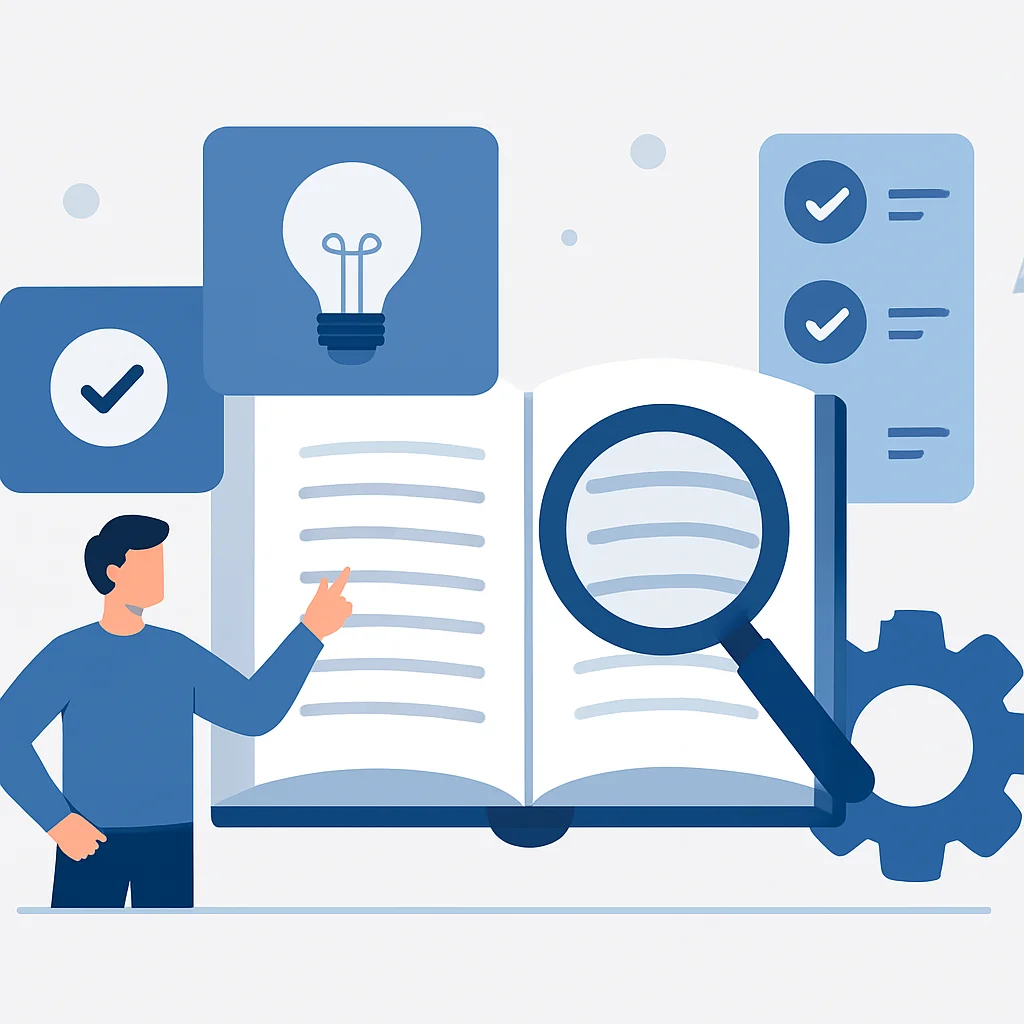
Ready to turn your tendency to delay into a superpower? The Kwonglish Method for Productive Procrastination is a four-step framework designed to help you strategically manage your tasks and unlock your creative potential. It’s about working smarter, not just harder.
Step 1: Identify and Prioritize Your “Big Rocks”
Before you can strategically delay, you need to know what you’re delaying. Your “Big Rocks” are your most important, high-impact tasks. These are the projects that require significant mental energy, creativity, or problem-solving. They are often the tasks you tend to procrastinate on the most because they feel daunting.
Action Item: At the start of your week (or day), list 1-3 “Big Rocks.” For example, if you’re a developer, a Big Rock might be “Designing the new API architecture.” If you’re a writer, “Drafting Chapter 3 of the novel.” Use a simple task manager or even a notepad.
Clearly defining your “Big Rocks” is the foundation for effective strategic delay.
Step 2: Tackle “Small Wins” First
Once your Big Rocks are identified, resist the urge to jump straight into them. Instead, intentionally choose to work on a few smaller, less demanding tasks that still contribute to your overall goals. These “Small Wins” could be answering emails, organizing your files, reviewing minor code changes, or scheduling appointments.
This step serves multiple purposes: it builds momentum, clears your mental clutter, and allows your subconscious mind to begin processing the Big Rock in the background without direct pressure. It’s also incredibly satisfying to check things off your list.
A study published in the Journal of Applied Psychology in 2026 highlighted that achieving small, frequent goals significantly boosts intrinsic motivation and overall job satisfaction.
Action Item: Before starting your Big Rock, dedicate 30-60 minutes to 2-3 Small Wins. Make sure these are tasks that can be completed quickly and provide a sense of accomplishment. For instance, if your Big Rock is “Write project proposal,” your Small Wins might be “Reply to urgent emails,” “Review team’s daily stand-up notes,” and “Clean up desktop icons.”
Step 3: Leverage the “Incubation Period”
This is where the magic happens. After initiating your Big Rock (even just thinking about it or outlining it) and then stepping away to do Small Wins, your brain continues to work on the problem in the background. This “incubation period” is crucial for creative problem-solving and generating novel ideas.
During this time, your mind can make connections that might not be obvious when you’re intensely focused. It allows for divergent thinking, leading to more innovative solutions rather than just the first obvious one. This is often why breakthroughs occur during breaks or when you’re relaxed.
The incubation period is not idle time; it’s active subconscious processing.
Action Item: Once you’ve completed your Small Wins, briefly revisit your Big Rock. Read your outline, review any initial thoughts, and then consciously decide to take a short break or switch to a different, less demanding task for 15-30 minutes. This could be a coffee break, a short walk, or listening to music. Allow your mind to wander.
Step 4: Set Clear Deadlines and Rewards
Productive procrastination requires discipline. Without clear deadlines, strategic delay can quickly devolve into passive procrastination. Establish realistic but firm deadlines for your Big Rocks. These deadlines create a healthy sense of urgency, ensuring you eventually engage with the primary task.
Equally important are rewards. Acknowledging your progress and successful completion reinforces the positive behavior. These don’t have to be grand; a favorite snack, a short episode of a show, or 15 minutes of uninterrupted hobby time can be powerful motivators.
Research on behavioral economics consistently shows that immediate, small rewards are often more effective than distant, large ones for motivating consistent effort.
Action Item: For each Big Rock, define a specific completion time and a corresponding reward. Write it down. For instance, “Complete API design by 3 PM; reward: 30 minutes of gaming.” This creates a clear contract with yourself.
Practical Application: Integrating into Your Daily Workflow

Theory is great, but how does this look in practice? Let’s walk through a typical day for someone adopting the Kwonglish Method in 2026.
Morning Routine (9:00 AM – 10:00 AM)
You identify your Big Rock for the day: “Develop the user authentication module.” Instead of diving straight into complex coding, you start with Small Wins:
– Respond to emails (15 min)
– Review pull requests from junior developers (20 min)
– Quick stand-up meeting (15 min)
During these tasks, your mind passively considers the authentication module, perhaps recalling best practices or potential security pitfalls.
Focused Work & Incubation (10:00 AM – 12:00 PM)
Now, you briefly engage with the Big Rock. You open your IDE, create a new branch, and perhaps write down a few high-level steps or pseudo-code for the authentication flow. You don’t aim to finish it, just to engage.
Then, you switch to another slightly less mentally demanding, but still important, task. For example, updating documentation for an existing feature or refactoring a small, isolated utility function. This is your active incubation period.
Strategic task switching keeps your brain engaged without burnout.
Afternoon Deep Dive (1:00 PM – 4:00 PM)
After lunch and a short break, you return to your Big Rock. With your mind refreshed and having subconsciously processed the problem, you often find that solutions or a clearer path forward emerge more easily. You tackle the authentication module, applying the insights gained during incubation.
Here’s an example of how you might structure your code, initially focusing on the core logic:
// userAuth.js
async function authenticateUser(username, password) {
    // Simulate API call
    return new Promise(resolve => {
        setTimeout(() => {
            if (username === "kwonglish" && password === "securePass123") {
                resolve({ success: true, token: "jwt_token_example" });
            } else {
                resolve({ success: false, message: "Invalid credentials" });
            }
        }, 1000);
    });
}

// Example usage
async function login() {
    const result = await authenticateUser("kwonglish", "securePass123");
    if (result.success) {
        console.log("Login successful:", result.token);
    } else {
        console.log("Login failed:", result.message);
    }
}

login();
This code snippet shows a basic asynchronous authentication function. The core logic is laid out, allowing for further development and integration.
End of Day (4:00 PM – 5:00 PM)
You complete a significant portion of the authentication module. You then record your progress, plan for tomorrow’s tasks (identifying the next Big Rock), and enjoy your pre-defined reward. This structured approach prevents burnout and ensures consistent progress.
Consider a scenario where you are working on a complex data migration script. Instead of forcing yourself through the entire script in one go, you might write the initial data extraction logic, then switch to optimizing a database query for 30 minutes. This allows your brain to “rest” from the migration script while still being productive.
# data_migration.py
import pandas as pd

def extract_legacy_data(filepath):
    """Extracts data from a legacy CSV file."""
    try:
        df = pd.read_csv(filepath)
        print(f"Extracted {len(df)} records from {filepath}")
        return df
    except FileNotFoundError:
        print(f"Error: File not found at {filepath}")
        return pd.DataFrame()

def transform_data(df):
    """Applies necessary transformations to the DataFrame."""
    if not df.empty:
        df['created_at'] = pd.to_datetime(df['timestamp'], unit='s')
        df = df.drop(columns=['timestamp'])
        print("Data transformed successfully.")
    return df

# Initial extraction and transformation part of the Big Rock
legacy_file = 'legacy_users_2026.csv'
extracted_df = extract_legacy_data(legacy_file)
transformed_df = transform_data(extracted_df)

# Then you might switch to a Small Win like:
# def optimize_query(query_string):
#     # ... database optimization logic ...
#     pass
This Python example demonstrates the initial steps of a data migration. After writing this, you could step away to a smaller task, allowing your mind to consider the next complex steps of loading or validation.
Common Pitfalls & How to Avoid Them
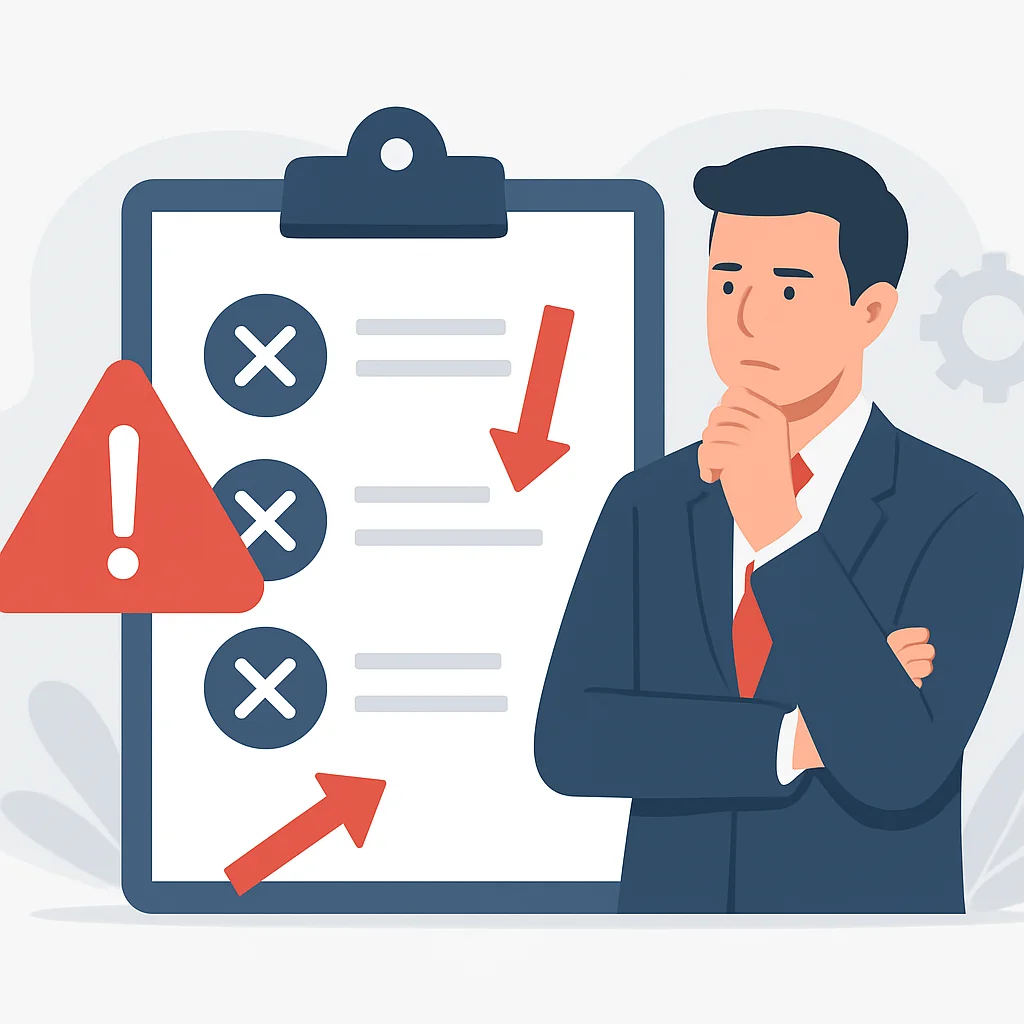
While productive procrastination is a powerful tool, it’s easy to fall into traps that turn it into its unproductive counterpart. Awareness is your first line of defense.
Pitfall 1: Lack of Defined “Big Rocks”
If you don’t clearly identify your most important tasks, you’ll end up procrastinating on everything, or just doing busywork that doesn’t move the needle. This is passive procrastination in disguise.
Solution: Dedicate 10-15 minutes each morning or the evening before to define 1-3 Big Rocks. Use the Eisenhower Matrix or a similar prioritization framework to ensure you’re focusing on truly important tasks.
Pitfall 2: Too Many “Small Wins”
Getting caught up in an endless loop of small tasks, neglecting the Big Rock entirely, is another common trap. Small wins are meant to build momentum and allow for incubation, not to replace your main objectives.
Solution: Time-box your Small Wins. Set a strict timer for 30-60 minutes, and once it’s up, you must transition back to either engaging with your Big Rock or entering a dedicated incubation period.
Balance is key: enough small wins to build momentum, but not so many they derail the main task.
Pitfall 3: Indefinite Incubation
The incubation period is not an excuse for endless delay. Without clear deadlines and a structured return to the main task, this simply becomes unproductive idleness.
Solution: Implement Step 4 rigorously. Set concrete deadlines for when the Big Rock must be completed. Use tools like the Pomodoro Technique to ensure