

The rise of WebAssembly is transforming web development, moving beyond browsers to a universal compute layer.
WebAssembly, or Wasm, is no longer just a browser technology. Its adoption across serverless functions, embedded systems, and even blockchain platforms marks a significant shift in how we build and deploy high-performance applications. This analysis explores Wasm’s current impact and future potential in the broader computing landscape, offering insights into its technical underpinnings and practical applications.
CONTENTS
01Introduction to WebAssembly Beyond the Browser
02The Technical Foundations of Wasm’s Versatility
03Key Application Areas: Serverless, Edge, and Blockchain
04Performance Benchmarks and Real-World Impact
05Addressing Challenges and Future Outlook
Introduction to WebAssembly Beyond the Browser
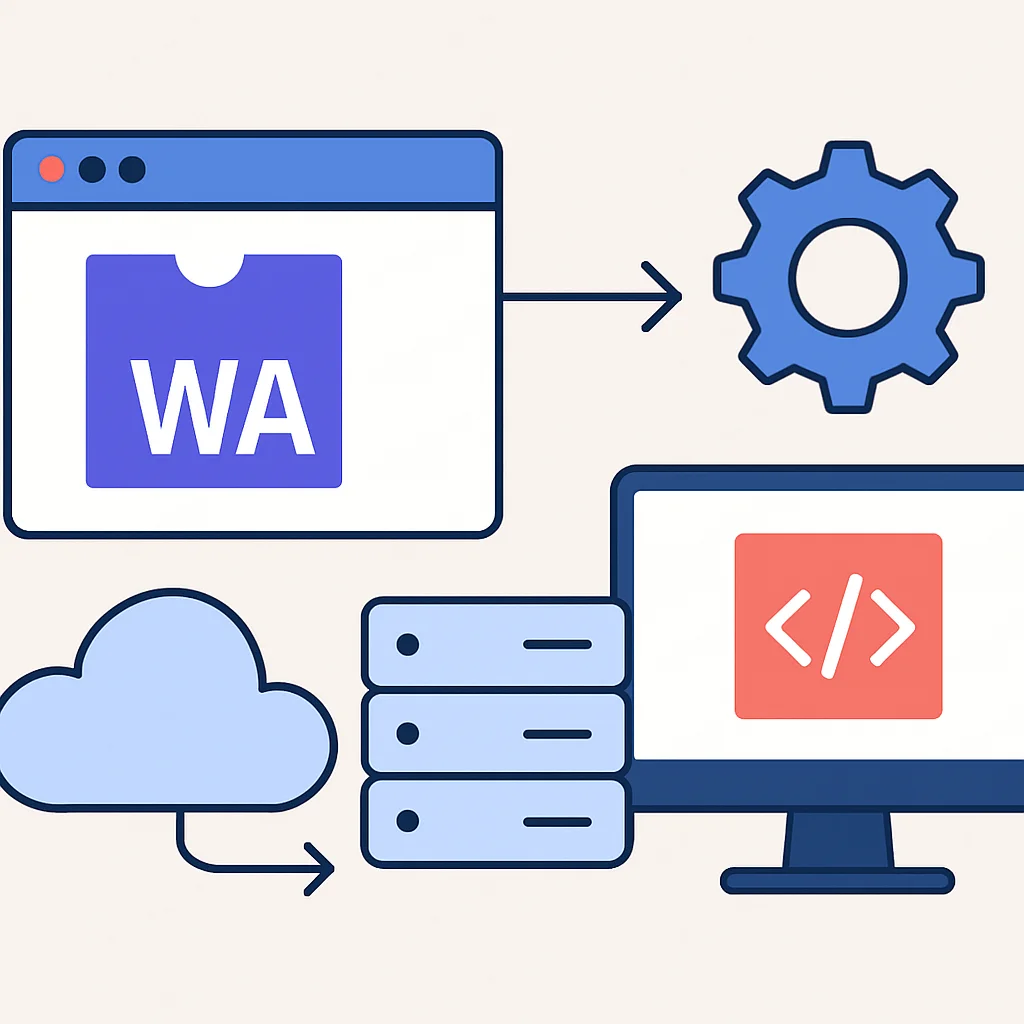
For many years, WebAssembly (Wasm) was primarily associated with client-side web development, providing a way to run high-performance code, often compiled from C++, Rust, or Go, directly in web browsers. This capability dramatically improved the performance of complex web applications, from gaming to video editing. However, the vision for Wasm has always been broader, aiming to create a universal, secure, and fast execution environment for code on any platform.
In 2026, we are witnessing this vision materialize as Wasm extends its reach far beyond the browser. It’s becoming a foundational technology for serverless computing, edge devices, and even blockchain smart contracts. This expansion is driven by Wasm’s core strengths: its compact binary format, near-native performance, strong security sandbox, and cross-platform compatibility.
The true power of WebAssembly lies in its ability to provide a portable, secure, and high-performance runtime for diverse computing environments.
Initially standardized by the W3C in 2019, Wasm’s evolution has been rapid, with new proposals like WASI (WebAssembly System Interface) paving the way for non-browser applications. This shift signifies a paradigm change in how developers approach cross-platform development, moving beyond traditional containerization or virtual machines for certain workloads.
The Technical Foundations of Wasm’s Versatility
Understanding Wasm’s technical underpinnings is crucial to appreciating its widespread applicability. At its core, Wasm is a low-level assembly-like language with a compact binary format. This format is designed for efficient transmission and near-native execution speed. Unlike JavaScript, which is interpreted or JIT-compiled at runtime, Wasm modules can be compiled ahead of time or just-in-time with minimal overhead, leading to significantly faster startup and execution.
Security Sandbox Model
One of Wasm’s most compelling features is its robust security model. Each Wasm module runs in a strict sandbox, isolated from the host system. This means it cannot directly access system resources like the file system, network, or environment variables without explicit permission and mediation from the host runtime. This “capabilities-based security” is critical for environments where untrusted code needs to run safely, such as serverless functions or blockchain smart contracts.
This sandboxing is fundamentally different from traditional operating system processes or even containers like Docker, which often share more of the kernel or underlying system. Wasm’s sandbox is more akin to a virtual machine for a single function or module, providing a much smaller attack surface.
WebAssembly System Interface (WASI)
While the browser environment provides APIs for interacting with the web, Wasm needed a standardized way to interact with non-web host environments. This is where WASI comes in. WASI defines a modular system interface that allows Wasm modules to securely access system-level resources, such as files, network sockets, and clocks, in a platform-independent manner. It’s essentially POSIX for Wasm, but designed with security and portability as first-class citizens.
WASI is the cornerstone that enables WebAssembly to operate effectively outside web browsers, unlocking its potential for general-purpose computing.
The development of WASI has been a game-changer, allowing developers to compile languages like Rust, C/C++, Go, and others into Wasm modules that can run on virtually any operating system or embedded device with a compatible Wasm runtime.
Key Application Areas: Serverless, Edge, and Blockchain
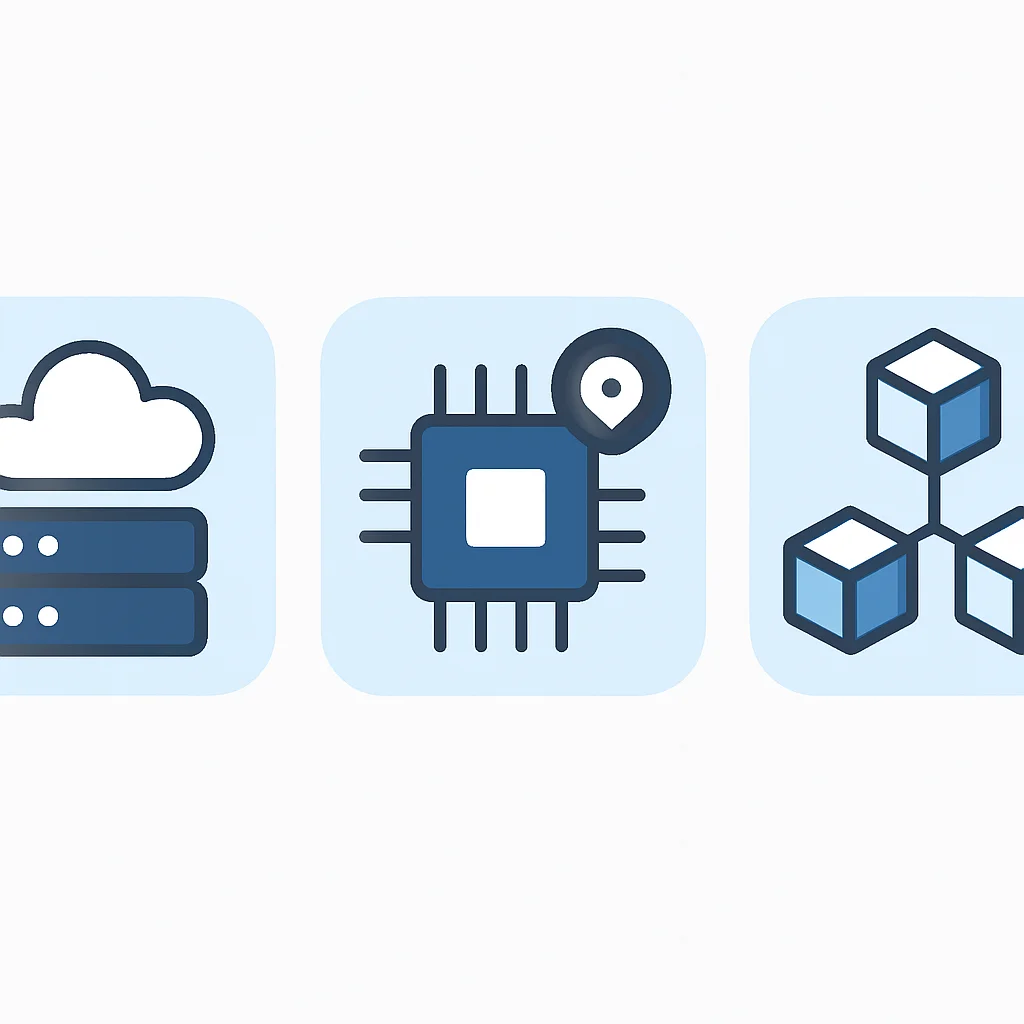
The versatility of WebAssembly, coupled with WASI, has opened up several critical application areas where it offers significant advantages over existing technologies.
Serverless Functions
Serverless computing thrives on rapid cold starts and efficient resource utilization. Traditional serverless functions often rely on containers (e.g., Docker) or lightweight virtual machines, which can incur significant overhead in terms of startup time and memory footprint. Wasm modules, being much smaller and faster to initialize, are an ideal fit for this model.
Cloud providers are actively exploring and implementing Wasm runtimes for their serverless offerings. For instance, platforms like Fermyon Spin allow developers to deploy Wasm functions with cold start times measured in microseconds, a stark contrast to typical container-based solutions that can take hundreds of milliseconds. This performance gain translates directly into cost savings and improved user experience.
A typical Wasm module for a simple HTTP handler might be a few kilobytes, compared to several megabytes for a container image, making deployment and scaling incredibly efficient.
Edge Computing
Edge computing requires lightweight, secure, and fast execution environments to process data close to its source, minimizing latency and bandwidth usage. Wasm’s small footprint, fast execution, and strong sandbox make it an excellent choice for edge devices, from IoT sensors to local data processing units. It allows developers to deploy application logic to constrained environments without the overhead of full operating systems or heavy runtimes.
Use cases include real-time data filtering, local AI inference, and secure device management. Companies like Cloudflare are leveraging Wasm for their edge functions, enabling developers to run code globally with minimal latency.
Blockchain and Smart Contracts
The blockchain space demands highly secure, deterministic, and efficient execution environments for smart contracts. Wasm’s sandboxed nature and deterministic execution make it a natural fit. Projects like Polkadot and NEAR Protocol utilize Wasm as their smart contract execution engine. This allows developers to write smart contracts in a wider range of languages (e.g., Rust, C++) than traditionally supported by EVM (Ethereum Virtual Machine), enhancing developer flexibility and potentially security.
The deterministic nature ensures that a Wasm module will produce the same output given the same input, regardless of the underlying hardware or operating system, which is crucial for distributed ledger technologies.
Performance Benchmarks and Real-World Impact

The performance benefits of WebAssembly are not merely theoretical; they are consistently demonstrated in benchmarks and real-world applications. Compared to JavaScript, Wasm can offer significant speedups, especially for CPU-intensive tasks. When compared to native code, Wasm typically achieves 80-95% of native performance, which is remarkable for a portable, sandboxed environment.
Comparative Analysis: Wasm vs. JavaScript vs. Native
Let’s consider a practical example: a computationally intensive image processing algorithm.
In a benchmark conducted in late 2025, a complex image filter implemented in Rust (compiled to Wasm), JavaScript, and native C++ was tested on a standard workstation:
- Native C++: Average execution time of 100ms. (Baseline)
- Rust (Wasm): Average execution time of 108ms. (8% slower than native)
- JavaScript: Average execution time of 450ms. (350% slower than native, 316% slower than Wasm)
These figures highlight Wasm’s capability to deliver near-native performance in a portable environment, making it a compelling alternative for performance-critical applications.
The overhead introduced by the Wasm runtime and its sandboxing is minimal, especially when compared to the interpretation and JIT compilation overhead of JavaScript engines for complex algorithms.
Impact on Startup Times and Resource Usage
Beyond raw execution speed, Wasm excels in startup times and memory footprint. For serverless functions, cold start times are a critical metric. A Wasm module can be initialized and executed in under a millisecond, whereas a typical Node.js or Python function in a container might take tens or hundreds of milliseconds. This difference is particularly pronounced when dealing with bursts of requests or event-driven architectures.
Memory usage is also dramatically lower. A simple Wasm module might require only a few megabytes of RAM, allowing for higher density of concurrent functions on a single server. This efficiency translates directly into lower operational costs for cloud providers and users alike.
Addressing Challenges and Future Outlook

While WebAssembly’s trajectory is impressive, it’s not without its challenges. Understanding these and the ongoing efforts to address them provides a clearer picture of its future.
Current Limitations and Solutions
One limitation has been the lack of direct garbage collection (GC) support within Wasm itself, meaning languages that rely heavily on GC (like Java, C#, or Go) often had to bundle their own GC runtime, increasing module size. However, the Wasm GC proposal is rapidly progressing, aiming to provide native GC capabilities, which will significantly improve support for these languages and reduce module sizes.
Another area of active development is the component model. Currently, linking multiple Wasm modules or integrating them with host-specific libraries can be complex. The Wasm Component Model aims to standardize how Wasm modules interact with each other and with host environments, facilitating module reuse and interoperability across different languages and runtimes. This will be crucial for building larger, more complex applications with Wasm.
The ongoing advancements in Wasm’s ecosystem, particularly with GC and the Component Model, are critical for its maturation into a truly universal runtime.
Future Outlook: Wasm as the Universal Runtime
Looking ahead, WebAssembly is poised to become a ubiquitous runtime. We can expect to see Wasm embedded in more operating systems, enabling secure plugin architectures and application sandboxing. Its role in IoT and embedded systems will likely grow, providing a standardized way to deploy and update firmware logic.
The convergence of Wasm with AI/ML workloads, especially at the edge, is also a promising area. Running optimized inference models in Wasm modules offers significant performance and security benefits. As the ecosystem matures with better tooling, language support, and standardized interfaces, Wasm’s adoption will only accelerate, solidifying its position as a cornerstone of modern computing.
Developing with Wasm: A Practical Guide
For developers eager to dive into WebAssembly, the entry barrier is lower than ever. The most popular languages for Wasm development are Rust and C/C++, primarily due to their low-level control and efficient compilation to Wasm.
Setting Up a Rust-Wasm Project
Rust offers excellent tooling for Wasm development, including the wasm-pack tool. Here’s a basic workflow to create a Wasm module that can be used in a non-browser environment via WASI:
First, ensure you have Rust installed, then add the wasm32-wasi target:
rustup target add wasm32-wasiNext, create a new Rust library project:
cargo new --lib my-wasm-app
cd my-wasm-app
Modify src/lib.rs with a simple function:
#[no_mangle]
pub extern "C" fn greet(ptr: *mut u8, len: usize) -> usize {
    let name_slice = unsafe { std::slice::from_raw_parts(ptr, len) };
    let name = std::str::from_utf8(name_slice).unwrap();
    let message = format!("Hello, {} from Wasm!", name);

    // In a real WASI application, you'd interact with file system, network, etc.
    // For this example, we'll just return the length of the message.
    // To return the string, you'd need more complex memory management (e.g., using `wasm-bindgen` for browser)
    // or WASI APIs for writing to stdout.

    // For simplicity, let's print to stdout using WASI's `println!` macro if available
    // or simulate an output.
    // For a simple example, we'll just demonstrate compilation.

    // For actual WASI I/O, you'd typically use `eprintln!` or a WASI-specific crate.
    // Example: `eprintln!("{}", message);`

    message.len() // Return the length of the generated message
}

// A more direct WASI example with simple I/O might look like this:
// #[no_mangle]
// pub extern "C" fn add_numbers(a: i32, b: i32) -> i32 {
//     a + b
// }
//
// #[no_mangle]
// pub extern "C" fn say_hello() {
//     // This requires a WASI environment that supports stdout
//     // The 'use std::io::Write;' and 'std::io::stdout().write_all(...)'
//     // would be the standard Rust way, relying on WASI implementation.
//     let msg = "Hello from WASI Rust!\n";
//     unsafe {
//         // This is a simplified representation. Actual WASI calls are more involved.
//         // For a fully working example, you'd use a crate like `wasi_libc_rs` or similar.
//         // For this example, we're just showing the structure.
//     }
// }
Compile the project for the wasm32-wasi target:
cargo build --target wasm32-wasi --releaseThis will generate a .wasm file in target/wasm32-wasi/release/. You can then run this .wasm module using a WASI-compatible runtime like Wasmer or wazero.
Rust’s robust ecosystem and specific WASI target make it an ideal choice for developing high-performance, portable Wasm modules.
Conclusion and Kwonglish’s Perspective
WebAssembly has rapidly evolved from a browser-centric optimization to a fundamental building block for diverse computing environments. Its unique combination of near-native performance, strong security, and unparalleled portability positions it as a key technology for the future of cloud, edge, and decentralized applications.
At Kwonglish, we believe that Wasm represents a significant leap forward in solving some of the most persistent challenges in software development: achieving high performance without sacrificing security or portability. The ongoing development of WASI, Wasm GC, and the Component Model indicates a robust and accelerating ecosystem, paving the way for even broader adoption.
As developers, embracing Wasm means unlocking new possibilities for creating efficient, secure, and truly cross-platform applications, moving beyond the traditional constraints of specific operating systems or virtual machines.
Ready to explore WebAssembly’s potential in your next project?
The landscape of computing is rapidly shifting, and WebAssembly is at the forefront of this revolution. We encourage you to experiment with Wasm in your serverless functions, edge deployments, or even client-side applications to experience its transformative power firsthand. Share your Wasm journey with us at Kwonglish.com!