
SUMMARY
Email Marketing for Developers: Build Your Audience & Newsletter in 2026
A practical guide for developers to establish an effective email marketing strategy and grow their tech audience.
Keywords: Email Marketing, Developer Newsletter, Audience Building
TABLE OF CONTENTS
1. Why Email Marketing is Crucial for Developers in 2026
2. Choosing the Right Email Marketing Platform
3. Crafting Compelling Content for Your Developer Newsletter
4. Strategies for Growing Your Developer Audience
5. Overcoming Common Email Marketing Challenges for Developers
6. Practical Guide: Launching Your First Developer Newsletter
7. Frequently Asked Questions
INTRODUCTION
Why Email Marketing is Crucial for Developers in 2026
In the rapidly evolving digital landscape of 2026, direct communication channels are more vital than ever. For developers looking to build their audience and cultivate a loyal community, email marketing stands out as an indispensable tool. It’s not just about sending out updates; it’s about owning your communication channel, fostering genuine connections, and establishing yourself as an authority within the tech space. A well-executed developer newsletter can be a game-changer for personal branding, project monetization, and career growth.
“Email marketing offers an unparalleled direct line to your audience, sidestepping algorithm changes and platform whims that dominate social media.”
— Kwonglish Analysis, 2026
Unlike volatile social media platforms where your reach is dictated by ever-changing algorithms, an email list provides a stable, direct connection to your subscribers. This means that every piece of content, every project update, and every valuable insight you share lands directly in their inbox, bypassing the noise and ensuring higher visibility. For developers, this translates into a more reliable way to share tutorials, announce open-source contributions, promote side projects, or even share job opportunities.
Consider the statistics: studies in 2025 showed that email consistently delivers an average ROI of $42 for every $1 spent, far surpassing most other digital marketing channels. For developers, this ROI isn’t just financial; it’s also measured in community engagement, project adoption, and career opportunities. Building an email list is an investment in your long-term digital presence and influence. It’s about creating a sustainable ecosystem around your work, rather than relying on rented land.
KEY POINT
Email marketing provides developers with a direct, algorithm-independent channel for communication, offering higher engagement and a significant ROI compared to other digital marketing strategies.
This guide will walk you through the essential steps to build an effective email marketing strategy in 2026, from selecting the ideal platform tailored for developer needs to crafting compelling content and scaling your audience. Whether you’re an open-source maintainer, a freelance developer, a technical blogger, or an aspiring startup founder, mastering email marketing will be a cornerstone of your success.

PLATFORM SELECTION
Choosing the Right Email Marketing Platform
The foundation of any successful email marketing strategy is the platform you choose. For developers, specific features like API access, markdown support, code block rendering, and integration capabilities are paramount. Let’s delve into a comparative analysis of popular platforms in 2026, considering their strengths and weaknesses for a developer audience.
Comparative Analysis of Top Platforms
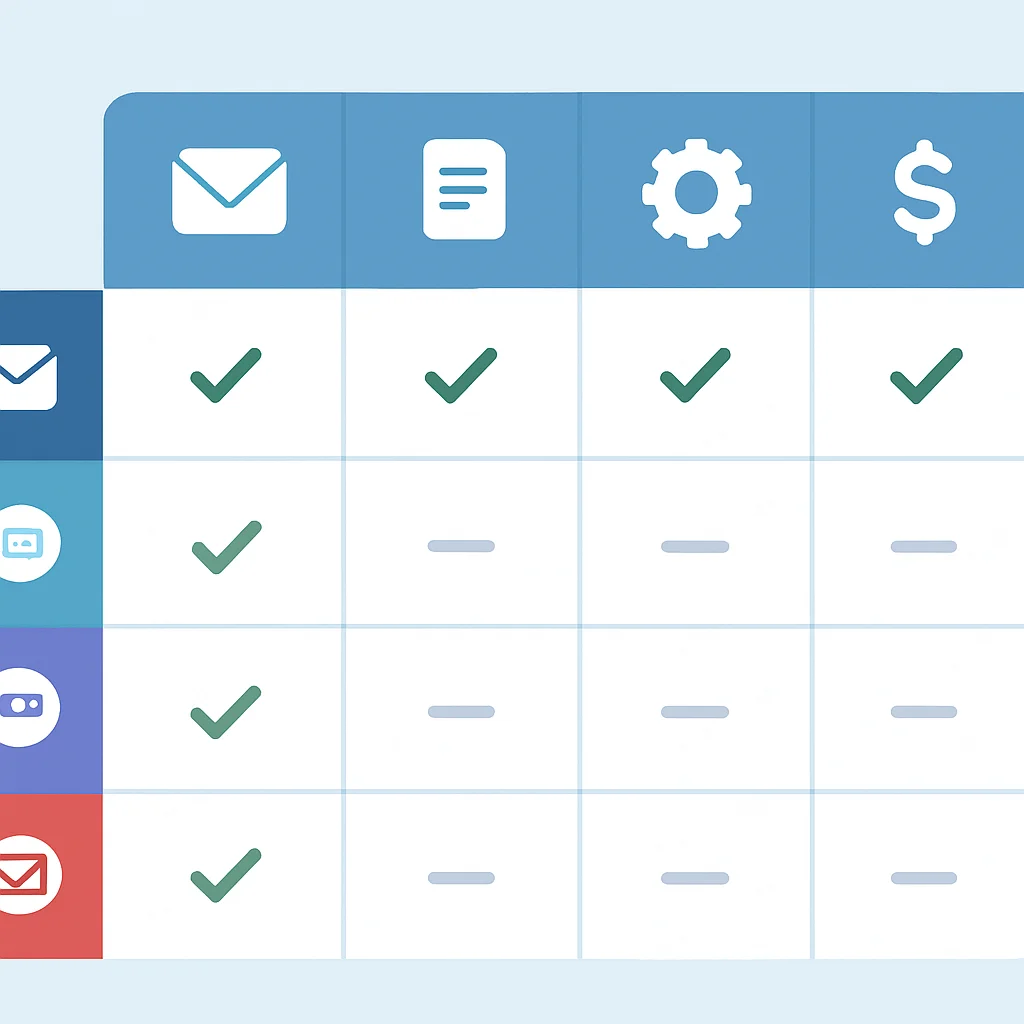
When evaluating platforms, we’re looking beyond just basic email sending. We need tools that empower developers to automate workflows, segment audiences based on technical interests, and present code snippets cleanly. Here’s a breakdown of some leading contenders:
Platform Comparison for Developers (2026)
1. ConvertKit: Highly recommended for creators and developers. Offers robust automation, landing page builders, and excellent subscriber segmentation. Integrates well with various tools. Free plan up to 1,000 subscribers, paid plans start around $29/month.
2. Mailchimp: A long-standing player, user-friendly interface. Strong free tier (up to 500 subscribers, 1,000 sends/month) suitable for beginners. API access is good, but automation can be less intuitive than ConvertKit. Paid plans start around $15/month.
3. Substack: Gained popularity for its simplicity and built-in monetization (paid subscriptions). Ideal for developers focused on content and easy setup. Less control over email design and automation compared to dedicated ESPs. Takes a 10% cut of paid subscriptions.
4. Ghost: An open-source publishing platform that includes a powerful email newsletter feature. Self-hostable or managed by Ghost Pro. Offers full control over content and design, excellent for code presentation. Ghost Pro starts around $9/month for 500 members.
5. SendGrid (or Postmark, AWS SES): More programmatic options for developers who want full control. These are primarily transactional email services but can be leveraged for marketing with custom code. Requires more setup but offers ultimate flexibility and often lower cost at scale. Pricing is usage-based.
Pros
✔ ConvertKit: Strong automation, creator-focused, good for segmentation.
✔ Ghost: Open-source control, excellent for content and code, built-in publishing.
✔ SendGrid/AWS SES: Maximum flexibility, cost-effective at high volumes, API-first.
Cons
✖ Substack: Limited customization, less automation, 10% revenue share.
✖ Mailchimp: Can be less developer-centric for advanced features, complex pricing at scale.
✖ SendGrid/AWS SES: Higher setup complexity, requires coding for full functionality.
KEY POINT
For developers, platforms like ConvertKit and Ghost offer a balance of features and control, while programmatic solutions like SendGrid provide ultimate customization for those comfortable with API-driven workflows.
When making your decision, consider your current coding comfort level, desired level of customization, and monetization goals. If you want a quick start with built-in monetization, Substack is a strong contender. If you value robust automation and integration with other developer tools, ConvertKit or Mailchimp might be better. For maximum control and a content-first approach, Ghost is excellent. For highly custom, high-volume needs, an API-driven service like SendGrid is ideal.
CONTENT STRATEGY
Crafting Compelling Content for Your Developer Newsletter
Once you’ve chosen your platform, the next critical step is to define your content strategy. What resonates with developers? How can you provide value that keeps them coming back for more? The key is to offer actionable insights, solve common problems, and share your unique perspective.
“Your newsletter isn’t just an email; it’s a curated experience designed to educate, inspire, and connect with fellow developers.”
— Kwonglish Content Guide
Content Ideas That Engage Developers
Developers are always looking to learn, optimize, and stay ahead of the curve. Here are some proven content formats:
- › In-depth Tutorials & How-Tos: Break down complex topics into digestible steps. Code examples are a must.
- › Tool Reviews & Comparisons: Share your unbiased opinions on new libraries, frameworks, or developer tools.
- › Open-Source Project Updates: If you maintain an open-source project, use your newsletter to announce new features, bug fixes, or contribution opportunities.
- › Career Advice & Insights: Share tips on interviewing, salary negotiation, or navigating career paths in tech.
- › Curated Links & Resources: Become a trusted filter for the vast amount of information out there. Share links to articles, videos, or podcasts you found valuable.
- › Behind-the-Scenes & Personal Stories: Share your development process, challenges you’ve faced, and lessons learned. This builds a personal connection.
Crafting Effective Subject Lines and Calls-to-Action (CTAs)
Your subject line is your first impression. It needs to be concise, intriguing, and clearly communicate value. For developers, directness and promises of practical knowledge often work best. Examples:
- › Good:
Boost Your React Performance: 5 Pro Tips - › Better:
🚀 5 React Performance Hacks You Need to Know (with code!)
CTAs should be clear, concise, and tell the reader exactly what to do next. Instead of a generic “Click Here,” try “Read the Full Tutorial,” “Download the Code,” or “Join the Discussion.”
KEY POINT
Focus on delivering practical, actionable value through tutorials, tool reviews, and genuine insights. Craft subject lines that promise clear benefits and CTAs that guide readers precisely.
Engagement metrics like open rates and click-through rates (CTRs) are crucial indicators of your content’s effectiveness. Industry averages for tech newsletters typically range from 20-30% open rates and 2-5% CTRs. Aim to exceed these benchmarks by continuously experimenting with content formats, subject lines, and send times. A/B testing different elements can provide valuable data to refine your strategy.
AUDIENCE GROWTH
Strategies for Growing Your Developer Audience
Building an email list takes time and consistent effort, but the payoff in terms of community and influence is immense. Here are effective strategies for developers to attract and retain subscribers in 2026.
Subscriber Acquisition Tactics
Your goal is to make it as easy and appealing as possible for developers to join your list. This means strategic placement and compelling offers:
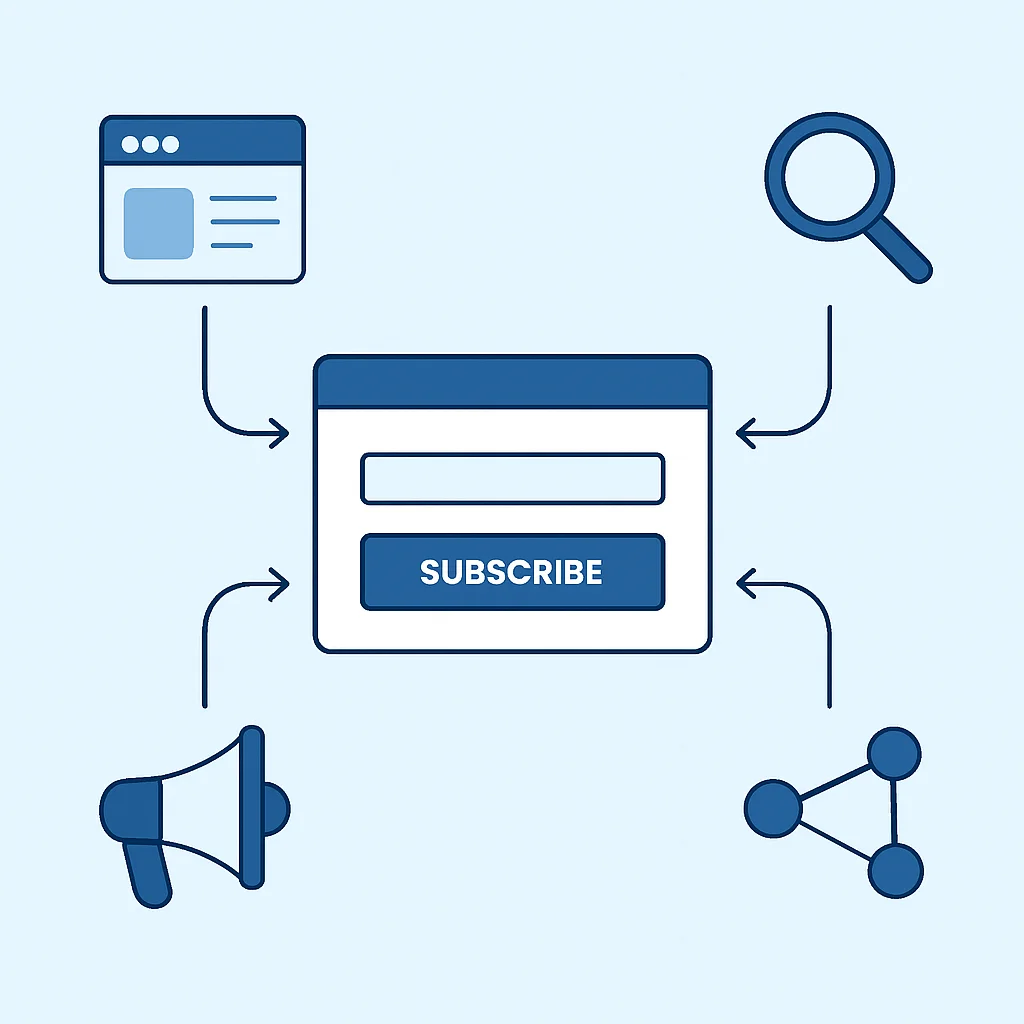
Effective Acquisition Channels
Website Integration: Prominently display sign-up forms on your blog, personal website, or project pages. Use pop-ups (judiciously), embedded forms, and dedicated landing pages.
Lead Magnets: Offer something valuable in exchange for an email address. This could be a cheat sheet for a framework, an exclusive mini-course, a project template, or an e-book on a niche topic.
Social Media Promotion: Regularly share your newsletter sign-up link on platforms like X (formerly Twitter), LinkedIn, and Reddit communities relevant to developers. Tease upcoming content to entice sign-ups.
Cross-Promotion: Collaborate with other developers or content creators in your niche. You can promote each other’s newsletters to tap into new audiences.
Developer Community Engagement: Be an active, helpful member of online forums, Discord servers, and Stack Overflow. When appropriate, mention your newsletter as a resource (without spamming).
“A compelling lead magnet can increase your conversion rates by 2-5x, turning casual visitors into engaged subscribers.”
— Digital Marketing Insights, 2026
Landing Page Optimization
A dedicated landing page for your newsletter is critical. It should clearly communicate the value proposition of your newsletter, what subscribers can expect, and how often they’ll receive emails. Keep it clean, professional, and mobile-responsive. Include social proof if possible, such as testimonials from early subscribers or the number of current subscribers (e.g., “Join 5,000+ developers learning about Web3!”).
KEY POINT
Leverage lead magnets and optimize your landing pages to attract subscribers. Promote your newsletter across all your existing channels and engage actively in developer communities to expand your reach.
PROBLEM SOLVING
Overcoming Common Email Marketing Challenges for Developers
Even with the best content and strategy, developers can encounter unique technical hurdles in email marketing. Here’s how to tackle them.
PROBLEM 01
SPAM Filters and Deliverability Issues
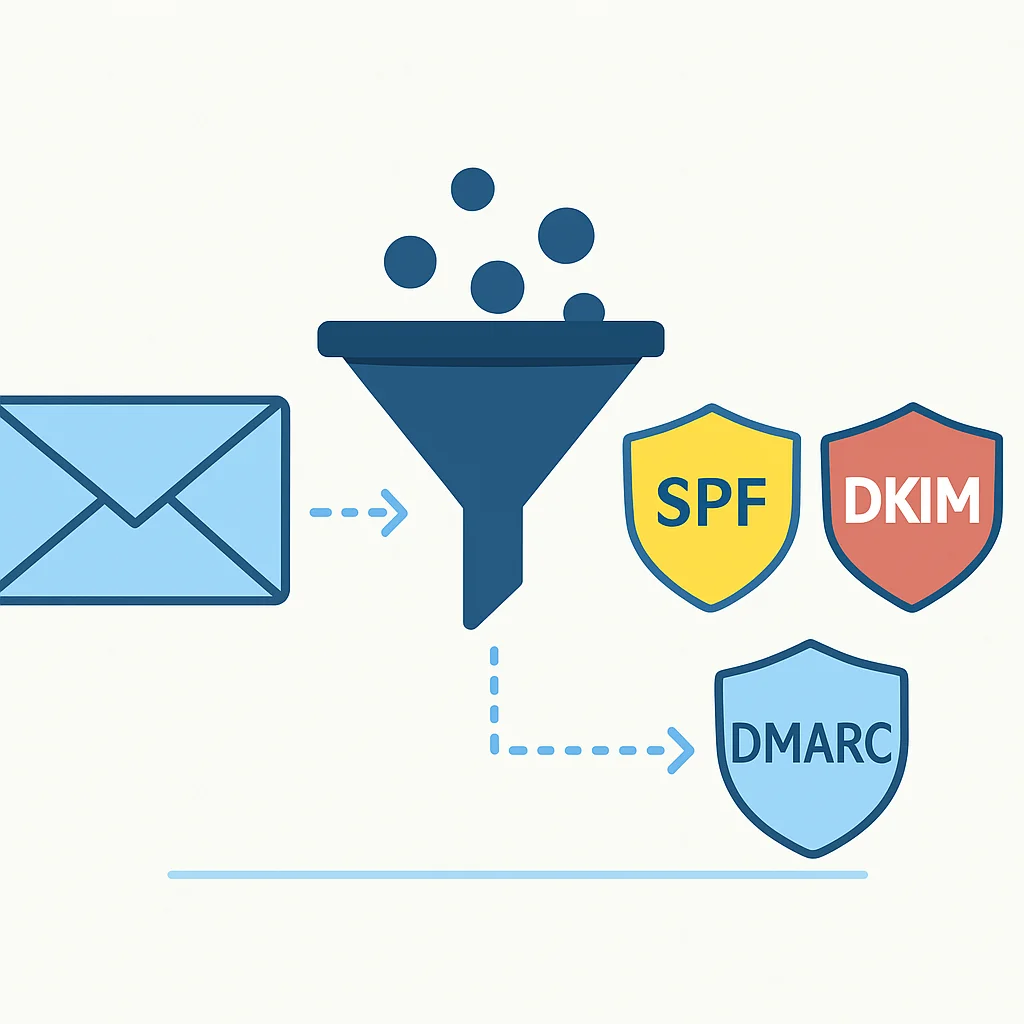
Emails landing in spam folders mean your valuable content goes unread. This can be due to poor sender reputation, suspicious content, or a lack of proper email authentication.
SOLUTION — Implement SPF, DKIM, and DMARC
These DNS records verify your email’s authenticity, significantly improving deliverability. Your email service provider will guide you on setting these up. Additionally, maintain a clean list by regularly removing inactive subscribers and avoid spammy keywords.
PROBLEM 02
Inconsistent Email Client Rendering for Code
Code snippets can look messy or break layouts in different email clients (Outlook, Gmail, Apple Mail). This is a common pain point for developer newsletters.
SOLUTION — Use Inline CSS and <pre><code> with Styling
For maximum compatibility, use inline CSS for styling code blocks. Wrap your code in <pre><code> tags and apply basic styles for readability and overflow. Many ESPs offer templates that handle this reasonably well, but manual tweaks might be needed.
CODE EXPLANATION
This HTML snippet demonstrates a basic, email-client-friendly way to display a code block, using inline styles for maximum compatibility. The pre tag preserves whitespace and line breaks, while code semantically marks the content as code. The overflow-x: auto; ensures horizontal scrolling for long lines, preventing layout breaks.
<!-- Example HTML for a code block in email -->
<div style="background-color: #2d2d2d; color: #f8f8f2; padding: 15px; border-radius: 5px; font-family: monospace; font-size: 14px; overflow-x: auto;">
  <pre style="margin: 0; padding: 0; white-space: pre-wrap; word-wrap: break-word;"><code>
function greetDeveloper(name) {
  console.log("Hello, " + name + "! Welcome to Kwonglish.");
}

// Call the function
greetDeveloper("Kwonglish Reader");
  </code></pre>
</div>
PROBLEM 03
GDPR/CCPA and Privacy Compliance
Navigating global privacy regulations like GDPR (Europe) and CCPA (California) can be daunting, especially when collecting data from a worldwide audience.
SOLUTION — Implement Double Opt-in and Clear Privacy Policy
Always use a double opt-in process for new subscribers, requiring them to confirm their subscription via email. This proves explicit consent. Provide a clear, accessible privacy policy on your website explaining how you collect, use, and store subscriber data. Ensure your ESP is also GDPR/CCPA compliant.
KEY POINT
Address deliverability with email authentication, ensure code readability across clients with careful HTML/CSS, and maintain privacy compliance through double opt-in and transparent policies.
PRACTICAL APPLICATION
Practical Guide: Launching Your First Developer Newsletter
Ready to dive in? Here’s a step-by-step guide to launching your very own developer newsletter.
1
Define Your Niche & Audience
Who are you writing for? What specific problems do they have that you can solve? A narrow focus (e.g., “Frontend Performance for React Developers” vs. “General Programming Tips”) will help you attract a dedicated audience.
2
Choose Your Email Marketing Platform
Based on the comparative analysis, select a platform that aligns with your budget, technical comfort, and feature requirements (e.g., ConvertKit for automation, Ghost for content control).
3
Set Up Your Account and Branding
Configure your sender name and email address. Design a simple, clean email template consistent with your personal brand (logo, colors). Ensure your domain is authenticated with SPF/DKIM.
4
Create Your First Lead Magnet & Landing Page
Develop a valuable resource (e.g., “The Ultimate VS Code Setup Guide”). Build a dedicated landing page and integrate sign-up forms on your website to capture emails.
5
Draft and Send Your Welcome Email & First Newsletter
Automate a welcome email that delivers your lead magnet and sets expectations. Then, craft your first newsletter with compelling content. Test thoroughly across different email clients before sending!
KEY POINT
Start by defining your niche, choose a suitable platform, brand your emails, create a valuable lead magnet, and meticulously test your first communications before launch.
FAQ
Frequently Asked Questions About Email Marketing for Developers
Q. How often should I send my developer newsletter?
Consistency is key. Weekly or bi-weekly newsletters are generally effective for developers, providing regular value without overwhelming subscribers. The best frequency depends on your content production capacity and audience expectations.
Q. Is it too late to start an email newsletter in 2026?
Absolutely not! While the landscape has evolved, email remains one of the most reliable and effective direct communication channels. The demand for high-quality, curated technical content continues to grow, making it an opportune time to start.
Q. Can I monetize my developer newsletter?
Yes, many developers successfully monetize their newsletters. Common methods include offering premium content for paid subscribers, including sponsored content or advertisements (ensure relevance to your audience), and promoting your own products, courses, or services.
Q. What are the most important metrics to track for a developer newsletter?
Key metrics include open rate (how many recipients opened your email), click-through rate (CTR, how many clicked on links), unsubscribe rate (how many opted out), and conversion rate (if you have a specific goal like a download or purchase). These metrics help you understand content effectiveness and audience engagement.
Q. How can I make my newsletter stand out from others?
Focus on a very specific niche, offer unique insights or a personal perspective that can’t be found elsewhere, and prioritize quality over quantity. Consistent value, clear code formatting, and engaging writing will help you differentiate yourself.
CONCLUSION
Wrap-Up: The Future of Developer Email Marketing
Email marketing for developers is not just a trend; it’s a foundational strategy for building a robust online presence and fostering a loyal community in 2026 and beyond. By carefully selecting your platform, crafting valuable content, implementing smart growth strategies, and proactively addressing technical challenges, you can create a powerful channel for communication and influence.
“The future of developer engagement lies in direct, personalized communication, and email is at the forefront of this evolution.”
— Kwonglish Outlook
Looking ahead, we anticipate further innovations in AI-powered personalization, allowing developers to deliver even more tailored content to their subscribers. Interactive email elements, such as polls and quizzes directly within the inbox, are also on the rise, promising higher engagement rates. Embracing these trends while staying true to the core principles of value and authenticity will ensure your developer newsletter remains a powerful asset.
Don’t underestimate the power of a direct relationship with your audience. Start building your email list today, and watch your influence and opportunities grow. The effort you put in now will pay dividends for years to come.
KEY POINT
Email marketing remains a vital, future-proof strategy for developers. Embrace personalization, interactivity, and consistent value to build a thriving community and expand your reach.
Thanks for reading!
We hope this guide empowers you to launch and grow a successful developer newsletter. Your audience is waiting for your insights!
Got questions or your own tips to share? Drop a comment below or connect with Kwonglish on kwonglish.com!