
SUMMARY
Mindfulness for Developers: Boost Focus & Reduce Stress in 2026
Practical mindfulness techniques tailored for developers to enhance concentration, manage stress, and improve overall well-being in their demanding tech career.
Keywords: mindfulness, developer wellness, stress reduction
TABLE OF CONTENTS
1 Overview: Why Mindfulness is Essential for Developers in 2026
2 Understanding Mindfulness: A Developer’s Perspective
3 Practical Mindfulness Techniques Tailored for Developers
4 Real-World Application: Mindfulness in Developer Workflows
5 Caveats, Common Pitfalls, and Sustaining Your Practice
6 Frequently Asked Questions
OVERVIEW
Why Mindfulness is Essential for Developers in 2026
Hey there, Kwonglish fam! Let’s talk about something incredibly vital for every developer navigating the fast-paced, ever-evolving tech world of 2026: mindfulness. If you’re a developer, you know the drill – tight deadlines, complex problem-solving, constant learning, and the pressure to deliver flawless code. This intense environment, while exhilarating, can also be a breeding ground for stress, burnout, and reduced focus.
In 2026, the demands on developers are higher than ever. With the rapid adoption of AI-powered development tools, serverless architectures, and increasingly intricate microservices, the cognitive load is substantial. It’s not just about writing code anymore; it’s about architecting resilient systems, understanding complex data flows, and collaborating across distributed teams. This often means long hours, intense periods of concentration, and the mental fatigue that comes with it.
Studies consistently show that tech professionals face significant challenges regarding mental well-being. A 2025 report by the Developer Wellness Institute found that nearly 60% of developers experience moderate to high levels of stress weekly, and one in three report feelings of burnout at least once a month. These aren’t just statistics; they represent real people, real careers, and real impacts on health and happiness. Mindfulness offers a powerful, evidence-based antidote to these challenges.
“Mindfulness isn’t about escaping the demands of your developer role; it’s about equipping you with the mental resilience to meet them with greater clarity and less reactive stress.”
— Kwonglish Perspective
This guide is designed specifically for you, the developer. We’ll explore what mindfulness truly means, why it’s a game-changer for your career and personal life, and provide practical, actionable techniques you can integrate into your daily routine starting today. No incense, no chanting required – just simple, effective mental exercises to boost your focus, reduce stress, and improve your overall well-being in 2026 and beyond.
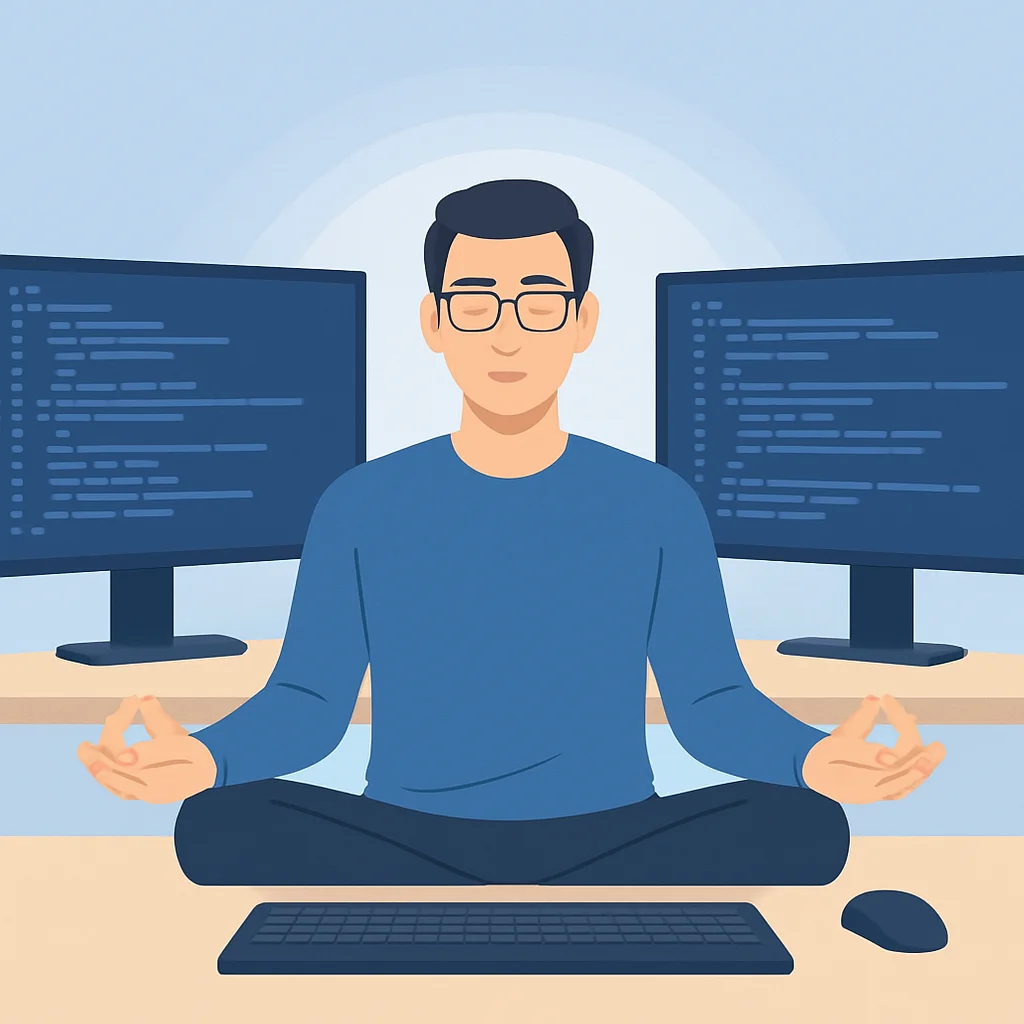
KEY POINT
The tech industry’s high-pressure environment makes developers particularly susceptible to stress and burnout. Mindfulness provides a scientifically backed framework to cultivate mental resilience, enhance cognitive function, and foster a healthier work-life balance.
CORE GUIDE
Understanding Mindfulness: A Developer’s Perspective
So, what exactly is mindfulness? It’s often misunderstood as just meditation, but it’s much broader. At its core, mindfulness is the practice of purposefully bringing one’s attention to the present moment, and observing it without judgment. Think of it like a highly focused debugger for your mind.
For developers, this means being fully engaged with the code you’re writing, the meeting you’re in, or even the coffee you’re drinking, rather than letting your mind wander to past mistakes or future deadlines. It’s about recognizing when your thoughts are spiraling into anxiety or distraction and gently guiding your attention back to the task at hand. This isn’t about clearing your mind completely – that’s often an unrealistic goal – but about changing your relationship with your thoughts and emotions.
The Unique Developer Challenges Mindfulness Addresses
Developers face a specific set of mental challenges that mindfulness can powerfully address:
- Cognitive Overload: Juggling multiple tasks, complex data structures, and evolving requirements can overwhelm your working memory. Mindfulness trains your attention, making it easier to focus on one problem at a time.
- Imposter Syndrome: Many developers, regardless of experience, struggle with feelings of inadequacy. Mindfulness helps you observe these self-critical thoughts without letting them define your worth or capabilities.
- Debugging Frustration: Spending hours on a seemingly intractable bug can be incredibly frustrating. Mindfulness teaches patience and non-reactivity, allowing you to approach problems with a clearer, calmer mind.
- Context Switching: Frequent interruptions from Slack, emails, and meetings fragment your focus. Mindfulness helps you recover focus faster and be more present in each interaction.
- Sedentary Lifestyle: Long hours at a desk can lead to physical discomfort and mental stagnation. Mindful movement breaks can alleviate this.
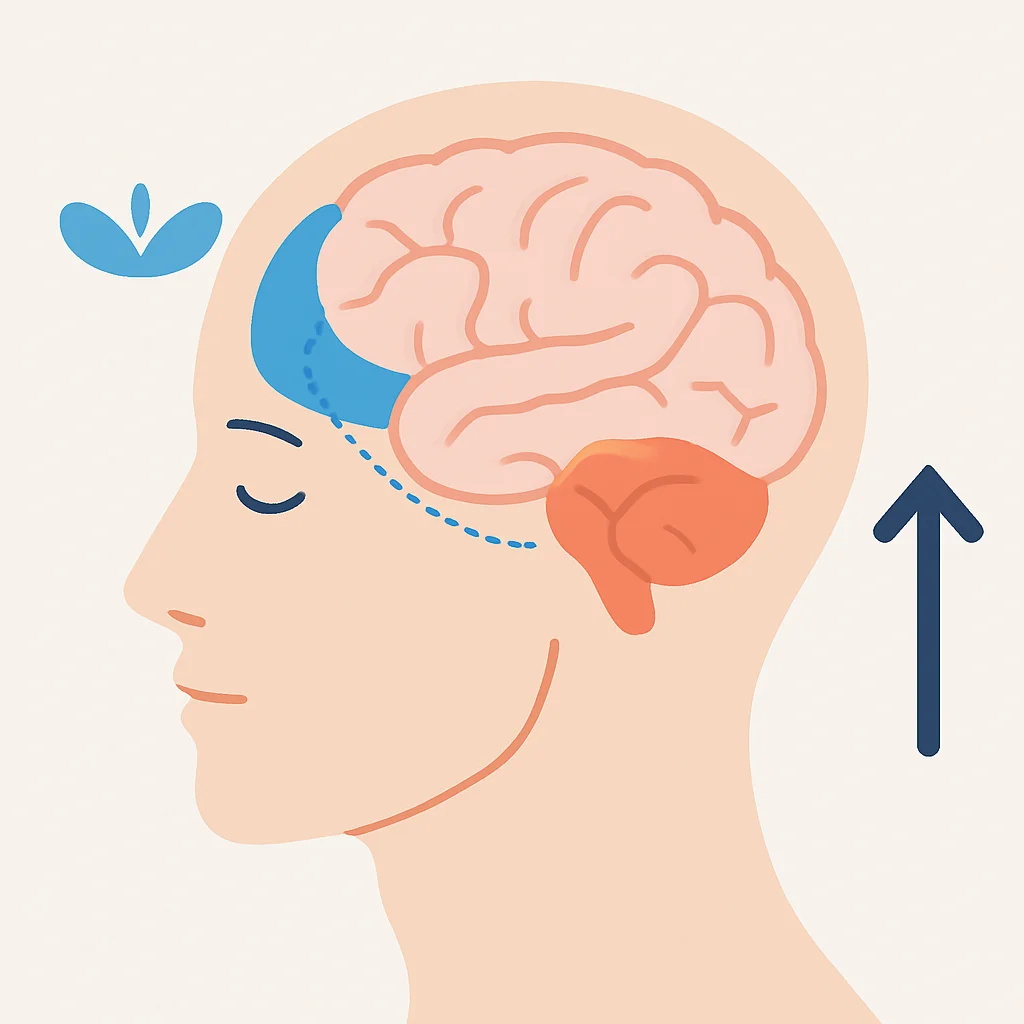
Benefits of Mindfulness for Developers
Enhanced Focus & Concentration — Reduces distractions and improves deep work capabilities, leading to higher quality code.
Stress Reduction & Burnout Prevention — Lowers cortisol levels and helps manage the emotional responses to workplace pressure.
Improved Problem-Solving — Fosters clearer thinking and creative solutions by reducing mental clutter and emotional reactivity.
Better Emotional Regulation — Helps you respond thoughtfully to feedback or difficult situations, rather than reacting impulsively.
The science backs this up. Neuroimaging studies have shown that consistent mindfulness practice can lead to measurable changes in brain structure and function, including increased gray matter in areas associated with learning, memory, and emotion regulation, and decreased activity in the amygdala, our brain’s “fear center.” (Source: Harvard Medical School)
KEY POINT
Mindfulness is not about stopping thoughts, but about observing them without judgment. It’s a mental training that enhances your ability to focus, manage stress, and improves your cognitive flexibility – all critical skills for a successful developer.
CORE GUIDE
Practical Mindfulness Techniques Tailored for Developers
Alright, let’s get practical! Here are some actionable mindfulness techniques you can start integrating into your developer workday right away. Remember, consistency is more important than duration. Even a few minutes a day can make a difference.
1. Mindful Breathing: The 5-Minute “System Reset”
This is your go-to technique for quick stress relief and focus restoration. When you feel overwhelmed, stuck on a bug, or just need a mental break, step away from the keyboard for five minutes and try this:
1
Find a Quiet Spot
Sit comfortably, with your feet flat on the floor and your back straight but relaxed. You can close your eyes or soften your gaze.
2
Focus on Your Breath
Bring your attention to the sensation of your breath. Notice the air entering your nostrils, the rise and fall of your chest or belly, and the air leaving your body. Don’t try to change your breath; just observe it.
3
Acknowledge Wandering Thoughts
Your mind will inevitably wander. This is normal! When you notice your thoughts drifting to code, deadlines, or anything else, gently acknowledge them without judgment. “Oh, there’s a thought about that bug.”
4
Gently Redirect
With kindness, bring your attention back to your breath. Repeat for 5 minutes. You can set a silent timer.

This simple exercise can reset your mental state, reduce acute stress, and improve your ability to concentrate on the next coding challenge. Many developers find it helpful to integrate these short breaks every 90-120 minutes of intense work.
CODE EXPLANATION
Here’s a simple JavaScript function you could integrate into a browser extension or a desktop app to remind you to take a mindful breathing break. It uses setTimeout to schedule a notification.
function scheduleMindfulBreak(intervalMinutes = 90) {
  const intervalMs = intervalMinutes * 60 * 1000;
  console.log(`Scheduling mindful break reminder every ${intervalMinutes} minutes...`);

  setTimeout(() => {
    alert("Time for a 5-minute Mindful Breathing Break! Focus on your breath.");
    // You could integrate a simple guided meditation here, or a link to one.
    scheduleMindfulBreak(intervalMinutes); // Reschedule for the next interval
  }, intervalMs);
}

// To start scheduling:
// scheduleMindfulBreak(90); // Remind every 90 minutes
2. “Thought Debugging”: Observing Your Mental Processes
As developers, we’re experts at debugging code. We identify problems, trace execution, and find solutions. You can apply a similar methodical approach to your thoughts and emotions. This is “thought debugging.”
PROBLEM 01
Getting Stuck in a Negative Thought Loop
You’re struggling with a complex algorithm, and your inner critic starts shouting: “You’re not good enough for this! Everyone else understands it. You’re going to miss the deadline.” This leads to anxiety and reduced performance.
SOLUTION — Observe, Label, Detach
When you notice a negative thought pattern, instead of getting caught in it:
- Observe: Notice the thought as an object, like a variable in your mind. “I’m having the thought that I’m not smart enough.”
- Label: Mentally label it: “Self-doubt,” “Worry about deadline,” “Comparison.” This creates distance.
- Detach: Allow the thought to pass without engaging with it. You wouldn’t fixate on a
console.logstatement for too long, right? Let it go and return your focus to the problem.
// Pseudocode for "Thought Debugging"
function debugThought(thought) {
  if (thought.isNegative || thought.isDistracting) {
    console.log(`[DEBUG_THOUGHT]: Observing: "${thought.content}"`);
    const label = categorizeThought(thought); // e.g., "Self-Doubt", "Worry"
    console.log(`[DEBUG_THOUGHT]: Labeling: ${label}`);
    // Do not engage further, just log and release
    console.log(`[DEBUG_THOUGHT]: Detaching from: ${label}`);
    return { status: "processed", action: "released" };
  }
  return { status: "no_action_needed" };
}

// Example usage:
// debugThought({ content: "I can't solve this bug!", isNegative: true });
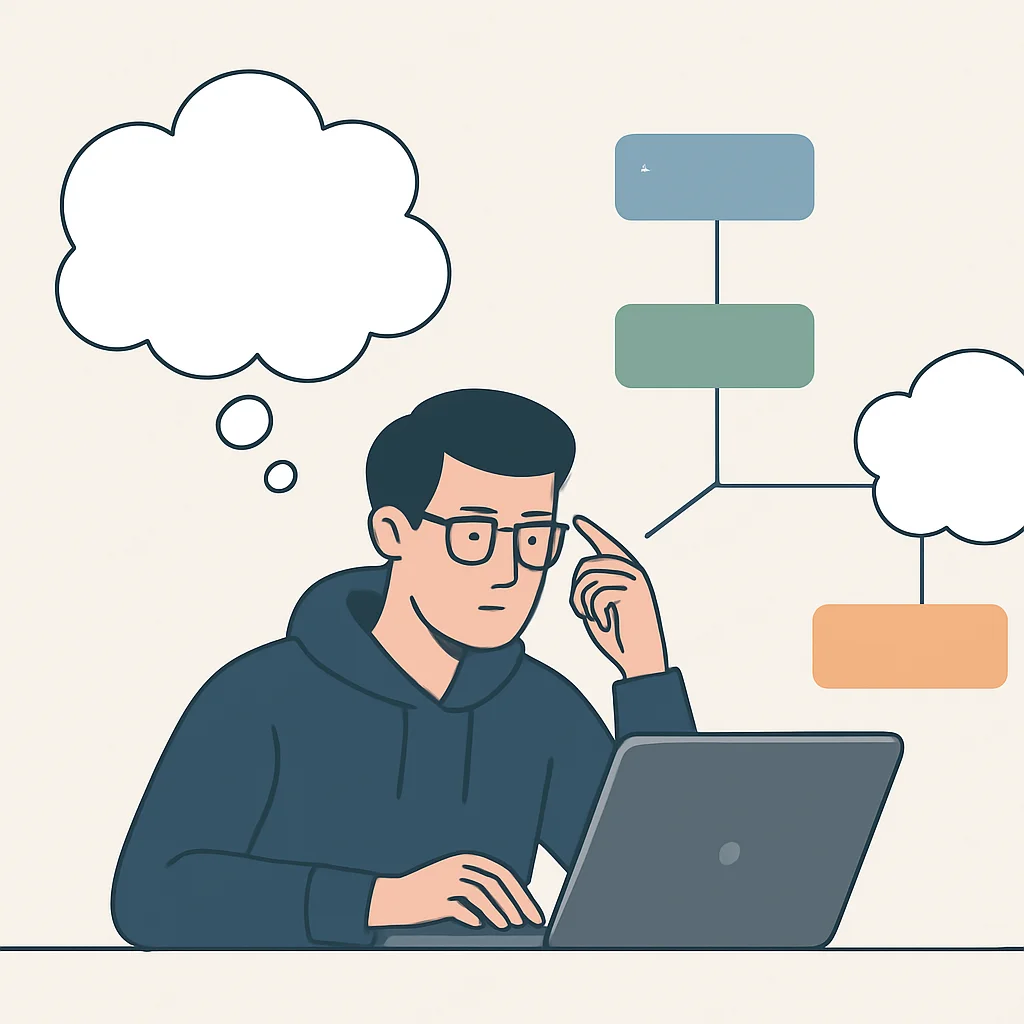
KEY POINT
Treating thoughts like temporary data streams rather than absolute truths empowers you to choose which thoughts to “process” and which to simply observe and let pass. This reduces the emotional impact of negative self-talk.
3. Mindful Coding Sessions: Deep Work with Intention
Mindfulness can transform your coding sessions into periods of deep, focused work. This isn’t just about avoiding distractions; it’s about approaching your code with full awareness and intention.
Mindful Coding Checklist
☑ Set an Intention: Before you start coding, take 30 seconds to mentally state your goal for the session. “My intention is to complete the user authentication module.”
☑ Eliminate Digital Distractions: Close unnecessary tabs, silence notifications (Slack, email, phone). Use “Do Not Disturb” mode. Consider a dedicated browser profile for work.
☑ Use the Pomodoro Technique Mindfully: Work for 25-50 minutes, then take a 5-10 minute mindful break (e.g., mindful breathing, a short walk). During the work period, if your mind wanders, gently bring it back to the code.
☑ Engage Your Senses: Notice the feel of the keyboard, the sounds around you, the light on your screen. This anchors you in the present.
☑ Mindful Commits/Reviews: Before committing code or submitting a PR, take a moment to review it with fresh eyes and a clear mind. Are you truly present in the review process?
☐ Regular Self-Check-ins: Every hour or so, briefly check in with yourself. How’s your posture? Are you holding tension? What’s your mental state? Adjust as needed.
4. Digital Detox & Mindful Breaks: Recharging Your System
Our screens are portals to immense information and connection, but they can also be sources of constant stimulation and mental fatigue. Mindful breaks, especially those away from screens, are crucial for developers.
WARNING
Constantly checking social media, news feeds, or even personal emails during work breaks can negate the restorative benefits of the break. Your brain remains in an “on” state, processing new information rather than truly resting.
Instead, try these mindful break strategies:
- Mindful Walking: Step outside for 10-15 minutes. Pay attention to the sensations: the ground under your feet, the air on your skin, the sounds around you, the sights without judgment. Let your mind wander, but gently bring it back to your senses when you notice it drifting.
- Mindful Eating: When you have lunch or a snack, truly focus on the experience. Notice the colors, smells, textures, and tastes. Chew slowly. This helps you feel more satisfied and prevents mindless overeating often associated with screen time.
- Short Stretching/Movement: Stand up, stretch your arms, roll your shoulders, twist your torso. Pay attention to the sensations in your body. This releases physical tension and brings you into the present.
- “Gaze” Meditation: Look out a window at a distant object for a few minutes. Let your eyes relax without focusing intently. This can relieve eye strain and mental fatigue.

KEY POINT
True breaks involve disengaging from digital inputs. By mindfully stepping away from your screens, you allow your brain to process, consolidate information, and truly recharge, leading to better problem-solving abilities when you return.
5. Body Scan for Tension Release
Developers often carry a lot of physical tension without realizing it – hunched shoulders, tight jaw, strained eyes. A quick body scan can help you identify and release this tension.
While sitting at your desk, close your eyes (or lower your gaze). Bring your attention to your feet. Notice any sensations. Then slowly move your attention up your body: ankles, calves, knees, thighs, hips, lower back, abdomen, chest, shoulders, arms, hands, neck, jaw, face, top of your head. As you notice tension in any area, simply acknowledge it without judgment and, on an exhale, imagine that tension softening or releasing.
“Our bodies often hold the silent stress of our minds. A mindful body scan is like running a diagnostic check, identifying points of physical strain and allowing for a gentle reset.”
— Kwonglish Insight
REAL-WORLD EXAMPLES
Real-World Application: Mindfulness in Developer Workflows
Let’s look at how developers are actually integrating mindfulness into their demanding schedules and seeing tangible benefits.
Case Study 1: Resolving a Production Bug with Calm
Developer: Sarah, Senior Backend Engineer at a FinTech startup.
Problem: A critical production bug caused intermittent data inconsistencies, leading to customer complaints. Sarah felt immense pressure and growing frustration.
During a particularly stressful debugging session, Sarah found herself staring at the same logs for 30 minutes, feeling her heart race. She remembered her mindful breathing practice. She took a 5-minute break, closed her eyes, and focused purely on her breath. When she returned, she approached the problem with a refreshed perspective. Instead of fixating on the known error message, she mindfully re-traced the data flow from the user input to the database commit. Within 20 minutes, she identified a subtle race condition in an asynchronous service call that she had overlooked due to her previous agitated state. The bug was fixed, and the incident resolved.
Case Study 2: Improving Team Collaboration through Mindful Communication
Team: The “Phoenix” Frontend Team at a large e-commerce company.
Problem: Team meetings were often derailed by strong opinions, interruptions, and a lack of active listening, leading to slower decision-making and occasional interpersonal friction.
Inspired by an internal wellness workshop, the Phoenix team decided to incorporate a 60-second “mindful check-in” at the start of each daily stand-up. Everyone took a deep breath, centered themselves, and set an intention to listen fully. Over three months, the team observed a 25% reduction in meeting duration due to more focused discussions and a noticeable improvement in psychological safety. Team members reported feeling more heard and understood, leading to better collaboration and faster resolution of technical debates.
Case Study 3: Managing Context Switching in a Hybrid Role
Developer: Alex, Full-Stack Developer with client-facing responsibilities.
Problem: Alex frequently switched between deep coding, client calls, and project management tasks, leading to mental exhaustion and reduced efficiency in all areas.
Alex implemented “transition rituals” using mindfulness. Before a client call, he would take three deep breaths and mentally set the intention to be fully present and listen actively. After a call, he’d take a 2-minute mindful walk to clear his head before diving back into code. This small practice, consistently applied over six months, resulted in Alex feeling more energized throughout the day and reporting a 15% increase in perceived productivity, as he could allocate his mental resources more effectively to each distinct task.
CAVEATS + FAQ
Caveats, Common Pitfalls, and Sustaining Your Practice
While mindfulness offers incredible benefits, it’s important to approach it with realistic expectations and an understanding of its limitations. Here are some key caveats and common pitfalls to be aware of:
Pros of Mindfulness Practice
✔ Enhances cognitive functions vital for coding (focus, memory, problem-solving).
✔ Reduces chronic stress and anxiety, preventing burnout.
✔ Improves emotional regulation and resilience in the face of setbacks (e.g., failed builds, critical feedback).
✔ Boosts overall well-being and satisfaction in both work and personal life.
✔ Requires minimal time investment for significant returns.
Cons / Common Pitfalls
✖ Not a Quick Fix: Mindfulness is a skill, not a pill. It requires consistent practice; results are gradual.
✖ Initial Frustration: It can be challenging at first, especially for highly analytical minds. Don’t get discouraged if your mind wanders constantly.
✖ Performance Pressure: Don’t turn mindfulness into another task to “optimize.” The goal is well-being, not just productivity.
✖ Not a Substitute for Professional Help: If you’re experiencing severe anxiety, depression, or chronic burnout, mindfulness can be a helpful adjunct, but it’s not a replacement for therapy or medical advice.
✖ Inconsistent Practice: Like coding, if you only practice sporadically, you won’t see significant improvements. Aim for daily, even short, sessions.
Sustaining Your Practice: The key to long-term benefits is integration. Start small – 5 minutes a day. Use apps like Headspace or Calm for guided meditations. Find a “mindfulness buddy” at work. Schedule your mindful breaks just like you schedule meetings. Over time, these small habits will compound into significant improvements in your focus, stress levels, and overall quality of life as a developer in 2026.
Frequently Asked Questions
Q. How long does it take to see benefits from mindfulness?
Many people report feeling calmer and more focused after just a few weeks of consistent daily practice (5-10 minutes). Significant, lasting changes in brain function and stress response typically emerge after 8-12 weeks.
Q. Do I need to sit in a specific posture or location to practice mindfulness?
While a quiet space and a comfortable, upright posture are ideal, mindfulness can be practiced anywhere, anytime. You can be mindful while walking, eating, or even during a coding session. The key is bringing intentional awareness to the present moment.
Q. Is mindfulness a religious practice?
No, contemporary mindfulness, particularly in the context of stress reduction and cognitive enhancement, is a secular practice. While its roots are in ancient contemplative traditions, modern mindfulness programs are evidence-based psychological interventions, free from religious dogma.
Q. Can mindfulness help with impostor syndrome in developers?
Yes, mindfulness can be very effective. By teaching you to observe self-critical thoughts without judgment and detaching from them, it helps weaken the grip of impostor syndrome, allowing you to recognize your accomplishments and capabilities more clearly.
WRAP-UP
Key Takeaways for a Mindful Developer Life
As we wrap up, remember that embracing mindfulness is not about adding another item to your already packed to-do list. It’s about enhancing the quality of your existing tasks and improving your overall experience as a developer. In the demanding tech landscape of 2026, cultivating a mindful approach is no longer a luxury but a crucial skill for sustained success and well-being.
By integrating simple practices like mindful breathing, thought debugging, and intentional breaks, you’re not just improving your mental health; you’re becoming a sharper, more resilient, and ultimately, a more effective developer. Start small, be patient with yourself, and observe the positive changes unfold.
Thanks for reading, fellow developer!
We hope this guide empowers you to bring more calm and focus into your coding journey. Your well-being is your most valuable asset.
Got questions or your own mindfulness tips? Drop a comment below and share your insights with the Kwonglish community!