
How to Become a Tech Lead or Engineering Manager in 2026
A practical guide for developers aspiring to leadership roles in tech, covering essential skills and career strategies.
Keywords: Tech Lead, Engineering Manager, Career Development
TABLE OF CONTENTS
1. Why Leadership Matters in Tech: TL vs. EM
2. Core Methods: The Path to Tech Leadership
3. Practical Application: Concrete Action Items for Growth
4. Common Pitfalls & Mistakes to Avoid
5. Frequently Asked Questions
6. Wrap-Up: Your Journey to Tech Leadership
SECTION 01
Why Leadership Matters in Tech: TL vs. EM
Hey Kwonglish crew! Ever found yourself looking at senior engineers or managers and thinking, “How do I get there?” Or maybe you’re already a seasoned developer, and the idea of guiding teams and shaping technical strategy really excites you. If that’s you, then you’re in the right place! The tech landscape in 2026 is evolving rapidly, and the demand for strong technical leaders is higher than ever. It’s not just about writing excellent code anymore; it’s about enabling others to do their best work, making crucial technical decisions, and driving projects to success.
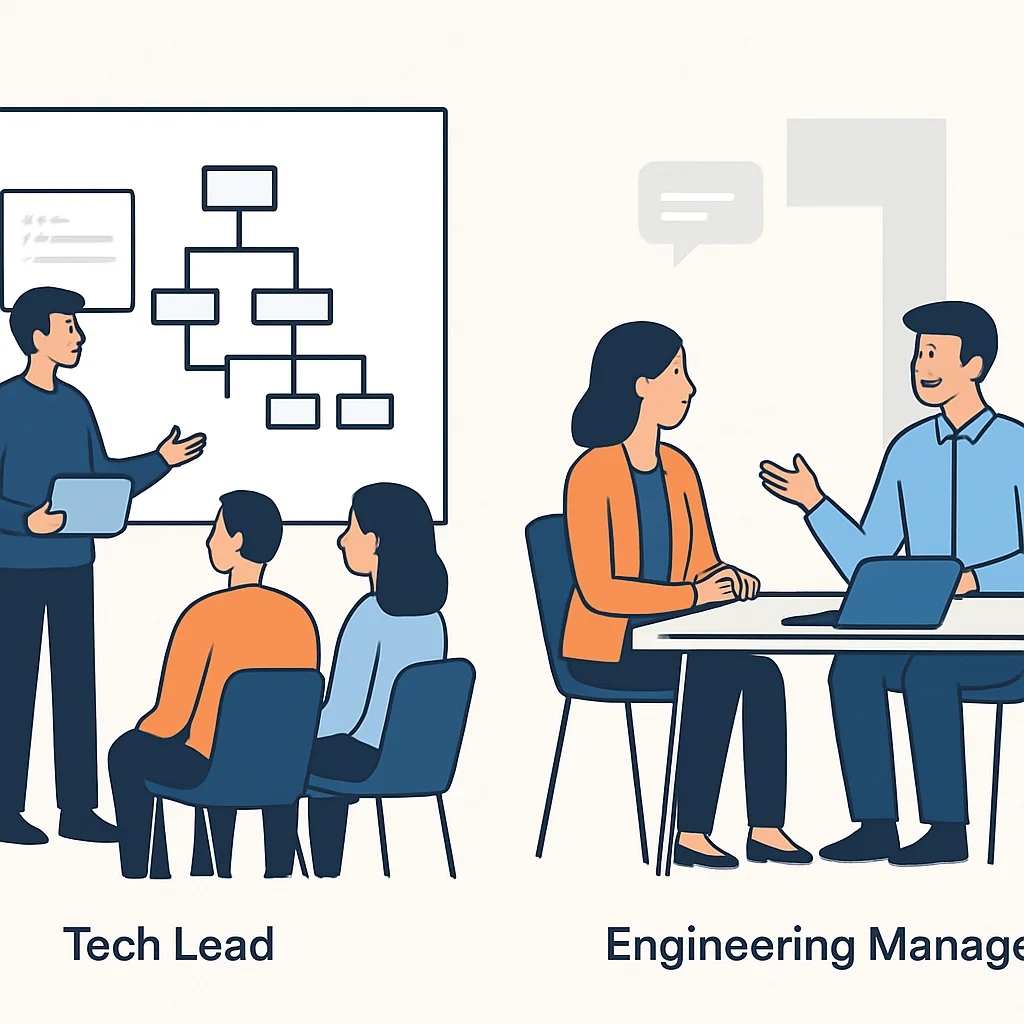
Many developers aspire to leadership, but the path isn’t always clear. Two common leadership roles emerge as natural next steps: the Tech Lead (TL) and the Engineering Manager (EM). While both involve leadership, their day-to-day responsibilities and primary focus areas are distinct. Understanding these differences is the first critical step in charting your own leadership journey.
Tech Lead (TL): The Technical Architect & Mentor
A Tech Lead is primarily responsible for the technical direction of a project or a small team. Think of them as the most senior individual contributor who also has leadership responsibilities. They are still heavily involved in coding, code reviews, system design, and ensuring the technical quality and integrity of the solution. They guide the team on “how” to build things, setting technical standards, making key architectural decisions, and troubleshooting complex problems. They mentor junior developers on technical skills and best practices.
Key Responsibilities of a Tech Lead
Technical Direction — Defining architecture, choosing technologies, ensuring code quality.
Code Contribution — Still actively coding, often on critical path items or complex features.
Mentorship — Guiding team members on technical challenges, conducting thorough code reviews.
Problem Solving — Deep diving into complex technical issues, unblocking the team.
Engineering Manager (EM): The People & Process Orchestrator
An Engineering Manager, on the other hand, shifts focus from individual code contribution to managing people and processes. While they typically have a strong technical background, their primary role is to ensure the team is productive, happy, and growing. They handle hiring, performance reviews, career development, conflict resolution, and resource allocation. They act as a shield for their team, protecting them from distractions and managing stakeholder expectations. Their technical involvement is usually at a higher level, focusing on strategic alignment and understanding technical risks rather than writing daily code.
EM Core Focus
Managing people, processes, and project delivery, with less direct coding.
Key Responsibilities of an Engineering Manager
People Management — 1:1s, performance reviews, career growth, hiring.
Process Improvement — Optimizing workflows, sprint planning, agile methodologies.
Stakeholder Management — Communicating with product, design, and other departments.
Team Health & Culture — Fostering a positive, productive, and inclusive environment.
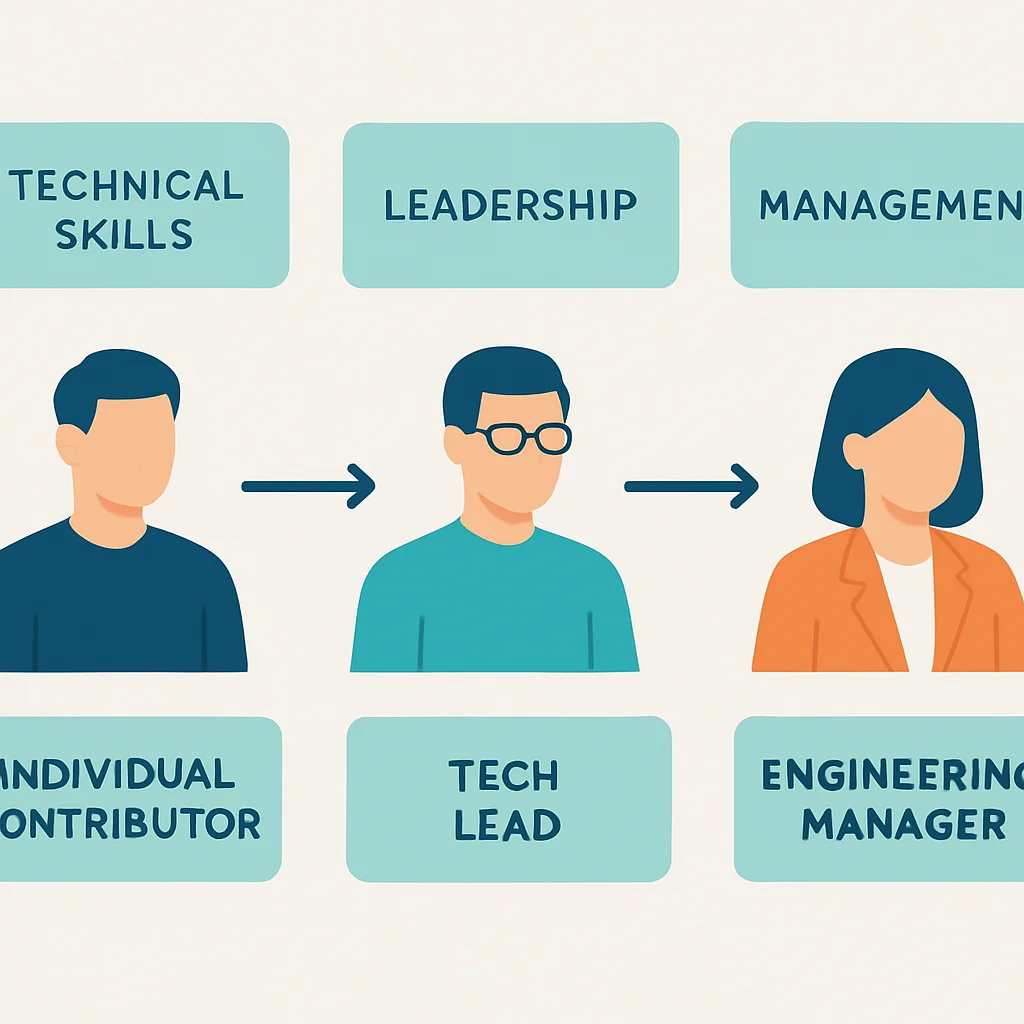
Many organizations also have a “Staff Engineer” or “Principal Engineer” role, which is a senior individual contributor path that often runs parallel to the management track. These roles focus on broad technical impact across multiple teams or the entire organization, without direct people management responsibilities. It’s a fantastic option for those who want to maximize their technical influence without moving into management.
KEY POINT
The core difference lies in focus: Tech Leads prioritize technical execution and mentorship, while Engineering Managers focus on people, process, and strategic alignment. Both are crucial for a successful engineering organization.
The choice between a TL and EM path often depends on your personal strengths and what truly energizes you. Do you love diving deep into code and designing elegant solutions, or do you find more satisfaction in empowering individuals and optimizing team dynamics? Both paths offer immense impact and reward. In the following sections, we’ll explore the foundational skills and practical steps you can take to excel in either direction in 2026.
SECTION 02
Core Methods: The Path to Tech Leadership
Becoming a Tech Lead or Engineering Manager isn’t about simply waiting for a promotion; it’s about actively cultivating a specific set of skills and demonstrating leadership potential long before the title change. This section will break down the essential areas you need to develop, whether you’re aiming for a technical leadership role or a people management position.
1
Master Your Craft: Technical Excellence
Before you can lead others technically, you must be technically proficient yourself. This isn’t just about writing code, but understanding the entire software development lifecycle, system architecture, and best practices. For a Tech Lead, this remains paramount; for an EM, it provides the credibility to understand and support your team’s challenges.
In 2026, technical excellence means staying current with emerging technologies (AI/ML integration, serverless, microfrontends), understanding cloud-native patterns, and advocating for robust, scalable, and maintainable solutions. For example, a TL might lead the adoption of a new GraphQL API for a microservices architecture, requiring deep knowledge of both. An EM, while not coding it, needs to understand its implications for hiring, team training, and project timelines.
CODE EXPLANATION
Here’s an example of a constructive code review comment a Tech Lead might provide, demonstrating both technical knowledge and mentorship.
// Code Review Comment by a Tech Lead
// File: src/services/userService.js
// Line: 45

// Suggestion: Consider using a more robust error handling pattern for API calls,
// like a centralized error utility or a custom Error class. This `try-catch`
// is good for local scope, but for production, we want consistent error
// logging and user-friendly messages.
//
// Example:
// try {
//   const response = await fetchUserById(userId);
//   if (!response.ok) {
//     throw new APIError(`Failed to fetch user ${userId}`, response.status);
//   }
//   return await response.json();
// } catch (error) {
//   logger.error(`Error fetching user: ${error.message}`, { userId });
//   throw new ServiceError('Could not retrieve user data. Please try again later.');
// }
//
// This approach improves maintainability and provides better insights for debugging.
KEY POINT
Technical excellence is the bedrock. It involves not just writing code, but understanding system design, architectural patterns, and staying updated with the latest industry trends and best practices. Lead by example with high-quality contributions.
2
Cultivate Communication & Collaboration
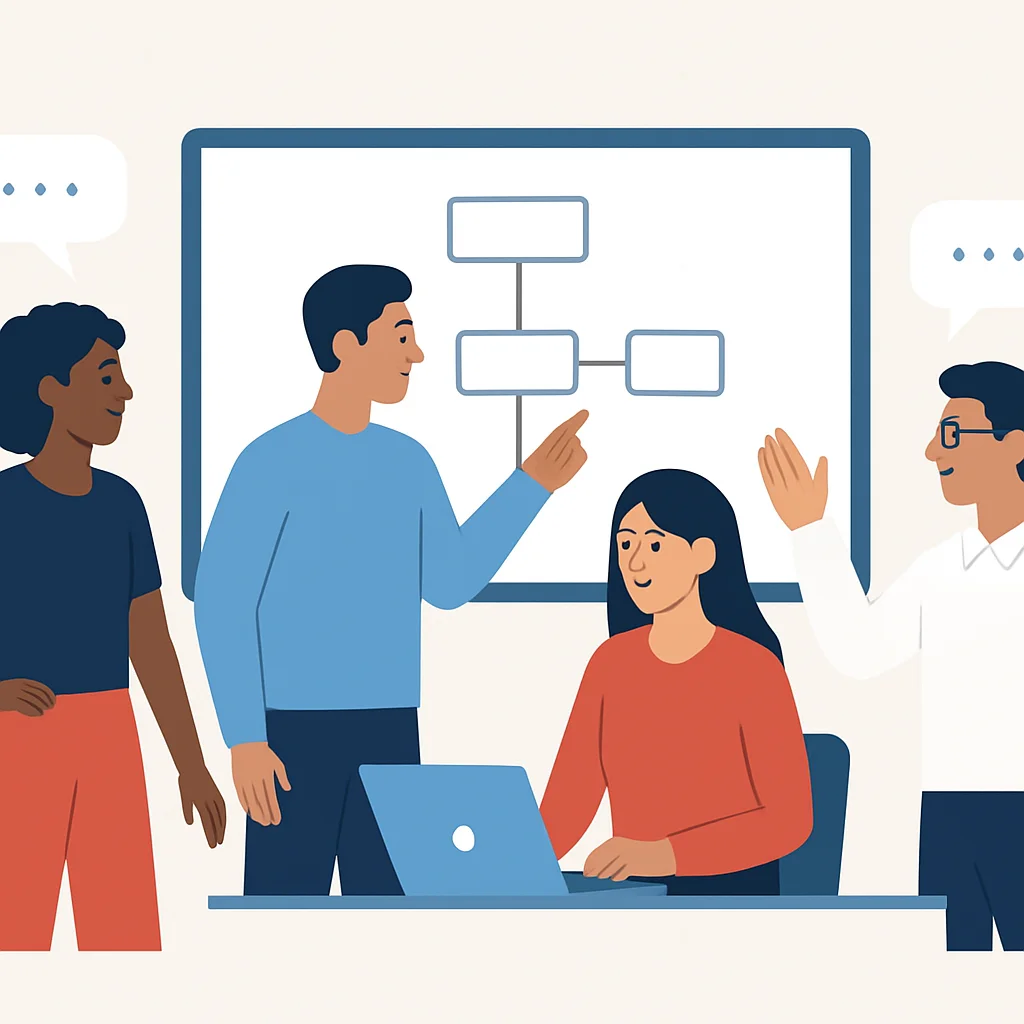
No matter the leadership role, communication is king. You’ll be translating complex technical concepts for non-technical stakeholders, mediating conflicts within your team, giving constructive feedback, and articulating vision. Strong collaboration skills ensure projects run smoothly and team members feel heard and valued.
This involves active listening, clear and concise written communication (e.g., RFCs, design docs), and effective verbal communication in meetings. For example, a TL needs to clearly explain a new architectural decision to their team, while an EM needs to communicate project status and potential blockers to upper management and product teams. According to a 2025 LinkedIn survey, 85% of hiring managers cited communication as the most important soft skill for leadership roles.
WARNING
Underestimating the importance of soft skills like communication is a common pitfall. Technical prowess alone is not enough for leadership; you must be able to inspire, guide, and connect with people.
3
Develop Mentorship & Coaching Abilities
A true leader doesn’t just solve problems; they empower others to solve problems. This means actively mentoring junior developers, providing constructive feedback, and coaching them through challenges. Both TLs and EMs do this, though TLs focus more on technical growth, and EMs on career and professional development.
Look for opportunities to pair program, explain complex concepts, or take on new hires for onboarding. When reviewing code, don’t just point out errors, explain the “why” behind the suggestion and offer alternative solutions. This builds trust and capability within your team. A study by Google’s Project Oxygen found that “being a good coach” was the number one behavior of highly effective managers.
KEY POINT
Shift from an individual contributor mindset to an enabler mindset. Your success as a leader is measured by the success and growth of your team, not just your own output.
4
Understand Project & Product Management
Leaders don’t just build; they ensure what’s built aligns with business goals and is delivered on time. This requires an understanding of project management principles (scope, timeline, resources) and product management concepts (user needs, market fit, business value). Both TLs and EMs need this, with EMs typically having a deeper involvement in the overall project lifecycle and stakeholder alignment.
Participate in sprint planning, retrospective meetings, and product reviews. Ask “why” are we building this? How does it impact the user? How does it align with the company’s Q2 2026 goals? Understanding these broader contexts helps you make better technical decisions and communicate more effectively with product managers.
CODE EXPLANATION
A simple representation of how a Tech Lead or EM might categorize tasks in a project plan, demonstrating an understanding of scope and priority.
// Project Task Categories & Priorities (simplified)

const PROJECT_TASKS = [
  { id: 'FEAT-001', name: 'Implement User Profile Page', type: 'Feature', priority: 'High', status: 'In Progress' },
  { id: 'BUG-005', name: 'Fix Login Redirection Bug', type: 'Bug', priority: 'Critical', status: 'Blocked' },
  { id: 'TECH-003', name: 'Upgrade Database Driver', type: 'Technical Debt', priority: 'Medium', status: 'Planned' },
  { id: 'REFACTOR-002', name: 'Optimize Image Upload Service', type: 'Performance', priority: 'High', status: 'Backlog' },
  { id: 'DOCS-001', name: 'Update API Documentation', type: 'Documentation', priority: 'Low', status: 'Planned' }
];

function getPrioritizedTasks(tasks) {
  return tasks.sort((a, b) => {
    const priorityMap = { 'Critical': 1, 'High': 2, 'Medium': 3, 'Low': 4 };
    return priorityMap[a.priority] - priorityMap[b.priority];
  });
}

// console.log(getPrioritizedTasks(PROJECT_TASKS));
// Output would show Critical tasks first, then High, etc.
5
Embrace Strategic Thinking
Moving into leadership means looking beyond the immediate task. It’s about seeing the bigger picture: how your team’s work fits into the company’s vision, anticipating future challenges, and identifying opportunities for innovation. This is crucial for both TLs (e.g., technical roadmap, future-proofing architecture) and EMs (e.g., long-term team growth, organizational structure).
Ask yourself: What are the long-term implications of this technical decision? How can we proactively address potential scaling issues? What skills will our team need in 12-18 months to meet future product demands? Engaging in strategic discussions, even if not directly asked, demonstrates your readiness for leadership. For example, a TL might propose a migration plan from an aging monolith to a modern microservices architecture, considering the next 3-5 years of product growth.
SECTION 03
Practical Application: Concrete Action Items for Growth
Knowing the skills is one thing; actively developing them is another. Here are concrete action items you can start implementing today to accelerate your journey toward becoming a Tech Lead or Engineering Manager in 2026.
Action 1: Seek Out Leadership Opportunities (Even Small Ones)
Don’t wait for a formal title. Start acting like a leader now. Volunteer to lead a small internal project, onboard a new team member, or take ownership of a critical module. This shows initiative and provides invaluable experience. For instance, if your team needs to evaluate a new database technology, offer to research it, prototype, and present your findings. This is a mini-Tech Lead role in itself.
KEY POINT
Leadership is a muscle; it gets stronger with practice. Proactively seek out chances to lead, even if they’re not explicitly “leadership” roles.
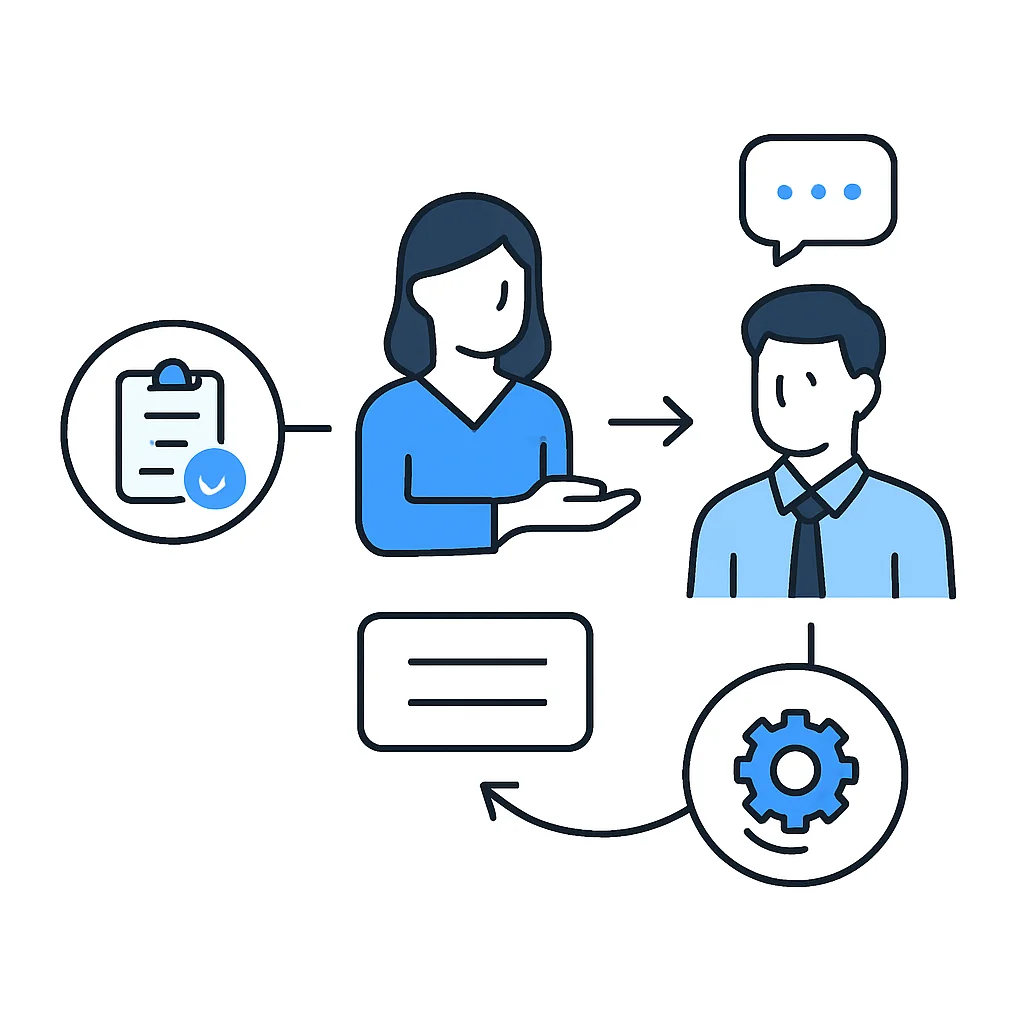
Action 2: Practice Delegation Effectively
As you take on more responsibility, you’ll inevitably need to delegate. This is a crucial skill for both TLs and EMs. Effective delegation isn’t just about offloading work; it’s about empowering others, fostering growth, and managing your own time more strategically. Start by delegating a small, well-defined task to a junior colleague. Provide clear instructions, necessary context, and express your trust in their ability. Follow up, but avoid micromanaging.
Delegation Scenario
Instead of fixing a minor UI bug yourself, delegate it to a new team member, guiding them through the debugging process. This empowers them and frees your time for more strategic tasks.
Action 3: Build a Strong Network & Find Mentors
No one becomes a leader in a vacuum. Connect with other leaders, both inside and outside your organization. Seek out mentors who are already in the roles you aspire to. Their insights, advice, and even warnings about common pitfalls can be incredibly valuable. Participate in industry meetups, online forums, or internal company communities. A strong network not only provides support but also opens doors to future opportunities.
Networking Tips for Aspiring Leaders
Identify Mentors — Look for leaders whose style you admire and ask for a 30-minute chat.
Cross-Functional Collaboration — Build relationships with product, design, and QA teams.
Attend Industry Events — Stay current and meet peers from other companies.
Action 4: Document Your Impact & Achievements
As you take on more responsibilities and develop new skills, keep a running log of your achievements. Quantify your impact whenever possible. Did you optimize a service that reduced latency by 30%? Did you mentor a junior engineer who successfully delivered their first major feature? Did you lead a technical discussion that resulted in a critical architectural decision? This documentation will be invaluable for performance reviews, promotion discussions, and updating your resume. It also helps you reflect on your growth.
KEY POINT
Don’t rely on memory. Keep an “impact journal” to track your contributions, especially those that demonstrate leadership, mentorship, and strategic thinking. Numbers speak volumes!
Action 5: Embrace Continuous Learning & Feedback
The tech world never stands still, and neither should your learning. Dedicate time to learning new technologies, leadership frameworks, and management theories. Read books, take courses, and listen to podcasts. Crucially, actively seek and accept feedback. Ask your peers, manager, and even those you mentor for honest feedback on your leadership style, communication, and technical contributions. Constructive criticism is a gift that helps you grow.
Your Leadership Growth Checklist
☑ Voluntarily led a small team project
☑ Mentored a junior developer on a technical task
☑ Successfully delegated a task and provided support
☑ Documented 3+ significant leadership contributions
☑ Had at least one coffee chat with an existing leader/mentor
☑ Actively sought feedback on your leadership potential
SECTION 04
Common Pitfalls & Mistakes to Avoid
The journey to leadership isn’t always smooth. Many aspiring leaders stumble upon common pitfalls that can hinder their progress. Being aware of these traps can help you navigate your path more successfully.
PROBLEM 01
Micromanagement & Inability to Delegate
This is perhaps the most common mistake. Aspiring leaders, often excellent individual contributors, struggle to let go of direct control. They believe they can do it faster or better themselves, leading to burnout and stifling team growth.
SOLUTION — Trust your team and empower them
Start with small, low-risk tasks and gradually increase the scope of delegation. Provide clear expectations and support, but allow autonomy. Your role is to enable, not to control every detail. Focus on outcomes, not just methods.
PROBLEM 02
Ignoring Soft Skills & Communication
Some developers believe that technical brilliance alone will pave their way to leadership. While essential, neglecting communication, empathy, and conflict resolution skills will severely limit your leadership potential. You can be the smartest person in the room, but if you can’t inspire or communicate effectively, your impact will be minimal.
SOLUTION — Actively practice and seek feedback on interpersonal skills
Engage in active listening during meetings, practice explaining complex topics clearly to non-technical audiences, and participate in team-building activities. Ask for feedback specifically on your communication style and how you handle disagreements.
WARNING
Don’t fall into the trap of thinking leadership means having all the answers. True leaders empower their teams to find solutions, providing guidance and removing blockers, rather than dictating every step.
PROBLEM 03
Over-focusing on Individual Contribution
While technical excellence is a prerequisite, a leader’s success is measured by the team’s output, not just their own. Continuing to prioritize personal coding tasks over mentorship, strategic planning, or unblocking the team will prevent you from scaling your impact and growing into a true leader.
SOLUTION — Shift your mindset to leverage the team
Consciously allocate time to activities that enable your team: code reviews, 1:1s, planning sessions, and architectural discussions. Resist the urge to jump in and solve every problem yourself; instead, guide others to the solution.

Frequently Asked Questions
Q. What’s the biggest difference between a Tech Lead and an Engineering Manager?
The biggest difference lies in their primary focus. Tech Leads are primarily focused on technical direction, architecture, and code quality, often still contributing code. Engineering Managers focus on people management, team processes, career development, and aligning the team with business goals, with less direct coding involvement.
Q. How long does it typically take to become a Tech Lead or Engineering Manager?
The timeline varies greatly based on individual experience, company structure, and opportunities. Generally, it takes 5-8 years of solid software engineering experience to reach a senior level where Tech Lead is a natural progression. Becoming an Engineering Manager often requires additional experience in leadership and people management, potentially adding another 2-4 years beyond a TL role, though some paths might accelerate this.
Q. Do I need a formal management degree to become an Engineering Manager?
No, a formal management degree is rarely a requirement. While beneficial, most successful Engineering Managers learn through on-the-job experience, mentorship, leadership training programs, and continuous self-study. Practical experience in leading projects, mentoring peers, and managing conflict is far more valued than a degree.
Q. Can I switch from a Tech Lead role to an Engineering Manager role, or vice-versa?
Absolutely! Many professionals move between these two tracks throughout their careers. A Tech Lead often transitions to EM by taking on more people management responsibilities. Conversely, an EM might move back to a more technical Staff/Principal Engineer role if they miss deep technical work. Companies often offer flexible career paths to accommodate these transitions.
SECTION 05
Wrap-Up: Your Journey to Tech Leadership
Becoming a Tech Lead or Engineering Manager in 2026 is an exciting and rewarding career goal. It’s a journey that demands continuous growth, not just in technical prowess but equally in soft skills, strategic thinking, and the ability to empower others. Whether you aspire to be the go-to technical guru shaping architecture or the compassionate leader fostering an exceptional team, the foundational principles remain the same: cultivate excellence, communicate effectively, mentor generously, and think strategically.
Remember, leadership is not a destination but a continuous process of learning and adaptation. Start small, seek out opportunities, embrace feedback, and document your progress. Your impact will grow, and you’ll find yourself not just building great software, but also building great teams and shaping the future of technology.
“The greatest leader is not necessarily the one who does the greatest things. He is the one that gets the people to do the greatest things.”
— Ronald Reagan
Thanks for reading!
We hope this guide equips you with the insights and actionable steps to propel your career into tech leadership.
Got questions or your own leadership tips? Drop a comment below and share your journey!