
SUMMARY
Building Your Emergency Fund in 2026
A practical guide for developers to establish a robust emergency fund for financial security and peace of mind in 2026.
Keywords: Emergency Fund, Financial Planning, Developer Finance
TABLE OF CONTENTS
1. Overview: Why an Emergency Fund is Crucial for Developers
2. Defining Your Emergency Fund Goal
3. Strategies for Building Your Fund Quickly
4. Where to Keep Your Emergency Fund
5. Maintaining and Replenishing Your Fund
6. Real-World Scenarios and Case Studies
7. Common Pitfalls and How to Avoid Them
8. FAQs
9. Wrap-Up: Your Path to Financial Resilience
1. Overview: Why an Emergency Fund is Crucial for Developers
Hey there, Kwonglish readers! As developers, we often focus on building amazing things, solving complex problems with elegant code, and staying on top of the latest tech trends. But how much thought do we give to building our personal financial resilience? In the fast-paced world of technology, unexpected twists and turns are almost a given. That’s where an emergency fund comes into play – it’s your personal financial safety net, designed to catch you when life throws a curveball.
So, what exactly is an emergency fund? Simply put, it’s a dedicated stash of money set aside specifically for unforeseen financial emergencies. Think of it as your financial “bug fix” for life’s unexpected errors. This isn’t for a new gaming console or that shiny new mechanical keyboard you’ve been eyeing; it’s for serious situations that could derail your financial stability.
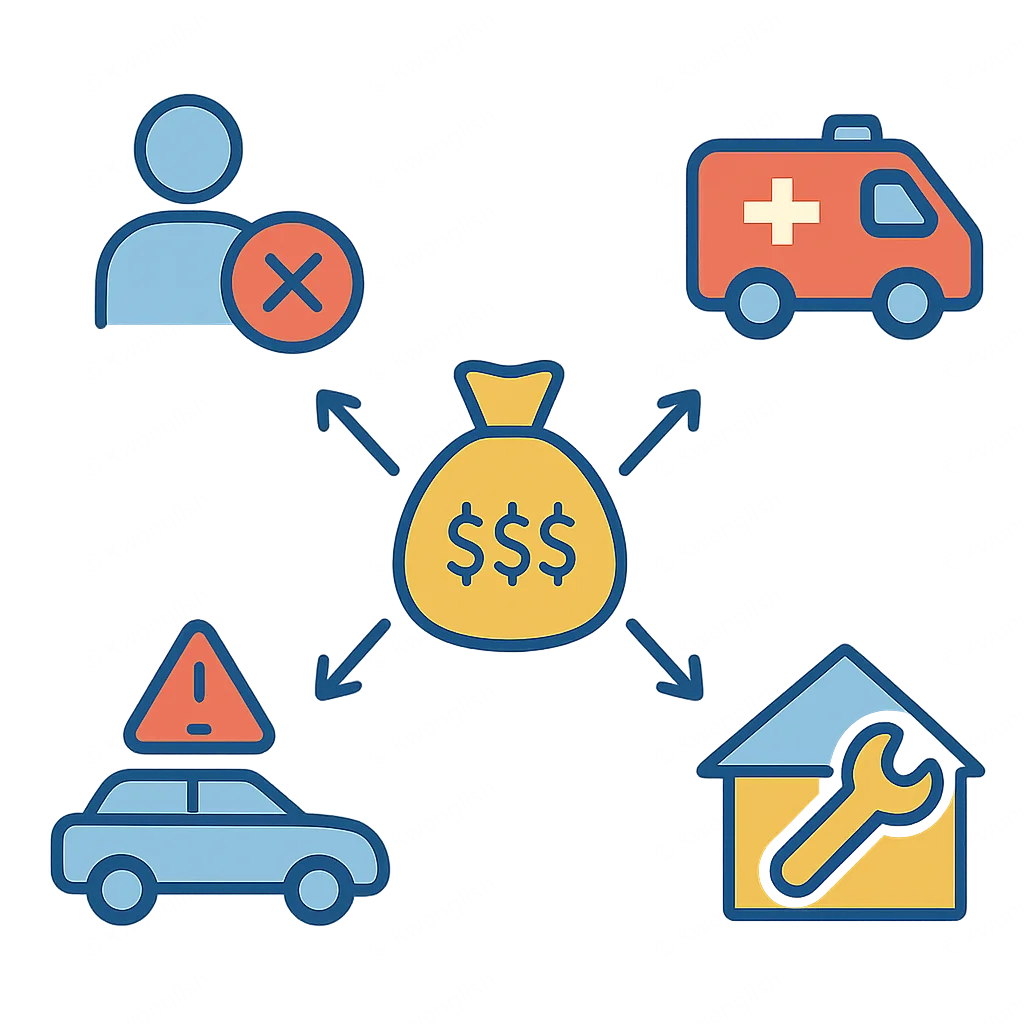
Why is this particularly crucial for developers in 2026? While the tech industry generally offers competitive salaries, it’s not immune to economic shifts, company layoffs, or project cancellations. Many developers also work as freelancers or contractors, which can mean fluctuating income and less stability than a traditional full-time role. A robust emergency fund provides a buffer against:
✓ Job Loss or Income Reduction: Even in a strong market, layoffs happen. An emergency fund can cover your living expenses for several months while you search for a new role without panic.
✓ Unexpected Medical Bills: Health emergencies can strike anyone, and even with good insurance, deductibles and out-of-pocket maximums can be substantial. For instance, a major surgery could easily incur costs of $5,000 to $10,000 or more even with insurance.
✓ Major Home or Car Repairs: Your apartment’s water heater gives out, or your car’s transmission fails. These are often sudden, expensive, and essential fixes. A new furnace in 2026 might cost anywhere from $4,000 to $7,000.
✓ Unexpected Travel or Family Emergencies: A sudden need to travel for a family crisis can come with significant last-minute flight and accommodation costs.
✓ Unforeseen Tech Expenses: While not always an emergency, a critical work machine failure could necessitate a quick replacement. If your primary development laptop dies unexpectedly, you might need $2,000 – $3,500 to get a suitable replacement fast.
According to a 2025 survey by Bankrate, only 44% of Americans could cover a $1,000 emergency expense from their savings. While developers generally have higher incomes, this statistic highlights a widespread vulnerability. Having an emergency fund isn’t just about money; it’s about peace of mind. It allows you to make rational decisions during a crisis, rather than being forced into high-interest debt, selling assets at a loss, or compromising your long-term financial goals.
KEY POINT
An emergency fund is your critical financial buffer against life’s unpredictable events, providing security and preventing debt. For developers, it mitigates risks associated with job market fluctuations and unexpected personal or professional expenses.
2. Defining Your Emergency Fund Goal
Alright, you’re convinced you need one. But how much money should you actually save? The general rule of thumb is to aim for 3 to 6 months’ worth of essential living expenses. However, this isn’t a one-size-fits-all number. Your ideal emergency fund size will depend on several factors unique to your situation.
Calculating Your Essential Living Expenses
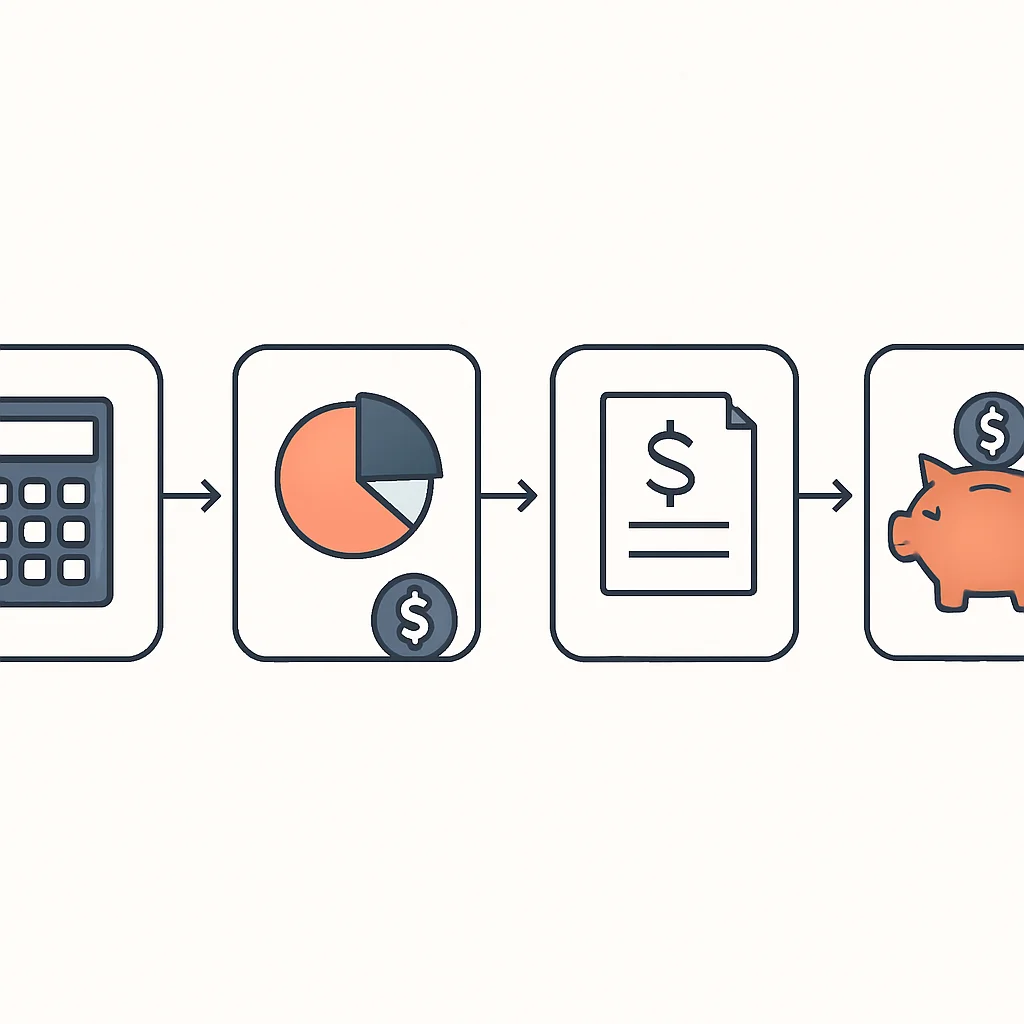
The first step is to track your spending. For at least a month, meticulously record every dollar you spend. If you already use budgeting software or spreadsheets, this will be easier. Once you have a clear picture, categorize your expenses into “essential” and “non-essential.”
Essential Expenses are the non-negotiables – the costs you absolutely must cover to maintain a roof over your head, food on the table, and basic utilities. These typically include:
● Rent/Mortgage Payments
● Utilities (electricity, gas, water, internet – yes, internet is pretty essential for a developer!)
● Groceries (basic food, not dining out)
● Transportation (car payment, insurance, gas, public transit fares)
● Health Insurance Premiums
● Minimum Debt Payments (credit cards, student loans – only the minimum, not extra payments)
● Basic Communication (cell phone bill)
Non-Essential Expenses are things you could cut back on or eliminate during a crisis. These might include:
● Dining out/Takeout
● Entertainment (streaming services, movies, concerts)
● Gym memberships (if you can exercise at home)
● Vacations/Travel
● New gadgets or non-essential software subscriptions
Example Calculation:
Let’s say your monthly essential expenses break down like this:
● Rent: $1,800
● Utilities: $250
● Groceries: $400
● Transportation: $300
● Health Insurance: $150
● Minimum Debt Payments: $200
● Phone/Internet: $100
Your total monthly essential expenses would be $1,800 + $250 + $400 + $300 + $150 + $200 + $100 = $3,200.
Based on this, your emergency fund goal would be:
● 3 months: $3,200 x 3 = $9,600
● 6 months: $3,200 x 6 = $19,200
Factors Influencing Your Target Amount
While 3-6 months is a good baseline, consider these factors to fine-tune your goal:
● Job Stability: If you’re in a highly stable role at a well-established company, 3 months might suffice. If you’re a freelancer, work in a volatile startup environment, or have a less in-demand tech stack, aiming for 6 months or even more is prudent.
● Dependents: If you have a spouse, children, or other dependents relying on your income, a larger fund provides more security.
● Health Status: If you or a family member have chronic health conditions, consider saving more to cover potential medical costs.
● Debt Load: While an emergency fund isn’t for paying off debt, having significant high-interest debt (like credit card debt) can make a crisis worse. Some experts suggest a smaller “starter” emergency fund (e.g., $1,000-$2,000) before aggressively tackling high-interest debt, then returning to build the full fund.
● Lifestyle: If you have a higher cost of living or specific needs (e.g., specialized equipment for a hobby), factor that in.
KEY POINT
Begin by calculating your true monthly essential expenses. Aim for 3-6 months of these expenses, adjusting upwards based on job stability, dependents, and health considerations for a personalized target.
3. Strategies for Building Your Fund Quickly
Now that you know your target, let’s talk about how to get there. Building an emergency fund might seem daunting, especially if you’re starting from scratch. But with a disciplined approach and smart strategies, you can reach your goal faster than you think.
Automate Your Savings
This is arguably the most powerful strategy. Set up an automatic transfer from your checking account to your dedicated emergency fund savings account immediately after each paycheck. Treat this transfer like a bill you have to pay. Even if it’s just $50 or $100 to start, consistency is key. As your income grows or expenses decrease, increase the transfer amount.
Cut Non-Essential Expenses Ruthlessly (Temporarily)
While building your fund, temporarily trim down or eliminate discretionary spending. This isn’t about deprivation forever, but a focused sprint to financial security. For developers, this might mean:
● Reviewing Subscriptions: How many SaaS tools or streaming services are you actually using? Cancel what’s not essential. Even $10-$20 per month adds up to $120-$240 annually.
● Cooking at Home: Eating out or ordering delivery is a huge budget killer. Challenge yourself to cook all meals at home for a month.
● Delaying Gadget Upgrades: That new GPU or monitor can wait. Focus on the fund first.
● Finding Free Entertainment: Instead of paid events, explore free local activities, parks, or open-source projects.
Increase Your Income
This is the other side of the coin. Look for ways to boost your earnings, even temporarily, and direct all extra income straight to your emergency fund.
● Freelance Gigs/Side Projects: Leverage your developer skills for extra income. Build a small website, offer tech support, or contribute to open-source projects with bounties. Platforms like Upwork or Fiverr can be a starting point.
● Overtime: If your job offers paid overtime, consider taking on extra hours.
● Selling Unused Items: Declutter your home and sell old electronics, books, or clothes online (e.g., eBay, Craigslist, local marketplaces). That old gaming console could net you a few hundred dollars.
● Negotiate a Raise: If you’ve been consistently performing well, perhaps it’s time to ask for a raise. Even a 5% raise on a $100,000 salary is an extra $5,000 annually, a significant portion of which could go to your fund.
Direct Windfalls to Your Fund
Any unexpected lump sums of money should be immediately directed to your emergency fund. This includes:
● Tax refunds
● Work bonuses
● Gifts or inheritances
● Reimbursements
Budgeting Tools and Methods
Utilize budgeting apps like YNAB (You Need A Budget), Mint, or Personal Capital to track your spending and allocate funds. Alternatively, try the 50/30/20 rule: 50% of your income for needs, 30% for wants, and 20% for savings and debt repayment. You can temporarily adjust this, perhaps aiming for 30-40% savings until your fund is built.
CODE EXPLANATION
This pseudocode illustrates a simple function to calculate how much to save for an emergency fund based on your monthly essential expenses and a target number of months. It also shows a basic loop for automated savings. This is a conceptual representation, not runnable code.
FUNCTION calculate_emergency_fund_goal(monthly_essentials, target_months):
    RETURN monthly_essentials * target_months

FUNCTION automate_savings(paycheck_amount, savings_percentage, savings_account_balance):
    savings_transfer = paycheck_amount * savings_percentage
    savings_account_balance = savings_account_balance + savings_transfer
    PRINT "Transferred $" + savings_transfer + " to emergency fund."
    RETURN savings_account_balance

// Example Usage
SET monthly_essential_expenses = 3200 // USD
SET desired_months_coverage = 6
SET emergency_fund_target = calculate_emergency_fund_goal(monthly_essential_expenses, desired_months_coverage)
PRINT "Your emergency fund target is: $" + emergency_fund_target

SET current_paycheck = 4000 // USD (bi-weekly)
SET savings_rate_per_paycheck = 0.10 // 10% of paycheck
SET current_emergency_fund_balance = 0

// Simulate automated savings over several paychecks
FOR i FROM 1 TO 12: // 6 months of bi-weekly paychecks
    current_emergency_fund_balance = automate_savings(current_paycheck, savings_rate_per_paycheck, current_emergency_fund_balance)
    PRINT "Emergency fund balance after paycheck " + i + ": $" + current_emergency_fund_balance
    IF current_emergency_fund_balance >= emergency_fund_target:
        PRINT "Emergency fund target reached!"
        BREAK
KEY POINT
Accelerate your emergency fund growth by automating transfers, temporarily cutting non-essential expenses, actively seeking additional income streams, and directing all financial windfalls directly to your savings.
4. Where to Keep Your Emergency Fund
Once you start accumulating funds, the next critical question is: where should you keep this money? The primary goals for your emergency fund are safety, liquidity (easy access), and preservation of capital. You’re not looking for high returns here; you’re looking for security.
High-Yield Savings Accounts (HYSAs)
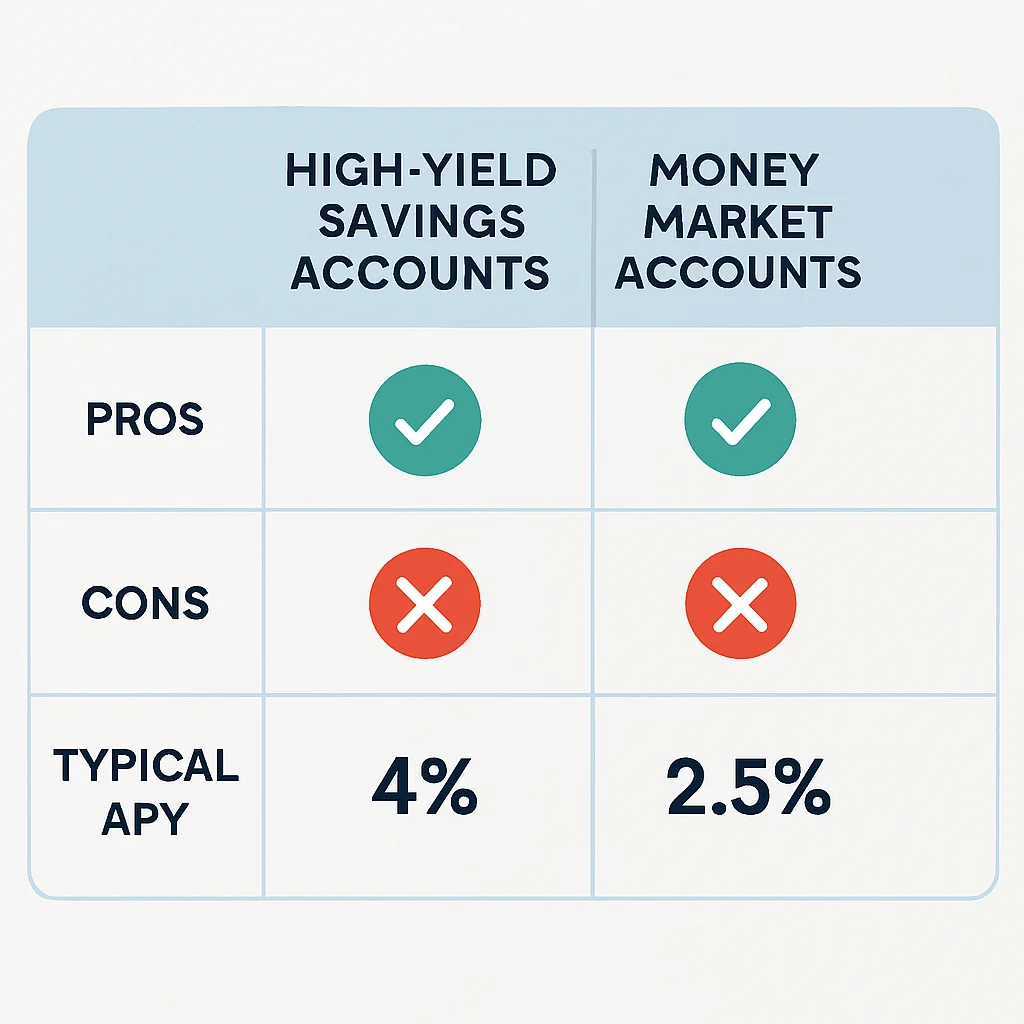
This is the gold standard for emergency funds. HYSAs offer significantly higher interest rates than traditional savings accounts, typically ranging from 4% to 5% Annual Percentage Yield (APY) in early 2026. They are:
● Liquid: You can access your money quickly, usually within 1-3 business days for transfers.
● Safe: Most HYSAs are FDIC-insured (up to $250,000 per depositor, per institution), meaning your money is protected even if the bank fails.
● Separate: Keeping it in a separate account (ideally at a different bank than your primary checking) makes it less tempting to dip into for non-emergencies.
Look for online banks that specialize in HYSAs, as they often offer the best rates due to lower overhead costs. Popular options in 2026 might include Ally Bank, Discover Bank, Capital One 360, or Marcus by Goldman Sachs.
Money Market Accounts (MMAs)
Similar to HYSAs, MMAs offer competitive interest rates and are typically FDIC-insured. Some MMAs might come with check-writing privileges or a debit card, offering slightly more immediate access, though there are usually limits on the number of transactions per month. Rates are often comparable to HYSAs.
Certificates of Deposit (CDs) – With a Laddering Strategy
CDs generally offer higher interest rates than HYSAs, but they lock your money in for a fixed term (e.g., 3 months, 6 months, 1 year, 5 years). Withdrawing early usually incurs a penalty. This makes them less liquid for a primary emergency fund.
However, a CD laddering strategy can work for a portion of a very large emergency fund (e.g., beyond 6 months’ expenses). For example, if you have $20,000, you could put $5,000 into a 3-month CD, $5,000 into a 6-month CD, $5,000 into a 9-month CD, and $5,000 into a 12-month CD. As each CD matures, you can either roll it into a new 12-month CD or access the funds if needed. This provides slightly higher returns while maintaining some staggered liquidity.
Where NOT to Keep Your Emergency Fund
Avoid these options for your primary emergency fund:
● Checking Account: Too accessible, easy to accidentally spend, and earns negligible interest.
● Stock Market/Investments: While important for long-term growth, the stock market is volatile. You can’t risk your emergency money losing 20-30% of its value right when you need it most. Investment accounts are for money you don’t need for at least 5-10 years.
● Physical Cash at Home: While some cash for very small, immediate needs is fine, keeping your entire emergency fund under the mattress is risky due to theft, fire, or loss, and it earns no interest.
WARNING
Never invest your core emergency fund in the stock market or other volatile assets. The primary goal of this fund is capital preservation and liquidity, not aggressive growth. Market downturns could deplete your safety net precisely when you need it most.
KEY POINT
A High-Yield Savings Account (HYSA) is the ideal home for your emergency fund, offering safety (FDIC-insured), liquidity, and modest interest returns. Avoid volatile investments or easily accessible checking accounts for this critical money.
5. Maintaining and Replenishing Your Fund
Building your emergency fund is a huge accomplishment, but it’s not a “set it and forget it” task. Life changes, expenses fluctuate, and emergencies happen. Regularly maintaining and, if necessary, replenishing your fund is crucial to long-term financial security.
Regular Review and Adjustment
Set a reminder to review your emergency fund at least once a year, or whenever significant life events occur. Ask yourself:
● Have my essential expenses changed? Rent might have increased, you might have a new car payment, or your insurance premiums could have gone up. If your monthly essentials have increased from $3,200 to $3,500, your 6-month fund needs to grow from $19,200 to $21,000.
● Has my income or job stability changed? A promotion might mean you can save more, while a career change to freelancing might warrant a larger fund.
● Are there new dependents? A new child or caring for an elderly parent will significantly increase your needs.
● Have I moved to a higher cost-of-living area? What was sufficient in one city might not be enough in another.
Replenishing After Use
The whole point of an emergency fund is to use it when needed! Don’t feel guilty if you have to dip into it for a true emergency. However, once the crisis has passed, your absolute top financial priority should be to replenish the fund back to its full target amount. Treat this like paying back a loan to yourself, but without the interest. Re-establish your automatic transfers and consider temporarily re-implementing aggressive savings strategies until it’s full again.
Consider a Tiered Approach
For some, a single large emergency fund can feel overwhelming. A tiered approach might make it more manageable:
● Tier 1: Mini-Fund ($1,000-$2,000): This is your immediate “first-aid kit” for smaller emergencies like a car repair, a dental issue, or an unexpected appliance replacement. This can be built quickly and provides immediate psychological relief.
● Tier 2: Full Emergency Fund (3-6 months expenses): This is your main buffer for job loss or major medical events.
● Tier 3: Extended Buffer (7-12 months expenses): If you have a very unstable job, are self-employed, have significant health concerns, or simply want maximum peace of mind, you might aim for an even larger fund. This extended portion could potentially be placed in slightly less liquid (but still safe) options like a CD ladder.
Emergency Fund Maintenance Checklist
☑ Review essential monthly expenses annually or after major life changes.
☑ Adjust your emergency fund target based on updated expenses or life circumstances.
☑ Immediately replenish the fund to its full target after any withdrawals.
☑ Consider a tiered approach for added flexibility and peace of mind.
☑ Keep the fund in a High-Yield Savings Account for safety and liquidity.
KEY POINT
An emergency fund requires ongoing attention. Regularly review and adjust its size to reflect changing life circumstances and promptly replenish it to its target amount after any use to maintain your financial security.
6. Real-World Scenarios and Case Studies
Sometimes, seeing how an emergency fund plays out in real life can be the best motivator. Let’s look at a few hypothetical scenarios a developer might face in 2026 and how an emergency fund can make all the difference.
Case Study 1: The Unexpected Layoff
Developer Sarah’s Job Loss
Sarah, a backend developer, had a 6-month emergency fund totaling $21,000 (based on $3,500/month essential expenses). In April 2026, her startup announced significant layoffs. She received a severance package covering one month, but knew finding a new role could take time.
Outcome with Emergency Fund: Sarah was able to cover her living expenses for 4 months while actively interviewing. She didn’t have to rush into the first job offer, could take her time finding the right cultural fit, and even used some time to upskill in a new framework. She avoided taking on debt and maintained her financial stability.
Case Study 2: The Medical Emergency
Mark’s Sudden Appendicitis
Mark, a frontend developer, had a 3-month emergency fund of $10,500. In July 2026, he experienced sudden appendicitis, requiring emergency surgery. Even with good insurance, his deductible and co-insurance amounted to $4,800.
Outcome with Emergency Fund: Mark was able to pay the medical bills immediately without stress or resorting to a high-interest credit card. He focused on recovery instead of financial worry. His fund was depleted by $4,800, but he quickly started replenishing it with his next paychecks.
Case Study 3: Freelancer’s Dry Spell
Jessica’s Client Loss
Jessica, a freelance full-stack developer, maintained an 8-month emergency fund of $28,000 due to her variable income. In September 2026, her largest client unexpectedly ended their contract, leaving a significant gap in her monthly income.
Outcome with Emergency Fund: Jessica used her emergency fund to cover her essential living expenses for two months while she actively sought new clients and ramped up marketing efforts. This allowed her to maintain her professional standards and not take on undesirable, low-paying work out of desperation. She eventually landed two new clients and replenished her fund over the next few months.
Case Study 4: Home Maintenance Catastrophe
David’s Burst Pipe
David, a DevOps engineer, had a 5-month emergency fund of $17,500. In January 2026, a sudden cold snap caused a pipe to burst in his home, leading to significant water damage and a $6,000 repair bill not fully covered by insurance.
Outcome with Emergency Fund: David was able to pay the plumber and restoration company immediately, preventing further damage and quickly getting his home back in order. Without the fund, he would have had to put the expense on a credit card, incurring interest, or delay repairs, potentially leading to more severe issues. He quickly adjusted his savings to refill the $6,000.
KEY POINT
These real-world examples demonstrate that an emergency fund isn’t just a theoretical concept; it’s a practical tool that provides tangible relief and prevents financial crises from spiraling into long-term debt or stress.
7. Common Pitfalls and How to Avoid Them
Even with the best intentions, people often stumble when building or maintaining their emergency fund. Being aware of these common pitfalls can help you steer clear of them.
Pitfall 1: Procrastination and Not Starting Soon Enough
PROBLEM 01
“I’ll start saving next month, after I buy that new monitor.”
Many people delay starting their emergency fund, prioritizing wants over needs. This leaves them vulnerable when an unexpected event inevitably occurs.
SOLUTION
Start today, even if it’s with a small amount like $25. Set up automatic transfers immediately. The power of compounding (even on a small interest rate) and consistent habit-building is immense. Make it a non-negotiable budget item.
Pitfall 2: Underestimating Essential Expenses
PROBLEM 02
Forgetting key categories or miscalculating average costs.
People often forget irregular expenses like annual insurance premiums, property taxes (if escrow isn’t used), or seasonal utility spikes when calculating their monthly essentials, leading to an insufficient fund.
SOLUTION
Track your spending meticulously for at least 2-3 months. Use budgeting apps to capture everything. When calculating, average out irregular bills over 12 months. When in doubt, round up your essential expenses to provide a buffer.
Pitfall 3: Using the Fund for Non-Emergencies
WARNING
A “sale” on a new gadget or an impulsive vacation is NOT an emergency. Dipping into your fund for wants defeats its purpose and leaves you exposed to genuine financial crises.
Solution: Clearly define what constitutes an emergency for you. Keep your emergency fund in a separate, somewhat inconvenient account (like an online HYSA) to reduce the temptation for impulse spending. If you’re unsure, pause for 24-48 hours before making a withdrawal decision.
Pitfall 4: Not Replenishing the Fund
KEY POINT
Using your emergency fund for a true emergency is exactly what it’s for. However, failing to replenish it immediately after use is a critical mistake that leaves you vulnerable to the next unexpected event.
Solution: As soon as an emergency passes, make replenishing your fund your absolute top financial priority. Re-enable or increase your automatic transfers and temporarily redirect any extra income until your fund is back to its target level.
Frequently Asked Questions
Q. What’s the ideal size for an emergency fund?
A. The general recommendation is 3 to 6 months of essential living expenses. However, this can vary based on your job stability, number of dependents, and overall financial situation, with some opting for up to 12 months of coverage.
Q. Can I invest my emergency fund?
A. No, the core emergency fund should not be invested in volatile assets like the stock market. Its primary purpose is safety and immediate liquidity. Keep it in a High-Yield Savings Account or Money Market Account for stability and easy access.
Q. How often should I review my emergency fund?
A. You should review your emergency fund at least once a year, or whenever you experience a significant life change such as a new job, salary increase, new dependents, or a move to a different cost-of-living area.
Q. What if I have high-interest debt, like credit card debt?
A. Many financial experts recommend saving a “mini-fund” of $1,000-$2,000 first, then aggressively paying down high-interest debt. Once the high-interest debt is cleared, you can then focus on building your full 3-6 month emergency fund.
Q. Is a “mini-fund” a good idea?
A. Yes, a “mini-fund” (typically $1,000-$2,000) is an excellent starting point. It provides immediate protection against smaller emergencies, preventing you from going into debt while you work towards building your larger, full emergency fund.
8. Wrap-Up: Your Path to Financial Resilience
Building an emergency fund is one of the most fundamental and impactful steps you can take toward achieving true financial security. For developers in 2026, navigating a dynamic industry and an evolving economic landscape, this safety net isn’t just a nice-to-have; it’s an essential component of responsible personal finance.
Remember, the journey to a fully funded emergency reserve is a marathon, not a sprint. It starts with calculating your true essential expenses, setting a realistic goal, and then implementing consistent savings strategies. Automate your contributions, ruthlessly cut non-essentials temporarily, and channel any extra income directly into your fund. Choose a safe, liquid home for your money, like a High-Yield Savings Account, and commit to reviewing and replenishing your fund regularly.
The peace of mind that comes with knowing you’re prepared for life’s unexpected challenges is invaluable. It frees you from financial anxiety, allowing you to focus on your career, your passions, and your long-term goals without the constant worry of what might go wrong. Start today, and build your fortress of financial resilience.
Thanks for reading, future-proof developer!
We hope this guide empowers you to take control of your financial future by building a robust emergency fund. Your journey to financial security starts now.
Got questions or tips to share? Drop a comment below – Kwonglish loves to hear from you!
Related Posts
- [Finance & Investing] Automated Investing for Developers: Best Robo-Advisors & Strategies in 2026
- [Finance & Investing] Stock Options & RSUs for Developers: Maximizing Your Equity Compensation in 2026
- [Finance & Investing] Cryptocurrency Investing for Developers: A Beginner’s Guide to Digital Assets in 2026