
SUMMARY
Cryptocurrency Investing for Developers: A Beginner’s Guide to Digital Assets in 2026
A developer’s practical guide to understanding and investing in cryptocurrencies, covering blockchain basics, common digital assets, and risk management strategies for 2026.
Keywords: Cryptocurrency, Crypto Investing, Web3
TABLE OF CONTENTS
1. The Digital Frontier: Why Developers Should Care About Crypto in 2026
2. Understanding the Foundation: Blockchain & Beyond
3. Navigating the Crypto Landscape: Key Digital Asset Categories
4. Your First Steps: Setting Up Your Crypto Investment Journey
5. Smart Strategies for Developers: Investing Principles for 2026
6. Mitigating Risks: Security and Due Diligence
7. Real-World Scenarios: Applying Crypto Investing Concepts
8. Important Considerations & FAQ
9. Wrapping Up: Building Your Digital Asset Future
OVERVIEW
The Digital Frontier: Why Developers Should Care About Crypto in 2026
Hey there, fellow developers! If you’re building for the future, you’ve probably heard the buzz around cryptocurrencies, Web3, and decentralized finance (DeFi). In 2026, these aren’t just buzzwords; they represent a significant shift in how we think about money, data, and digital ownership. As creators and innovators, developers are uniquely positioned to not only understand this space but also to participate in its growth, both technically and financially.
Many of us are comfortable with code, logic, and complex systems, which gives us a natural advantage in grasping the underlying technology of digital assets. However, translating that technical understanding into a sound investment strategy can feel daunting. This guide is designed to bridge that gap, offering a practical, no-nonsense approach to cryptocurrency investing specifically for developers in 2026. We’ll cover the essentials, from blockchain fundamentals to smart investment tactics and crucial security measures, all while keeping a casual, friendly tone.
Think of this as your practical roadmap to exploring digital assets. We’re not just talking about quick gains (though those can happen); we’re focusing on understanding the technology, identifying value, and building a diversified portfolio that aligns with your financial goals. Let’s dive in and demystify the world of crypto investing!
KEY POINT
As developers, our analytical skills and understanding of decentralized systems give us a unique edge in evaluating cryptocurrency projects beyond mere hype. This guide focuses on leveraging that advantage for informed investment decisions in 2026.
CORE GUIDE
Understanding the Foundation: Blockchain & Beyond
Before you even think about buying your first token, it’s crucial to grasp the bedrock of it all: blockchain technology. As developers, you’re likely familiar with distributed systems, but blockchain takes it a step further with unique properties.
What is a Blockchain?
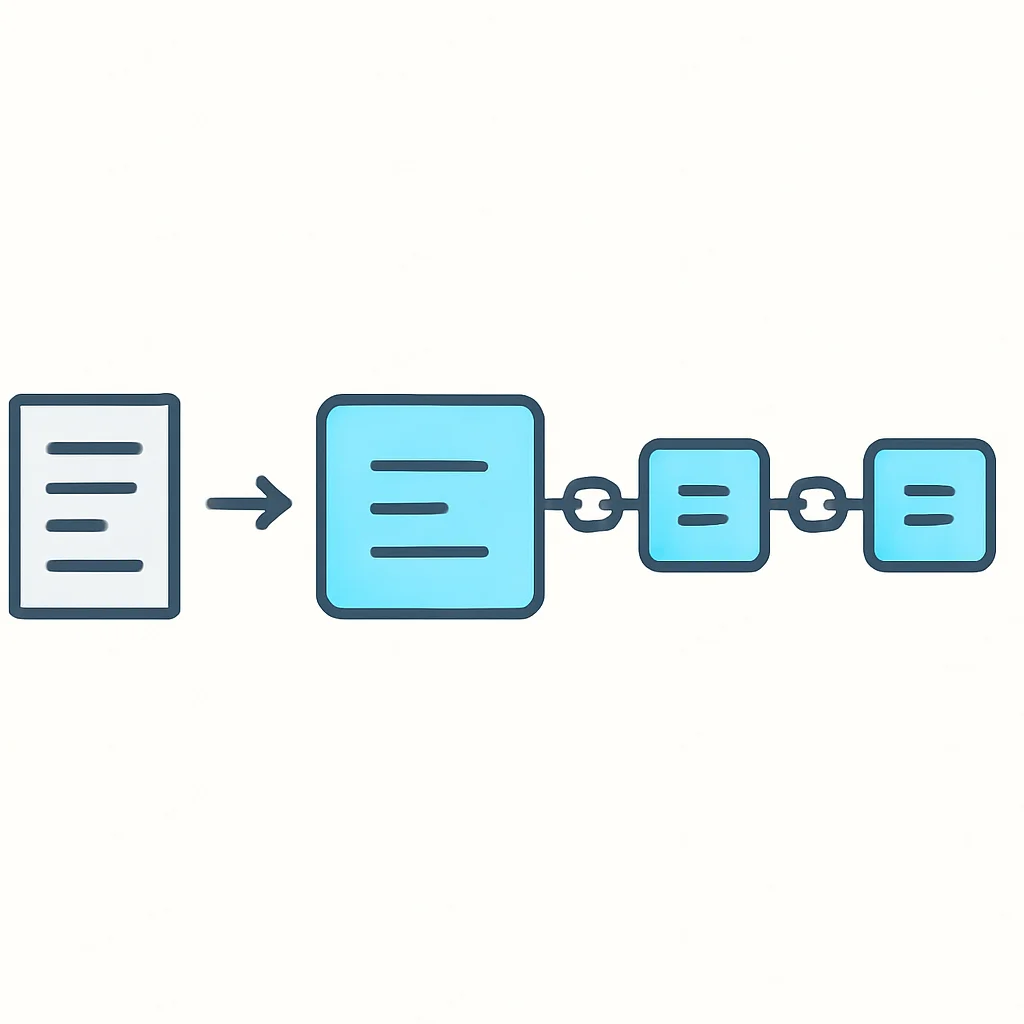
At its core, a blockchain is a decentralized, distributed ledger that records transactions across many computers. Each “block” in the chain contains a timestamped batch of transactions, and once a block is added, it cannot be altered without changing all subsequent blocks, which is nearly impossible due to cryptographic linking and network consensus. This gives us three critical properties:
1. ✔️ Decentralization: No single entity controls the network. Instead, it’s maintained by a peer-to-peer network.
2. ✔️ Immutability: Once data is recorded on the blockchain, it’s permanent and cannot be changed or deleted.
3. ✔️ Transparency: All transactions are publicly visible (though often pseudonymous) and verifiable by anyone on the network.
Consensus Mechanisms: The Heartbeat of a Blockchain
How do all these distributed computers agree on the correct state of the ledger? Through consensus mechanisms. The two most common are:
🔹 Proof of Work (PoW): Used by Bitcoin and older Ethereum, PoW involves miners solving complex computational puzzles to validate transactions and add new blocks. This process is energy-intensive but highly secure. For example, Bitcoin’s network consumes significant electricity, but its security has been uncompromised for over a decade.
🔹 Proof of Stake (PoS): Adopted by Ethereum 2.0 (now just Ethereum) and many newer blockchains like Solana and Cardano, PoS involves validators “staking” (locking up) their cryptocurrency as collateral to validate transactions. This method is far more energy-efficient and scalable. A validator with more staked tokens has a higher chance of being selected to create a new block.
KEY POINT
Understanding PoW vs. PoS is crucial. PoS networks generally offer higher transaction speeds and lower fees, making them suitable for DeFi applications, while PoW networks prioritize security and decentralization at scale.
Smart Contracts: Code That Executes Itself
For developers, smart contracts are where the real magic happens. These are self-executing contracts with the terms of the agreement directly written into lines of code. They run on a blockchain (most famously Ethereum, but also Solana, Avalanche, Polygon, etc.) and execute automatically when predetermined conditions are met, without the need for intermediaries.
Imagine an escrow service where funds are released automatically to a freelancer once a specific code commit is verified on GitHub, or an insurance policy that pays out instantly when a flight delay is confirmed by an oracle (a data feed bringing off-chain data onto the blockchain). The possibilities are endless, and this is the engine driving Web3 and DeFi.
CODE EXPLANATION
This is a simplified Solidity (Ethereum smart contract language) example of a basic token contract. It defines a token with a name, symbol, and a fixed supply. This is the foundation for countless digital assets.
// SPDX-License-Identifier: MIT
pragma solidity ^0.8.0;

contract SimpleToken {
    string public name = "Kwonglish Coin";
    string public symbol = "KWONG";
    uint public totalSupply = 1000000; // 1 million KWONG tokens
    mapping(address => uint) public balances;

    constructor() {
        balances[msg.sender] = totalSupply; // Assign all tokens to the deployer
    }

    function transfer(address _to, uint _value) public returns (bool success) {
        require(balances[msg.sender] >= _value, "Insufficient balance");
        balances[msg.sender] -= _value;
        balances[_to] += _value;
        return true;
    }
}
Understanding the basics of smart contracts and how they interact with blockchain is your superpower in this space. It allows you to analyze projects not just by their marketing, but by the robustness and utility of their underlying code.
CORE GUIDE
Navigating the Crypto Landscape: Key Digital Asset Categories
The crypto world is vast and constantly evolving. While Bitcoin and Ethereum dominate the headlines, there’s a universe of other digital assets, each with different purposes and risk profiles. Let’s break down the main categories you’ll encounter in 2026.
1. Cryptocurrencies (Layer 1 Blockchains)
These are the native tokens of foundational blockchain networks. They power the network, pay for transaction fees (gas), and often serve as a store of value or medium of exchange.
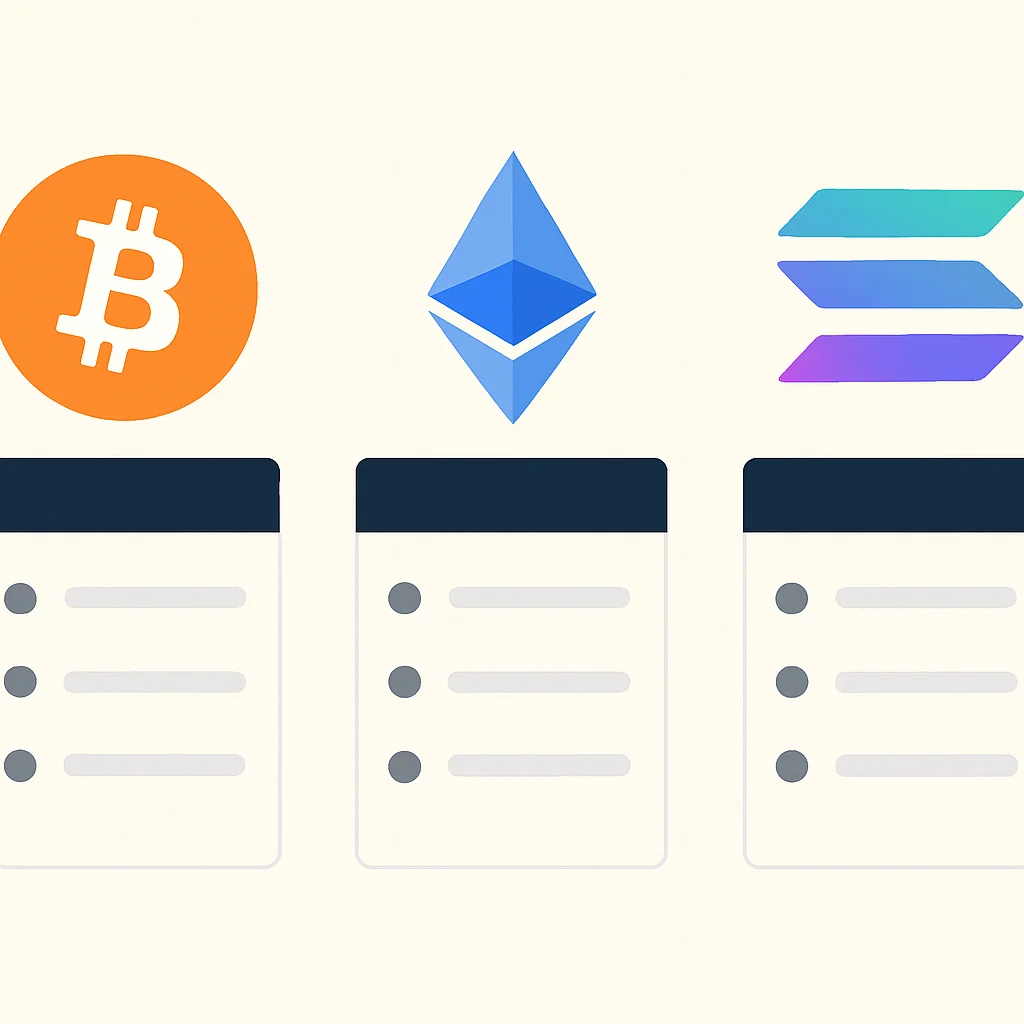
🔹 Bitcoin (BTC): The original cryptocurrency, primarily a store of value (“digital gold”). Its supply is capped at 21 million, making it deflationary. In 2026, it remains the largest by market cap and a benchmark for the entire industry.
🔹 Ethereum (ETH): The second-largest, Ethereum is a platform for smart contracts and decentralized applications (dApps). Its transition to PoS has made it more scalable and energy-efficient. ETH is the “gas” for the network and a core asset for DeFi and NFTs.
🔹 “Ethereum Killers” / Alternative Layer 1s: Projects like Solana (SOL), Cardano (ADA), Avalanche (AVAX), and Polkadot (DOT) aim to offer faster transactions, lower fees, or different architectural approaches than Ethereum. For example, Solana boasts transaction speeds of up to 65,000 transactions per second (TPS) compared to Ethereum’s ~15-30 TPS before sharding, though it has faced centralization concerns.
2. Stablecoins
These cryptocurrencies are designed to maintain a stable value, typically pegged 1:1 to a fiat currency like the US Dollar. They are crucial for traders to move in and out of volatile assets without converting back to traditional currency, and for DeFi applications.
🔹 Fiat-backed: USDT (Tether), USDC (USD Coin). These hold reserves (fiat, bonds, etc.) equivalent to the tokens issued. USDC, for instance, is audited regularly and backed by cash and short-duration U.S. Treasuries.
🔹 Algorithmic: Less common in 2026 due to past failures, these maintain their peg through smart contract algorithms that adjust supply. They carry higher risk.
WARNING
While stablecoins offer stability, they are not risk-free. Regulatory scrutiny, reserve transparency, and potential de-pegging events (as seen in some algorithmic stablecoins) are important factors to consider.
3. DeFi Tokens (Decentralized Finance)
DeFi tokens are native to decentralized applications that aim to replicate traditional financial services (lending, borrowing, trading, insurance) without intermediaries. They often grant governance rights or generate yield.
🔹 Decentralized Exchanges (DEXs): Tokens like UNI (Uniswap), CAKE (PancakeSwap). Holders can vote on protocol changes and sometimes earn a share of trading fees.
🔹 Lending/Borrowing Protocols: Tokens like AAVE, COMP (Compound). These allow users to lend crypto for interest or borrow against their holdings. The tokens often represent governance rights over the protocol’s parameters.
🔹 Liquid Staking Derivatives (LSDs): Tokens like LDO (Lido DAO). These represent staked ETH and allow users to access liquidity while their ETH is locked for staking, earning additional yield. This sector has seen significant growth since Ethereum’s merge.
4. NFTs (Non-Fungible Tokens)
While not currencies, NFTs represent unique digital assets like art, collectibles, music, or in-game items. Each NFT has a distinct identity recorded on a blockchain. Their value is subjective and driven by scarcity, utility, and community.
As a developer, you might be interested in NFTs not just as investments, but as a technological frontier for digital identity, gaming, and intellectual property. The market for NFTs in 2026 is maturing, with a stronger focus on utility beyond speculative art.
KEY POINT
Diversifying across these categories can help manage risk. For instance, a portfolio might include foundational assets (BTC, ETH), stablecoins for liquidity, and a small allocation to promising DeFi tokens or Layer 1 alternatives after thorough research.
CORE GUIDE
Your First Steps: Setting Up Your Crypto Investment Journey
Ready to jump in? Here’s a step-by-step guide to get your crypto investment journey started. Remember, security is paramount in this space, so pay close attention to each detail.
Step 1: Choose a Cryptocurrency Exchange
This is where you’ll convert your fiat currency (like USD or EUR) into crypto. There are two main types:
🔹 Centralized Exchanges (CEXs): These are regulated companies that hold your crypto for you, similar to a traditional bank. They offer user-friendly interfaces, customer support, and easier fiat on-ramps.
Popular CEXs in 2026
Coinbase: Great for beginners, strong regulatory compliance, but often higher fees.
Binance: Largest exchange by trading volume, vast selection of coins, lower fees for active traders, but can be overwhelming for new users.
Kraken: Known for security and a good selection of altcoins, popular among more experienced traders.
🔹 Decentralized Exchanges (DEXs): These allow you to trade crypto directly from your wallet without an intermediary. They offer greater privacy and control but are more complex and don’t typically support fiat conversions directly. Examples include Uniswap (Ethereum-based) and PancakeSwap (BNB Chain-based).
Recommendation for beginners: Start with a reputable CEX to buy your first crypto. Once you’re comfortable, you can explore DEXs for more advanced trading or specific altcoins.
Step 2: Complete KYC/AML Verification
Most CEXs require Know Your Customer (KYC) and Anti-Money Laundering (AML) verification. This involves submitting personal identification (ID, proof of address) to comply with financial regulations. While it might feel intrusive, it’s a standard practice for regulated financial services and helps prevent fraud.
Step 3: Fund Your Account
You can typically fund your CEX account via bank transfer, debit card, or sometimes PayPal. Bank transfers usually have lower fees but take longer (1-5 business days). Debit card purchases are instant but often incur higher fees (e.g., 2-4% on some platforms). In 2026, many exchanges also support faster payment methods like SEPA Instant in Europe or FedNow in the US.
Step 4: Understand Cryptocurrency Wallets
A wallet is where you store your crypto. More accurately, it stores the private keys that give you access to your crypto on the blockchain. There are two main types:
🔹 Hot Wallets: Software wallets connected to the internet. These include exchange wallets (where your crypto is held on the exchange), mobile wallets (e.g., Trust Wallet, Coinbase Wallet), and browser extension wallets (e.g., MetaMask). Convenient for small amounts and frequent transactions, but more susceptible to online hacks.
🔹 Cold Wallets (Hardware Wallets): Physical devices that store your private keys offline. Examples include Ledger and Trezor. These are considered the most secure option for storing significant amounts of crypto, as they are immune to online threats.
KEY POINT
For any substantial investment, moving your crypto from an exchange (hot wallet) to a personal cold wallet is highly recommended. Remember the adage: “Not your keys, not your crypto.”
Step 5: Make Your First Purchase
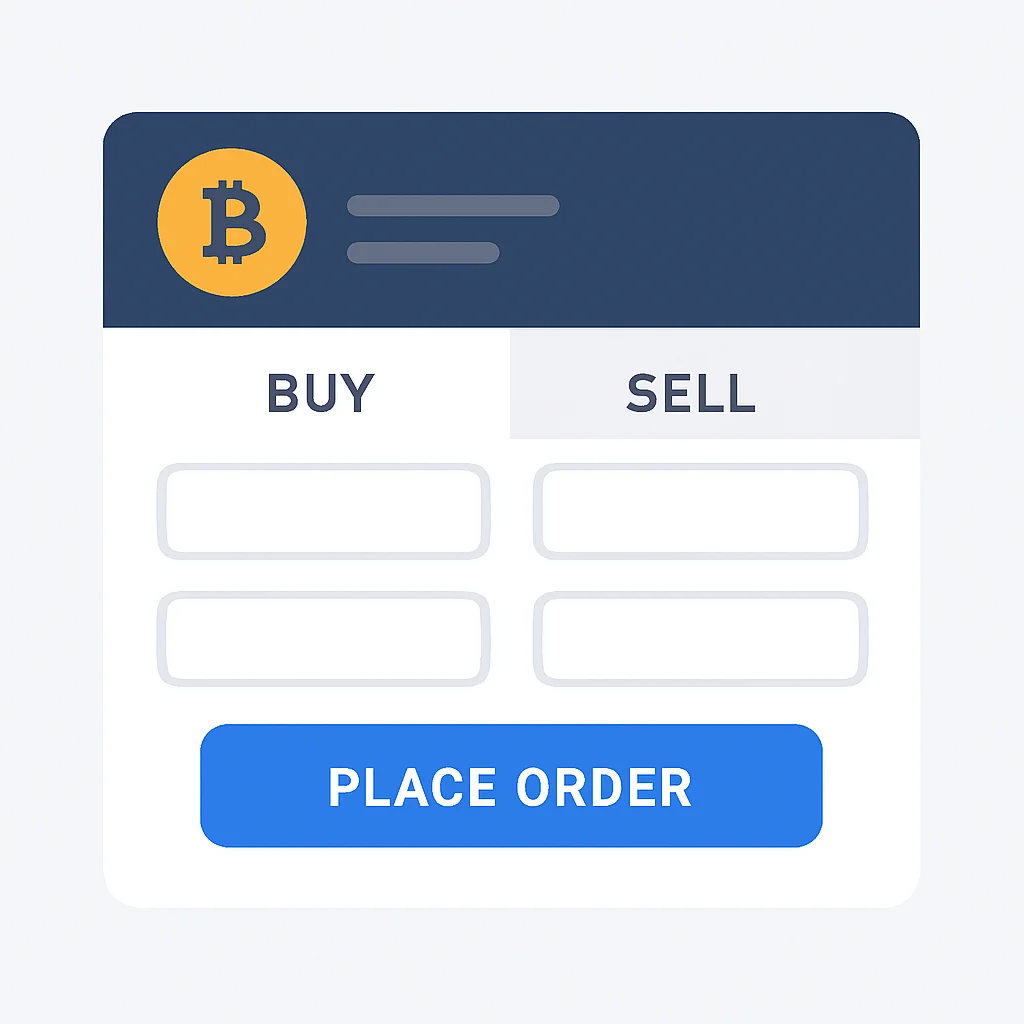
Once your account is funded, navigate to the “Buy Crypto” section of your chosen CEX. You can typically buy Bitcoin (BTC) or Ethereum (ETH) directly with fiat. Start with a small, manageable amount to get a feel for the process. For example, if you’re investing $100, try buying $25 of BTC and $25 of ETH first. Observe the transaction, understand the fees, and then consider larger amounts.
CORE GUIDE
Smart Strategies for Developers: Investing Principles for 2026
Now that you know how to buy crypto, let’s talk about how to invest intelligently. As developers, our analytical mindset is a huge asset here. Avoid emotional decisions and stick to a disciplined approach.
1. Dollar-Cost Averaging (DCA)
DCA is your best friend in a volatile market like crypto. Instead of investing a large lump sum at once, you invest a fixed amount of money at regular intervals (e.g., $100 every week or month), regardless of the asset’s price. This strategy:
🔹 Reduces Risk: You average out your purchase price over time, minimizing the impact of short-term price swings.
🔹 Removes Emotion: You stick to a plan, avoiding the temptation to “time the market.”
For example, if you invest $100 in ETH every month for 12 months, you’ll buy more ETH when the price is low and less when it’s high, resulting in a good average entry price over the year.

2. Diversification
Don’t put all your eggs in one basket. A diversified crypto portfolio might include:
🔹 Blue Chips: A significant portion (e.g., 50-70%) in Bitcoin and Ethereum for their established networks and market dominance.
🔹 Layer 1 Alternatives: A smaller percentage (e.g., 20-30%) in promising “Ethereum killers” like Solana, Avalanche, or Polkadot, which have strong development activity and ecosystem growth.
🔹 DeFi/Web3 Niche: A small, speculative portion (e.g., 5-15%) in specific DeFi protocols, gaming tokens, or other emerging Web3 projects that align with your technical interests and research.
The exact percentages depend on your risk tolerance and investment horizon. Remember, the more speculative the asset, the smaller your allocation should be.
3. Research, Research, Research (DYOR)
This is where your developer skills shine. Before investing in any project, do your own research (DYOR). Look beyond the hype:
🔹 Whitepaper: Does it clearly articulate a problem and a solution? Is the technology sound?
🔹 Team: Who are the developers? Do they have a track record? Are they doxxed (publicly identified)?
🔹 Tokenomics: What’s the total supply? How is the token distributed? Is there a vesting schedule for the team and early investors? High inflation or concentrated ownership can be red flags.
🔹 Community & Development Activity: Is the project actively being developed (check GitHub)? Is there a vibrant and engaged community (Discord, X/Twitter)?
🔹 Use Case & Adoption: Does the project solve a real problem? Is it gaining traction and users?
As a developer, you can even audit smart contract code for potential vulnerabilities (though this requires advanced skills). Tools like DappRadar or DeFiLlama can provide insights into a project’s TVL (Total Value Locked) and user activity.
KEY POINT
A project with a strong technical team, clear tokenomics, and a tangible use case built on robust code is generally a better long-term bet than one driven solely by social media hype.
4. Explore Earning Opportunities (with caution)
Beyond simply holding assets, you can potentially earn yield on your crypto. However, these methods come with their own risks:
🔹 Staking: Locking up PoS tokens to support network operations and earn rewards (e.g., staking ETH to earn ~3-5% APY in 2026). This usually means your funds are locked for a period.
🔹 Lending: Lending your crypto on DeFi protocols (like Aave or Compound) or centralized platforms to earn interest. Rates vary greatly (e.g., stablecoins might yield 1-5% APY, while more volatile assets could offer higher but riskier returns).
🔹 Yield Farming/Liquidity Providing: Providing liquidity to DEXs or lending protocols to earn trading fees and/or governance tokens. This is generally high-risk, susceptible to “impermanent loss” and smart contract exploits. Approach with extreme caution and only a small portion of your portfolio.
WARNING
High APYs often come with high risks. Smart contract bugs, protocol failures, and impermanent loss (for liquidity providers) can lead to significant capital loss. Always understand the risks before participating in any yield-generating activity.
CORE GUIDE
Mitigating Risks: Security and Due Diligence
The decentralized nature of crypto means you are your own bank. This comes with great power and great responsibility. Security is not an afterthought; it’s fundamental.
1. Protect Your Private Keys and Seed Phrase
Your private keys (or the 12/24-word seed phrase that generates them) are the ONLY way to access your crypto. If you lose them, your crypto is gone forever. If someone else gets them, your crypto is gone forever. Treat them like the keys to a vault filled with cash.
🔹 Write it down: Physically write your seed phrase on paper (or engrave it on metal) and store it in multiple secure, offline locations (e.g., a fireproof safe, a bank vault).
🔹 Never digitize: Do NOT take photos, store in cloud drives, or email your seed phrase. Keep it entirely offline.
🔹 Double-check: When setting up a new wallet, always confirm your seed phrase by re-entering it as prompted.
🔹 Hardware Wallets: Use a Ledger or Trezor for significant holdings. They keep your private keys isolated from your internet-connected computer.
2. Enable Two-Factor Authentication (2FA)
For any exchange or online service, enable 2FA using an authenticator app (like Google Authenticator or Authy), not SMS-based 2FA (which is vulnerable to SIM swap attacks). This adds an extra layer of security, requiring a code from your device in addition to your password.
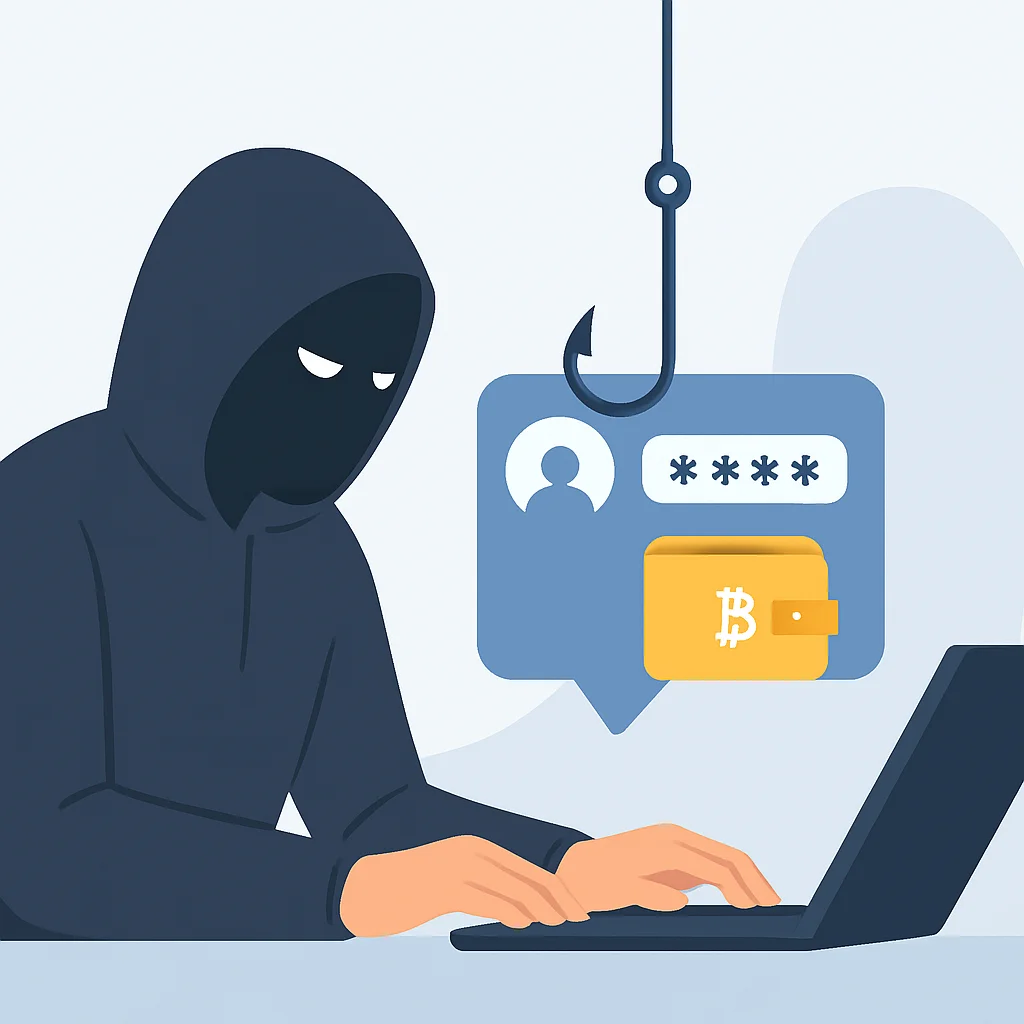
3. Beware of Scams and Phishing
The crypto space is unfortunately rife with scams. Be highly skeptical of:
🔹 Fake websites: Always double-check URLs. Phishing sites mimic legitimate ones to steal your login info or seed phrase.
🔹 “Too good to be true” offers: High-yield investment programs promising guaranteed daily returns are almost always Ponzi schemes.
🔹 Impersonators: Be wary of DMs on social media from “support staff” or “influencers” asking for your seed phrase or to click suspicious links.
🔹 Rug Pulls: In DeFi, developers create a token, pump its value, then suddenly withdraw all liquidity, leaving investors with worthless tokens. Thorough research into the team and tokenomics can help identify these.
As a developer, you can often spot red flags in a project’s GitHub activity (or lack thereof), audit reports, or community engagement. Always verify information from multiple reputable sources.
KEY POINT
Never share your seed phrase or private keys with anyone, ever. No legitimate service or person will ever ask for them.
4. Stay Informed About Regulations
The regulatory landscape for crypto is still evolving in 2026. Governments worldwide are working on frameworks for digital assets, which can impact taxes, trading, and even the legality of certain tokens or activities. Stay updated on regulations in your jurisdiction. This often means:
🔹 Taxation: Cryptocurrency gains are typically taxable events, similar to stocks. Keep detailed records of all your transactions (purchase price, sale price, dates) for tax reporting. Consult a tax professional familiar with crypto.
🔹 Exchange Compliance: Choose exchanges that are compliant with local regulations. Unregulated exchanges might offer more freedom but come with higher risks of funds being frozen or lost.
🔹 DeFi Risks: While decentralized, DeFi protocols are not immune to regulatory scrutiny. Be aware of the risks associated with participating in protocols that may operate in legal grey areas.
REAL-WORLD EXAMPLES
Real-World Scenarios: Applying Crypto Investing Concepts
Let’s look at a couple of hypothetical scenarios to illustrate how a developer might approach crypto investing in 2026.
Case Study 1: The Long-Term DCA Developer
A developer, Alex, aged 30, wants to build a long-term crypto portfolio without constantly monitoring the market.
Strategy: Alex decides on a Dollar-Cost Averaging strategy. Every two weeks, on payday, Alex automatically invests $200 into a diversified portfolio. Alex uses a reputable CEX like Coinbase to set up recurring buys.
Portfolio Allocation:
🔹 50% Bitcoin (BTC): For its role as a store of value.
🔹 30% Ethereum (ETH): For its ecosystem and smart contract dominance.
🔹 20% Solana (SOL): As a speculative bet on a high-throughput Layer 1, after researching its technical roadmap and developer community.
Security: Alex purchases a Ledger hardware wallet after accumulating $1,000 worth of crypto and transfers the assets off the exchange for cold storage. The seed phrase is written down and stored in a fireproof safe.
Outcome: Over 2 years (2026-2028), Alex invests $9,600. Despite market fluctuations, the average purchase price is favorable, and the portfolio grows alongside the broader market, with the cold storage providing peace of mind.
Case Study 2: The DeFi Explorer
Sarah, a smart contract developer, wants to explore DeFi opportunities beyond just holding assets, but with careful risk management.
Strategy: Sarah allocates 10% of her overall crypto portfolio (which is already diversified with BTC/ETH) to DeFi. She focuses on established protocols with audited smart contracts.
Action:
🔹 She buys a small amount of USDC on a CEX and sends it to her MetaMask wallet (a hot wallet for active DeFi interaction).
🔹 She researches lending protocols and chooses Aave, an established platform with a long track record and multiple audits. She lends her USDC to earn an estimated 3% APY.
🔹 She also identifies a new, promising Layer 2 scaling solution called Optimism (OP token) with active development on GitHub. She allocates a very small, highly speculative amount (1% of her total portfolio) to OP, understanding the higher risk.
Security: Sarah uses a separate, dedicated MetaMask wallet for DeFi interactions, distinct from her main wallet holding larger sums. She never connects her main hardware wallet directly to new or unverified dApps. She also uses Revoke.cash to regularly check and revoke token approvals to prevent potential exploits.
Outcome: Sarah earns a modest yield on her stablecoins and gains exposure to a high-growth sector. She avoids major losses by limiting her exposure to speculative assets and prioritizing security best practices.
These examples highlight the importance of strategy, diversification, and robust security practices. Each investor’s journey will be unique, but these core principles remain constant.
CAVEATS
Important Considerations & FAQ
Before we wrap up, it’s crucial to reiterate some important caveats and address common questions. Please remember that this guide is for informational purposes only and should not be considered financial advice. Always consult with a qualified financial advisor before making any investment decisions.
General Caveats:
🔹 High Volatility: Cryptocurrency markets are notoriously volatile. Prices can swing wildly in short periods. Only invest what you can afford to lose.
🔹 Regulatory Uncertainty: The regulatory environment for crypto is still maturing. New laws or enforcement actions could significantly impact the market.
🔹 Technological Risks: Smart contract bugs, blockchain network failures, or new security vulnerabilities are ever-present risks.
🔹 Market Manipulation: Smaller cap altcoins can be susceptible to “pump-and-dump” schemes. Stick to well-researched projects.
WARNING
Never invest money that you need for essential living expenses, emergency funds, or debt repayment. Crypto investing is speculative and carries a high risk of capital loss.
FAQ
Frequently Asked Questions About Crypto Investing
Q. What is the minimum amount I should start investing in crypto?
There’s no fixed minimum, but many exchanges allow purchases as low as $10-$20. It’s more important to start with an amount you’re comfortable losing, and consistently apply Dollar-Cost Averaging.
Q. How do I pay taxes on my crypto gains in 2026?
In most jurisdictions, cryptocurrency is treated as property for tax purposes. This means capital gains (selling for a profit) and sometimes certain income from staking or mining are taxable events. You’ll need to track all transactions and consult a tax professional or use crypto tax software to ensure compliance.
Q. Is it too late to invest in Bitcoin or Ethereum in 2026?
While past gains are historical, Bitcoin and Ethereum remain foundational assets with strong network effects and continued development. Many investors view them as long-term holds due to their established position and potential for future growth, especially with ongoing adoption and technological advancements.
Q. What’s the difference between a hot wallet and a cold wallet?
A hot wallet is connected to the internet (e.g., exchange account, mobile app, browser extension) and is convenient but more vulnerable to online hacks. A cold wallet (hardware wallet) stores your private keys offline, making it the most secure option for significant holdings.
Q. How can I identify a “rug pull” or scam project?
Look for red flags like anonymous teams (no doxxed developers), vague whitepapers, extremely high promised returns, lack of external audits for smart contracts, and limited community interaction beyond hype. Always research the project’s code, team, and tokenomics thoroughly.
WRAP-UP
Wrapping Up: Building Your Digital Asset Future
The world of cryptocurrency investing can seem complex, but as a developer, you have an inherent advantage. Your ability to understand underlying technology, scrutinize code, and approach problems logically are invaluable assets in navigating this space. By focusing on education, disciplined investment strategies like DCA, robust security practices, and thorough research, you can confidently build a digital asset portfolio that aligns with your financial goals in 2026 and beyond.
Remember, slow and steady wins the race. Avoid FOMO (Fear Of Missing Out) and FUD (Fear, Uncertainty, Doubt). Stick to your plan, continuously educate yourself, and prioritize the security of your assets above all else. The journey into digital assets is an exciting one, and with the right knowledge and approach, you’re well-equipped to thrive.
KEY POINT
Your technical background is a significant asset in crypto. Leverage it to understand projects deeply, identify genuine innovation, and make informed, rather than emotional, investment decisions.
Thanks for reading!
We hope this guide has provided a solid foundation for your cryptocurrency investing journey. The digital world is constantly evolving, and staying informed is key.
Got questions or insights from your own crypto journey? Drop a comment below!