

SUMMARY
Selling Your Home in 2026: A Developer’s Legal & Financial Guide
Navigate the complex process of selling your home in 2026 with our developer-focused guide.
Keywords: home selling, real estate, financial planning
TABLE OF CONTENTS
1. Overview: Why a Developer’s Approach to Home Selling Matters
2. Understanding the 2026 Housing Market from a Developer’s Perspective
3. The Legal Landscape: Navigating Compliance & Contracts
4. Financial Planning: Maximizing Your Return & Minimizing Tax Burden
5. Real-World Examples: Developer Success Stories
6. Common Pitfalls to Avoid
7. Frequently Asked Questions (FAQ)
8. Wrap-Up: Sell Smart, Not Hard
OVERVIEW
Why a Developer’s Approach to Home Selling Matters
Selling a home is one of the most significant financial transactions many of us undertake. For those with a developer’s mindset, however, it’s not just about listing a property; it’s about optimizing value, streamlining processes, and mitigating risks. In 2026, the real estate market continues to evolve, presenting both unique challenges and unprecedented opportunities. Whether you’re a seasoned property developer or simply someone who approaches problems with a structured, analytical perspective, this guide is tailored for you.
The goal isn’t just to sell your home, but to sell it intelligently. This means understanding the intricate legal requirements that protect both buyers and sellers, navigating the financial landscape to maximize your net proceeds, and leveraging your keen eye for value to make strategic pre-sale improvements. We’ll delve into concrete numbers, cite credible sources for legal and financial information, and provide actionable advice to ensure your 2026 home sale is as smooth and profitable as possible.
“A developer’s mindset sees a home sale not just as a transaction, but as a project to be optimized, from legal compliance to financial returns.”
CORE GUIDE
Understanding the 2026 Housing Market from a Developer’s Perspective
The real estate market in 2026 is influenced by a confluence of factors, including interest rate fluctuations, housing inventory levels, and evolving buyer preferences. For a developer, understanding these dynamics isn’t just academic; it’s fundamental to setting the right price, timing the sale, and identifying key value propositions for your property.
Current Market Trends in 2026
As of 2026, we’re seeing a market that, while cooling from the intense peaks of prior years, remains robust in many desirable areas. Interest rates, after several adjustments, have stabilized somewhat, hovering around the 6.5% to 7.5% range for a 30-year fixed mortgage, depending on credit scores and specific lenders. This rate environment means buyers are more sensitive to monthly payments, making a well-priced, move-in ready home particularly attractive.
Housing inventory varies significantly by region. In urban centers and high-demand suburbs, supply remains tight, often leading to competitive bidding for prime properties. Conversely, some exurban or less developed areas might see higher inventory, requiring sellers to differentiate their homes more aggressively. Buyer demand is strong for properties that offer energy efficiency, smart home technology, and dedicated spaces for remote work.

Leveraging Technology in Real Estate
Technology continues to transform real estate. AI-powered valuation tools can provide quick, albeit generalized, estimates, but a developer’s understanding of hyper-local nuances and specific upgrades can significantly refine these. Smart home features are no longer niche; they’re expected. Integrating systems like smart thermostats (e.g., Nest, Ecobee), intelligent lighting (e.g., Philips Hue), and robust security systems can add perceived and actual value. According to a 2025 report by the National Association of Realtors, homes with integrated smart technology sold 7-10% faster and for a 3-5% higher price point on average.
The Developer’s Advantage: Identifying Value and Optimization
Your background as a developer gives you a critical edge. You’re wired to spot inefficiencies, identify underutilized potential, and understand the cost-benefit of improvements. This translates to:
- Strategic Upgrades: Instead of guessing, you can calculate the ROI of a kitchen refresh versus a full remodel, or the impact of landscaping versus an added patio.
- Problem Solving: You’re adept at finding solutions to potential issues (e.g., a quirky layout, dated fixtures) before they become buyer objections.
- Data-Driven Pricing: You can analyze comparable sales (comps) with a critical eye, understanding what specific features drove higher prices in your neighborhood.
KEY POINT
In 2026, homes with modern amenities, energy efficiency, and clear remote work capabilities command a premium. Leverage your developer’s eye to identify and highlight these features, or make strategic upgrades with a high ROI.
LEGAL GUIDE
The Legal Landscape: Navigating Compliance & Contracts
The legal aspects of selling a home can be daunting, but for a developer, they are just another set of specifications to master. Compliance is not optional; it’s foundational to a successful, stress-free sale. Understanding your obligations regarding disclosures, permits, and contracts will protect you from future liabilities.
Disclosure Requirements: Transparency is Key
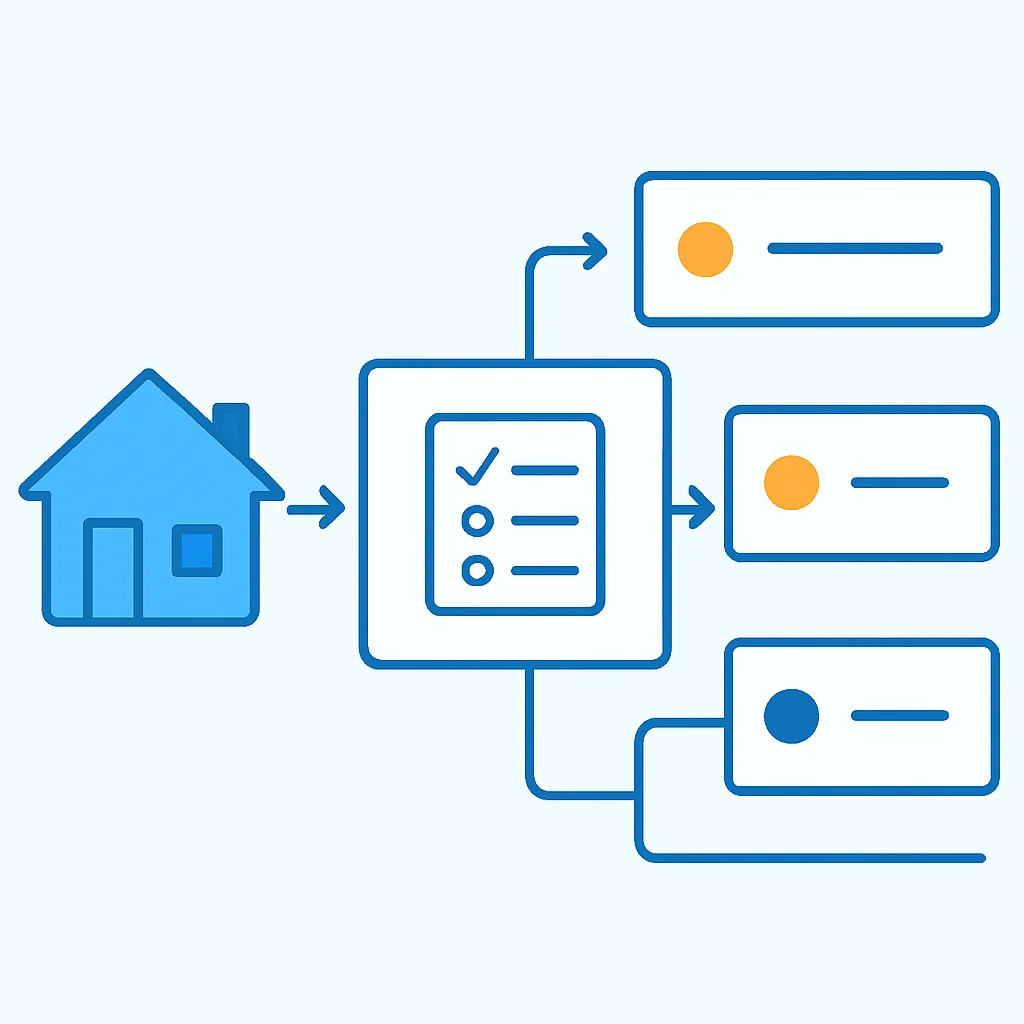
Sellers are legally obligated to disclose known material defects and other pertinent information about the property. These vary by federal, state, and local laws.
- Federal Disclosures: The most common is the Lead-Based Paint Disclosure for homes built before 1978.
- State/Local Disclosures: These are typically the most extensive and can include:
- Property Condition Disclosures (e.g., known roof leaks, foundation issues, appliance functionality).
- Natural Hazard Disclosures (e.g., earthquake zones, flood plains, wildfire risk).
- Homeowners’ Association (HOA) documents, if applicable (bylaws, CC&Rs, financial statements).
- Environmental hazards (e.g., asbestos, mold, radon, underground storage tanks).
- Pest and wood-destroying organism reports.
- Developer-Specific Disclosures: If you recently renovated the property, especially if it was a flip, you might have additional obligations to disclose the nature and extent of the work, including permits obtained. Some states require disclosure if you’ve done significant work within a certain timeframe (e.g., 2-3 years).
WARNING
Failing to disclose known material defects can lead to severe legal repercussions, including lawsuits, rescission of the sale, and financial penalties. Always err on the side of over-disclosing.
Contracts and Agreements: The Blueprint of Your Sale
The Purchase Agreement is the core legal document governing your home sale. It outlines the terms and conditions, including:
- Purchase Price: The agreed-upon sale amount.
- Earnest Money Deposit: A good-faith deposit from the buyer, typically 1-3% of the purchase price.
- Contingencies: Conditions that must be met for the sale to proceed. Common ones include financing contingency (buyer secures loan), inspection contingency (buyer approves home inspection), and appraisal contingency (home appraises at or above sale price).
- Closing Date: The target date for transferring ownership, usually 30-60 days after contract acceptance.
- Inclusions/Exclusions: What items stay with the property (e.g., appliances, window treatments) and what are taken by the seller.
Always have a qualified real estate attorney review the purchase agreement, especially if you’re dealing with complex clauses or if you’re selling a property with unique features or history. While real estate agents are crucial for marketing and negotiation, their legal expertise is limited. An attorney ensures your interests are fully protected.
Permits and Renovations: The Paper Trail of Progress
For a developer, ensuring all past renovations have proper permits is paramount. Unpermitted work can cause significant headaches during a sale, leading to delays, demands for remediation, or even a buyer backing out. Buyers’ lenders often require proof of permits for major structural, electrical, or plumbing work. Before listing, verify permits for any significant work done on your property. Your local building department can provide records.
CODE EXPLANATION
This hypothetical JSON structure represents a simplified disclosure statement for property renovations. It helps organize information about completed work, ensuring all necessary details like permits and completion dates are tracked. This could be part of an internal system for a developer managing multiple properties.
{
  "propertyAddress": "123 Main St, Anytown, CA 90210",
  "sellerName": "Kwonglish Properties LLC",
  "disclosures": [
    {
      "renovationType": "Kitchen Remodel",
      "description": "Full kitchen overhaul including new cabinetry, countertops, appliances, and flooring.",
      "completionDate": "2024-08-15",
      "permitRequired": true,
      "permitNumber": "BLDG-2024-07-00123",
      "permitStatus": "Finalized",
      "contractor": "Elite Renovations Inc.",
      "notes": "Electrical and plumbing updates performed by licensed professionals under permit."
    },
    {
      "renovationType": "Bathroom Addition",
      "description": "Added a half-bath on the first floor.",
      "completionDate": "2025-03-20",
      "permitRequired": true,
      "permitNumber": "PLMB-2025-02-00456",
      "permitStatus": "Finalized",
      "contractor": "AquaFlow Plumbing & Construction",
      "notes": "New waste lines connected to main sewer. All inspections passed."
    },
    {
      "renovationType": "Deck Extension",
      "description": "Extended existing backyard deck by 100 sq ft.",
      "completionDate": "2025-06-10",
      "permitRequired": false,
      "permitNumber": "N/A",
      "permitStatus": "N/A",
      "contractor": "DIY Project",
      "notes": "Minor aesthetic extension, not requiring structural permit per local code for less than 200 sq ft."
    }
  ]
}
Title and Escrow: Securing Your Transaction
A clear title is essential. This means the property has no liens, encumbrances, or disputes that could prevent its transfer. Title companies perform a thorough search to ensure this. Escrow is a neutral third party that holds all funds and documents until all conditions of the sale are met. They facilitate the closing process, ensuring funds are disbursed and deeds are recorded correctly.
KEY POINT
Proactive legal due diligence, especially regarding disclosures and permits, is your best defense against post-sale liabilities. Engage a real estate attorney early in the process for review and advice.
FINANCIAL GUIDE
Financial Planning: Maximizing Your Return & Minimizing Tax Burden
The financial outcome of your home sale is where your developer’s acumen truly shines. It’s about more than just the sale price; it’s about net proceeds, understanding tax implications, and making smart investments in your property before it hits the market. Let’s break down the numbers.
Calculating Your Net Proceeds: The True Bottom Line
Your net proceeds are the funds you receive after all expenses related to the sale are paid. It’s crucial to estimate these accurately to plan your next financial move.
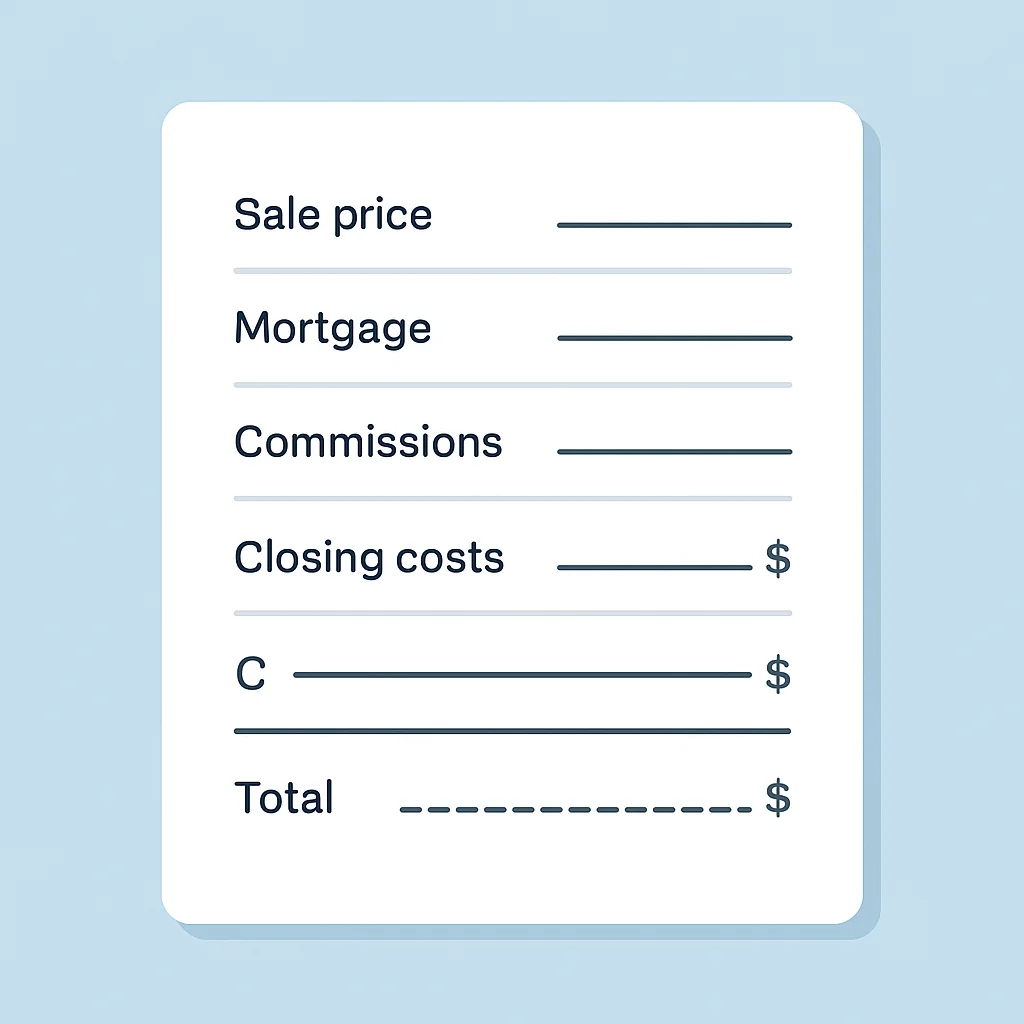
The formula is generally: Sale Price - Mortgage Payoff - Closing Costs - Agent Commissions - Pre-Sale Repairs/Staging = Net Proceeds
Let’s look at a detailed example for a home sold for $750,000:
- Gross Sale Price: $750,000
- Outstanding Mortgage Balance: -$300,000
- Real Estate Agent Commissions: Typically 5-6% of sale price. For $750,000, this is -$45,000 (assuming 6%).
- Seller Closing Costs: These vary widely by state and locality, but generally include:
- Transfer Taxes/Recording Fees: Varies, but could be 0.5% – 2% of sale price. Let’s estimate -$7,500 (1% of sale price).
- Title Insurance (Owner’s Policy): Often paid by seller in some states. Estimate -$2,000.
- Escrow Fees: Shared between buyer/seller or paid by one party. Estimate -$1,500.
- Attorney Fees: If you hired one, estimate -$2,500.
- Prorated Property Taxes/HOA Dues: Depending on closing date, you might owe a portion. Estimate -$1,000.
- Home Warranty (Optional): If offered to buyer, estimate -$600.
- Pre-Sale Repairs/Staging: -$10,000 (e.g., fresh paint, minor landscaping, professional staging).
Total Estimated Net Proceeds: $750,000 – $300,000 – $45,000 – $7,500 – $2,000 – $1,500 – $2,500 – $1,000 – $600 – $10,000 = $380,000
Capital Gains Tax Implications
One of the most significant financial considerations is capital gains tax. The good news is that many homeowners qualify for a substantial exclusion on profit from the sale of their primary residence.
According to IRS Publication 523, Selling Your Home, you can exclude up to $250,000 of capital gain from your income if you’re single, or $500,000 if you’re married filing jointly. To qualify, you must meet both the ownership test and the use test:
- Ownership Test: You owned the home for at least two years during the five-year period ending on the date of sale.
- Use Test: You lived in the home as your main home for at least two years during the five-year period ending on the date of sale.
For developers who might sell multiple properties, it’s crucial to distinguish between a primary residence and investment properties. Gains from investment properties are subject to different capital gains rules and do not qualify for this exclusion. Consult a tax professional for personalized advice, especially if your situation is complex.
KEY POINT
Understand the IRS primary residence exclusion rules ($250k single / $500k married) to potentially save significantly on capital gains tax. Keep meticulous records of your cost basis, including purchase price and qualified improvements.
Cost-Benefit Analysis for Pre-Sale Improvements
As a developer, you know that not all improvements yield the same return. Focus on upgrades that appeal to a broad buyer base and offer a high ROI:
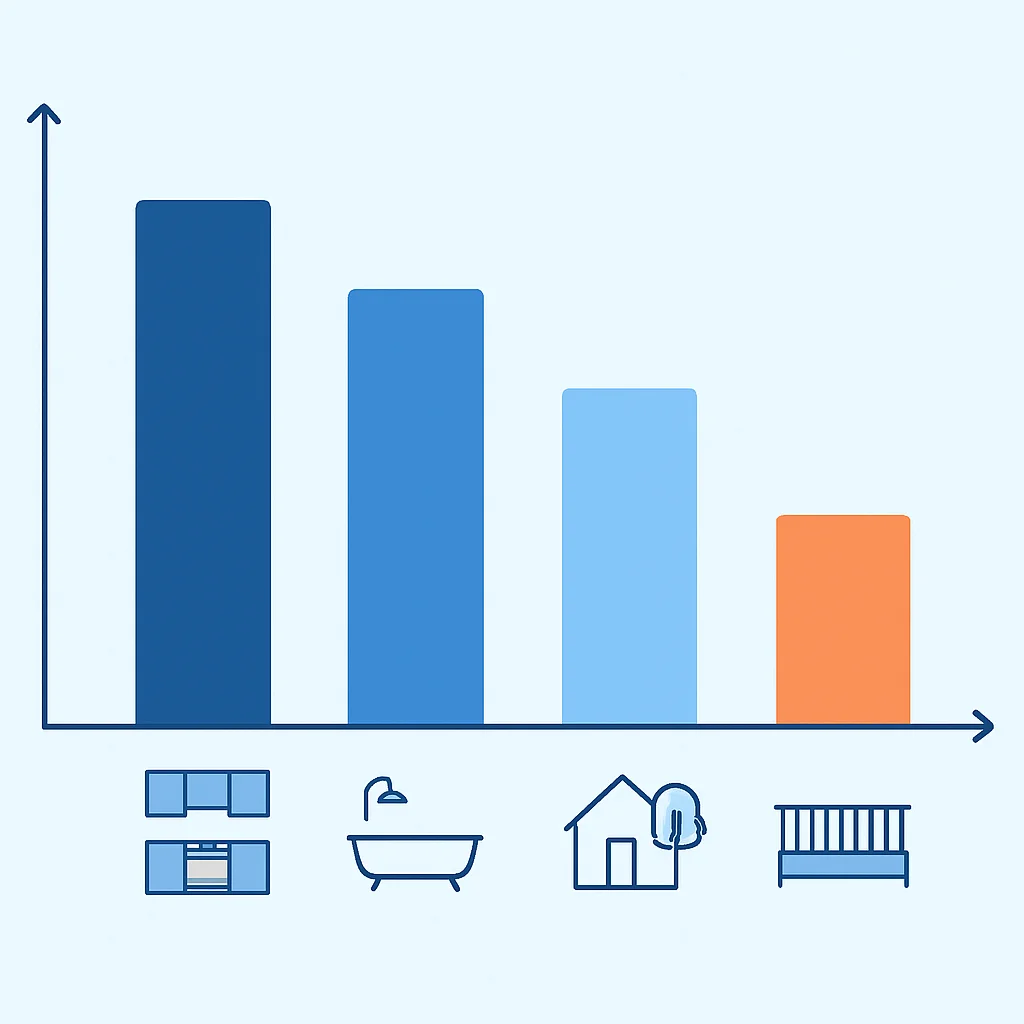
- Kitchen & Bath Refreshes: Minor kitchen remodels can yield 75-80% ROI, while a full gut might be closer to 50-60%. Focus on painting cabinets, updating hardware, new countertops, and modern light fixtures.
- Curb Appeal: Landscaping, fresh exterior paint, and a welcoming entryway can offer 100%+ ROI, as first impressions are critical.
- Energy Efficiency: Smart thermostats, LED lighting, and updated insulation are highly valued in 2026.
- Staging: Professional staging can increase sale price by 1-5% and reduce time on market by 30-50%.
Prioritize repairs that address functionality issues (e.g., leaky faucets, broken appliances) and cosmetic fixes that offer the most visual impact for the least cost. Avoid highly personalized or expensive upgrades that might not appeal to the average buyer.
Mortgage Payoff Strategies
When you sell your home, your existing mortgage must be paid off at closing. Obtain an accurate payoff statement from your lender a few weeks before closing. Be aware of any potential prepayment penalties, though these are less common with conventional mortgages in 2026. Timing the payoff correctly ensures a smooth transfer of title and avoids unnecessary interest charges.
REAL-WORLD EXAMPLES
Developer Success Stories: Leveraging Insights for a Better Sale
Let’s look at how a developer’s approach can translate into tangible success in the 2026 real estate market.
Case Study 1: The Smart Home Savvy Seller
Leveraging modern tech for a premium sale in a competitive market.
Sarah, a software developer, decided to sell her 1990s-built suburban home in a desirable school district in early 2026. The market was experiencing moderate inventory, meaning she needed to stand out. Instead of a full renovation, Sarah focused on strategic tech upgrades:
- Installed a smart thermostat and smart lighting system (total cost: $1,200).
- Upgraded the garage door opener to a smart-enabled model (cost: $300).
- Added a video doorbell and smart locks (cost: $500).
- Invested in professional staging that highlighted these features (cost: $2,000).
Outcome: Total investment of $4,000. Her home, originally valued at $650,000, received multiple offers and sold for $675,000 within two weeks. Buyers explicitly cited the integrated smart home features as a major draw, appreciating the ‘move-in ready tech’ aspect. This resulted in an additional $25,000 in sale price for a $4,000 investment, a clear win.
Case Study 2: Navigating a Permit Issue with Precision
Proactive resolution of unpermitted work prevents deal collapse.
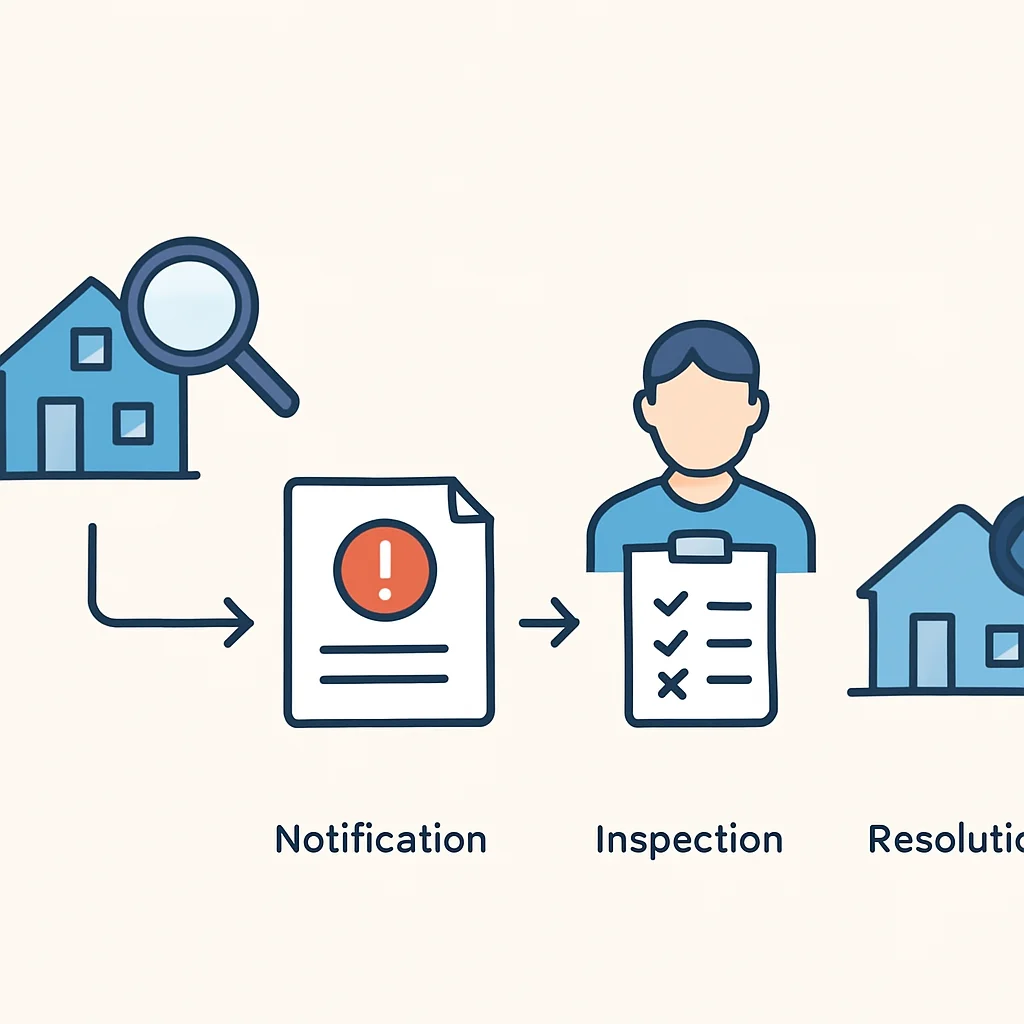
Mark, a civil engineer by trade, was selling an older property in 2026 that he had purchased years ago. During a pre-listing inspection, it was discovered that a previous owner had converted a garage space into a bedroom without obtaining proper permits. This was a significant red flag for potential buyers and their lenders.
Mark’s Developer Solution:
- Legal Counsel: Immediately consulted a real estate attorney to understand his options and potential liabilities.
- Building Department Review: Worked with the city’s building department to assess if the work could be retroactively permitted or if it needed to be reverted.
- Strategic Repair: Rather than demolishing, he opted for a partial remediation that brought the space up to code as a bonus room (not a bedroom), obtaining the necessary permits and inspections for this change. Cost: $8,000 for labor and materials.
- Full Disclosure: Clearly disclosed the history of the space and the steps taken to bring it into compliance, providing all documentation.
Outcome: Despite the initial setback, Mark’s proactive and transparent approach prevented the issue from derailing the sale. The buyer appreciated the honesty and the fact that the issue was resolved professionally. While he incurred an $8,000 expense, it secured a $580,000 sale that might have otherwise fallen through, saving him from potential legal battles and prolonged market time.
CAVEATS
Common Pitfalls to Avoid
Even with a developer’s keen eye, certain pitfalls can derail a home sale. Being aware of these common mistakes can help you navigate the process more smoothly:
WARNING
Avoid these common mistakes to prevent delays, financial losses, or even legal trouble during your home sale.
- Overpricing Your Home: While you want to maximize your return, an inflated price can deter buyers, lead to longer market times, and ultimately force a price reduction. A well-priced home generates more interest and often sells faster, sometimes even above asking. Rely on comparative market analysis (CMA) from your agent and independent appraisals.
- Neglecting Disclosures: As discussed, withholding known material facts can lead to lawsuits. Even if you think a defect is minor, it’s safer to disclose it. Transparency builds trust and protects you legally.
- Skipping Professional Inspections/Appraisals: A pre-listing inspection can uncover issues you might not be aware of, allowing you to address them proactively or disclose them without surprises. This prevents buyer-initiated repairs or price reductions later. Similarly, an appraisal gives an objective value assessment.
- Underestimating Closing Costs: Many sellers focus solely on the sale price. However, closing costs, agent commissions, and potential repair credits can significantly reduce your net proceeds. Always budget conservatively.
- Emotional Attachment: It’s hard to separate emotion from your home, but viewing the sale as a business transaction helps you make rational decisions about pricing, negotiations, and repairs.
- Ignoring Curb Appeal: First impressions matter. A neglected exterior can deter potential buyers before they even step inside. Basic landscaping, a clean exterior, and a fresh coat of paint on the front door can make a huge difference.
Frequently Asked Questions (FAQ)
Q. What are the most important documents a seller needs for closing in 2026?
A. Key documents include the deed, loan payoff statement, seller disclosure forms, purchase agreement, title insurance policy, and a valid photo ID. Your real estate agent or attorney will guide you through the complete list specific to your state.
Q. How long does the home selling process typically take in 2026?
A. From listing to closing, the process can range from 30 to 90 days, depending on market conditions, buyer financing, and any unforeseen issues. Preparing your home (repairs, staging) can add another 2-4 weeks before listing.
Q. Should I hire a real estate attorney even if I have an agent?
A. While not mandatory in all states, hiring a real estate attorney is highly recommended, especially for complex transactions or if you want an independent review of contracts and disclosures. An attorney provides legal protection that agents cannot.
Q. What is the average commission rate for real estate agents in 2026?
A. Agent commissions typically range from 5% to 6% of the sale price, which is usually split between the buyer’s and seller’s agents. These rates are negotiable and can vary based on your location and the services provided.
WRAP-UP
Sell Smart, Not Hard
Selling your home in 2026 doesn’t have to be a stressful ordeal. By applying a developer’s methodical, data-driven approach, you can transform it into a strategic project with optimal outcomes. From meticulously navigating legal disclosures and permits to shrewdly planning your finances and making high-ROI improvements, every step contributes to a smoother, more profitable sale.
Remember, the key is preparation. Start early, gather all necessary documentation, consult with professionals (agents, attorneys, tax advisors), and leverage your innate ability to identify value and solve problems. By doing so, you’ll not only sell your home efficiently but also maximize your financial return and minimize potential headaches.
Thanks for reading!
We hope this guide equips you with the knowledge to make your 2026 home sale a resounding success.
Got questions or your own developer tips? Drop a comment below!