
SUMMARY
Edge Computing for Developers: Trends, Challenges, and Opportunities in 2026
Explore the rapid growth of edge computing and its implications for developers, focusing on 2026 trends.
Keywords: Edge Computing, Distributed Systems, Real-time Processing
TABLE OF CONTENTS
1 Introduction: The Rise of Edge Computing in 2026
2 Current Trends Driving Edge Adoption
3 Key Challenges for Edge Developers
4 Opportunities and Emerging Paradigms
5 Practical Application: Developing for the Edge
6 Edge vs. Cloud: A Comparative View
7 Frequently Asked Questions
INTRODUCTION
The Rise of Edge Computing in 2026
Welcome back to Kwonglish! Today, we’re diving deep into one of the most transformative shifts in technology for 2026: edge computing. For years, cloud computing has been the undisputed king, centralizing data processing and storage. However, as the world becomes increasingly connected, with billions of devices generating unprecedented amounts of data, the limitations of solely relying on distant data centers are becoming apparent. This is where edge computing steps in, bringing computation and data storage closer to the sources of data generation – the “edge” of the network.
In 2026, edge computing isn’t just a buzzword; it’s a critical infrastructure component enabling a new generation of applications that demand ultra-low latency, real-time processing, and enhanced privacy. Think autonomous vehicles, smart factories, advanced healthcare monitoring, and immersive augmented reality experiences. These applications simply cannot tolerate the round-trip delays inherent in sending all data to a centralized cloud for processing. The market reflects this growth, with projections estimating the global edge computing market to exceed $100 billion by the end of 2026, a significant leap from its earlier valuations.
“Edge computing is fundamentally reshaping how we design, deploy, and interact with digital services, pushing intelligence to where it’s needed most.”
— Kwonglish Analysis, 2026
For developers, this shift presents both exciting opportunities and unique challenges. Understanding the landscape of edge computing – its underlying principles, the technologies driving its adoption, and the specific hurdles it introduces – is paramount for anyone looking to build the next generation of innovative applications. This report will break down the essential aspects of edge computing in 2026, offering insights into trends, practical challenges, and the vast opportunities awaiting developers.
KEY POINT
Edge computing moves data processing and storage closer to the data source, drastically reducing latency and enabling real-time applications critical for 2026’s interconnected world.
TRENDS
Current Trends Driving Edge Adoption
The momentum behind edge computing is fueled by several converging technological trends. Understanding these trends is crucial for developers to position themselves effectively in the evolving ecosystem.
1. AI and Machine Learning at the Edge
One of the most significant drivers in 2026 is the proliferation of Artificial Intelligence (AI) and Machine Learning (ML) capabilities directly on edge devices. Instead of sending raw video feeds or sensor data to the cloud for analysis, edge devices are increasingly equipped to perform inference locally. This enables immediate decision-making, such as identifying anomalies in manufacturing lines, recognizing faces for security, or processing natural language in smart assistants without network delays. The market for AI at the edge is projected to grow by an annual rate of over 30% through 2026, reaching approximately $15 billion globally.
2. 5G and Beyond-5G Integration
The rollout of 5G networks, and early discussions around 6G, is a perfect complement to edge computing. 5G’s promise of high bandwidth and ultra-low latency (down to 1ms) creates an ideal backbone for connecting edge devices to localized micro-data centers or even directly to other devices. This synergy is particularly vital for applications like vehicle-to-everything (V2X) communication, remote surgery, and real-time multiplayer gaming, where network performance is non-negotiable. By 2026, it’s estimated that over 60% of new 5G deployments will incorporate edge computing infrastructure.
“The convergence of AI, 5G, and edge computing isn’t just an evolutionary step; it’s a revolutionary leap towards truly intelligent and responsive environments.”
— Industry Analyst Report, 2026
3. Serverless Edge Functions (Function-as-a-Service at the Edge)
The serverless paradigm, popular in cloud environments, is now extending to the edge. Edge Function-as-a-Service (FaaS) platforms allow developers to deploy small, event-driven functions that execute directly on edge nodes, without managing the underlying infrastructure. This simplifies development, reduces operational overhead, and enables highly scalable and responsive microservices at the network’s periphery. Companies like Cloudflare Workers, AWS Lambda@Edge, and emerging open-source solutions are leading this charge, making edge development more accessible.
4. Industrial IoT and Digital Twins
In industrial settings, edge computing is integral to the Industrial Internet of Things (IIoT) and the concept of digital twins. Sensors on machinery generate vast amounts of data that, when processed at the edge, can enable predictive maintenance, real-time quality control, and optimized operational efficiency. Digital twins – virtual replicas of physical assets – leverage edge processing to stay synchronized and provide immediate insights, allowing for simulations and proactive interventions. The adoption rate of edge computing in manufacturing is projected to hit 75% for new IIoT deployments by 2026.
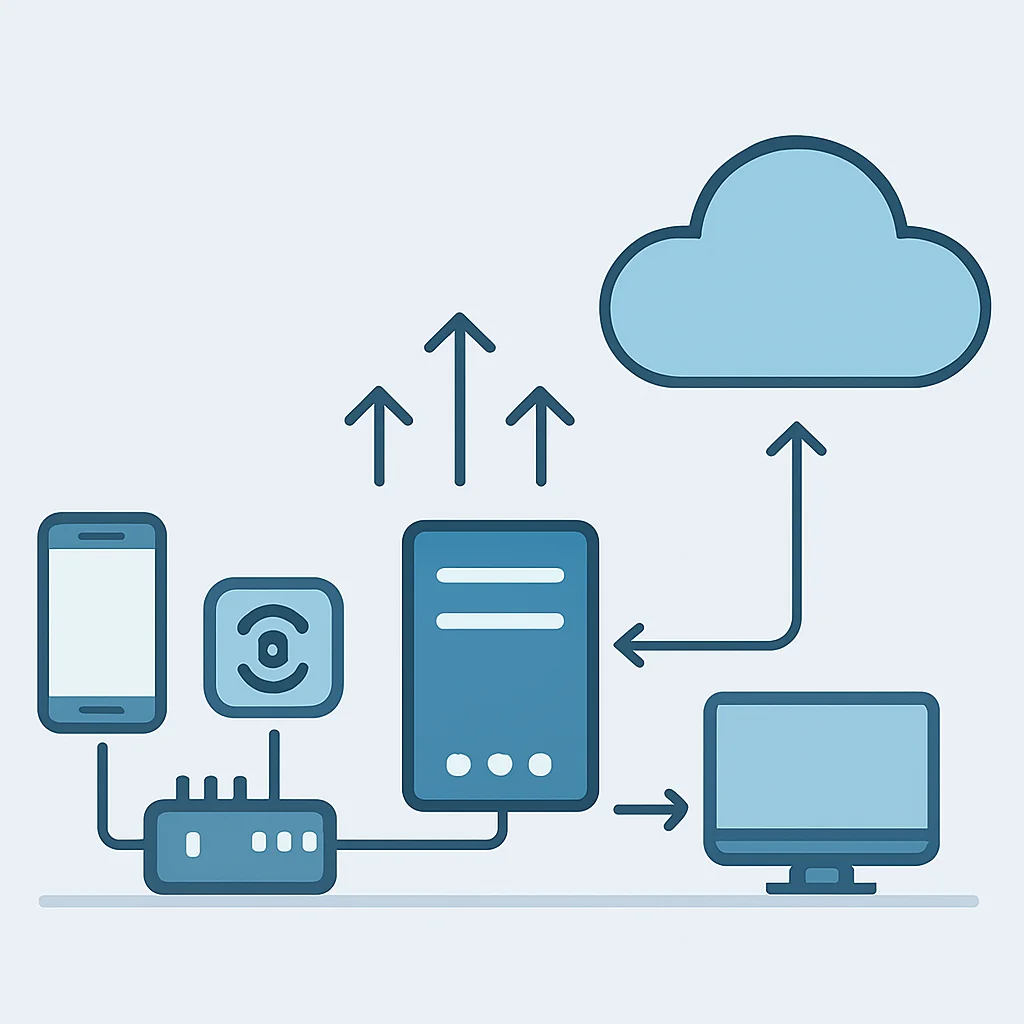
Key Edge Trends for Developers
AI/ML at the Edge — Deploying inference models directly on devices for real-time insights.
5G Integration — Leveraging high-speed, low-latency connectivity for edge-to-cloud and edge-to-edge communication.
Serverless Edge — Developing event-driven functions without managing infrastructure.
IIoT & Digital Twins — Enabling smart factories and real-time operational optimization.
KEY POINT
The convergence of AI, 5G, and serverless architectures is democratizing edge development, making it easier for developers to build powerful, distributed applications across diverse industries.
CHALLENGES
Key Challenges for Edge Developers
While the opportunities are immense, developing for the edge comes with its own set of complexities that developers must navigate. These challenges often stem from the distributed nature of edge environments and the inherent resource constraints of many edge devices.
1. Resource Constraints and Heterogeneity
Unlike the seemingly infinite resources of the cloud, edge devices often have limited CPU, memory, storage, and power. Developers need to optimize their applications to run efficiently within these constraints. Furthermore, the edge ecosystem is highly heterogeneous, encompassing everything from tiny microcontrollers (e.g., Raspberry Pi Zero, ESP32) to powerful industrial gateways and local micro-data centers. Developing applications that can seamlessly run across such a diverse range of hardware requires careful architectural design and often necessitates different deployment strategies for various device types.
2. Security and Privacy Concerns
Distributing computation across numerous, often physically exposed, edge devices introduces significant security vulnerabilities. Physical tampering, unauthorized access, and data leakage are heightened risks. Protecting data in transit and at rest, securing device identities, and ensuring the integrity of deployed code are critical. Moreover, processing sensitive data (e.g., personal health information, financial data) at the edge raises complex privacy compliance issues, such as GDPR and CCPA, which developers must address through robust encryption, anonymization, and access control mechanisms. A 2026 survey found that over 40% of organizations consider edge security their top concern.
PROBLEM 01
Managing Data Synchronization and Consistency
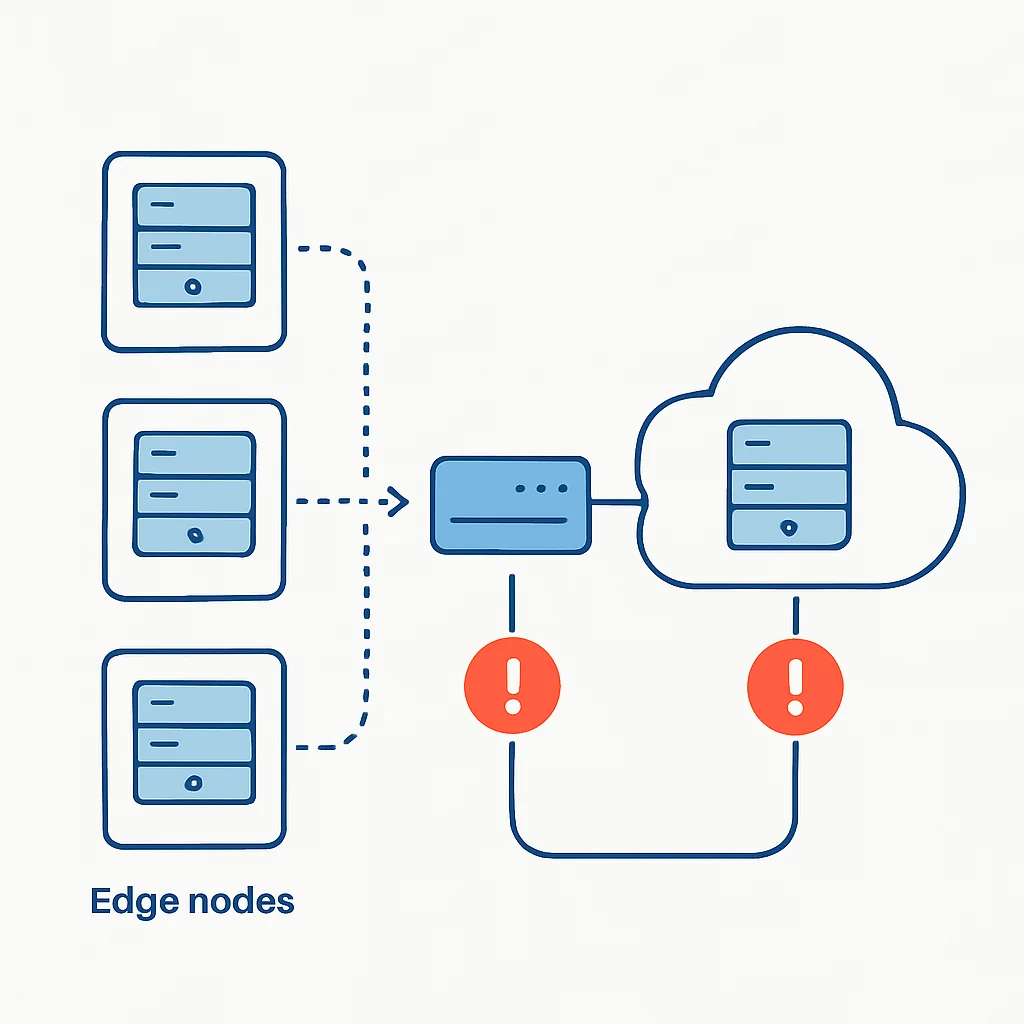
Ensuring data consistency between edge devices, local edge servers, and the centralized cloud is notoriously difficult, especially with intermittent connectivity and varying network conditions. Conflicts can arise when data is updated simultaneously at different points.
SOLUTION — Implement robust conflict resolution strategies and eventual consistency models.
# Example: Simplified pseudo-code for eventual consistency with timestamps
# Assume 'edge_data' is updated locally, 'cloud_data' is the source of truth

def sync_data(edge_data, cloud_data):
    if edge_data['timestamp'] > cloud_data['timestamp']:
        # Edge has newer data, push to cloud
        upload_to_cloud(edge_data)
        return edge_data
    elif cloud_data['timestamp'] > edge_data['timestamp']:
        # Cloud has newer data, pull to edge
        download_from_cloud(cloud_data)
        return cloud_data
    else:
        # Timestamps are same, or no clear winner, apply specific conflict resolution logic
        # e.g., merge, prioritize cloud, or prompt user
        return resolve_conflict(edge_data, cloud_data)

# In practice, this involves robust messaging queues, CRDTs (Conflict-free Replicated Data Types),
# and sophisticated data orchestration layers.
3. Deployment, Management, and Orchestration
Deploying and managing applications across thousands or even millions of geographically dispersed edge devices is a logistical nightmare without proper tools. Traditional cloud deployment models don’t directly translate. Developers need robust orchestration platforms that can handle remote updates, patch management, device provisioning, and monitoring at scale. Tools like Kubernetes (with lightweight distributions like K3s or MicroK8s for edge), AWS IoT Greengrass, Azure IoT Edge, and various open-source edge orchestration frameworks are gaining traction to address these challenges.
WARNING
Ignoring security best practices at the edge can lead to widespread data breaches and system compromises, given the distributed and often exposed nature of edge infrastructure.
KEY POINT
Edge development requires a shift in mindset, prioritizing efficiency, robust security, and sophisticated orchestration to overcome the inherent complexities of distributed, resource-constrained environments.
OPPORTUNITIES
Opportunities and Emerging Paradigms
Despite the challenges, edge computing unlocks a treasure trove of opportunities for developers to innovate and create applications that were previously impossible. The demand for skilled edge developers is skyrocketing, making this a prime area for career growth in 2026.
1. New Application Categories
Edge computing enables entirely new categories of applications, particularly those requiring real-time responsiveness and high data throughput locally. Examples include:
- Autonomous Systems: Self-driving cars, drones, and robots that need to process sensor data instantly for navigation and decision-making.
- Smart Cities & Infrastructure: Intelligent traffic management, smart street lighting, and environmental monitoring that respond to local conditions in real-time.
- Personalized Healthcare: Wearable devices performing on-device anomaly detection for critical health events, sending only actionable alerts to the cloud.
- Augmented and Virtual Reality (AR/VR): Rendering complex visuals and processing user interactions with minimal lag for truly immersive experiences.
“The edge is where the digital and physical worlds truly intersect, creating a canvas for innovation unlike anything we’ve seen before.”
— Kwonglish Perspective, 2026
2. Specialized Frameworks and Tools
To ease the development burden, a growing ecosystem of specialized frameworks and tools is emerging. These include:
- Edge ML Frameworks: TensorFlow Lite, OpenVINO, and PyTorch Mobile allow for deploying optimized machine learning models on resource-constrained devices.
- Container Orchestration for Edge: K3s, MicroK8s, and other lightweight Kubernetes distributions are making containerized deployments feasible on smaller edge nodes.
- Data Management Solutions: Distributed databases (e.g., SQLite, Realm), message brokers (e.g., Mosquitto MQTT), and data synchronization services designed for intermittent connectivity.
CODE EXPLANATION
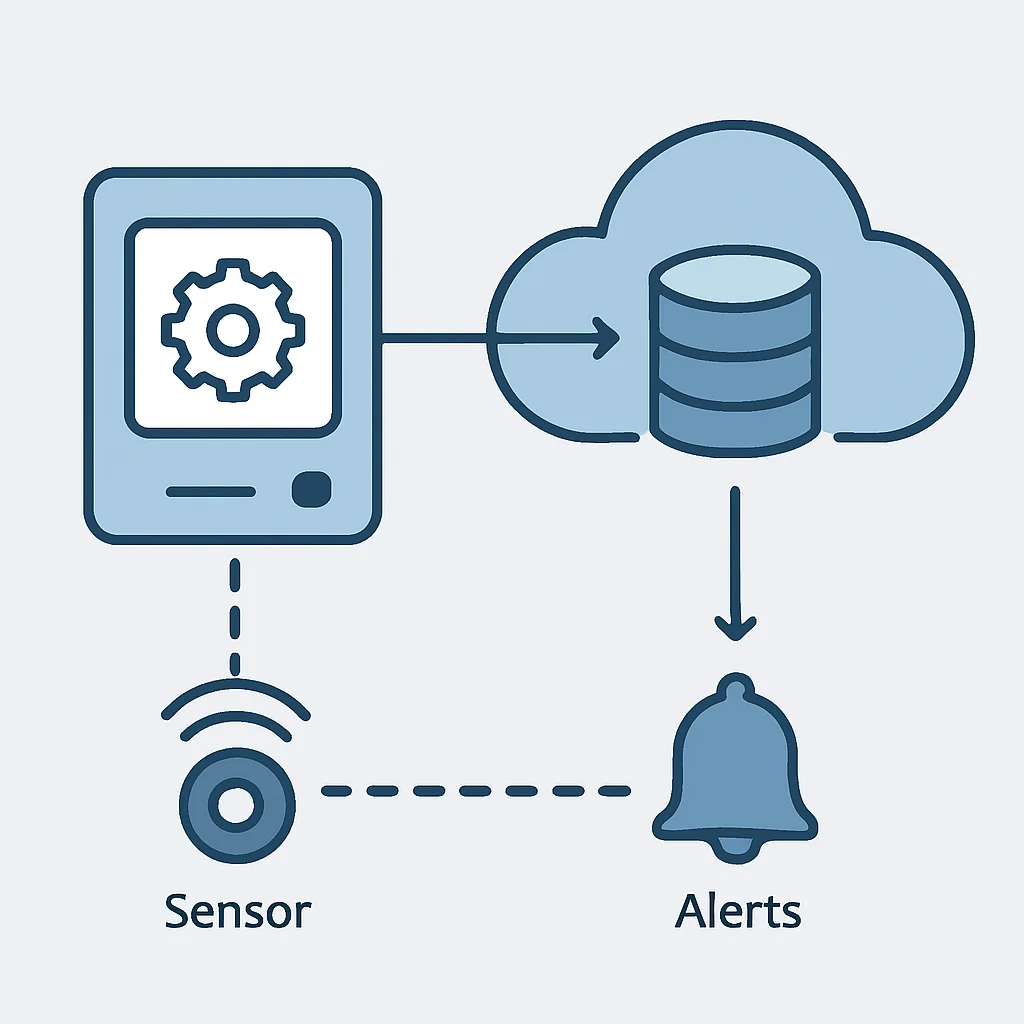
This Python snippet demonstrates a basic edge function that simulates sensor data processing. It performs a local classification (e.g., identifying a “critical” reading) and then decides whether to send a summarized alert to a cloud endpoint or store data locally for batch upload. This approach minimizes cloud bandwidth and latency.
import time
import random
import json
import requests # For sending data to cloud

# --- Configuration ---
CLOUD_ENDPOINT = "https://api.example.com/edge_alerts"
DEVICE_ID = "edge-sensor-001"
THRESHOLD_CRITICAL = 90.0
LOCAL_STORAGE_PATH = "/var/log/sensor_data.json"

# --- Edge Functions ---
def read_sensor_data():
    """Simulates reading data from a physical sensor."""
    # In a real scenario, this would interact with hardware
    return {"temperature": round(random.uniform(20.0, 100.0), 2),
            "humidity": round(random.uniform(30.0, 90.0), 2),
            "timestamp": int(time.time())}

def process_data_locally(data):
    """Performs local analysis on sensor data."""
    is_critical = data["temperature"] > THRESHOLD_CRITICAL
    data["status"] = "CRITICAL" if is_critical else "NORMAL"
    return data

def send_alert_to_cloud(alert_data):
    """Sends critical alerts to a centralized cloud endpoint."""
    try:
        response = requests.post(CLOUD_ENDPOINT, json=alert_data, timeout=5)
        if response.status_code == 200:
            print(f"[{time.ctime()}] Cloud alert sent successfully: {alert_data['status']}")
        else:
            print(f"[{time.ctime()}] Failed to send cloud alert. Status: {response.status_code}")
    except requests.exceptions.RequestException as e:
        print(f"[{time.ctime()}] Network error sending cloud alert: {e}")

def store_data_locally(data):
    """Stores non-critical data locally for later batch processing or auditing."""
    try:
        with open(LOCAL_STORAGE_PATH, 'a') as f:
            f.write(json.dumps(data) + '\n')
        print(f"[{time.ctime()}] Data stored locally: {data['status']}")
    except IOError as e:
        print(f"[{time.ctime()}] Error storing data locally: {e}")

# --- Main Edge Loop ---
def run_edge_device():
    print(f"[{time.ctime()}] Edge device '{DEVICE_ID}' starting...")
    while True:
        raw_data = read_sensor_data()
        processed_data = process_data_locally(raw_data)
        processed_data["device_id"] = DEVICE_ID

        if processed_data["status"] == "CRITICAL":
            send_alert_to_cloud(processed_data)
        else:
            store_data_locally(processed_data)

        time.sleep(5) # Simulate sensor reading interval

if __name__ == "__main__":
    run_edge_device()
KEY POINT
The growing ecosystem of specialized tools and frameworks, from ML inference engines to lightweight container orchestrators, empowers developers to overcome edge complexities and build innovative applications.
PRACTICAL APPLICATION
Practical Application: Developing for the Edge
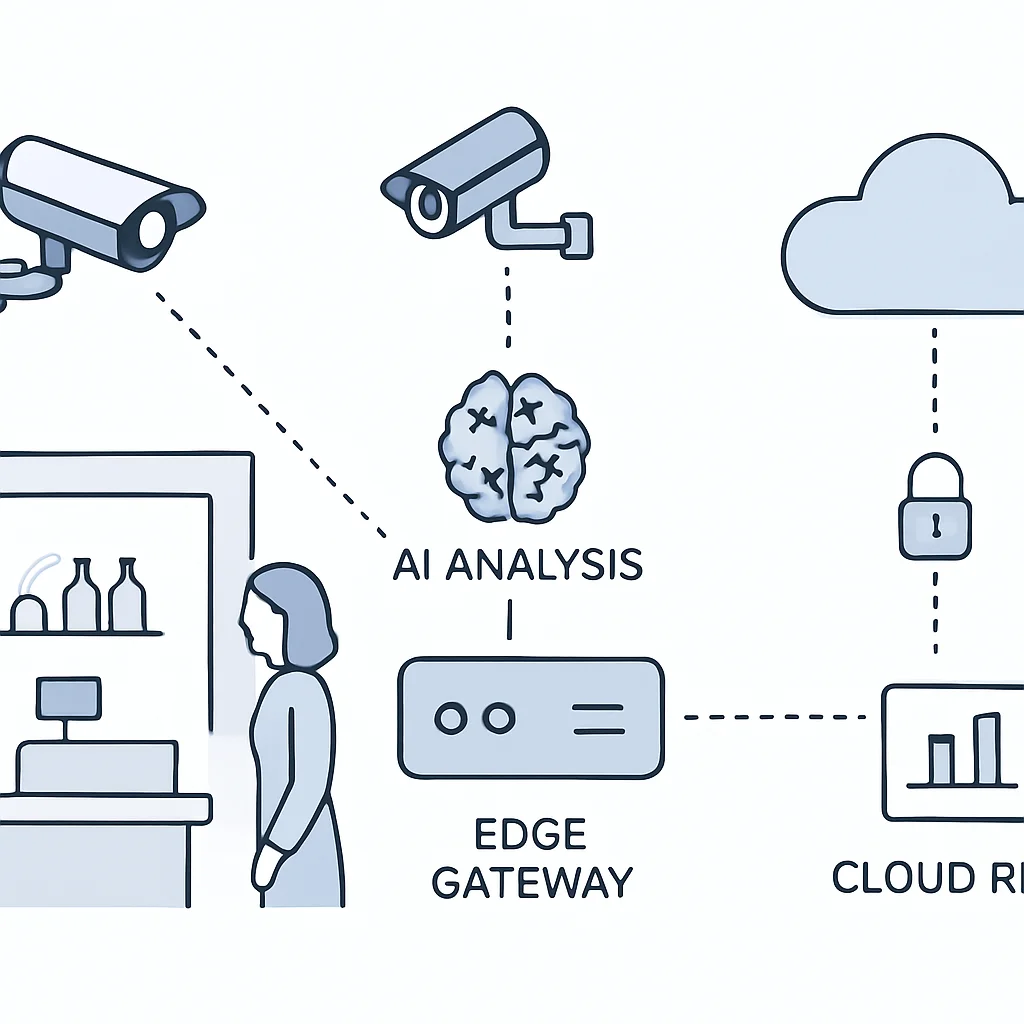
Let’s walk through a hypothetical scenario to illustrate how a developer might approach building an edge-enabled application in 2026. Consider a “Smart Retail Analytics” system designed to monitor customer traffic and behavior in a retail store using existing CCTV cameras.
Use Case: Smart Retail Analytics
Real-time customer traffic analysis in a retail store to optimize staffing and product placement without sending raw video to the cloud.
1
Edge Device Selection
A robust edge gateway (e.g., an industrial PC or a powerful NVIDIA Jetson device) is chosen for each store. This device will connect to multiple CCTV cameras and run the analytics software. It needs sufficient processing power for real-time video inference.
2
Model Optimization and Deployment
A pre-trained object detection model (e.g., YOLO or SSD) is optimized using TensorFlow Lite for efficient execution on the chosen edge gateway’s GPU. The model is then containerized (e.g., Docker) along with the application logic and deployed to the edge devices using a platform like AWS IoT Greengrass or Azure IoT Edge for remote management.
3
Local Data Processing & Aggregation
The edge application continuously processes video streams locally. It counts customer entries/exits, identifies hot zones, and calculates dwell times. Only aggregated, anonymized metadata (e.g., “Hourly customer count: 120, Peak activity: 14:00-15:00”) is generated, not raw video. This ensures privacy and minimizes data transfer.
4
Cloud Integration & Centralized Reporting
The aggregated metadata is periodically (e.g., every 15 minutes) sent to a central cloud platform for long-term storage, cross-store analysis, and dashboard visualization. This allows retail managers to see trends across all stores, optimize staffing schedules, and evaluate marketing campaign effectiveness. The cloud also handles model retraining and pushing updates back to the edge.
KEY POINT
Practical edge applications leverage local processing for real-time needs and privacy, while relying on the cloud for long-term analytics, global insights, and centralized management.
COMPARATIVE ANALYSIS
Edge vs. Cloud: A Comparative View
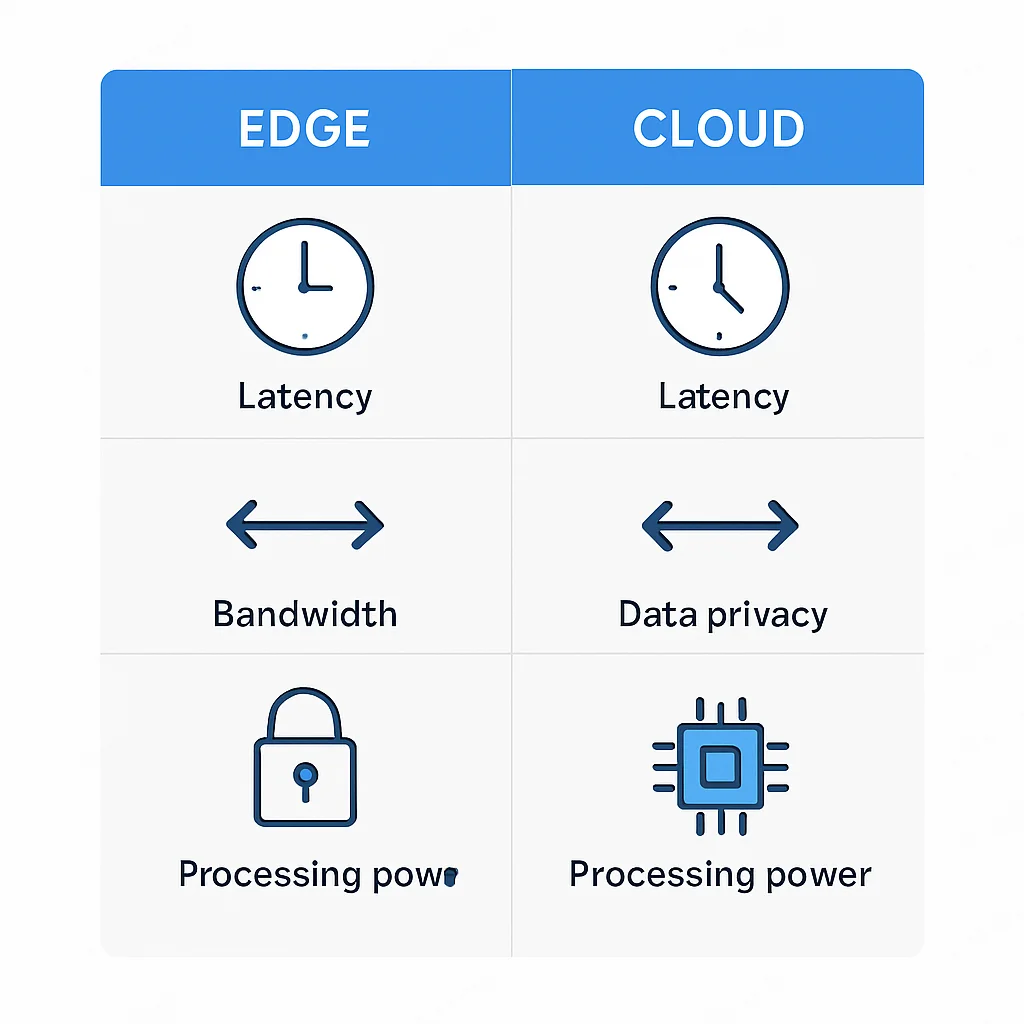
It’s important to understand that edge computing is not a replacement for cloud computing but rather a complementary paradigm. In 2026, most sophisticated applications will adopt a hybrid approach, leveraging the strengths of both. Here’s a comparative breakdown:
Edge Computing – Pros
✔️ Ultra-low Latency: Near-instantaneous response times, critical for real-time applications (e.g., autonomous systems, AR/VR).
✔️ Reduced Bandwidth Costs: Processes data locally, sending only aggregated insights or critical alerts to the cloud, significantly cutting data transfer costs.
✔️ Enhanced Privacy & Security: Sensitive data can be processed and anonymized locally, reducing exposure during transit and meeting compliance requirements.
✔️ Offline Capabilities: Applications can continue to function even with intermittent or no network connectivity to the cloud.
✔️ Distributed Resilience: Failure of one edge node doesn’t necessarily impact the entire system, as processing is distributed.
Edge Computing – Cons
❌ Resource Constraints: Limited computational power, memory, and storage on many edge devices.
❌ Management Complexity: Deploying, monitoring, and updating software across a vast number of heterogeneous edge devices can be challenging.
❌ Higher Initial Cost: Requires investment in specialized edge hardware and localized infrastructure.
❌ Physical Security Risks: Edge devices are often more exposed to physical tampering or theft.
❌ Limited Scalability for Global Data: Not suitable for applications requiring massive global data aggregation or complex batch processing.
Cloud Computing – Pros
✔️ Massive Scalability: Virtually unlimited computational and storage resources on demand.
✔️ Centralized Management: Easier to manage, monitor, and deploy applications from a single point.
✔️ Cost-Effective for Batch Processing: Ideal for large-scale data analytics, machine learning training, and global data aggregation.
✔️ Rich Ecosystem: Access to a vast array of managed services, tools, and APIs from major providers.
✔️ Robust Security Infrastructure: Hyperscale providers invest heavily in sophisticated security measures.
Cloud Computing – Cons
❌ Higher Latency: Data must travel to distant data centers, introducing delays unsuitable for real-time applications.
❌ Bandwidth Intensive: Requires sending all raw data to the cloud, leading to high data transfer costs and network congestion.
❌ Reliance on Connectivity: Applications cease to function without an active internet connection.
❌ Privacy Concerns: Centralizing all data can raise concerns about data sovereignty and regulatory compliance.
❌ Vendor Lock-in Potential: Deep integration with a specific cloud provider’s services can make migration difficult.
KEY POINT
The optimal strategy for most enterprises in 2026 is a hybrid approach, utilizing the edge for immediate, localized processing and the cloud for global aggregation, deep analytics, and long-term storage.
FAQ
Frequently Asked Questions About Edge Computing in 2026
Q. What is the primary benefit of edge computing for developers in 2026?
The primary benefit is enabling ultra-low latency applications by processing data closer to its source, which is crucial for real-time systems like autonomous vehicles and industrial automation. It also significantly reduces network bandwidth usage and enhances data privacy.
Q. How does 5G impact edge computing development?
5G provides the high bandwidth and extremely low latency connectivity essential for connecting numerous edge devices and facilitating rapid data exchange between edge nodes and local edge servers, accelerating the deployment of real-time edge applications.
Q. What are the biggest challenges developers face when building edge applications?
Key challenges include managing resource constraints on diverse edge devices, ensuring robust security and data privacy in distributed environments, and orchestrating deployments and updates across a vast number of geographically dispersed nodes.
Q. Is edge computing replacing cloud computing?
No, edge computing is complementary to cloud computing. While edge handles immediate, localized processing, the cloud remains essential for global data aggregation, long-term storage, deep analytics, machine learning training, and centralized management.
Q. What programming languages and tools are popular for edge development in 2026?
Python is highly popular due to its versatility and rich ML libraries. C/C++ is used for performance-critical tasks. Go and Rust are gaining traction for their efficiency. Tools like Docker, Kubernetes (K3s/MicroK8s), TensorFlow Lite, OpenVINO, and cloud-provider specific SDKs (AWS IoT Greengrass, Azure IoT Edge) are widely used.
WRAP-UP
Conclusion and Future Outlook
The landscape of computing is undeniably shifting. Edge computing, driven by advancements in AI, 5G, and distributed systems, is no longer a niche concept but a fundamental pillar of modern technological infrastructure. For developers in 2026, embracing edge computing means not just adapting to new tools and paradigms but also unlocking the potential to build truly transformative applications that interact with the physical world in unprecedented ways.
The journey to mastering edge development involves navigating complexities like resource constraints, stringent security requirements, and the intricacies of distributed data management. However, with the rapid evolution of specialized frameworks and platforms, these challenges are becoming increasingly manageable. The opportunities for innovation are vast, ranging from autonomous systems and smart cities to advanced industrial automation and personalized healthcare.
“The future of computing is distributed, intelligent, and responsive, with the edge playing a pivotal role in shaping our connected world.”
— Kwonglish Insight, 2026
As we look ahead, the integration of edge computing with emerging technologies like quantum computing and advanced neuromorphic chips will likely push the boundaries even further. Developers who invest in understanding and building for the edge today will be at the forefront of this exciting evolution, shaping the intelligent, real-time world of tomorrow. The distributed future is here, and it’s happening at the edge.
Thanks for reading!
We hope this deep dive into edge computing has provided valuable insights into its trends, challenges, and the incredible opportunities it presents for developers in 2026. The journey to a truly intelligent and responsive world is just beginning.
Got questions or want to share your edge computing experiences? Drop a comment below or connect with Kwonglish on social media!