SUMMARY
Building Your Personal Brand as a Developer in 2026
Practical strategies for developers to cultivate a strong personal brand, enhancing visibility and opening new career opportunities in the competitive tech landscape of 2026.
Keywords: Developer Career, Personal Branding, Tech Industry
TABLE OF CONTENTS
1 Why Your Personal Brand Matters More Than Ever in 2026
2 Core Methods: Crafting Your Developer Brand Story
3 Practical Application: Amplifying Your Brand Online
4 Common Pitfalls & Mistakes to Avoid
5 Frequently Asked Questions
WHY IT MATTERS
Why Your Personal Brand Matters More Than Ever in 2026
Hey there, Kwonglish fam! In today’s hyper-connected and increasingly competitive tech landscape, simply being a skilled developer isn’t always enough to stand out. The year 2026 brings with it an accelerated pace of technological change, a globalized talent pool, and a hiring market that’s constantly evolving. This is where your personal brand comes into play – it’s your unique fingerprint in the professional world, showcasing not just what you do, but who you are and the value you bring.
Think about it: when recruiters or hiring managers are sifting through hundreds of applications or searching for specific talent, what makes one profile pop more than another? It’s often the developer who has cultivated a recognizable presence, a clear niche, and a compelling narrative around their expertise. Your personal brand is that narrative. It’s the sum of your online presence, your professional interactions, your projects, and the reputation you build over time.
“Your personal brand isn’t just about getting noticed; it’s about attracting the right opportunities that align with your passions and career goals.”
— Kwonglish Insight, 2026
In the past, a strong resume and a good interview were sufficient. Today, however, your digital footprint speaks volumes before you even get a chance to speak for yourself. A well-defined personal brand can lead to inbound opportunities, speaking engagements, collaborations, and even higher earning potential. It signals to the world that you are a thought leader, an expert, and someone who is passionate about their craft.

Consider the rise of AI in recruitment. While AI can filter resumes for keywords, it’s the human element – the personal brand – that often makes the final, impactful impression. A strong brand helps you transcend algorithmic filters and connect on a human level, demonstrating your real-world impact and soft skills alongside your technical prowess.
KEY POINT
In 2026, a strong personal brand for developers is no longer a luxury but a necessity for career advancement, attracting ideal opportunities, and establishing credibility in a fiercely competitive market.
Moreover, a personal brand isn’t just for job seekers. For seasoned professionals, it solidifies your reputation, opens doors for leadership roles, and positions you as an invaluable asset within your organization and the broader industry. It’s about building a legacy, not just a resume.
CORE METHODS
Core Methods: Crafting Your Developer Brand Story
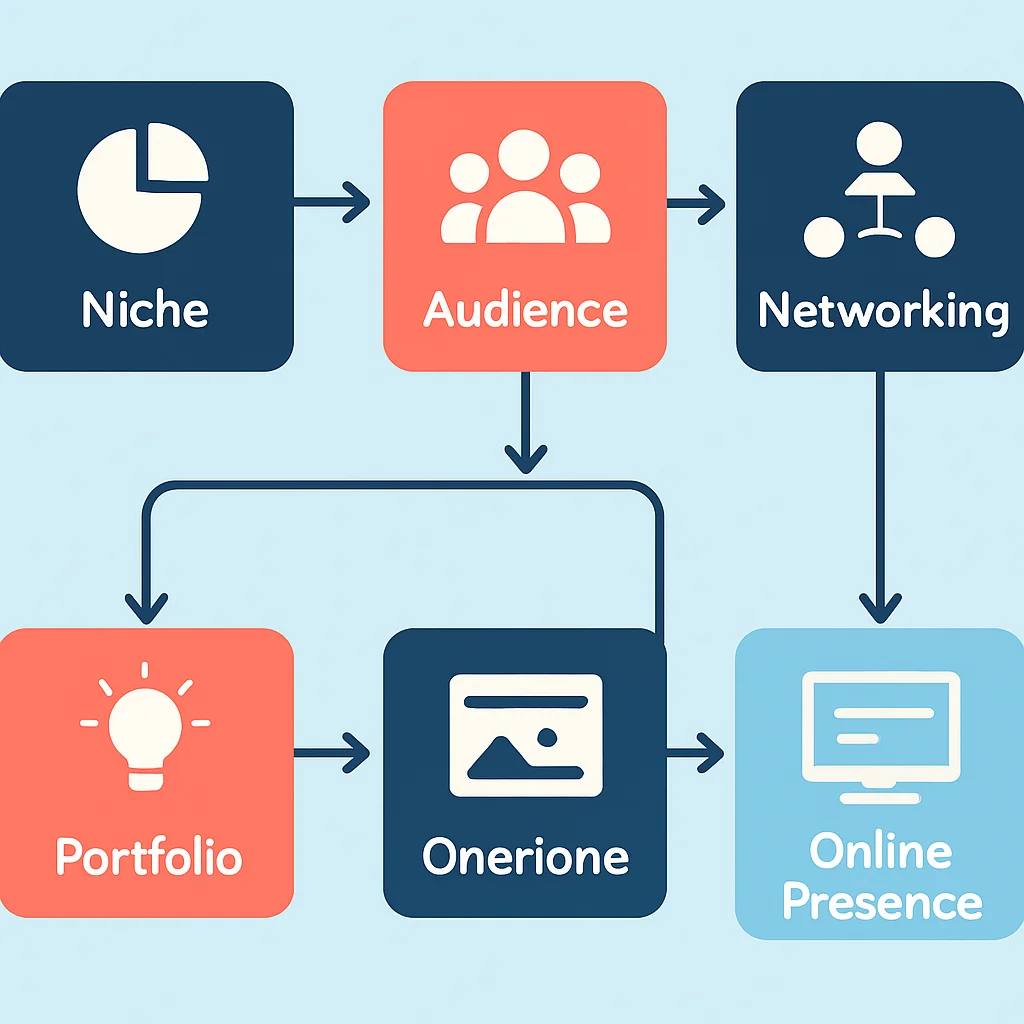
Building a personal brand isn’t about fabricating an image; it’s about authentically showcasing your skills, passions, and unique perspective. It’s a journey of self-discovery and strategic communication. Here’s a step-by-step guide to crafting your compelling developer brand story:
1
Define Your Niche and Expertise
What truly sets you apart? Are you a backend wizard specializing in Go and distributed systems? An AI/ML engineer focused on ethical AI? A frontend developer with a knack for accessibility and user experience? Don’t try to be everything to everyone. Identify 2-3 core areas where you excel and genuinely enjoy working. This clarity will be the foundation of your brand messaging.
2
Identify Your Target Audience
Who are you trying to reach? Recruiters at specific companies, fellow open-source contributors, potential clients, or industry thought leaders? Understanding your audience helps tailor your content and communication style. For instance, if you’re targeting startups, your brand might be more agile and innovative; for enterprises, it might emphasize reliability and scalability.
KEY POINT
Authenticity is paramount. Your personal brand should genuinely reflect who you are and what you’re passionate about. Faking it will quickly erode credibility.
3
Develop Your Unique Value Proposition (UVP)
This is a concise statement that summarizes what you offer, who you help, and why you are the best choice. It’s your elevator pitch. For example: “I help early-stage SaaS companies scale their backend infrastructure with robust, cost-effective solutions using Rust and Kubernetes.” Practice articulating this clearly and consistently across all your platforms.
4
Show, Don’t Just Tell: Build a Portfolio
Words are powerful, but demonstrable work is stronger. Your portfolio can include open-source contributions, personal projects, technical blogs, talks, or even snippets of code that showcase your problem-solving abilities. A well-curated GitHub profile is a must. Ensure your projects have clear READMEs, examples, and ideally, live demos.
“Your code is your resume. Make it speak volumes about your skill and dedication.”
— Industry Proverb
Here’s an example of how you might structure a simple yet effective GitHub README for a personal project:
CODE EXPLANATION
This markdown snippet shows a typical structure for a project’s README.md file on GitHub. It covers essential sections like the project title, description, features, installation, usage, and contribution guidelines, making it easy for others to understand and engage with your work.
# My Awesome Python API Project

## Description
This project is a simple RESTful API built with FastAPI that manages a collection of books. It demonstrates CRUD operations, data validation, and basic authentication.

## Features
- Create, Read, Update, Delete (CRUD) book entries.
- In-memory database for simplicity (can be extended to PostgreSQL).
- FastAPI for high performance and easy API development.
- Pydantic for data validation.

## Installation
1. Clone the repository:
   ```bash
   git clone https://github.com/yourusername/my-awesome-api.git
   cd my-awesome-api
   ```
2. Create a virtual environment and install dependencies:
   ```bash
   python -m venv venv
   source venv/bin/activate  # On Windows: `venv\Scripts\activate`
   pip install -r requirements.txt
   ```

## Usage
1. Run the API server:
   ```bash
   uvicorn main:app --reload
   ```
2. Access the API documentation at `http://127.0.0.1:8000/docs` to test endpoints.

## Contributing
Contributions are welcome! Please open an issue or submit a pull request.

## License
This project is licensed under the MIT License - see the LICENSE.md file for details.
5
Cultivate Your Online Presence
Consistency is key. Choose platforms where your target audience spends their time. This could be LinkedIn, GitHub, a personal blog, Stack Overflow, or even Twitter/X for developer discussions. Ensure your profiles are consistent in messaging, professional in appearance, and regularly updated. Your personal website can serve as a central hub for all these elements.
PRACTICAL APPLICATION
Practical Application: Amplifying Your Brand Online
Now that you’ve got your brand story defined, it’s time to put it into action. Your online presence is your digital storefront, and optimizing it is crucial for visibility and impact. Here’s how to practically apply your brand-building efforts across key platforms:
1. Optimize Your LinkedIn Profile
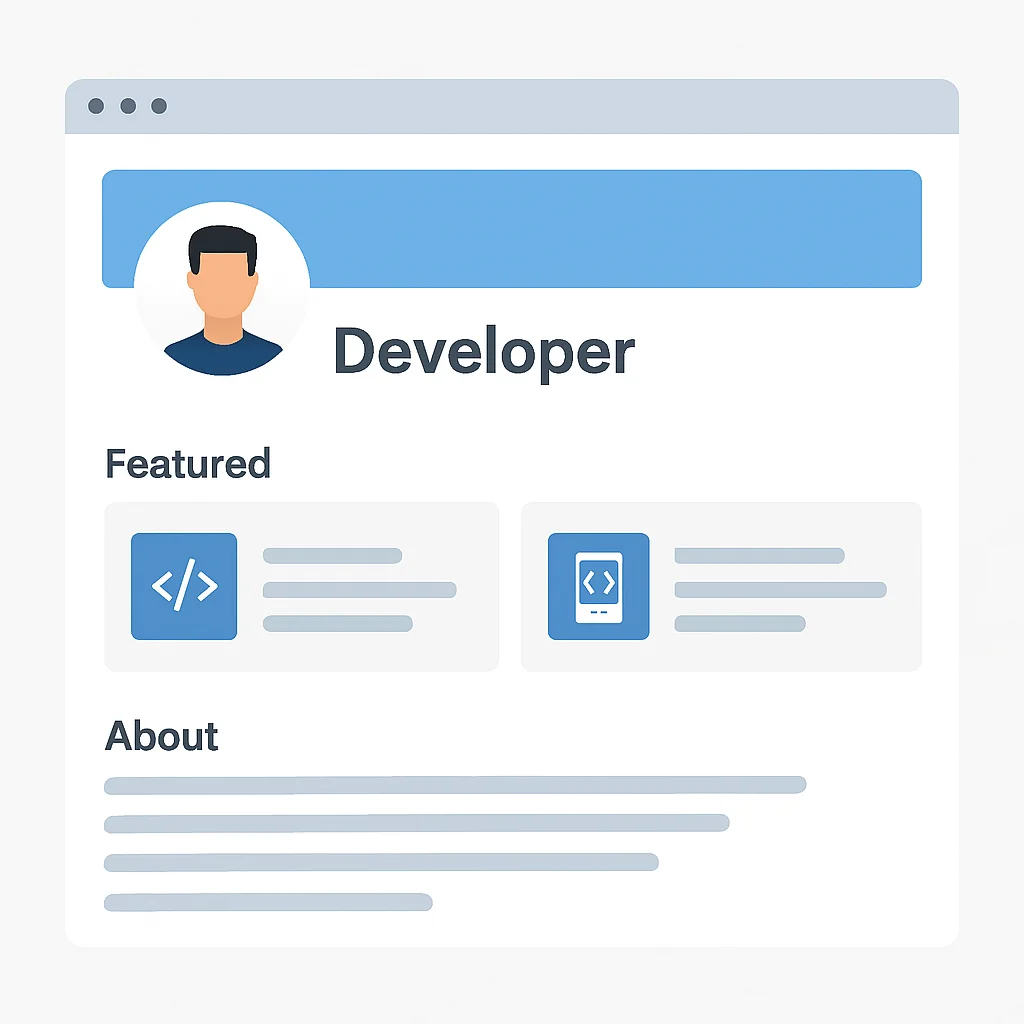
LinkedIn remains the go-to professional networking site. Treat it as your primary online resume and professional portfolio. Make sure your profile is complete, engaging, and reflective of your defined brand.
LinkedIn Optimization Checklist
Professional Photo & Banner — High-quality, approachable image and a relevant banner (e.g., code snippet, tech-related graphic).
Compelling Headline — Don’t just list your job title. Use your UVP. E.g., “Full-Stack Dev specializing in scalable microservices with Node.js & AWS | Helping startups build robust backend solutions.”
Detailed ‘About’ Section — Tell your story. Highlight your passions, key achievements, and what drives you. Use keywords relevant to your niche.
Showcase Projects & Articles — Use the ‘Featured’ section to link to your GitHub repos, personal website, blog posts, or presentations.
Engage & Network — Comment on industry posts, share relevant articles, and connect with peers and thought leaders. Don’t just passively consume content.
2. Leverage GitHub for Code & Collaboration
GitHub is your developer playground and often the first place technical recruiters look. It’s not just for storing code; it’s a platform for collaboration, learning, and showcasing your abilities.
KEY POINT
Active and meaningful contributions to open-source projects can significantly boost your credibility and visibility within specific tech communities.
Case Study: Open-Source Contributor
Meet Sarah, a junior Python developer who wanted to specialize in data engineering. Instead of just taking online courses, she started contributing to a popular open-source data pipeline library. Her consistent, thoughtful pull requests and bug fixes caught the attention of the maintainers and, eventually, a lead engineer at a prominent data analytics firm. She was offered a position without even applying, purely based on her visible contributions and positive interactions within the open-source community. This happened in early 2026, demonstrating the power of active engagement.
Here’s how you might create a simple GitHub profile README (a special repository named after your username) to highlight your brand:
CODE EXPLANATION
This markdown code creates a dynamic and informative GitHub profile README. It uses emojis for visual appeal, links to social profiles, highlights current work and interests, and even integrates a GitHub Stats card to visually represent activity. This gives visitors a quick overview of your skills and engagement.
<h1>Hi there, I'm <a href="https://kwonglish.com">Kwonglish</a> 👋</h1>

<p>I'm a passionate Backend Engineer specializing in building scalable and robust APIs with Go and Python. I love diving deep into system design, distributed systems, and optimizing performance. My goal is to create elegant solutions that solve complex problems.</p>

<h3>🚀 What I'm Currently Working On</h3>
<ul>
  <li>Developing a new microservice for real-time data processing in Go.</li>
  <li>Contributing to open-source project <code>awesome-go-framework</code>.</li>
</ul>

<h3>💡 My Skills & Interests</h3>
<p>
  <strong>Languages:</strong> Go, Python, JavaScript, SQL <br>
  <strong>Frameworks:</strong> FastAPI, Echo, Gin, React <br>
  <strong>Databases:</strong> PostgreSQL, MongoDB, Redis <br>
  <strong>Cloud & DevOps:</strong> AWS, Docker, Kubernetes, CI/CD <br>
  <strong>Concepts:</strong> Microservices, Distributed Systems, API Design, Performance Optimization
</p>

<h3>🌱 I'm Learning</h3>
<p>Currently exploring WebAssembly (Wasm) for server-side applications.</p>

<h3>💬 Let's Connect!</h3>
<p>
  <a href="https://www.linkedin.com/in/yourprofile/" target="_blank"><img src="https://img.shields.io/badge/-LinkedIn-0077B5?style=flat-square&logo=linkedin&logoColor=white" alt="LinkedIn"></a>
  <a href="https://twitter.com/yourhandle" target="_blank"><img src="https://img.shields.io/badge/-Twitter-1DA1F2?style=flat-square&logo=twitter&logoColor=white" alt="Twitter"></a>
  <a href="mailto:[email protected]"><img src="https://img.shields.io/badge/-Email-D14836?style=flat-square&logo=gmail&logoColor=white" alt="Email"></a>
</p>

<!-- GitHub Stats (optional, but popular) -->
<a href="https://github.com/anuraghazra/github-readme-stats">
  <img src="https://github-readme-stats.vercel.app/api?username=yourusername&show_icons=true&theme=nord" alt="Your GitHub Stats" />
</a>
3. Create a Personal Website/Blog
A personal website is your ultimate digital hub. It gives you full control over your narrative and allows you to present your brand exactly as you envision it. Use it to host your portfolio, blog posts, speaking engagements, and contact information.
Website Essentials
Clean Design — Keep it professional, easy to navigate, and mobile-responsive.
Clear Call to Action — Make it easy for visitors to connect with you, view your work, or download your resume.
Regular Content — Publish blog posts about your projects, insights, or tutorials. This positions you as a thought leader and improves SEO.
SEO Optimized — Use relevant keywords, meta descriptions, and ensure fast loading times to help people find you.
WARNING
Avoid inconsistent branding. Ensure your messaging, tone, and visual identity are cohesive across all platforms. Inconsistency can confuse your audience and dilute your brand’s impact.
COMMON PITFALLS & MISTAKES
Common Pitfalls & Mistakes to Avoid
While building a personal brand offers immense rewards, there are common traps developers fall into. Being aware of these can save you time, effort, and potential damage to your professional image.
PROBLEM 01
Inconsistency Across Platforms
Having a stellar LinkedIn profile but an empty or outdated GitHub, or a personal website that hasn’t been touched in years, creates a disjointed and unprofessional image. Your brand should tell a consistent story wherever it appears.
SOLUTION — Audit and Harmonize
Regularly audit all your online professional profiles (LinkedIn, GitHub, personal site, Twitter/X, Stack Overflow). Ensure your bio, profile picture, key skills, and project descriptions are consistent and up-to-date. Link to your other profiles from each platform to create a cohesive web presence. For instance, add your GitHub link to your LinkedIn and vice versa.
PROBLEM 02
Over-Promising or Under-Delivering
Exaggerating your skills or contributions can quickly backfire. If your brand promises expertise in a certain area, but your projects or discussions don’t reflect that, you risk losing trust and credibility. The same applies to starting a blog or project and then abandoning it.
SOLUTION — Be Authentic and Consistent
Build your brand on genuine skills and achievements. It’s better to be an expert in one niche than mediocre in many. If you start a project or content series, commit to it. Even small, consistent efforts are more impactful than grand, unfinished ones. Quality over quantity, always.

KEY POINT
Your personal brand is a marathon, not a sprint. Consistent, authentic effort over time yields the best results. Don’t expect instant fame or recognition.
PROBLEM 03
Neglecting Networking and Community Engagement
A strong online presence is fantastic, but it’s only half the battle. Neglecting real-world (or live virtual) networking and engagement with the broader developer community means missing out on crucial feedback, collaboration opportunities, and organic growth for your brand.
SOLUTION — Participate Actively
Attend virtual meetups, local tech conferences, or online forums. Ask questions, offer help, and share your insights. Even small interactions can lead to valuable connections. Consider giving a lightning talk at a local meetup or hosting a small workshop. These activities not only build your network but also reinforce your expertise.
FAQ
Frequently Asked Questions About Developer Branding
Q. How long does it take to build a strong personal brand as a developer?
Building a strong personal brand is an ongoing process, not a one-time task. While you can start seeing results from initial efforts within a few months, true brand recognition and influence typically take 1-3 years of consistent effort and engagement. It’s a continuous journey of learning, sharing, and evolving.
Q. Do I need to be a senior developer to start building my brand?
Absolutely not! Developers at any stage of their career can and should start building their personal brand. For junior developers, it’s an excellent way to stand out, demonstrate passion, and accelerate learning. Sharing your learning journey, small projects, or insights from courses can be incredibly valuable to others and establish your early expertise.
Q. What if I’m an introvert and don’t like public speaking or writing?
Building a personal brand doesn’t exclusively mean public speaking or blogging. You can focus on showcasing your skills through code contributions on GitHub, creating detailed project documentation, answering questions on Stack Overflow, or participating in niche online communities. The key is to find methods that align with your comfort level and strengths, focusing on demonstrating your value in authentic ways.
Q. Should my personal brand be separate from my employer’s brand?
Yes, generally your personal brand should be distinct from your employer’s. While your work at a company contributes to your experience and can be highlighted, your personal brand represents your individual expertise, values, and career trajectory. This ensures that your brand remains with you throughout your career, regardless of your employer, and provides you with professional autonomy.
WRAP-UP
Wrap-Up: Your Journey to Developer Recognition
There you have it, Kwonglish crew! Building your personal brand as a developer in 2026 is an investment in yourself, your career, and your future. It’s about taking control of your professional narrative, showcasing your unique talents, and connecting with the right opportunities. It’s a continuous process that requires dedication, authenticity, and strategic effort, but the rewards—increased visibility, better job prospects, and a stronger professional network—are well worth it.
Remember, your brand isn’t about being famous; it’s about being known for something specific and valuable. It’s about creating a reputation that precedes you, opening doors and fostering connections that might otherwise remain closed. So, take these steps, start small, and be consistent. Your future self will thank you.
Your Personal Branding Action Plan
☑️ Define your niche and UVP.
☑️ Optimize your LinkedIn profile with a strong headline and ‘About’ section.
☑️ Curate your GitHub with well-documented projects and contributions.
☑️ Consider starting a personal website or tech blog.
☑️ Engage regularly with the developer community online and offline.
☑️ Consistently review and update your brand assets every 3-6 months.

Ready to start building your brand? Pick one action item from the checklist above and implement it this week. Small steps lead to big changes. We’re excited to see you shine!
Thanks for reading, fellow developer!
We hope this guide empowers you to cultivate a powerful personal brand and unlock new career heights in 2026 and beyond.
Got questions or your own branding tips? Drop a comment below and share your insights with the Kwonglish community!