
SUMMARY
Networking for Developers: Build Connections & Boost Your Tech Career in 2026
Discover practical strategies for developers to build valuable connections, find mentors, and unlock new career opportunities in the tech industry.
Keywords: Developer Networking, Tech Career Growth, Professional Development
TABLE OF CONTENTS
1. Why Networking is Non-Negotiable for Developers in 2026
2. Core Methods: A Step-by-Step Guide to Effective Developer Networking
3. Practical Application: Real-World Strategies and Examples
4. Common Pitfalls & Mistakes to Avoid
5. Frequently Asked Questions (FAQ)
Why Networking is Non-Negotiable for Developers in 2026
Hey Kwonglish community! Let’s be real: as developers, we often pride ourselves on our technical prowess. We love diving deep into code, solving complex algorithms, and building incredible things. The idea of “networking” might conjure images of awkward cocktail parties or forced conversations, far removed from the comfort of our IDEs. But here’s the truth, especially in 2026: neglecting your professional network is like trying to navigate a dense forest without a map or compass. You might eventually find your way, but it’ll be a lot harder and take much longer.
The tech industry is dynamic, competitive, and constantly evolving. While your skills are paramount, your connections open doors that your resume alone might not. Think about it: an estimated 70-80% of jobs are found through networking. That number isn’t just for sales or marketing roles; it applies to us, the builders, too! In 2026, with the rise of AI tools streamlining some development tasks and a global talent pool, having a strong network isn’t just a nice-to-have; it’s a strategic imperative for career growth and resilience.
KEY POINT
Your network is your net worth in the tech industry. It provides access to hidden job markets, mentorship, collaboration opportunities, and critical insights into industry trends.
So, what exactly does networking offer a developer?
Benefits of Developer Networking
Uncover Hidden Opportunities — Many of the best jobs are never publicly advertised. They’re filled through referrals from trusted contacts.
Find Mentors & Mentees — Accelerate your learning, gain guidance, and give back by connecting with experienced professionals and emerging talents.
Stay Ahead of the Curve — Learn about new technologies, best practices, and industry shifts directly from those on the front lines, helping you future-proof your skills.
Build Your Personal Brand — Establish yourself as an expert or a valuable contributor in your niche, attracting opportunities rather than solely chasing them.
Gain Collaboration Partners — Find like-minded individuals for side projects, open-source contributions, or even starting a new venture.
Consider the story of Sarah, a backend developer I know. For years, she focused solely on her code, rarely attending meetups or engaging online. When she decided to look for a senior role in 2025, she applied to dozens of companies online with limited success. Frustrated, she started attending local tech events and contributing to open-source projects. Within three months, she connected with a lead engineer at a company she admired through a mutual connection she made at a hackathon. That connection led to an informal chat, then an interview, and ultimately, her dream job. Her skills were always there, but her network provided the direct pathway.

This isn’t about collecting business cards; it’s about building genuine relationships based on mutual respect and value. It’s about being proactive, curious, and willing to both give and receive. Let’s dive into how you, as a developer, can build a robust and effective network in 2026.
Core Methods: A Step-by-Step Guide to Effective Developer Networking
Networking doesn’t have to be intimidating. It’s a skill, like coding, that can be learned and improved with practice. Here’s a structured approach to building your developer network effectively.
Step 1
Define Your Goals and Niche
Before you start reaching out, understand why you’re networking and who you want to connect with. Are you looking for a new job in a specific technology (e.g., Rust, Web3, AI/ML)? Do you want to find a mentor in cloud architecture? Are you seeking collaborators for an open-source project? Clarity here will make your efforts much more targeted and efficient. Identify your niche – frontend, backend, DevOps, mobile, data science – and then think about the types of people who operate in that space, or in spaces adjacent to where you want to grow.
Step 2
Identify Your Platforms and Communities
Where do developers hang out? It’s not always at formal events. In 2026, online communities are just as, if not more, potent. Consider:
• Professional Social Networks: LinkedIn is the obvious choice. Optimize your profile to showcase your skills and projects. GitHub is also crucial – it’s your developer resume.
• Technical Forums & Communities: Stack Overflow, Reddit (r/programming, r/ExperiencedDevs), specific Discord servers for languages or frameworks, dev.to, Hashnode, Medium, and even Twitter (now X) for following thought leaders.
• Local & Virtual Meetups: Check Meetup.com, Eventbrite, or local university tech calendars for events related to your interests. Many are still hybrid or fully virtual, making them accessible.
• Conferences & Workshops: Whether in-person or virtual, these are concentrated hubs of industry professionals. Even if you can’t attend, many publish speaker lists and recordings, offering leads for connections.
• Open Source Projects: Contributing to open-source software is a fantastic way to meet talented developers and build a reputation.
KEY POINT
Don’t try to be everywhere at once. Focus on 2-3 platforms or communities where you can consistently engage and add value, aligning with your networking goals.
Step 3
Craft Your Online Presence
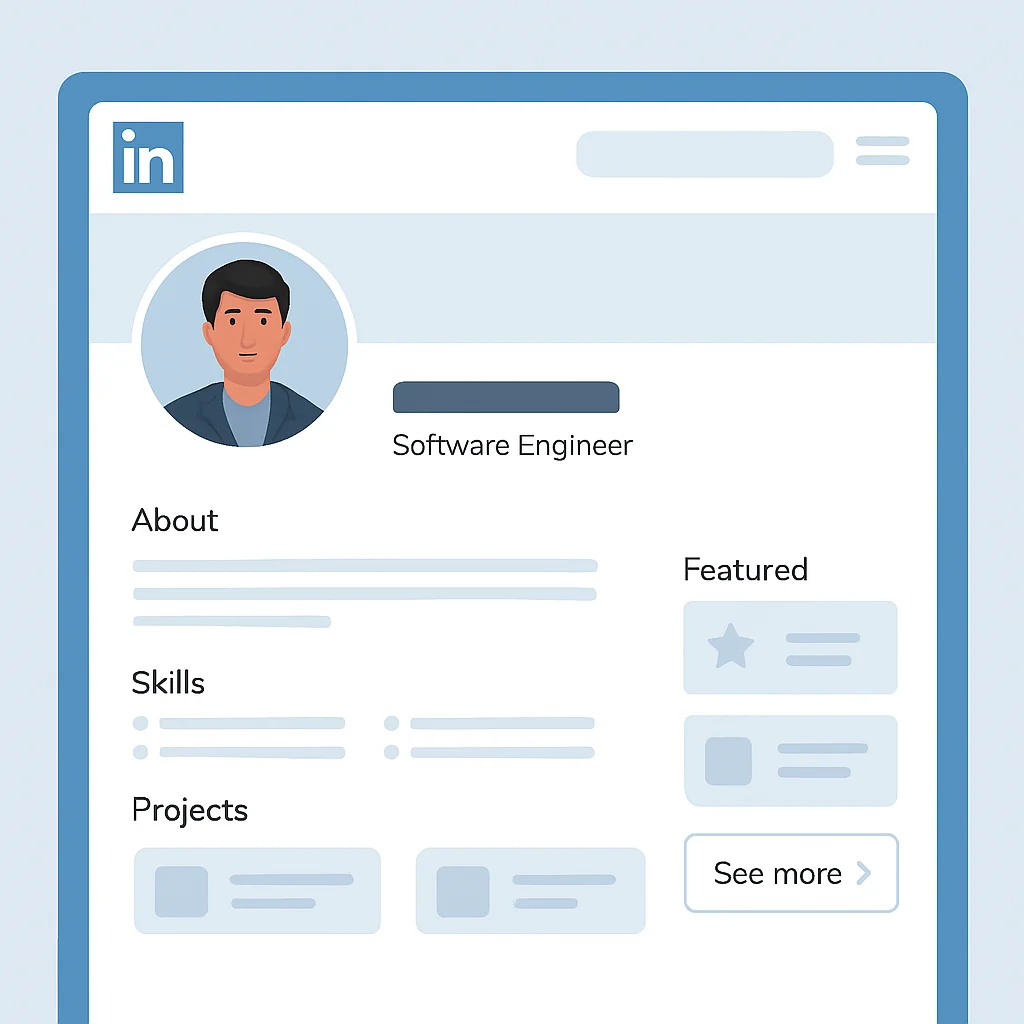
Your online profiles are your digital handshake. Make them count. Ensure your LinkedIn profile is up-to-date, highlights your skills, projects, and career aspirations. Use a professional headshot. On GitHub, make sure your contributions are visible, and consider having a well-maintained personal website or portfolio. This isn’t about bragging; it’s about making it easy for people to understand who you are and what you do.
Remember, people often look you up online before deciding to connect or engage further. A strong, consistent online presence builds credibility and trust.
Step 4
Engage Authentically and Add Value
This is the heart of effective networking. Don’t just lurk. Engage! Comment thoughtfully on articles, answer questions on forums, share your insights, and offer help where you can. The goal is to be seen as a valuable member of the community, not just someone looking for something.
When reaching out:
• Personalize your message: Refer to something specific they’ve done or said. “I enjoyed your talk at the 2026 Developer Summit on serverless architectures…” is far better than “Hi, connect with me.”
• Be clear about your intent: Are you seeking advice, a quick chat, or just to connect because you admire their work? State it concisely.
• Offer value first: Can you share a relevant resource, offer feedback on their project (if appropriate), or connect them with someone in your network? Even a simple compliment on their work is a form of value.
• Keep it concise: Respect their time. A few well-crafted sentences are more effective than a long, rambling paragraph.
Step 5
Follow Up and Nurture Relationships
The initial connection is just the beginning. Follow up promptly (within 24-48 hours) after a meeting or introduction. A quick, personalized email thanking them for their time and reiterating a key takeaway from your conversation is perfect. Long-term, nurture these relationships. This doesn’t mean pestering people. It means:
• Occasional check-ins: Share an article relevant to their interests, congratulate them on a new role, or simply ask how they’re doing.
• Offer help: If you see an opportunity where you can genuinely assist them, do so.
• Be a connector: Introduce two people in your network who could benefit from knowing each other. This is a powerful way to add value.
Remember, networking is a marathon, not a sprint. Consistent, authentic engagement builds a strong, supportive network over time.
Practical Application: Real-World Strategies and Examples
Let’s get concrete. Here are specific scenarios and how you can apply the core methods to build your network.
Scenario 1: Attending a Virtual Tech Conference (e.g., KubeCon + CloudNativeCon 2026)
Even in a virtual setting, conferences are prime networking opportunities. Before the event, check the speaker list and attendee directory (if available). Identify 3-5 people you’d genuinely like to connect with based on their talks or roles.
Conference Networking Playbook
Strategize your approach for virtual tech events.
• Pre-event: Identify key speakers/attendees. Follow them on LinkedIn/X. Look for their talks/papers.
• During event: Actively participate in Q&A. Use the chat for insightful comments. Join virtual “hallway tracks” or breakout rooms. Send a personalized LinkedIn connection request to speakers after their session, referencing their talk.
• Post-event: Send a follow-up message within 24 hours. Suggest a brief virtual coffee chat if appropriate.
Scenario 2: Engaging on LinkedIn
LinkedIn is your professional hub. Don’t just connect; interact. Find posts from engineers or tech leaders you admire. Instead of a generic “Great post!”, offer a specific, thoughtful comment that adds to the conversation. For example, if someone posts about a new feature in Kubernetes, you could comment: “Excellent point about the challenges of stateful applications in K8s! Have you explored using Operator patterns for managing custom resources in this context? Curious about your thoughts.”
CODE EXPLANATION
This Python script helps you generate personalized LinkedIn connection messages. It takes a template and fills in details about the person you’re connecting with, making your outreach more efficient and authentic. Remember to customize the template for each individual.
def generate_linkedin_message(name, common_interest, reference_point, call_to_action=""):
    """
    Generates a personalized LinkedIn connection message.

    Args:
        name (str): The name of the person you want to connect with.
        common_interest (str): A shared interest or area of expertise.
        reference_point (str): A specific article, talk, or project you admire.
        call_to_action (str, optional): A suggestion for next steps (e.g., "Would love to chat sometime").

    Returns:
        str: The personalized connection message.
    """
    message = f"Hi {name},\n\nI've been following your work on {common_interest} and was particularly impressed by {reference_point}. I'm also deeply interested in {common_interest} and would love to connect with fellow professionals in the field."

    if call_to_action:
        message += f" {call_to_action}"

    message += "\n\nBest,\n[Your Name]"
    return message

# --- Example Usage ---
# Scenario 1: Connecting after a conference talk
msg1 = generate_linkedin_message(
    name="Dr. Anya Sharma",
    common_interest="AI ethics in software development",
    reference_point="your recent presentation at the Global Tech Summit 2026 on responsible AI implementation."
)
print("--- Message 1 ---")
print(msg1)
print("\n")

# Scenario 2: Connecting with someone whose blog post you admired
msg2 = generate_linkedin_message(
    name="Mark Chen",
    common_interest="optimizing database performance",
    reference_point="your insightful article on 'Scaling Postgres with Sharding' on dev.to.",
    call_to_action="Would you be open to a quick chat about best practices?"
)
print("--- Message 2 ---")
print(msg2)
print("\n")

# Scenario 3: Connecting with a potential mentor
msg3 = generate_linkedin_message(
    name="Sophia Rodriguez",
    common_interest="serverless architecture",
    reference_point="your extensive experience leading the serverless team at InnovateCorp.",
    call_to_action="I'm keen to learn more about career paths in this area and would be grateful for any advice you might offer."
)
print("--- Message 3 ---")
print(msg3)
KEY POINT
Always personalize your outreach. A generic message is easily ignored. Show you’ve done your homework and genuinely value their work or perspective.
Scenario 3: Finding a Mentor
A mentor can be invaluable for career guidance. Look for someone whose career path you admire, who works in an area you want to grow into, or who has skills you want to develop. Don’t directly ask “Will you be my mentor?” on the first interaction. Instead, build a relationship first. Start by asking for a brief informational interview (15-20 minutes) to learn about their career, challenges, and insights.
Informational Interview Approach
How to approach a potential mentor for advice.
• Initial outreach: “I’m a junior developer interested in [their field]. I admire your work at [their company/project]. Would you be open to a brief 15-minute virtual coffee to share insights on your career journey?”
• Prepare questions: Focus on their experiences, challenges, and advice. Examples: “What’s the biggest challenge you faced breaking into [X technology]?” or “If you were starting your career today, what would you focus on?”
• Be respectful of time: Stick to the agreed-upon duration. End with a sincere thank you.
• Follow up: Send a thank-you note. If the conversation goes well and you feel a connection, you can later ask if they’d be open to occasional check-ins or more formal mentorship.

Scenario 4: Contributing to Open Source
Open source is a fantastic way to network by doing. You’re collaborating with developers globally, getting your code reviewed, and building a public portfolio. Start small: fix a bug, improve documentation, or add a minor feature. Engage in the project’s discussions (GitHub Issues, Discord, mailing lists). Your contributions speak volumes about your skills and collaborative spirit.
When you contribute, you naturally connect with maintainers and other contributors. These are often highly skilled individuals who value talent and teamwork. Many developers have landed jobs or found mentors through their open-source activities.
Common Pitfalls & Mistakes to Avoid
Even with good intentions, it’s easy to stumble when networking. Being aware of these common mistakes can help you navigate the process more effectively.
WARNING
Avoid these common networking mistakes to ensure your efforts are productive and perceived positively.
PROBLEM 01
Being Transactional (The “What Can You Do For Me?” Approach)
Networking is about building relationships, not just extracting favors. If your first message to someone is a job request or a demand for their time without offering any context or demonstrating genuine interest, it will likely be ignored. People can sense when they’re being used.
SOLUTION
Focus on giving before receiving. Offer value, share insights, ask thoughtful questions, and show genuine curiosity about their work. Build rapport first, and opportunities will naturally arise from a strong relationship.
PROBLEM 02
Lack of Follow-Up
You had a great conversation at a meetup, exchanged contact info, and then… nothing. Without follow-up, that connection quickly fades into oblivion. The initial contact is just the first step; nurturing the relationship is where the real value lies.
SOLUTION
Always follow up within 24-48 hours with a personalized message. Set reminders to periodically check in with key contacts. A simple “Thought of you when I saw this article on [topic]” can keep the connection warm without being intrusive.

KEY POINT
Consistency is key. Sporadic networking yields sporadic results. Make it a regular habit, whether it’s commenting on LinkedIn posts or attending a monthly meetup.
PROBLEM 03
Being Unprepared or Vague
“I’m just looking for opportunities” or “What do you do?” without any prior research shows a lack of respect for the other person’s time. It’s difficult for someone to help you if you can’t articulate what you’re looking for or why you’re connecting with them specifically.
SOLUTION
Do your homework! Research the person and their company. Have a clear, concise “elevator pitch” about who you are and what you’re interested in. Prepare specific questions that show you’ve thought about their work.
Frequently Asked Questions (FAQ)
Q. Is networking still relevant for developers with so many online job boards?
A. Absolutely! While online job boards are useful, an estimated 70-80% of jobs are filled through networking and referrals. Networking gives you access to the “hidden job market,” provides warm introductions, and helps you stand out in a competitive landscape, especially in 2026.
Q. I’m an introverted developer. How can I network effectively without feeling overwhelmed?
A. Focus on quality over quantity. Start with online interactions, like thoughtful comments on LinkedIn or contributing to open-source projects. When attending events, set a small, achievable goal, like talking to just two new people. One-on-one virtual coffee chats can also be less intimidating than large group settings.
Q. How do I ask for a mentor without sounding demanding or awkward?
A. Don’t ask directly, “Will you be my mentor?” Instead, build a relationship first. Start by requesting a brief informational interview (15-20 minutes) to learn about their career journey or specific insights. If a connection forms, you can then gently explore the possibility of ongoing guidance.
Q. What’s the best way to follow up after a networking event?
A. Send a personalized message within 24-48 hours. Reference something specific you discussed to show you were listening. Keep it concise, reiterate your appreciation for their time, and suggest a clear next step if appropriate (e.g., “I’d love to connect on LinkedIn” or “Perhaps a quick virtual chat sometime?”).
Q. Should I try to connect with very senior developers or only peers?
A. A diverse network is the strongest. Connect with peers for collaboration and shared learning, and with senior developers for mentorship and strategic insights. Just ensure your outreach to senior individuals is respectful of their time, highly personalized, and clearly articulates your reason for connecting.
Wrap-Up: Your Network, Your Future
Networking might feel like an additional task on top of your coding responsibilities, but it’s an investment in your long-term career health. In the ever-evolving tech landscape of 2026, the ability to connect, learn, and collaborate with others is more valuable than ever. It’s about building bridges, not just burning code. Start small, be consistent, and always strive to add value to others.
Remember, every connection you make is a potential door to a new opportunity, a new piece of knowledge, or a new friendship. So, step out of your comfort zone, engage authentically, and watch your tech career flourish.

Your Developer Networking Checklist for 2026
☑ Defined clear networking goals for the next 6-12 months
☑ Optimized LinkedIn and GitHub profiles
☑ Identified 2-3 key online communities or platforms to engage with
☑ Practiced crafting personalized outreach messages
☑ Committed to regular, authentic engagement (e.g., 30 mins/week)
☑ Set up a system (even a simple spreadsheet) to track connections and follow-ups
☑ Prepared for an informational interview with a potential mentor
Thanks for reading, Kwonglish!
I hope this guide empowers you to build a powerful network and supercharge your tech career. Remember, your journey in tech is a collaborative one, and a strong network is your most valuable asset.
Got questions or your own networking tips? Drop a comment below or connect with me on Kwonglish.com →