
SUMMARY
Negotiating Your Developer Salary in 2026
This is a practical guide for developers on how to confidently negotiate salary, understand your market value, and secure the compensation you deserve in 2026.
Keywords: Developer Salary, Salary Negotiation, Tech Compensation
TABLE OF CONTENTS
1 Why Negotiating Your Salary Matters in 2026
2 Core Methods: Mastering Your Market Value
3 Practical Application: The Art of the Counter-Offer
4 Common Pitfalls & Mistakes to Avoid
5 Frequently Asked Questions (FAQ)
6 Wrap-Up: Your Path to Maximized Earning
SECTION 1
Why Negotiating Your Salary Matters in 2026
Hey there, Kwonglish fam! Let’s discuss something that often feels awkward but is absolutely crucial for your career growth: salary negotiation. As a developer in 2026, the tech landscape is constantly evolving, and your earning potential should evolve with it. Many developers, especially those early in their careers, leave significant money on the table simply because they don’t negotiate.
Consider this: a seemingly small difference of $5,000 or $10,000 in your starting salary can compound dramatically over your career. If you start at $80,000 instead of $75,000, and receive average annual raises of 3-5%, that initial gap can balloon into hundreds of thousands of dollars over a decade. It’s not just about the immediate paycheck; it’s about establishing a higher baseline for all future earnings.
“The single biggest jump in your salary will likely come from switching jobs, not from annual reviews. And when you switch, negotiating that new offer is paramount.”
— Kwonglish Insight
In 2026, the demand for skilled developers remains high, but the market is also more nuanced. While AI and machine learning specialists might command top dollar, generalist roles still offer strong compensation. Companies are increasingly looking for developers who not only code but also understand business impact, collaborate effectively, and continuously learn. This means your negotiation isn’t just about your technical skills; it’s about the full package of value you bring.
Many developers shy away from negotiation due to fears of losing the offer or appearing greedy. However, most companies expect candidates to negotiate. It demonstrates confidence, an understanding of your worth, and a proactive attitude – qualities that are highly valued in any professional role. Recruiters and hiring managers often have a budget range, and their initial offer is rarely their absolute maximum. If you don’t ask, you don’t get.
KEY POINT
Negotiating your salary is not just about a bigger paycheck today, but about significantly increasing your lifetime earnings. It’s a skill that demonstrates confidence and business acumen.
Beyond the base salary, negotiation extends to total compensation, which includes bonuses, stock options or Restricted Stock Units (RSUs), benefits, and even perks like professional development budgets. Understanding and negotiating these components can add substantial value to your overall package. This guide will walk you through the strategies to confidently approach your next salary negotiation and maximize your earning potential in 2026.

SECTION 2
Core Methods: Mastering Your Market Value
Before you even think about negotiating, you need to understand your worth. This isn’t just a gut feeling; it’s backed by data and a clear understanding of what you bring to the table. Let’s dive into how you can accurately assess your market value.
Research Your Market Value
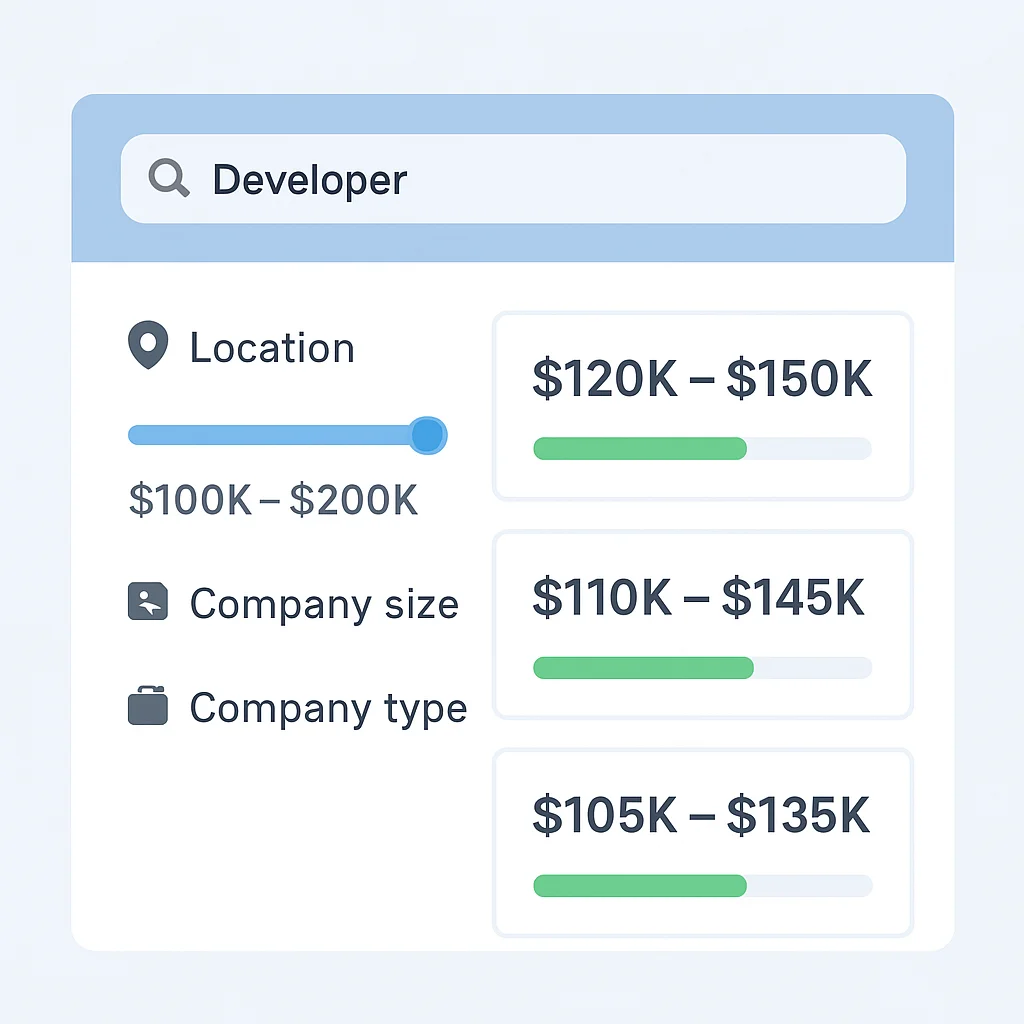
Accurate market data is your strongest weapon. Start by looking at reliable salary aggregators and industry reports. Websites like Glassdoor, Levels.fyi, Comparably, and LinkedIn Salary are invaluable resources. When using these, pay close attention to specifics:
- Location: Salaries vary wildly by city and state. A developer in San Francisco will earn significantly more than one in a lower cost-of-living area, even for the same role.
- Company Size & Type: Large tech giants (FAANG-level) typically pay more than startups or non-tech companies.
- Experience Level: Entry-level, junior, mid-level, senior, staff, principal – each has a distinct salary band.
- Specific Technologies/Skills: Expertise in high-demand areas like AI/ML, cloud platforms (AWS, Azure, GCP), specific frameworks (React, Node.js, Go), or niche languages can command a premium.
- Role Specialization: Frontend, Backend, Full-stack, DevOps, Data Engineer, Mobile Developer – each has its own compensation range.
Don’t just look at the average. Try to find data points that match your profile as closely as possible. For instance, if you’re a mid-level Python backend developer with 4 years of experience in New York City, search for that exact combination. If you can’t find exact matches, look for similar roles and adjust your expectations accordingly.
KEY POINT
Your market value is dynamic. Continuously research salary data based on your specific skills, location, experience, and target company type to establish a realistic and ambitious compensation range.
Understand Total Compensation (TC)
Many developers make the mistake of focusing solely on the base salary. In reality, your total compensation (TC) is what truly matters. This includes several components:
- Base Salary: The fixed annual amount you receive. This is the foundation.
- Performance Bonus: A percentage of your base salary, often tied to individual or company performance. This can range from 5% to 20% or more.
- Equity (RSUs/Stock Options): This is where tech compensation gets interesting.
- Restricted Stock Units (RSUs): Shares of the company granted to you, which vest over a period (e.g., 25% each year for four years). Once vested, they are yours.
- Stock Options: The right to buy company shares at a pre-determined price. More common in startups, these can be very lucrative if the company grows.
For public companies, RSUs are a significant and often predictable part of TC. For startups, equity can be a lottery ticket – high risk, high reward.
- Sign-on Bonus: A one-time payment to entice you to join, often clawed back if you leave within a certain period (e.g., 12-24 months).
- Benefits: Health insurance, dental, vision, 401(k) matching, unlimited PTO, commuter benefits, wellness stipends, tuition reimbursement. These might not be cash in hand, but they represent real value. A strong 401(k) match, for instance, is free money towards your retirement.
When comparing offers, always look at the total compensation package. A lower base salary with substantial equity and a good bonus structure might actually be more valuable than a higher base with no other components. Always ask for a detailed breakdown of the offer.

Build Your Case: Documenting Your Value
Once you know what you’re worth, you need to articulate why. This means showcasing your achievements and the value you’ve delivered. Don’t just list responsibilities; quantify your impact wherever possible.
Create a “brag document” for yourself that includes:
- Projects Completed: What did you build? What was its purpose?
- Impact & Metrics: Did your work improve performance by 20%? Reduce bugs by 15%? Save the company $50,000 annually? Increase user engagement by X%?
- Skills Acquired/Applied: Highlight specific technologies, frameworks, or methodologies you mastered and used effectively.
- Leadership & Mentorship: Did you mentor junior developers? Lead a feature? Improve team processes?
- Problem-Solving: Describe complex challenges you faced and how you successfully overcame them.
This document isn’t something you hand over, but it’s your personal reference guide. It boosts your confidence and provides concrete examples you can draw upon during interviews and negotiation conversations. For example, instead of saying “I worked on the payment system,” say “I refactored the legacy payment processing module, reducing transaction latency by 30ms and improving system reliability by 10%, leading to a 5% increase in successful transactions.” See the difference?
SECTION 3
Practical Application: The Art of the Counter-Offer
You’ve done your homework, you know your worth, and now you’ve got an offer in hand. This is where the real fun begins! Don’t accept the first offer immediately. Always negotiate. Here’s how to play the game strategically.
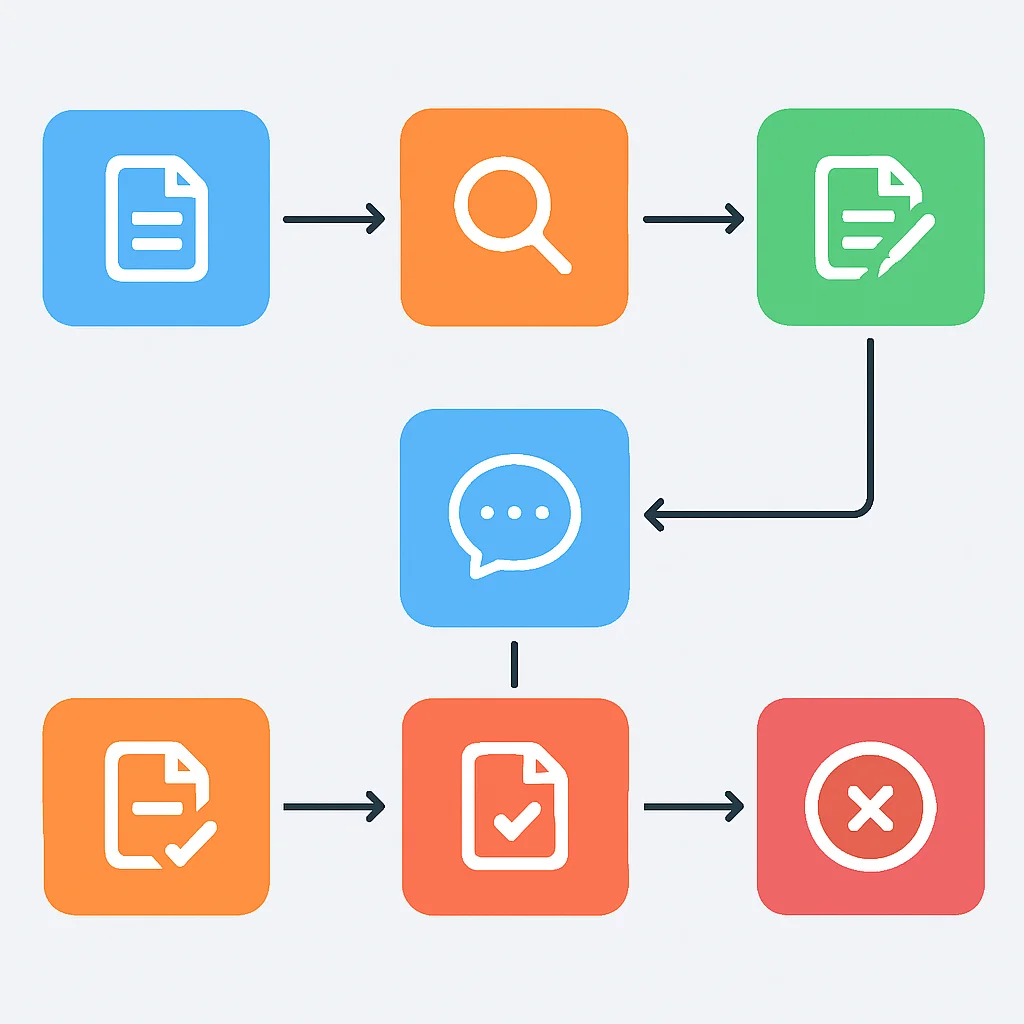
The Negotiation Dance: Step-by-Step
1
Receive the Offer
When you receive a verbal offer, express enthusiasm and gratitude. Thank them for the offer. Do not accept or reject it on the spot. Ask for the offer in writing, including all components (base, bonus, equity, benefits, sign-on). Give yourself at least 24-48 hours to review it thoroughly.
2
Analyze and Formulate Your Counter
Compare the offer against your researched market value and your desired TC. Identify specific areas where you want to negotiate (e.g., higher base, more equity, sign-on bonus). Aim for a counter-offer that is 10-20% higher than their initial offer, but within your researched market range. Be prepared to justify your request with your skills, experience, and value.
3
Present Your Counter-Offer
Ideally, do this over the phone or video call with the hiring manager or recruiter. This allows for a more personal touch and immediate feedback. Follow up with an email summarizing your discussion. Be polite, confident, and firm. Focus on the value you bring and your excitement for the role, while clearly stating your desired compensation.
4
Handle Responses and Rebuttals
They might accept, make a revised offer, or push back. If they push back, reiterate your value and market research. If they can’t meet your base, try to negotiate other components like a higher sign-on bonus, more RSUs, or a professional development budget. Always aim for a win-win.
5
Final Decision
Once you’ve reached a satisfactory agreement, accept the offer enthusiastically and professionally. Get the revised offer in writing before formally accepting. If you can’t reach an agreement, be prepared to walk away if the offer is truly below your worth. This is a tough decision but sometimes necessary.
Crafting Your Counter-Offer: An Example Script
Here’s a template for what you might say (and email) when presenting your counter-offer. Remember to customize it with your specific details and research.
CODE EXPLANATION
This is a polite yet firm email script for a counter-offer. It expresses appreciation, reiterates enthusiasm for the role, and clearly states desired compensation based on market value and unique contributions. It also shows flexibility by suggesting negotiation on other components if the base salary is inflexible.
Subject: Following Up on Software Engineer Offer - [Your Name]

Hi [Hiring Manager/Recruiter Name],

Thank you so much for extending the offer for the Software Engineer position at [Company Name]. I truly enjoyed learning more about the team during the interview process, especially [mention something specific you liked, e.g., the challenging projects, the team's collaborative spirit]. I am very excited about the opportunity to contribute my skills in [mention specific tech, e.g., React and Node.js] to [mention project/goal, e.g., your new product initiative].

Regarding the compensation package, I am very grateful for the offer. Based on my research of current market rates for a [Your Experience Level] Software Engineer with my specific skill set in [Your City/Region] – particularly my experience in [mention 1-2 key skills/achievements, e.g., optimizing database queries by 25% and leading a successful feature rollout] – I was hoping for a total compensation package closer to $X,XXX.

Specifically, I would like to request an adjustment to the base salary to $Y,YYY. This figure aligns more closely with my market value and what I believe I can bring to [Company Name].

If there is limited flexibility on the base salary, I would be open to discussing an increase in the sign-on bonus or an adjustment to the RSU package to help bridge this gap.

I am genuinely enthusiastic about the prospect of joining [Company Name] and believe I would be a valuable asset to your team. I look forward to your thoughts on this.

Thank you again for your time and consideration.

Best regards,

[Your Name]
[Your Phone Number]
Leveraging Multiple Offers
The strongest negotiation position you can have is to possess multiple competing offers. If you have another offer that is higher or more attractive, use it as leverage. Be transparent (but not boastful) with your preferred company. Say something like:
“I’m very excited about [Company A], but I also have an offer from [Company B] that includes a base of $Z,ZZZ and $W,WWW in RSUs. While I prefer [Company A] for [specific reasons], I need to consider my overall compensation. Is there any flexibility to match or get closer to this package?”
KEY POINT
Always negotiate with respect and professionalism. Your tone and attitude are just as important as the numbers. Focus on your value and how you will contribute to the company’s success.
SECTION 4
Common Pitfalls & Mistakes to Avoid
Even with the best intentions, it’s easy to stumble during salary negotiations. Being aware of common mistakes can help you navigate the process more smoothly and effectively.
Not Negotiating at All
This is the biggest mistake. As mentioned, most companies expect it. Not negotiating signals a lack of confidence or awareness of your market value. You are almost certainly leaving money on the table.
Revealing Your Current Salary
When asked about your current salary, politely deflect. Your past earnings are irrelevant to your future value. Focus on your desired compensation for the role you’re applying for. A good response is: “I’m looking for a compensation package that reflects my skills and experience for this role, which I understand to be in the range of $X to $Y for this market.” In many regions, it’s now illegal for companies to ask about salary history, but be prepared just in case.
Being Unrealistic or Aggressive
While you should be ambitious, your counter-offer must be grounded in reality (your market research). Asking for double the market rate without exceptional justification will likely lead to your offer being rescinded. Similarly, being demanding or aggressive can sour the relationship before you even start. Maintain a collaborative and professional tone.
Focusing Only on Base Salary
As discussed, total compensation is key. If a company can’t budge much on the base, explore other components like sign-on bonuses, equity, or specific benefits. Sometimes, a higher 401(k) match or a larger professional development budget can add significant value that you might overlook if you’re only focused on the base.
WARNING
Never accept an offer verbally and then try to negotiate later. Once you accept, your leverage is gone. Always negotiate before giving your final acceptance.
Not Getting It in Writing
Always, always get the final offer, including all negotiated terms, in writing before you officially accept. Verbal agreements can lead to misunderstandings or unfulfilled promises.

KEY POINT
Preparation is key to avoiding pitfalls. Know your numbers, practice your responses, and maintain a professional demeanor throughout the negotiation process.
Frequently Asked Questions (FAQ)
Q. When is the best time to start salary negotiation?
A. The best time to negotiate is after you have received a formal job offer, ideally in writing. Before then, you can indicate your salary expectations based on market research, but save the actual negotiation for when they’ve committed to you.
Q. How much should I ask for above the initial offer?
A. A common strategy is to ask for 10-20% above the initial offer, provided it aligns with your researched market value. This gives them room to counter while still pushing you into a higher bracket. Always be prepared to justify your request with your skills and market data.
Q. What if the company says there’s no room for negotiation?
A. If they claim no flexibility on base salary, ask about other compensation components. Inquire about a sign-on bonus, additional equity, a higher vacation allowance, professional development budget, or increased 401(k) matching. There’s often flexibility in other areas.
Q. Should I negotiate if I’m happy with the initial offer?
A. Yes, always negotiate. Even if you’re happy, there’s likely still room for a modest increase. It also sets a stronger precedent for future raises and promotions. A simple, polite counter can often yield positive results without risking the offer.
SECTION 5
Wrap-Up: Your Path to Maximized Earning
Congratulations! You’ve armed yourself with the knowledge and strategies to confidently negotiate your developer salary in 2026. Remember, negotiation is a skill that improves with practice and preparation. It’s not about being aggressive; it’s about being informed, confident, and articulate about the value you bring.
As the tech industry continues its dynamic evolution, your ability to advocate for yourself financially will be a cornerstone of your long-term career success. Don’t underestimate the power of a well-executed negotiation. It can set you on a trajectory for significantly higher lifetime earnings and open doors to more senior roles faster.
Your Salary Negotiation Checklist for 2026
☑ Researched market value for your specific role, location, and experience
☑ Understood all components of total compensation (base, bonus, equity, benefits)
☑ Documented your achievements and quantifiable impact
☑ Prepared a polite and firm counter-offer script
☑ Ready to deflect questions about current salary
☑ Prepared to negotiate on multiple compensation components
☑ Committed to getting all final terms in writing
Don’t be afraid to ask for what you deserve. You’ve worked hard to develop your skills, and it’s time for your compensation to reflect that. Go out there and get that maximized earning potential, Kwonglish developer!
Ready to Level Up Your Earnings?
We hope this guide empowers you to confidently approach your next salary negotiation and secure the compensation you’ve earned. Your career is an investment, and smart negotiation is key to maximizing its returns.
Got questions or a negotiation success story? Drop a comment below! We love hearing from you.