

SUMMARY
Property Tax Assessments & Appeals in 2026: A Developer’s Legal Guide
Don’t just pay your property taxes! This guide helps developers understand how property assessments work, identify potential errors, and navigate the appeal process to potentially save money in 2026.
Keywords: Property Taxes, Tax Appeal, Real Estate Law
TABLE OF CONTENTS
1 Overview: Why Understanding Property Taxes Matters for Developers
2 Understanding Property Tax Assessments
3 Key Factors Influencing Your 2026 Assessment
4 Identifying Potential Errors in Your Assessment
5 The 2026 Property Tax Appeal Process: Step-by-Step
6 Real-World Examples & Case Studies
7 Caveats, Important Considerations & FAQ
8 Wrapping Up: Take Control of Your Property Taxes
OVERVIEW
Why Understanding Property Taxes Matters for Developers
As a property developer or even a savvy homeowner, you know that every dollar counts. One of the most significant, yet often overlooked, expenses in real estate is property tax. While these taxes fund essential local services like schools, roads, and emergency services, ensuring you’re paying a fair amount is crucial for your bottom line. Especially in 2026, with evolving market dynamics and potential shifts in local assessment practices, being informed can translate into substantial savings.
Many property owners simply accept their annual property tax bill without question. However, property assessments, which determine your tax liability, are not infallible. Errors, outdated information, or a misunderstanding of market conditions can lead to an inflated valuation, costing you hundreds or even thousands of dollars each year. For a developer managing multiple properties, these discrepancies can quickly compound into significant financial drains.
“Ignoring your property assessment is akin to leaving money on the table. A proactive approach can uncover errors and ensure you only pay your fair share.”
— Kwonglish
This comprehensive guide is designed to empower you with the knowledge and practical steps needed to understand your property tax assessment, identify potential inaccuracies, and confidently navigate the appeal process in 2026. We’ll break down the legal and practical aspects, offering concrete numbers and actionable advice so you can protect your investments and optimize your financial strategy.
CORE GUIDE
Understanding Property Tax Assessments
Before you can appeal an assessment, you need to understand what it is and how it’s calculated. Property tax assessments are essentially the valuation of your real estate by a local government assessor’s office. This value is then used to determine the amount of property tax you owe.
What is a Property Tax Assessment?
A property tax assessment is a formal appraisal of your property’s value for taxation purposes. This “assessed value” is usually a percentage of the property’s fair market value, determined by state law or local ordinance. For instance, in many states, the assessed value might be 33.33% of the fair market value, while in others, it could be 100%.
Who Performs Assessments and How Often?
Assessments are carried out by the local tax assessor’s office, a government body responsible for valuing all taxable property within its jurisdiction. The frequency of assessments varies significantly:
• Annually: Some jurisdictions reassess properties every year to keep up with market changes. This is common in rapidly developing areas.
• Biennially: Every two years.
• Quadrennially: Every four years. This can sometimes lead to larger jumps in assessed value if market conditions change dramatically between cycles.
The date of the last assessment and the next scheduled reassessment are critical pieces of information you should find on your assessment notice.
Common Assessment Methods
Assessors typically use one or a combination of three standard appraisal methods to determine your property’s value:
1. Sales Comparison Approach (Market Approach): This is the most common method for residential properties. The assessor compares your property to recently sold properties (comparables or “comps”) that are similar in size, age, condition, and location. Adjustments are made for differences between your property and the comps.
2. Cost Approach: This method estimates the cost to replace the structure new, subtracts depreciation, and then adds the value of the land. It’s often used for newer construction or unique properties where comparable sales are scarce, and is particularly relevant for developers building new structures.
3. Income Approach: Primarily used for income-producing properties (commercial real estate, rental properties). It estimates value based on the property’s potential to generate income, often using capitalization rates. This approach is highly relevant for developers investing in multi-family units or commercial spaces.
KEY POINT
Your property’s assessed value is generally a fraction of its fair market value. Understanding this ratio is fundamental to verifying the accuracy of your assessment.
The Assessment Ratio and Calculation Example
The “assessment ratio” or “equalization factor” is the percentage of your property’s market value that is subject to taxation. This ratio is set at the state or local level. Let’s say your property’s estimated fair market value is $500,000, and your county has an assessment ratio of 33.33%.
CODE EXPLANATION
This simple calculation demonstrates how the assessed value is derived from the market value and the local assessment ratio. This is the base upon which your tax rate is applied.
Market_Value = 500000 # USD
Assessment_Ratio = 0.3333 # 33.33%
Assessed_Value = Market_Value * Assessment_Ratio

print(f"Fair Market Value: ${Market_Value:,.2f}")
print(f"Assessment Ratio: {Assessment_Ratio*100:.2f}%")
print(f"Assessed Value: ${Assessed_Value:,.2f}")

# Output:
# Fair Market Value: $500,000.00
# Assessment Ratio: 33.33%
# Assessed Value: $166,650.00
In this scenario, your property would be assessed at $166,650. This assessed value is then multiplied by the local tax rate (millage rate) to determine your actual property tax bill. For example, if the tax rate is 2.5% (or 25 mills), your annual tax would be $166,650 * 0.025 = $4,166.25.
CORE GUIDE
Key Factors Influencing Your 2026 Assessment
Property assessments are not static; they fluctuate based on a variety of factors. Understanding these influences, particularly in the context of 2026, is essential for predicting and challenging your valuation.
1. Market Conditions and Recent Sales
The most significant driver of property values is the local real estate market. Assessors rely heavily on recent sales data for comparable properties. In 2026, we’re seeing a market that has largely absorbed the rapid shifts from earlier in the decade. While interest rates may have stabilized or even slightly decreased from their peaks, housing supply remains a critical factor in many regions. Assessors will be looking at sales from late 2025 and early 2026 to set current values.
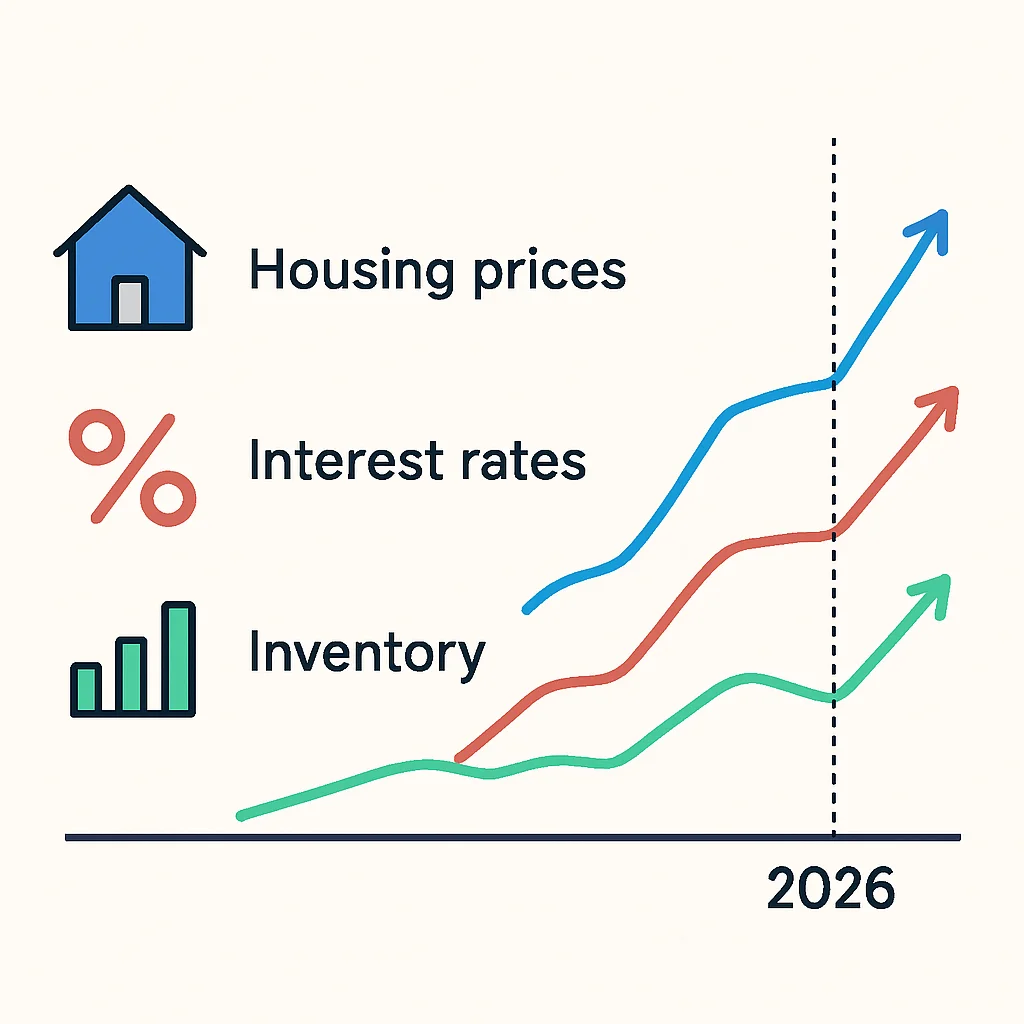
If your neighborhood has seen a slowdown in sales, or if properties are selling for less than their asking price, this could indicate a potential overvaluation in your assessment.
2. Property Characteristics
These are the fundamental attributes of your property:
• Size: Square footage of living space and lot size.
• Age and Condition: The year built, and the overall physical state of the property. A 20-year-old home in excellent condition will be valued differently than one in poor condition.
• Number of Rooms: Bedrooms, bathrooms, and other functional spaces.
• Amenities: Garages, swimming pools, fireplaces, central air conditioning, finished basements, unique architectural features. Each adds to the perceived value.
For developers, accurately documenting these characteristics, especially after new construction or significant renovations, is vital. Any discrepancies can lead to an incorrect assessment.
3. Improvements and Renovations
Major improvements, such as adding a new room, finishing a basement, or significant kitchen/bathroom remodels, will almost certainly increase your property’s assessed value. Assessors often get this information from building permits filed with the city or county. However, not all improvements add value dollar-for-dollar. For example, a luxury kitchen renovation costing $75,000 might only add $50,000 to the assessed value.
KEY POINT
Always verify that your assessment accurately reflects the actual value added by improvements, not just their cost. Be prepared to argue that the market value increase is less than the renovation cost if applicable.
4. Zoning and Land Use
The zoning designation of your property (e.g., residential, commercial, industrial) and its permitted land use significantly impact its value. A parcel zoned for multi-family development will inherently have a higher value than an identical parcel zoned for single-family residential, assuming there’s demand for multi-family. Changes in zoning or future development plans in the area can influence assessments, even if your property’s physical characteristics haven’t changed.
5. Economic Trends in 2026
Broader economic factors play a role:
• Local Job Growth: Strong local economies with job growth attract residents, increasing housing demand and prices.
• Interest Rates: While not directly assessed, higher mortgage interest rates reduce buyer affordability, which can temper market values.
• Inflation and Construction Costs: For assessors using the Cost Approach, rising material and labor costs (due to inflation) can push up valuations, even if market demand hasn’t kept pace. Developers should be particularly aware of this disconnect.
Keeping an eye on these macro trends, alongside micro-level neighborhood data, provides a holistic view of whether your 2026 assessment is fair.
CORE GUIDE
Identifying Potential Errors in Your Assessment
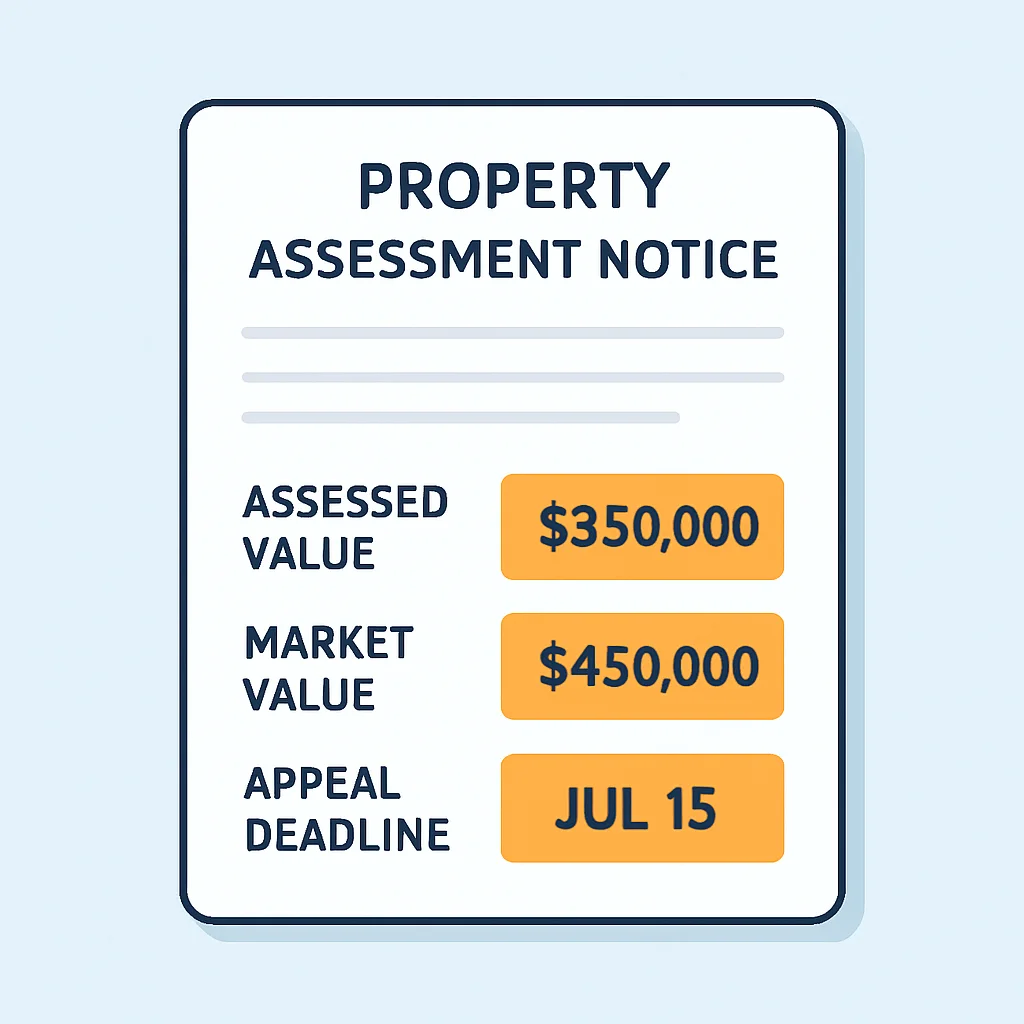
The assessor’s office handles thousands of properties, making human error, outdated data, or misinterpretations a real possibility. Your first line of defense is a thorough review of your assessment notice and the property record card (also known as a property profile or data card). You can usually find this information on your county assessor’s website.
1. Factual Errors in Property Data
These are often the easiest errors to spot and correct:
• Incorrect Square Footage: Is the living area listed accurately? Measure it yourself if you suspect an error. A difference of even 100 square feet can impact value significantly.
• Wrong Number of Bedrooms/Bathrooms: Ensure the count matches your property. A half-bath might be incorrectly listed as a full bath.
• Lot Size Discrepancies: Verify the acreage or lot dimensions against your deed or survey.
• Missing or Incorrect Features: Is a detached garage listed as attached? Is there a pool on record that doesn’t exist? Are you being assessed for a finished basement that is actually unfinished?
These errors are common, especially for older properties or those with unpermitted additions/changes that the assessor might not be aware of.
2. Overvaluation Compared to Similar Properties (Comparables)
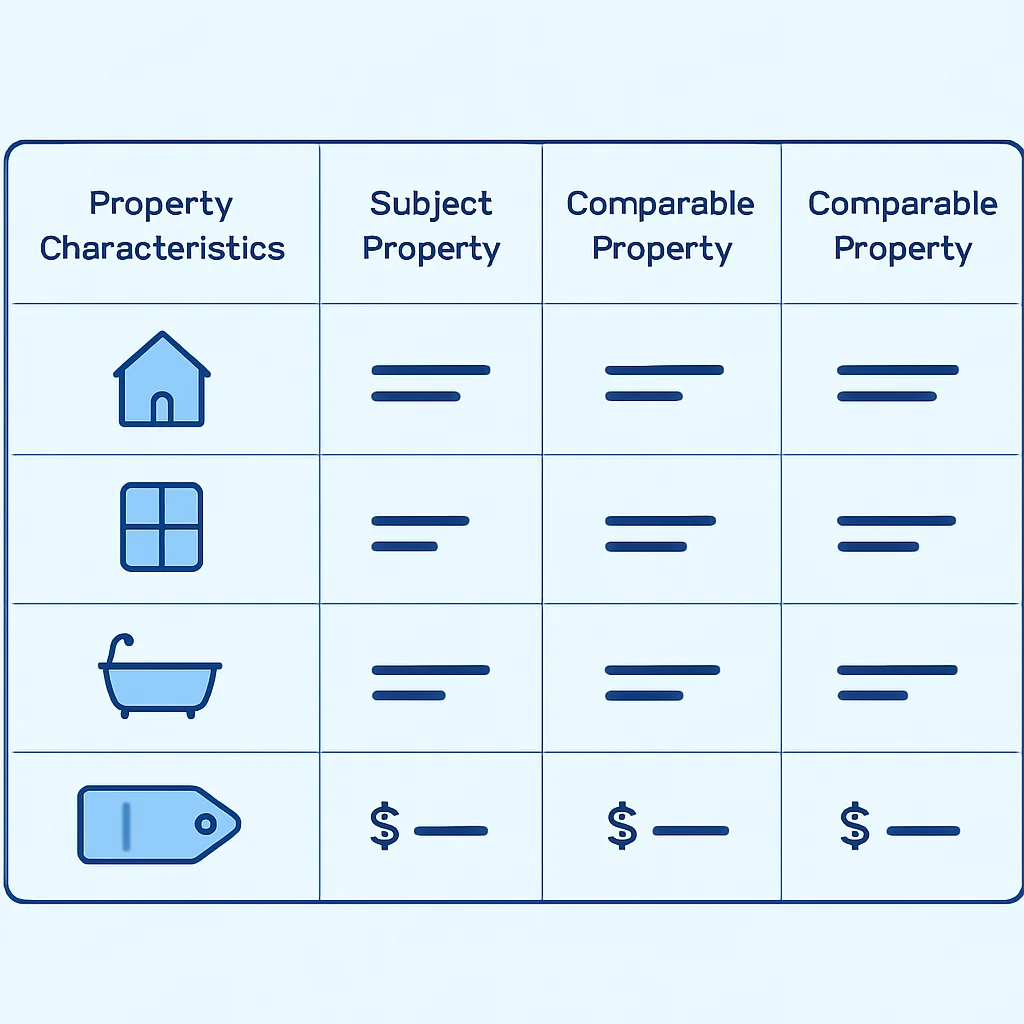
This is often the strongest argument for an appeal. The assessor’s job is to value your property consistently with comparable properties in your neighborhood. If your home is assessed at $600,000, but similar homes (same size, age, condition, amenities, and location) recently sold for $500,000-$550,000, you likely have a case for overvaluation.
To check this, search your county’s assessor website for recent sales data or use real estate platforms to find “comps” (comparable sales). Focus on sales within the last 6-12 months, ideally within a 1-mile radius, and properties with similar characteristics to yours.
KEY POINT
When selecting comparables, prioritize recent sales (within 6-12 months) of properties that are as similar as possible to yours in terms of square footage, lot size, age, condition, and number of beds/baths, and located in the immediate vicinity.
3. Incorrect Condition Rating or Depreciation
Assessors often assign a condition rating (e.g., excellent, good, average, fair, poor) to properties. If your property is older, has deferred maintenance, or is in poorer condition than assumed by the assessor, its value might be inflated. Significant damage from natural events (fire, flood, storm) that reduces market value may also not be reflected in your assessment. Documenting these issues with photos and repair estimates can be crucial.
4. Unapplied Exemptions
Many jurisdictions offer exemptions that can reduce your taxable value. Common exemptions include:
• Homestead Exemption: For owner-occupied primary residences.
• Senior Citizen Exemption: For elderly homeowners meeting specific income or age criteria.
• Veteran Exemption: For eligible military veterans.
• Disability Exemption: For individuals with disabilities.
If you qualify for an exemption that hasn’t been applied to your property, correcting this can directly lower your tax bill without changing the assessed value itself. Always check your assessment notice for applied exemptions.
5. “Phantom” Improvements or Missing Properties
It’s rare, but sometimes assessors might incorrectly add improvements to your property record that don’t exist, or even confuse your property with a neighboring one. Conversely, if you own multiple parcels, ensure each is assessed correctly and not consolidated or misidentified. A physical inspection of your property records, and perhaps even a drive-by of the assessor’s comparables, can sometimes reveal these kinds of errors.
WARNING
Never assume your assessment is correct. A quick review of your property record card and local comparables can often reveal significant errors that are costing you money.
PRACTICAL GUIDE
The 2026 Property Tax Appeal Process: Step-by-Step
The property tax appeal process can seem daunting, but by following a structured approach, you can significantly increase your chances of success. Remember, deadlines are absolutely critical and vary by jurisdiction, so always confirm them with your local assessor’s office.
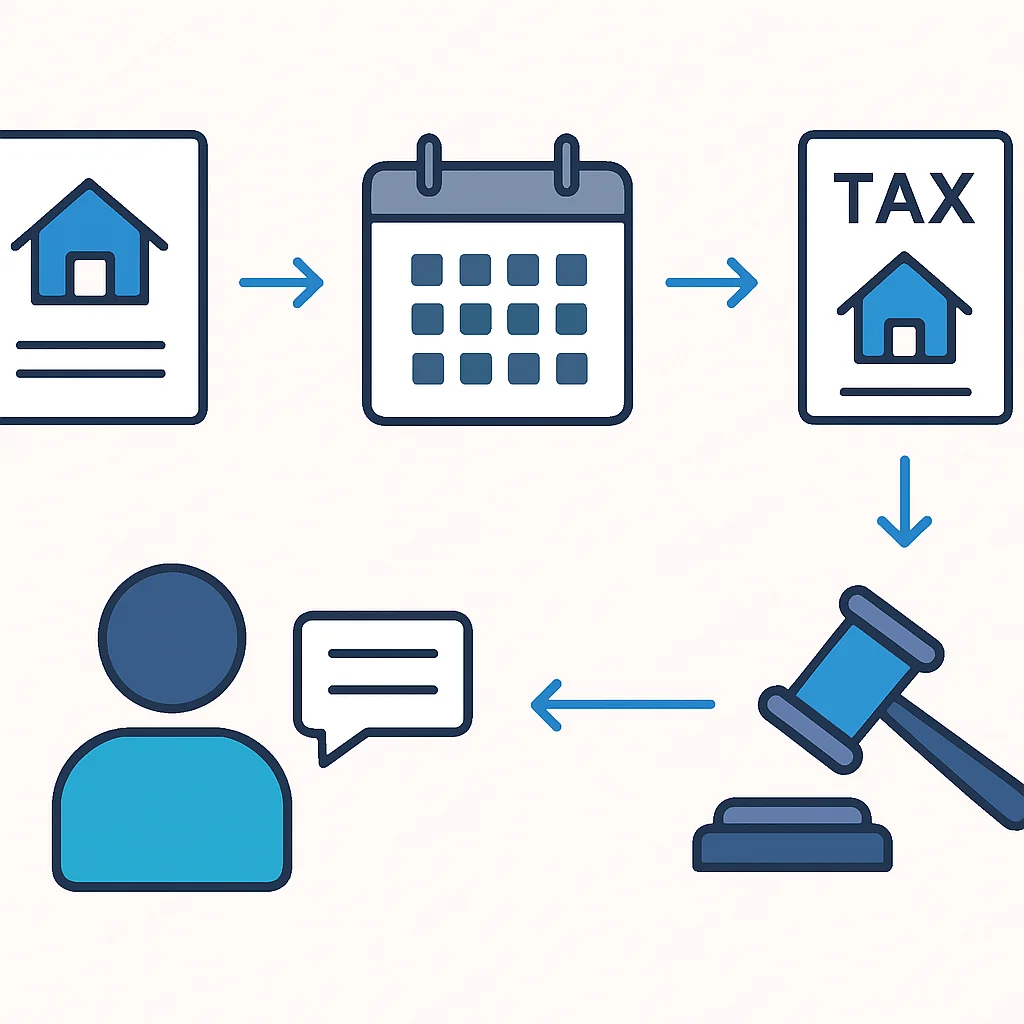
Step 1: Review Your 2026 Assessment Notice Immediately
Receive and Scrutinize Your Assessment
When your annual assessment notice arrives (typically in spring 2026 for taxes due in late 2026 or early 2027), open it immediately. It contains your new assessed value, the market value estimate, and, most importantly, the deadline to appeal. This window is often very short, sometimes as little as 30-45 days.
Step 2: Gather Comprehensive Evidence
Build Your Case with Data
This is the most crucial step. You need objective data to prove your property is overvalued. Focus on:
• Comparable Sales (Comps): Find 3-5 recently sold properties (within 6-12 months) in your immediate neighborhood that are highly similar to yours. Look for properties that sold for less than your assessed value. Source these from your assessor’s website, local MLS data, or a real estate agent. Print out property details, photos, and sale prices.
• Photos: Take current photos of your property, especially highlighting any negative conditions (e.g., outdated features, wear and tear, structural issues) that might detract from its value and are not reflected in the assessment.
• Appraisal Report: If you’ve had a recent independent appraisal (within the last year), this is powerful evidence.
• Cost Estimates for Repairs: If your property has significant defects, get quotes from contractors for necessary repairs.
• Income & Expense Statements: For income-producing properties, provide detailed financials to support a lower income-based valuation.
Ensure all your evidence is organized and clearly presented.
Step 3: Informal Review (Highly Recommended)
Discuss with the Assessor
Many jurisdictions offer an informal review period before the formal appeal deadline. Schedule a meeting or call with the assessor’s office. Present your evidence politely and clearly. Often, factual errors or clear discrepancies can be resolved at this stage, saving you the time and effort of a formal appeal. Be prepared to negotiate a fair value.
Step 4: File a Formal Appeal
Submit Your Official Challenge
If the informal review doesn’t yield results, or if it’s not an option, you must file a formal appeal by the specified deadline. This usually involves completing a specific form (e.g., “Petition to the Board of Review” or “Appeal Application”) and submitting all your supporting documentation. There might be a small filing fee. Make sure to keep copies of everything you submit.
Step 5: Attend the Hearing (if necessary)
Present Your Case to the Board
Formal appeals often lead to a hearing before a local Board of Review or Assessment Appeals Board. This is your opportunity to present your evidence and arguments. Be concise, respectful, and focus on the facts. The assessor’s representative will also present their case. The board will then make a decision, which you will receive in writing.
Step 6: Further Appeals (if initial appeal fails)
Consider Higher-Level Recourse
If your appeal to the local board is denied or unsatisfactory, you might have options for further appeal to a state-level board (e.g., State Board of Equalization) or even tax court. These levels typically involve more formal legal procedures and may require the assistance of a real estate attorney or a professional property tax consultant. This step should be carefully weighed against the potential savings and costs involved.
KEY POINT
Deadlines are non-negotiable. Missing an appeal deadline means you forfeit your right to challenge the assessment for that tax year. Mark your calendar!
REAL-WORLD EXAMPLES
Real-World Examples & Case Studies
Let’s look at a few hypothetical but realistic scenarios that illustrate how property tax appeals can lead to significant savings for developers and homeowners alike in 2026.
Case Study 1: The Miscalculated Multi-Family Unit
Developer: Sarah, managing a duplex in Austin, TX
Sarah received her 2026 assessment notice for her recently acquired duplex, valued at $850,000. Upon reviewing the property record card online, she noticed the assessor had listed the property with 4 bedrooms and 3 bathrooms, and a total living area of 2,800 sq ft. Her duplex actually has 3 bedrooms, 2.5 bathrooms, and 2,400 sq ft of living space.
Action: Sarah immediately contacted the assessor’s office for an informal review, providing her original purchase documents, floor plans, and current photos. She also pointed out three similar duplexes in the same zip code that had recently sold for an average of $780,000, all with accurate 3-bed/2.5-bath/2,400 sq ft configurations.
Outcome: The assessor acknowledged the factual errors and adjusted the market value down to $775,000. With an assessment ratio of 35% in her county, this reduced her assessed value by approximately $26,250 ($850,000 – $775,000 = $75,000 market value reduction; $75,000 * 0.35 = $26,250 assessed value reduction). At a tax rate of 2.2%, this saved her approximately $577.50 annually.
Case Study 2: Market Correction in a Suburban Development
Developer: Mark, holding a speculative single-family home in Phoenix, AZ
Mark purchased a newly built single-family home in late 2024 for $650,000. His 2026 assessment came in at $680,000, reflecting peak market values from mid-2025. However, by early 2026, the local market had cooled, with several comparable new builds selling for $610,000 – $630,000 due to rising interest rates and increased inventory.
Action: Mark gathered detailed sales data for 5 comparable new construction homes that closed between November 2025 and February 2026. He highlighted the average sales price of $620,000 and the downward trend. He submitted a formal appeal to the Board of Equalization, emphasizing the recent market shifts not captured by the assessor’s earlier valuation date.
Outcome: The board agreed that the market had indeed softened since the assessor’s valuation date. They reduced the market value to $625,000. With an assessment ratio of 10% (common in Arizona for residential properties), this meant a reduction in assessed value of $5,500 ($680,000 – $625,000 = $55,000 market value reduction; $55,000 * 0.10 = $5,500 assessed value reduction). At a tax rate of 1.1%, this saved Mark approximately $60.50 annually, preventing an overpayment for a property he was holding for resale.
Case Study 3: The Overlooked Commercial Income Property
Developer: Emily, owning a small retail strip center in Charlotte, NC
Emily’s retail strip center was assessed at $1.5 million for 2026. However, two of her four units had been vacant for over 10 months, and the remaining tenants were paying below-market rent due to a struggling local economy. The assessor had used a general market capitalization rate and assumed full occupancy.
Action: Emily, using the Income Approach, compiled detailed income and expense statements for the past two years, along with vacancy rates and lease agreements. She argued that the assessor’s assumed income was unrealistic given the actual performance of the property and the current market. She also provided data on higher local capitalization rates for similar underperforming commercial properties.
Outcome: After reviewing Emily’s financial data, the assessor agreed to reduce the market value to $1.3 million, reflecting the true income-generating potential. With a 100% assessment ratio (common for commercial properties in North Carolina), this reduced her assessed value by $200,000. At a tax rate of 1.3%, this resulted in an annual savings of $2,600.
CONSIDERATIONS
Caveats, Important Considerations & FAQ
While appealing your property tax assessment can lead to significant savings, it’s essential to be aware of potential pitfalls and nuances.
Important Caveats for 2026 Appeals
• Jurisdictional Differences: Property tax laws and appeal processes vary wildly by state, county, and even city. Always consult your local assessor’s website or office for precise rules, forms, and deadlines in your area. What works in one state might not apply in another.
• Risk of Increased Assessment: While rare, there’s a theoretical risk that an appeal could lead to your assessment being increased, particularly if the assessor finds errors that undervalued your property. This usually happens if you highlight an error in your favor (e.g., wrong square footage) but the assessor then discovers another significant feature (e.g., a newly finished basement) that was previously missed. For this reason, always be truthful and have solid evidence.
• Cost of Professional Help: For complex cases, especially for commercial properties or high-value residential properties, hiring a professional appraiser (costing $300-$600+) or a real estate attorney (hourly rates vary widely, $200-$500+) might be worthwhile. Weigh the potential tax savings against these professional fees.
• Strict Deadlines: As reiterated, appeal deadlines are unforgiving. Miss them, and you lose your chance for the current tax cycle. Mark multiple reminders!
• Focus on Market Value: The core of your argument should always be that your property’s assessed value (or the market value it’s based on) is higher than its true fair market value, supported by objective data, not just that your taxes are “too high.”
KEY POINT
Always verify local rules and deadlines. The appeal process is highly localized, and general advice must be adapted to your specific jurisdiction.
Frequently Asked Questions (FAQ)
Q. What is the difference between assessed value and market value?
Assessed value is the value assigned to your property by the local tax assessor for taxation purposes, often a percentage of the market value. Market value is the price a property would likely sell for on the open market.
Q. Can my property assessment increase if I appeal?
While it’s rare, there’s a theoretical possibility your assessment could increase if the assessor finds significant errors that previously undervalued your property. However, the primary focus of an appeal is typically to reduce an overvaluation, and most successful appeals result in a reduction or no change.
Q. What kind of evidence is most effective for a property tax appeal?
The most effective evidence includes recent sales data (within 6-12 months) of comparable properties in your immediate area that sold for less than your assessed value, recent independent appraisal reports, photos documenting poor property condition, and detailed income/expense statements for commercial properties.
Q. Do I need an attorney or appraiser to appeal my property taxes?
For most residential properties, you can successfully appeal on your own with good research. For complex cases, high-value properties, or commercial real estate, hiring a professional appraiser or real estate attorney can significantly strengthen your case and be a wise investment.
Q. How often should I check my property assessment?
You should review your property assessment notice every year it’s issued, even if your jurisdiction doesn’t reassess annually. Market conditions can change rapidly, and errors can persist or be introduced, making an annual check a smart financial habit.
WRAP-UP
Wrapping Up: Take Control of Your Property Taxes
Property taxes are a significant and recurring expense for any property owner, particularly developers with multiple assets. In 2026, with market fluctuations and economic shifts, understanding your property tax assessment and knowing how to challenge it is more important than ever.
“Don’t be a passive payer. Be an active participant in determining your property tax liability. Your due diligence can directly impact your financial health.”
— Kwonglish
By diligently reviewing your assessment notice, understanding the factors that influence your property’s value, and meticulously gathering evidence, you are well-equipped to navigate the appeal process. Whether it’s correcting a simple factual error or demonstrating an overvaluation based on market comparables, a successful appeal can lead to tangible annual savings.
Remember that this isn’t about avoiding your fair share of taxes; it’s about ensuring accuracy and equity in the assessment process. Take the proactive step, review your 2026 assessment, and assert your right to a fair valuation. Your financial future will thank you.
Thanks for reading!
We hope this guide empowers you to understand and confidently challenge your property tax assessment in 2026. Knowledge is power, especially when it comes to your investments.
Got questions or a successful appeal story? Drop a comment below! We’d love to hear from you.