

SUMMARY
Easements & Rights-of-Way Explained: A Developer’s Legal Guide to Property Access in 2026
Demystify property easements and rights-of-way, understanding their legal implications and impact on property access for developers.
Keywords: Easements, Rights-of-Way, Property law, Developer real estate
TABLE OF CONTENTS
1. Overview: Why Easements & Rights-of-Way Matter for Developers
2. Defining Easements & Rights-of-Way
3. Types of Easements and Their Creation
4. Legal Implications for Developers in 2026
5. Real-World Scenarios and Developer Challenges
6. Best Practices for Navigating Easements
7. Caveats, FAQs, and Essential Advice
8. Wrap-Up: Your Path to Smoother Development
OVERVIEW
Why Easements & Rights-of-Way Matter for Developers
For any real estate developer, a clear understanding of property rights is paramount. Among the most critical aspects are Easements and Rights-of-Way, which can profoundly impact a project’s feasibility, design, and ultimate profitability. In this legal guide for developers, we’ll explain these concepts, their various forms, and how they affect property access and ownership in 2026. Navigating these legal intricacies is not just about avoiding future disputes; it’s about unlocking a property’s full potential and ensuring a smooth development process from acquisition to completion.
Whether you’re planning a residential subdivision, a commercial complex, or an industrial park, the presence or absence of an easement or right-of-way can dictate everything from where you can build to how you connect to essential utilities. Ignoring these details can lead to costly delays, redesigns, or even legal battles that can derail your entire project. This guide aims to equip you with the knowledge needed to identify, understand, and strategically manage these property interests.
KEY POINT
Thorough due diligence regarding easements and rights-of-way is non-negotiable for developers. These property interests can significantly affect buildable area, access, and utility connections, directly influencing project viability and costs.
CORE GUIDE
Defining Easements & Rights-of-Way
At their core, both easements and rights-of-way grant someone the right to use another person’s land for a specific purpose, without owning that land. While often used interchangeably, there are subtle yet crucial distinctions, especially in a development context.
What is an Easement?
An Easement is a legal right to use another’s land for a specific limited purpose. It’s an interest in real property, meaning it typically “runs with the land” and transfers with ownership. The land that benefits from the easement is called the dominant estate, and the land burdened by it is the servient estate. For example, if your development needs to run a sewer line across a neighbor’s property to connect to the main municipal system, you would seek a utility easement.
Easements are generally non-possessory, meaning the easement holder cannot occupy the land, only use it for the stated purpose. The landowner retains full ownership and can use the land in any way that does not interfere with the legitimate use of the easement.
What is a Right-of-Way?
A right-of-way (ROW) is a specific type of easement that grants the right to pass over another’s property. While all rights-of-way are easements, not all easements are rights-of-way. ROWs are commonly associated with transportation infrastructure, such as roads, public pathways, or railway lines. They are also frequently granted to utility companies for installing and maintaining power lines, pipelines, or communication cables.
For a developer, a ROW is often critical for providing access to a property, especially if it’s landlocked, or for creating public roads within a new subdivision. The width and specific location of a ROW are usually defined precisely, impacting how much of your land can be developed.
KEY POINT
The key distinction: an easement is a broad term for a non-possessory right to use land, while a right-of-way is a specific type of easement granting passage. Understanding this difference is crucial for assessing property usability and development potential.
CORE GUIDE
Types of Easements and Their Creation
Easements come in various forms, each with distinct characteristics that can impact a developer’s plans. Knowing these types is vital for proper assessment.
Common Types of Easements
Key Easement Types
Easement Appurtenant — Benefits an adjacent parcel of land (dominant estate) and typically transfers with the sale of that land. Example: A driveway easement across Parcel A to access Parcel B.
Easement in Gross — Benefits a specific individual or entity (e.g., a utility company) rather than a parcel of land. It does not attach to a dominant estate. Example: An electric company’s right to run power lines across your property.
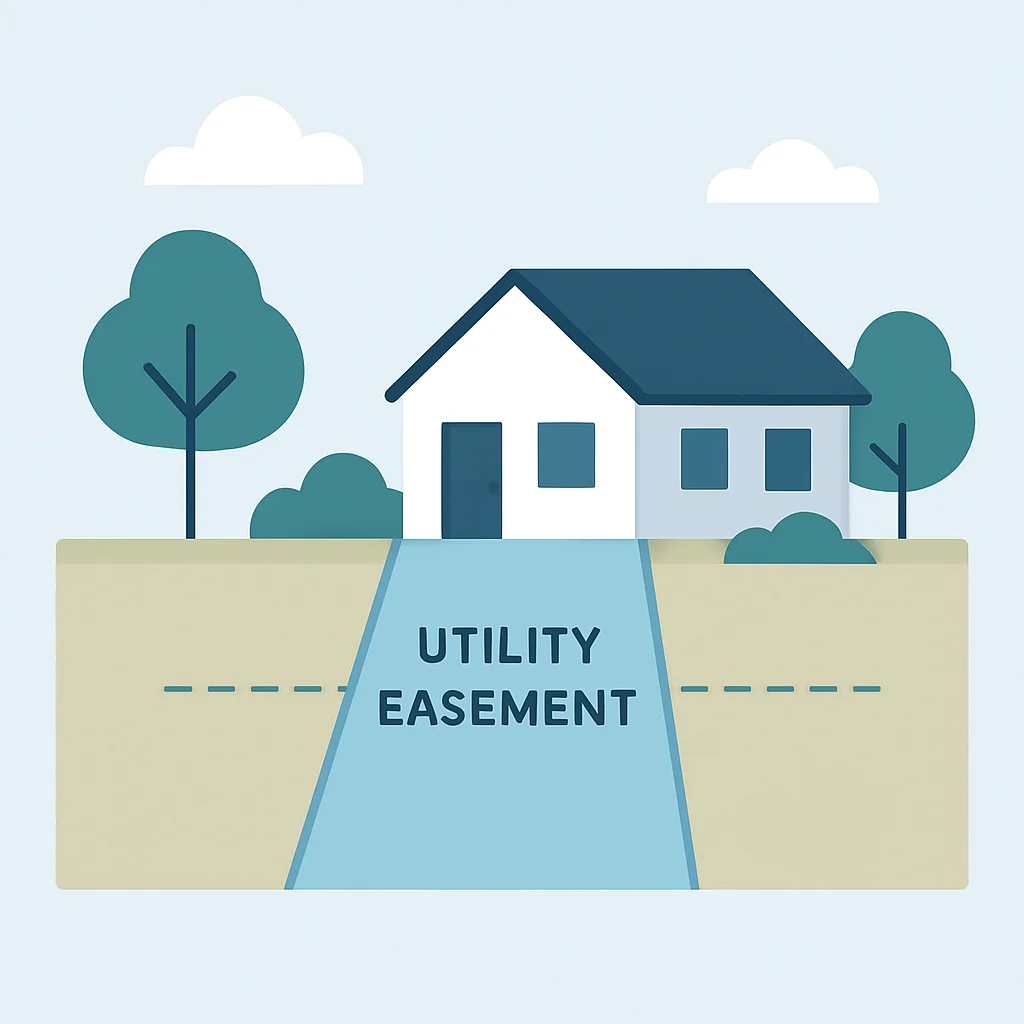
Utility Easement — Grants utility companies the right to install, maintain, and access infrastructure (water, sewer, gas, electricity, telecommunications) on private property. These are incredibly common and can restrict building envelopes significantly.
Prescriptive Easement — Acquired through continuous, open, notorious, and adverse use of another’s land for a statutorily defined period (e.g., 5-20 years, depending on state law). No permission is granted by the landowner. This is similar to adverse possession but grants only a right of use, not ownership.
Easement by Necessity — Arises when a parcel of land is landlocked, and access is essential for its reasonable use and enjoyment. Often granted by a court, provided there was once common ownership of the parcels.
Conservation Easement — A voluntary legal agreement restricting future development to protect natural, scenic, or historical features of a property. Often held by land trusts or government agencies, it reduces property value but can offer tax benefits.
How Easements Are Created
The method of creation determines an easement’s legal strength and how it can be managed or terminated. Developers should be aware of these pathways:
1
Express Grant or Reservation
This is the most common and straightforward method. It involves a written agreement (deed, contract, or separate instrument) where the landowner explicitly grants an easement or reserves one when selling a portion of their land. These must be recorded in public records to be legally binding and provide notice to future buyers.
2
Easement by Implication
Implied easements arise from the circumstances surrounding a land division. If a property was historically used in a certain way that implies an easement is necessary for the reasonable enjoyment of one of the newly created parcels, a court may recognize an implied easement. This requires prior common ownership and continuous, apparent use.
3
Easement by Necessity
As mentioned, this occurs when a parcel becomes landlocked due to the division of a larger tract, making access impossible without crossing another’s land. Courts typically grant these to ensure productive use of the land, provided there was unity of ownership at some point.
4
Easement by Prescription
This is established through long-term, adverse use. The user must openly and continuously use a portion of another’s property without permission for the statutory period. Proving this often requires legal action and clear evidence, making it a risk for developers if not identified early.
KEY POINT
Always verify the method of easement creation. Express easements are typically recorded and clear; implied and prescriptive easements require more investigation and may necessitate legal interpretation to confirm their validity and scope.
DEVELOPER FOCUS
Legal Implications for Developers in 2026
For developers, easements and rights-of-way aren’t just abstract legal concepts; they are tangible factors that directly influence land acquisition, project design, construction costs, and ultimately, profitability. Understanding these implications is crucial in the dynamic real estate market of 2026.
Impact on Property Value and Development Potential
An existing easement can significantly reduce the developable area of a property. For instance, a 20-foot wide utility easement running through the middle of a parcel could preclude the construction of a building or even a parking lot in that specific zone. This directly impacts the allowable density, building footprint, and overall project yield. Developers must factor these “unbuildable” areas into their financial models and land valuations. A property with extensive easements will likely command a lower purchase price than one without, assuming all other factors are equal.
Conversely, the lack of a necessary easement (e.g., for access or utilities) can render a property undevelopable or significantly increase infrastructure costs. Imagine purchasing a beautiful parcel only to discover it’s landlocked without a legal right of access. Obtaining an easement in such a scenario can be a lengthy, costly, and uncertain process, potentially requiring negotiation with multiple landowners or even litigation.
The Critical Role of Due Diligence: Title Searches & Surveys
Before acquiring any property, developers must undertake comprehensive due diligence. This process is your first line of defense against unforeseen easement issues:
- Title Search: A thorough title search by a qualified title company or attorney will reveal recorded easements, covenants, conditions, and restrictions (CC&Rs) affecting the property. This typically goes back 40-60 years to ensure clear title.
- Boundary Survey & Topographic Survey: A professional land survey is indispensable. It physically locates property lines, existing structures, and, critically, the exact boundaries of any recorded easements or rights-of-way. A topographic survey will also show elevation changes, which can impact utility routing. The surveyor will mark these on the ground and depict them on a survey plat.
- Site Visit & Observation: Sometimes, unrecorded prescriptive easements (like a well-worn path across the property) are only discoverable through a physical inspection. These “open and notorious” uses can ripen into legal easements if not addressed.
WARNING
Relying solely on verbal assurances or old property records without a current title search and survey is a high-risk strategy. Unrecorded or newly established prescriptive easements can emerge, leading to significant legal and financial setbacks.
Negotiating and Extinguishing Easements
Developers may find themselves needing to either acquire a new easement or extinguish an existing one. Both processes require careful negotiation and legal expertise:
- Acquiring New Easements: If your project needs access or utility lines across adjacent property, you’ll need to negotiate with the neighboring landowner. This involves agreeing on the easement’s purpose, location, width, duration, maintenance responsibilities, and compensation. A clear, recorded easement agreement is essential.
- Extinguishing Existing Easements: Terminating an easement is generally more challenging. Methods include:
- Merger: If the dominant and servient estates come under the same ownership.
- Release: The easement holder formally relinquishes their rights in writing, which must be recorded. This often requires compensation.
- Abandonment: Requires proof of intent to abandon (e.g., non-use coupled with actions demonstrating intent to give up the right). This is difficult to prove.
- Expiration: If the easement was granted for a specific period or purpose that has concluded.
- Adverse Possession/Prescription: If the servient owner prevents the use of the easement for the statutory period.
Eminent Domain and Public Easements
Government entities and public utility companies have the power of eminent domain, allowing them to take private property for public use, even if the owner doesn’t want to sell. This includes acquiring easements or rights-of-way. While the Fifth Amendment mandates “just compensation,” the process can be complex and contentious for developers, especially if it impacts a planned project. Developers should be aware of any public infrastructure projects planned in the vicinity that might lead to new easements on their property.
KEY POINT
Easements directly impact a property’s buildable area, density, and value. Proactive due diligence, including current surveys and title searches, is critical to identify all encumbrances and avoid costly surprises. Negotiation or legal action may be required to secure or extinguish necessary easements.
REAL-WORLD EXAMPLES
Real-World Scenarios and Developer Challenges
Let’s look at some practical scenarios where easements and rights-of-way can significantly impact a development project. These examples highlight the importance of early identification and strategic planning.
Case Study 1: Restricting Building Footprint for a Retail Center
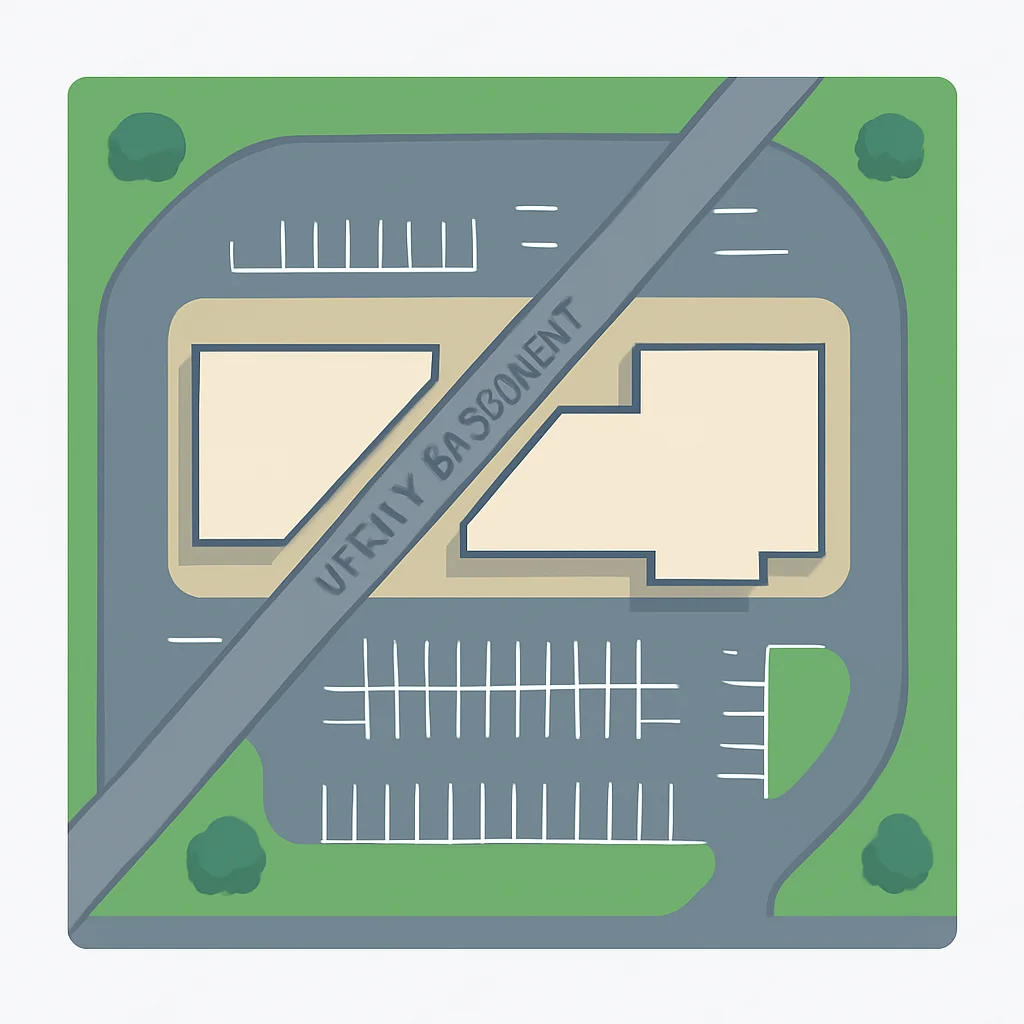
A developer plans to build a 50,000 sq ft retail center on a 5-acre parcel. During due diligence, a 30-foot wide underground gas pipeline easement (easement in gross) is discovered running diagonally across the property, affecting approximately 0.75 acres. Local zoning prohibits any permanent structures or heavy excavation within such easements.
Challenge: The easement significantly reduces the effective buildable area, forcing a complete redesign of the retail center layout. The original plan for a single anchor store is no longer feasible; instead, two smaller buildings are considered, increasing construction costs due to more complex utility runs and additional exterior finishes.
Solution: The developer explores two options: 1) Negotiate with the gas company to relocate the pipeline (estimated cost: $500,000 – $1,000,000, plus 6-12 months delay). 2) Redesign the site plan to accommodate the easement, potentially reducing the total leasable area by 10-15% and requiring a smaller anchor tenant. They choose the latter, accepting a slightly reduced profit margin but avoiding substantial delays and upfront costs.
Case Study 2: Unrecorded Prescriptive Easement for Agricultural Access
A developer purchases a 100-acre rural parcel for a residential subdivision. The land appears clear on the title report. However, during a site visit, they observe a well-worn dirt track used by a neighboring farmer to access their back fields, crossing 500 feet of the developer’s property. The farmer claims they’ve used it continuously for 25 years.
Challenge: The farmer likely has a valid prescriptive easement, which could prevent the developer from building roads or homes over that path without legal intervention. The subdivision’s master plan relies on developing the area where the path exists.
Solution: The developer’s attorney advises negotiating with the farmer. Options include: 1) Purchasing the easement from the farmer (estimated cost: $50,000 – $150,000, depending on negotiation). 2) Offering to construct an alternative access road on the developer’s property that is more convenient for the farmer, in exchange for a formal release of the prescriptive easement. The developer chooses option 2, building a new gravel road for $75,000 and securing the release, which is then recorded.
Case Study 3: Access Easement for a Landlocked Commercial Property
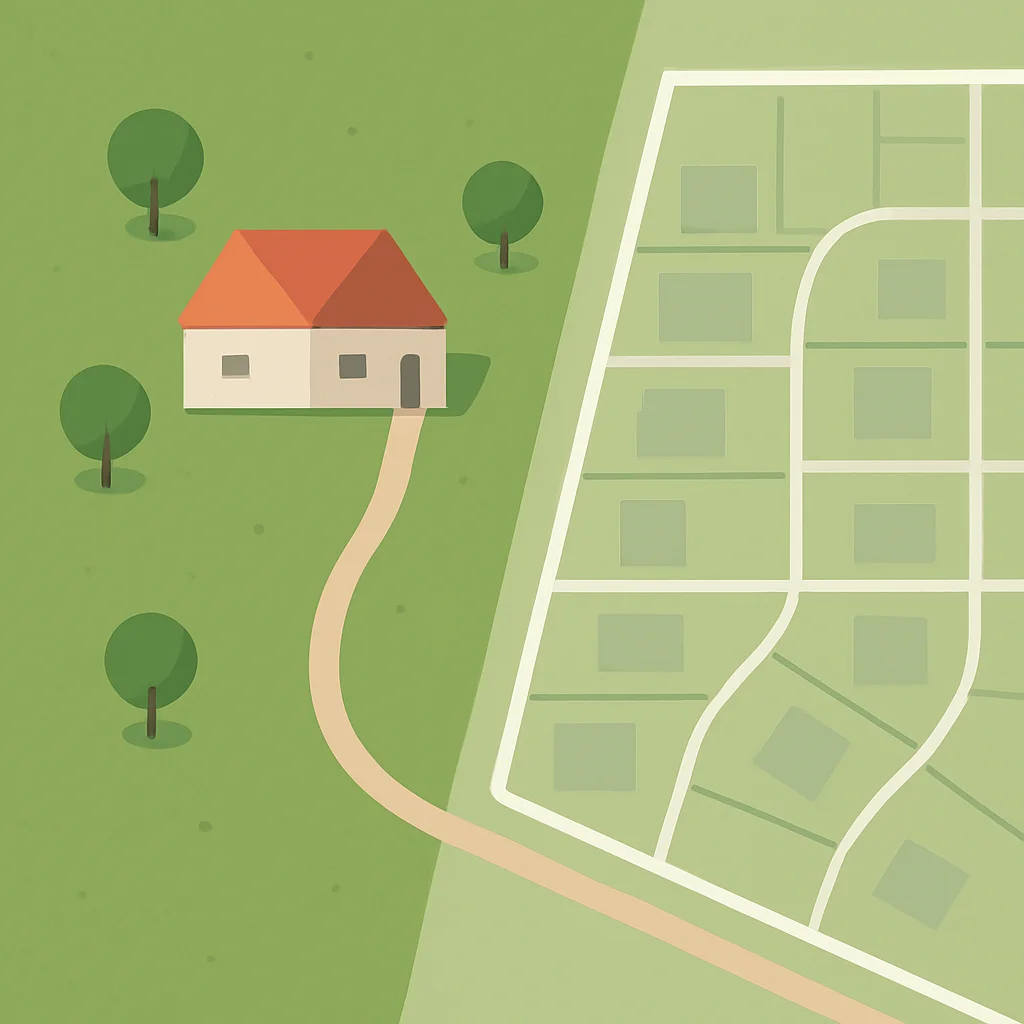
A developer acquires a 2-acre parcel zoned for commercial use, intending to build a small office park. The property is landlocked, with no direct frontage on a public road. The previous owner relied on an informal agreement to cross an adjacent property, but this was never recorded.
Challenge: Without a legal, recorded access easement, the property is virtually worthless for commercial development. Financing, permitting, and construction cannot proceed without guaranteed access to a public right-of-way.
Solution: The developer’s legal team investigates and finds that the landlocked parcel and the adjacent property were once under common ownership. They pursue an easement by necessity through court, arguing that access is essential. After several months and legal fees totaling $30,000, the court grants an easement by necessity, defining a 25-foot wide right-of-way across the adjacent property to the public road. This allows the project to move forward.
KEY POINT
Real-world scenarios demonstrate that easements are not theoretical. They directly dictate design, cost, and timelines. Developers must anticipate and address these issues proactively through meticulous due diligence and strategic legal engagement.
PRACTICAL ADVICE
Best Practices for Navigating Easements
Successfully managing easements and rights-of-way is a hallmark of an experienced developer. Here are some best practices to integrate into your development process in 2026:
Developer’s Easement Checklist
☑ Conduct a comprehensive title search and obtain title insurance.
☑ Order a new, detailed boundary and topographic survey with easement overlays.
☑ Physically inspect the property for signs of unrecorded uses (paths, utility markers).
☑ Consult with a real estate attorney specializing in land use law.
☑ Engage with local planning departments and utility providers early.
☑ Clearly define and record any newly created or modified easements.
☑ Factor easement impacts into financial proformas and project timelines.
☑ Maintain clear communication with all parties involved in easement negotiations.
The Process: From Discovery to Resolution
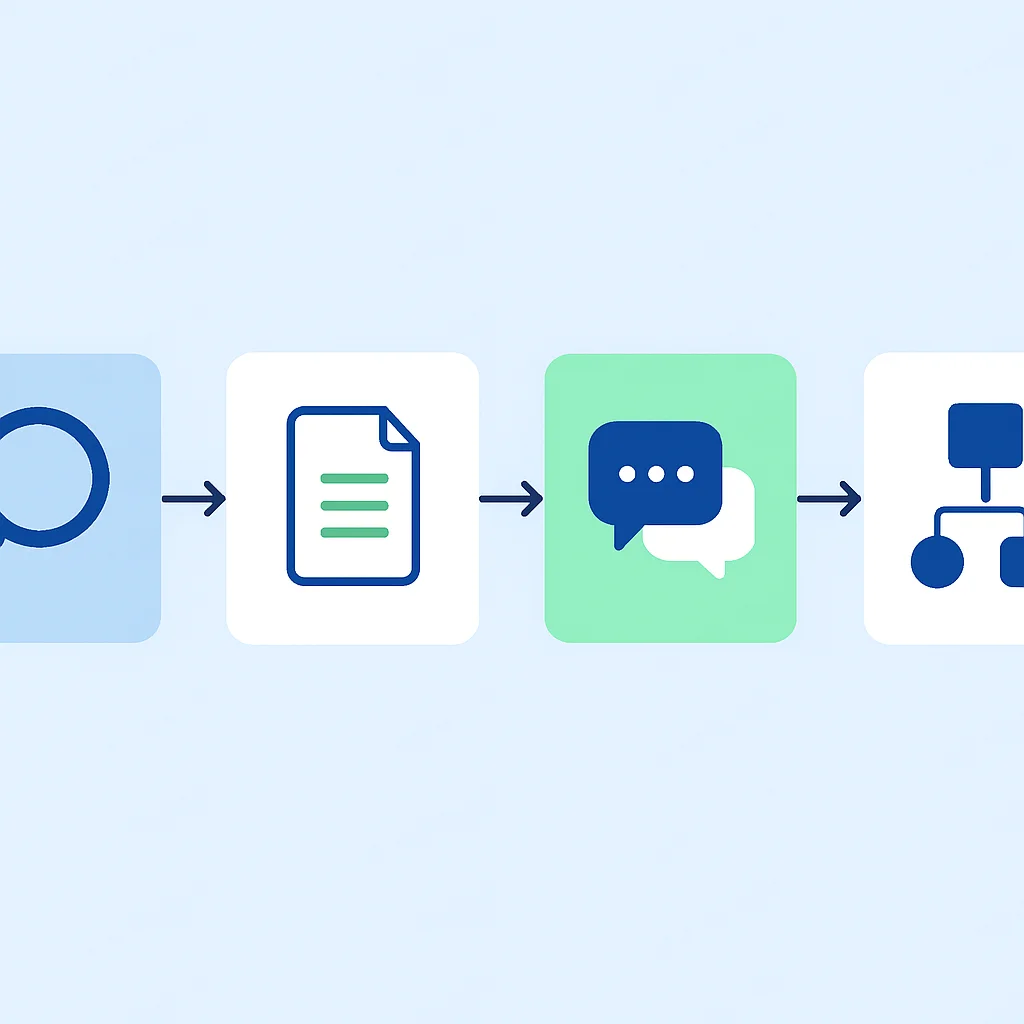
Here’s a generalized step-by-step approach to managing easements:
1
Initial Discovery & Assessment
This phase involves the title search, survey, and site visit. Identify all recorded and potential unrecorded easements. Quantify their impact on developable area, access, and utility connections. This is where you determine if the property is viable.
2
Legal & Engineering Review
Engage your legal counsel to interpret the easements’ terms and conditions, assess their validity, and advise on potential challenges. Your civil engineers will use the survey data to integrate easements into preliminary site designs, identifying conflicts and opportunities.
3
Negotiation & Acquisition/Release
If an easement needs to be acquired, modified, or extinguished, this is the negotiation phase. Work with your attorney to draft clear, comprehensive agreements that protect your interests. Ensure all agreements are properly executed and recorded.
4
Integration into Project Design & Permitting
Finalize your site plans, ensuring all easements are respected and properly delineated. Submit these plans to relevant municipal authorities for permitting. Clear documentation of easements is often a prerequisite for permit approval.
KEY POINT
Proactive engagement with legal counsel and surveyors from the earliest stages of a project is the most effective strategy. Attempting to address easement issues late in the development cycle can lead to significant cost overruns and delays.
CAVEATS & FAQ
Caveats, FAQs, and Essential Advice
While this guide provides a comprehensive overview, the nuances of property law can be highly complex. Always remember that state and local laws vary significantly regarding easements and rights-of-way. What holds true in California might be different in Texas or New York. Therefore, the most crucial piece of advice is to engage qualified local professionals.
WARNING
Never assume the absence of an easement based solely on visual inspection or incomplete records. Unrecorded, implied, or prescriptive easements can exist and become legally enforceable, creating significant liabilities and development hurdles.
Property law is dynamic, and interpretations can shift. Staying informed about recent court decisions and legislative changes in your jurisdiction is also beneficial. For example, some states have specific “private road” statutes that impact how rights-of-way are established or terminated, which can be critical for rural developments.
Frequently Asked Questions
Q. Can an easement be revoked or terminated?
A. Yes, easements can be terminated through various means such as merger of properties, release by the easement holder, abandonment, expiration if a specific term was set, or by adverse possession. The specific method and legal requirements vary by jurisdiction.
Q. What is the difference between an easement and a license?
A. An easement is a legal interest in real property that is generally permanent and transferable, running with the land. A license is a temporary, revocable permission to use land for a specific purpose, is not an interest in real property, and is typically personal to the grantee.
Q. How long does a prescriptive easement typically take to establish in 2026?
A. The statutory period for establishing a prescriptive easement varies significantly by state, typically ranging from 5 to 20 years. For example, in California, it’s 5 years, while in New York, it’s 10 years. Always consult local legal counsel for the exact period in your jurisdiction.
Q. Does a utility easement mean the utility company owns that part of my land?
A. No, a utility easement grants the utility company the right to use a specific portion of your land for their infrastructure, but you retain ownership of the land itself. You typically cannot build permanent structures or interfere with their access within the easement area.
Q. Can I build over a drainage easement?
A. Generally, no. Building permanent structures over a drainage easement is usually prohibited as it can impede water flow, hinder maintenance, and create liability issues. Some jurisdictions may allow certain permeable surfaces or landscaping with specific permits, but solid structures are almost always forbidden.
WRAP-UP
Your Path to Smoother Development
Navigating the complexities of easements and rights-of-way is a critical skill for any successful real estate developer. These property interests, while sometimes challenging, are a fundamental aspect of land use and property access. By understanding their types, methods of creation, and legal implications, you can transform potential obstacles into manageable elements of your development strategy.
Remember, the key to mitigating risks and optimizing project outcomes lies in thorough due diligence, early engagement with legal and surveying professionals, and strategic negotiation. In the competitive real estate landscape of 2026, being well-informed about property law is not just an advantage; it’s a necessity for ensuring your projects are built on a solid legal foundation.

Build with Confidence, Develop with Knowledge!
We hope this guide empowers you to tackle property access challenges effectively.
Got questions about a specific easement or rights-of-way scenario? Share your thoughts in the comments below!