

SUMMARY
Sustainable Software Development: Green Coding Practices for Developers in 2026
Practical green coding practices to reduce software’s environmental impact in 2026.
Keywords: Green Coding, Software Sustainability, Eco-friendly Development
TABLE OF CONTENTS
1. The Imperative of Green Coding in 2026
2. Core Principles of Sustainable Software Development
3. Practical Green Coding Practices for Developers
4. Addressing Challenges in Sustainable Software Implementation
5. Implementing Green Practices: A Developer’s Guide
6. Frequently Asked Questions
INTRODUCTION
The Imperative of Green Coding in 2026
As we navigate through 2026, the global conversation around sustainability has intensified, extending its reach into every sector, including technology. While the immediate environmental impacts of hardware manufacturing are often highlighted, the software we develop and deploy also carries a significant, albeit less visible, carbon footprint. From data centers consuming vast amounts of electricity to inefficient algorithms demanding excessive computational power, the digital world’s energy demands are substantial and growing. This report delves into the critical importance of sustainable software development, often termed “green coding,” and provides actionable insights for developers to minimize their applications’ environmental impact.
The sheer scale of digital operations today means that even small inefficiencies, when multiplied across billions of users and countless servers, accumulate into significant energy consumption. For instance, a single Google search is estimated to consume a tiny fraction of a watt-hour, but with billions of searches daily, this quickly adds up. Similarly, streaming services, cloud computing, and AI model training contribute to a global digital footprint that rivals that of the aviation industry in terms of carbon emissions. In 2026, with the proliferation of AI, IoT, and increasingly complex applications, this impact is only projected to escalate without conscious intervention.
“Every line of code we write has an energy cost. Green coding is about making that cost as minimal as possible without compromising functionality or user experience.”
This isn’t merely an ethical consideration; it’s becoming a business imperative. Consumers and investors are increasingly scrutinizing companies’ environmental, social, and governance (ESG) performance. Governments worldwide are introducing regulations and incentives for sustainable practices, and energy costs continue to be a significant operational expense. By embracing green coding, developers and organizations can not only contribute to a healthier planet but also gain a competitive edge through reduced operational costs, enhanced brand reputation, and compliance with emerging standards.
KEY POINT
The digital sector’s energy consumption is a major contributor to global carbon emissions. Adopting green coding practices in 2026 is crucial for environmental responsibility, cost reduction, and meeting evolving market demands.
CORE PRINCIPLES
Core Principles of Sustainable Software Development
Sustainable software development isn’t just a set of coding tricks; it’s a holistic approach rooted in several core principles that guide design, implementation, deployment, and maintenance throughout the software lifecycle. Understanding these principles is the first step towards building truly eco-friendly applications.
Energy Efficiency
At the heart of green coding is the drive for energy efficiency. This means writing code that performs its tasks with the least possible consumption of computational resources (CPU, memory, I/O). It involves choosing efficient algorithms, optimizing data structures, and minimizing unnecessary computations. For example, a poorly optimized loop running billions of times can consume significantly more energy than an equivalent, well-optimized one. A study by the University of Cambridge in 2024 estimated that optimizing just 10% of the world’s most frequently executed software routines could save up to 0.5% of global IT energy consumption, translating to millions of tons of CO2 annually.
Resource Utilization
Beyond just energy, efficient resource utilization encompasses hardware, network bandwidth, and storage. In cloud environments, this translates to right-sizing instances, leveraging serverless architectures, and optimizing database queries to reduce load. Over-provisioning resources, a common practice to ensure peak performance, leads to idle capacity consuming energy unnecessarily. Conversely, under-provisioning can lead to performance bottlenecks that force applications to work harder, consuming more energy in the long run. The goal is to match resource allocation closely to actual demand, dynamically scaling as needed.
Data Efficiency
Data is the lifeblood of modern applications, but its creation, storage, processing, and transmission all consume energy. Data efficiency involves minimizing data transfers over networks, optimizing data storage formats to reduce footprint, and ensuring that only necessary data is collected and retained. For instance, transmitting uncompressed images or redundant API responses can significantly increase network energy consumption. Data centers, which house vast amounts of data, are major energy consumers; reducing data volume directly impacts their energy needs.
Pros
✔ Reduced operational costs (energy, cloud bills)
✔ Improved application performance and responsiveness
✔ Enhanced brand reputation and investor appeal
✔ Compliance with emerging environmental regulations
Cons
✖ Initial investment in tooling and developer training
✖ Potential for increased complexity in development if not planned well
✖ Requires a cultural shift within development teams
Carbon Footprint Measurement and Transparency
You can’t manage what you don’t measure. A key principle is the ability to measure and monitor the energy consumption and carbon footprint of software. This involves using specialized tools and methodologies to quantify the environmental impact, from development to deployment. Transparency in reporting these metrics, both internally and externally, fosters accountability and drives continuous improvement. New standards like the Software Carbon Intensity (SCI) specification, developed by the Green Software Foundation, are gaining traction in 2026 to provide a common language for measuring software’s carbon emissions.
Lifecycle Management
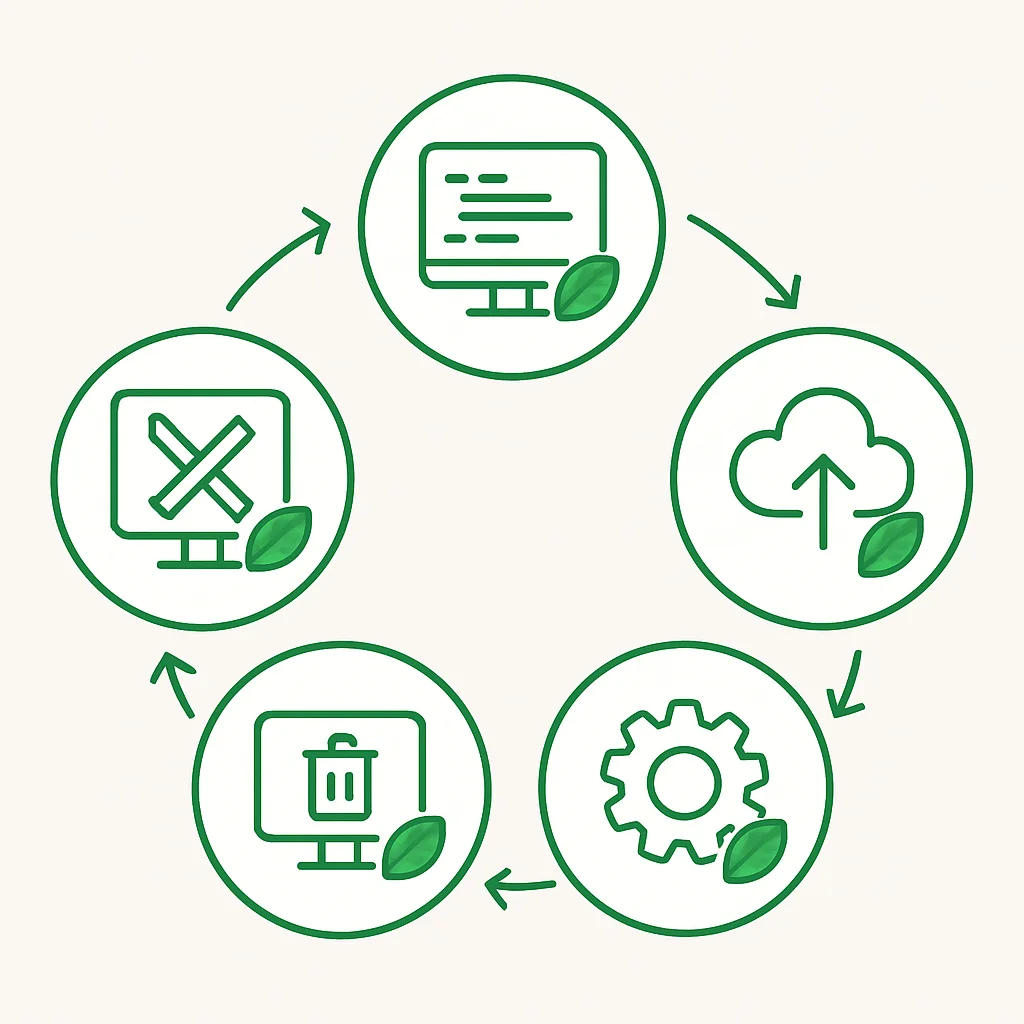
Sustainable software development considers the entire lifecycle of an application. This starts at the design phase, where architectural decisions can profoundly impact energy efficiency. It extends through development, testing, deployment, and ongoing maintenance. Crucially, it also includes the decommissioning phase, ensuring that software and its underlying infrastructure are gracefully retired to avoid zombie servers or unused data storage consuming energy indefinitely. Proactive planning for scalability, maintainability, and eventual retirement minimizes waste at every stage.
KEY POINT
Key principles include optimizing energy and resource utilization, ensuring data efficiency, measuring carbon footprint, and managing the entire software lifecycle sustainably. These elements collectively minimize environmental impact while potentially reducing operational costs.
PRACTICES
Practical Green Coding Practices for Developers
Translating the principles of sustainable software development into daily coding practices requires a conscious effort and a shift in mindset. Here are several actionable green coding practices that developers can adopt in 2026 to make a tangible difference.
1. Efficient Algorithms and Data Structures
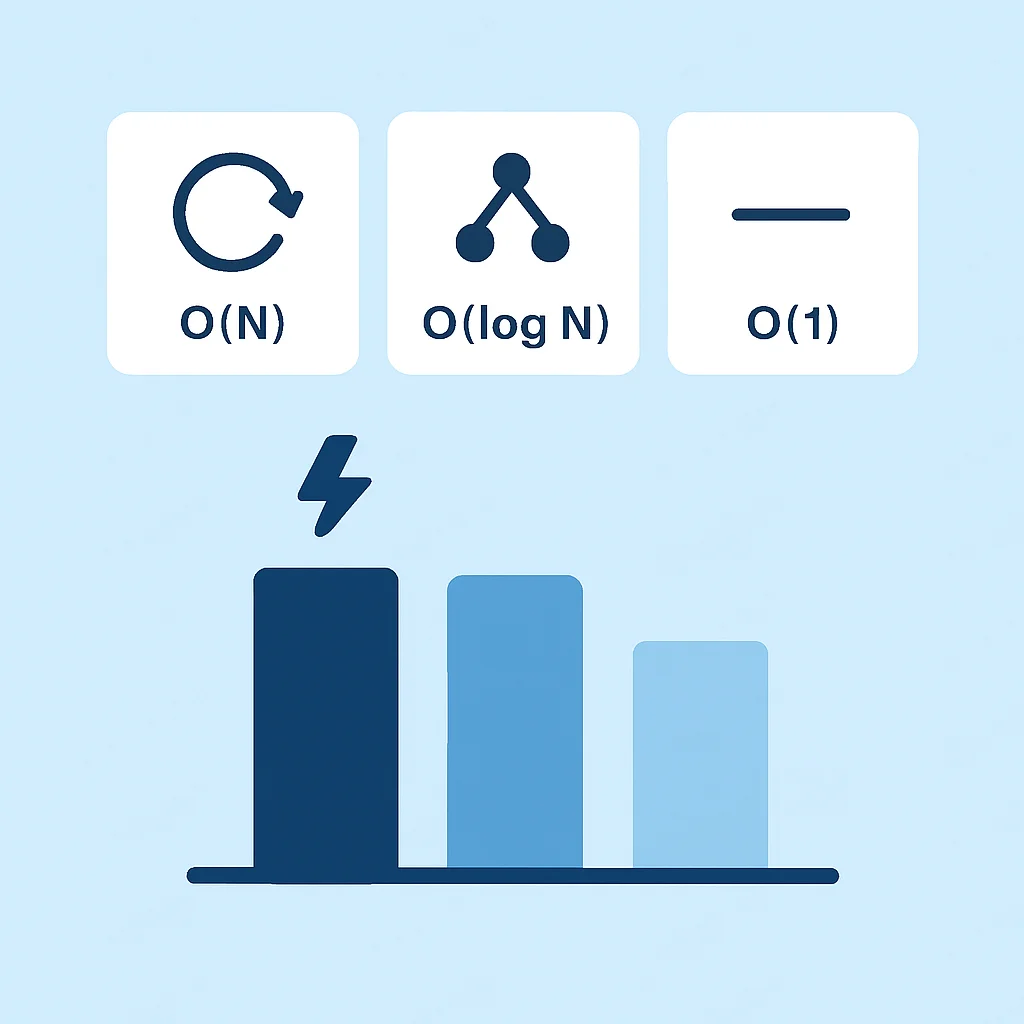
The choice of algorithms and data structures has a profound impact on an application’s energy consumption. An algorithm with a lower time complexity (e.g., O(log n) compared to O(n^2)) will execute faster and consume significantly less energy, especially with large datasets. Similarly, selecting the right data structure (e.g., a hash map for fast lookups instead of an array requiring linear scans) can drastically reduce CPU cycles and memory access.
Consider a scenario where you need to check for the presence of elements in a collection. Using a linear search on an unsorted array (O(n)) vs. using a hash set (average O(1)) illustrates this perfectly. For 1 million elements, a linear search might take millions of operations, while a hash set would take, on average, a single operation per lookup. This difference directly translates to CPU time and energy.
CODE EXPLANATION
This Python example demonstrates the performance difference between a linear search in a list and a lookup in a set, highlighting how data structure choice impacts efficiency and thus energy consumption.
import timeit

# Scenario 1: Linear search in a list (O(n))
list_data = list(range(1_000_000))
search_item = 999_999

list_search_time = timeit.timeit(lambda: search_item in list_data, number=10)
print(f"List search time: {list_search_time:.6f} seconds")

# Scenario 2: Lookup in a set (average O(1))
set_data = set(range(1_000_000))

set_search_time = timeit.timeit(lambda: search_item in set_data, number=10)
print(f"Set lookup time: {set_search_time:.6f} seconds")

# Output will show set lookup is significantly faster, consuming less energy
2. Optimized Database Interactions
Databases are often bottlenecks and significant energy consumers. Optimizing database interactions involves several strategies:
- Indexing: Properly indexing frequently queried columns can turn full table scans (highly energy-intensive) into quick lookups.
- Efficient Queries: Writing specific and minimal queries (e.g., selecting only necessary columns, using
LIMITclauses) reduces data processed and transferred. - Batching Operations: Instead of multiple individual inserts or updates, batching them into a single transaction can reduce network overhead and database load.
- Caching: Implementing robust caching layers (e.g., Redis, Memcached) for frequently accessed data reduces the need to hit the database, saving significant energy.
A well-indexed database can reduce query execution time by orders of magnitude, directly translating to fewer CPU cycles on the database server and less energy consumption. For example, a query that takes 500ms on an unindexed table might complete in 5ms with proper indexing, leading to a 99% reduction in processing time for that specific operation.
3. Reduced Network Traffic
Data transfer over networks is energy-intensive. Minimizing network traffic is a crucial green coding practice:
- Data Compression: Compressing data before transmission (e.g., Gzip for HTTP responses) significantly reduces the volume of data sent over the wire.
- Efficient APIs: Design RESTful APIs to return only necessary data. Avoid over-fetching or under-fetching by using GraphQL or selective field projections.
- Client-Side Caching: Leverage HTTP caching headers (
Cache-Control,ETag) to minimize repeated data requests from clients. - Lazy Loading: Only load assets (images, videos, scripts) or data when they are actually needed by the user.
Reducing network traffic by just 10% across an application with millions of users can lead to substantial energy savings across ISPs, data centers, and user devices.
KEY POINT
Optimizing algorithms, database interactions, and network traffic are fundamental green coding practices that directly translate to lower energy consumption and reduced carbon footprint for applications.
4. Efficient Cloud Resource Management
Cloud computing offers immense flexibility but also presents opportunities for inefficiency. Green cloud practices include:
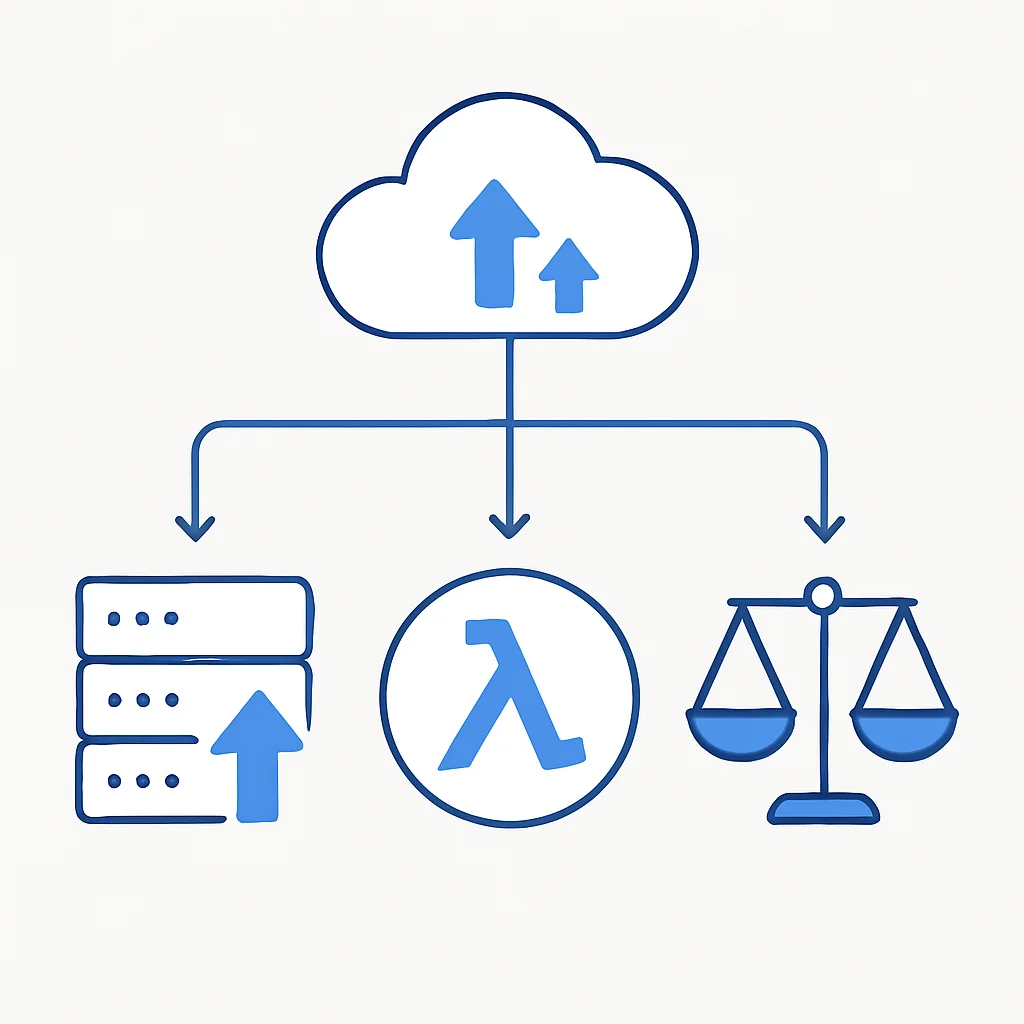
- Right-Sizing: Provisioning cloud instances (VMs, databases) that perfectly match the application’s workload, avoiding over-provisioning. Regular review of resource utilization is key.
- Auto-Scaling: Implementing auto-scaling policies to dynamically adjust resources based on demand, ensuring optimal utilization and minimizing idle energy consumption.
- Serverless Architectures: Leveraging serverless functions (e.g., AWS Lambda, Azure Functions) where appropriate, as they only consume resources when code is actively running.
- Choosing Green Regions: Opting for cloud regions powered by a higher percentage of renewable energy, where available.
According to a 2025 report by the Cloud Native Computing Foundation, organizations that aggressively right-size and adopt serverless architectures can reduce their cloud energy consumption by up to 30% compared to traditional VM-based deployments, without sacrificing performance.
5. Memory Management and Garbage Collection
Efficient memory usage is critical. Excessive memory allocation can lead to more frequent garbage collection cycles, which are CPU-intensive and consume energy. Avoiding memory leaks and optimizing data structures to use less memory means less pressure on the garbage collector and overall system resources. In languages like Java or C#, understanding the nuances of object lifecycle and generational garbage collection can lead to significant energy savings by reducing GC pauses and overhead.
6. Hardware-Aware Development
While developers often abstract away hardware details, being aware of them can inform green coding decisions. For example, minimizing I/O operations (disk reads/writes) reduces power consumption. Leveraging multi-core processors efficiently with parallel computing can complete tasks faster, potentially saving energy compared to a single-threaded approach that runs longer at full capacity. Understanding CPU cache utilization can also lead to more cache-friendly code that reduces trips to slower main memory, saving power.
CODE EXPLANATION
This Java example illustrates how to perform efficient memory management by nullifying objects no longer needed, allowing the garbage collector to reclaim memory faster and reduce overhead.
public class MemoryOptimization {
    public static void main(String[] args) {
        // Create a large object that will consume significant memory
        String[] largeArray = new String[1000000];
        for (int i = 0; i < largeArray.length; i++) {
            largeArray[i] = "String" + i;
        }
        System.out.println("Large array created, memory consumed.");

        // Simulate some processing...
        try {
            Thread.sleep(1000);
        } catch (InterruptedException e) {
            Thread.currentThread().interrupt();
        }

        // When the largeArray is no longer needed, nullify it
        // This makes it eligible for garbage collection immediately
        largeArray = null;
        System.out.println("Large array nullified, eligible for GC.");

        // Request garbage collection (not guaranteed, but a hint)
        System.gc();

        System.out.println("Program finished.");
    }
}
CHALLENGES & SOLUTIONS
Addressing Challenges in Sustainable Software Implementation
While the benefits of green coding are clear, its widespread adoption faces several challenges. Understanding these hurdles and their potential solutions is crucial for successful implementation.
PROBLEM 01
Balancing Performance, Cost, and Sustainability
Often, optimizing for one factor (e.g., raw performance) might inadvertently increase energy consumption or development complexity. Developers might prioritize speed or immediate cost savings (like cheaper, less efficient cloud instances) over long-term environmental benefits, especially under tight deadlines or budget constraints. This creates a perception that green coding is an “extra” effort rather than an integrated practice.
SOLUTION — Integrated Decision-Making & A/B Testing
The solution lies in integrating sustainability as a core metric from the project’s inception. Employ prioritization frameworks that weigh energy efficiency alongside performance and cost. Conduct A/B testing not just for user experience, but also for energy consumption of different code paths or architectural choices. Tools are emerging in 2026 that allow developers to estimate the carbon impact of their code changes directly within CI/CD pipelines, making sustainability a measurable and comparable metric. For instance, a cloud cost optimization tool could also report estimated carbon emissions, making the trade-offs explicit.
PROBLEM 02
Lack of Standardized Metrics and Tooling
Measuring the environmental impact of software accurately can be complex. There’s a historical lack of standardized metrics and readily available, easy-to-use tools that provide granular insights into code-level energy consumption. This makes it difficult for developers to identify energy hotspots in their code or compare the sustainability of different solutions objectively.
SOLUTION — Adoption of SCI and Green Software Tools
The industry is rapidly addressing this. The Software Carbon Intensity (SCI) specification by the Green Software Foundation is gaining significant traction in 2026 as a universal metric (Carbon per Unit of Work). Furthermore, new open-source and commercial tools are emerging, such as Scaphandre for real-time energy monitoring, Cloud Carbon Footprint for cloud emissions, and IDE plugins that highlight energy-inefficient code patterns. Investing in and adopting these tools, along with training developers on SCI, will enable quantifiable progress.
KEY POINT
Overcoming challenges like balancing competing priorities and a lack of standardized metrics requires integrating sustainability into core development processes, leveraging emerging tools, and fostering a culture of continuous measurement and optimization.
IMPLEMENTATION
Implementing Green Practices: A Developer’s Guide
Adopting green coding practices doesn’t happen overnight. It requires a structured approach and a commitment from both individual developers and organizations. Here’s a step-by-step guide to integrate sustainable software development into your workflow in 2026.
1
Educate Yourself and Your Team
Start by understanding the fundamentals of green software and its impact. Encourage team discussions, workshops, and share resources from organizations like the Green Software Foundation. Knowledge is the first step towards change. Many online courses and certifications are now available, focusing on sustainable software engineering principles and practices.
2
Establish Baselines and Set Goals
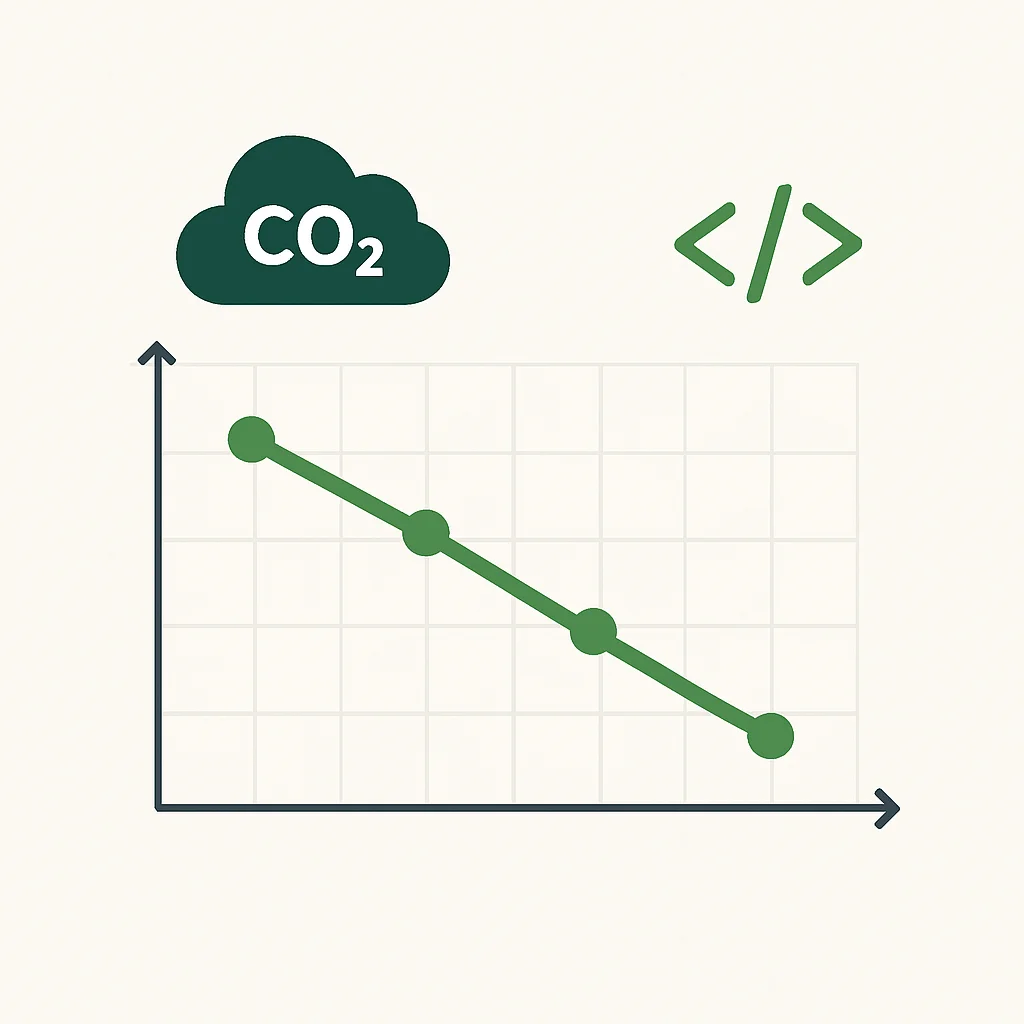
Before you can improve, you need to know where you stand. Use tools like Cloud Carbon Footprint or custom energy profilers to measure the current energy consumption and carbon footprint of your applications. Set realistic, measurable goals for reduction (e.g., “reduce cloud energy consumption by 15% in the next quarter”).
3
Integrate Green Metrics into CI/CD
Automate the measurement of energy efficiency. Integrate carbon intensity checks into your CI/CD pipelines. This ensures that new code changes are evaluated for their environmental impact before deployment, making sustainability a continuous part of the development process. Alerts can be triggered if changes increase the carbon footprint beyond a certain threshold.
4
Prioritize Optimization Efforts
Focus on areas with the highest impact. Use profiling tools to identify energy hotspots in your code (e.g., frequently executed loops, complex database queries, high network traffic components). Start with low-hanging fruit that offers significant energy savings with minimal refactoring. For example, optimizing a heavily used API endpoint might yield more immediate benefits than refactoring a rarely accessed legacy module.
5
Foster a Culture of Sustainability
Green coding should be a shared responsibility. Encourage knowledge sharing, peer reviews focused on energy efficiency, and celebrate sustainability achievements. Make green coding a criterion in architectural reviews and design discussions. This cultural shift ensures that sustainability becomes an inherent part of the development DNA.
KEY POINT
Effective implementation involves continuous education, setting clear baselines and goals, integrating green metrics into automated pipelines, prioritizing high-impact optimizations, and cultivating a team culture that values sustainability.
Frequently Asked Questions
Q. What is the biggest environmental impact of software?
The biggest environmental impact of software primarily stems from the energy consumption of the hardware it runs on, particularly in data centers. Inefficient code, excessive data transfer, and poorly managed cloud resources contribute significantly to this energy demand and associated carbon emissions.
Q. How can I measure the carbon footprint of my application?
You can measure your application’s carbon footprint by monitoring its energy consumption (e.g., CPU, memory, network I/O) and then converting that energy into CO2 emissions using regional energy mix data. Tools like the Green Software Foundation’s Software Carbon Intensity (SCI) specification, Cloud Carbon Footprint, and various energy profilers can assist in this measurement.
Q. Does green coding always mean slower performance or higher development costs?
Not necessarily. While some initial investment in tooling or training might be required, green coding often leads to improved performance and reduced operational costs in the long run. Efficient algorithms, optimized resource usage, and streamlined data handling inherently make applications faster and cheaper to run, creating a win-win scenario for both the environment and the business.
Q. What role do cloud providers play in sustainable software?
Cloud providers play a crucial role by investing in renewable energy sources for their data centers and offering energy-efficient services. Developers can contribute by choosing cloud regions with higher renewable energy mixes, utilizing serverless and auto-scaling features, and right-sizing their instances to avoid wasted resources.
CONCLUSION
Wrap-Up: Building a Greener Digital Future
The journey towards sustainable software development is a collective one, requiring commitment from individual developers, teams, and organizations alike. In 2026, as technology continues to permeate every aspect of our lives, the environmental footprint of our digital creations can no longer be overlooked. By embracing green coding practices, we are not just optimizing for performance or cost; we are consciously choosing to build a more responsible and sustainable digital future.
The principles of energy efficiency, resource utilization, data efficiency, and lifecycle management provide a robust framework. The practical strategies—from selecting efficient algorithms to optimizing cloud resources—offer tangible ways for developers to contribute. While challenges exist, the rapid evolution of tooling and industry standards, such as the SCI, is making it easier than ever to measure, monitor, and improve the sustainability of our software.
9.0
/ 10
Green coding is an essential, impactful, and increasingly accessible practice for every developer.
As developers, we hold immense power to shape the digital world. By integrating sustainability into our coding DNA, we can build applications that are not only performant and robust but also environmentally conscious. This shift is not merely a trend; it’s a fundamental responsibility that will define the next generation of software engineering. Let’s commit to green coding and build a greener digital future, one line of code at a time.

Thanks for reading!
Join the Kwonglish community as we explore the future of tech.
Got questions or green coding tips to share? Drop a comment below!