
SUMMARY
Top 7 Must-Play RPGs for Developers in 2026: Epic Adventures Await!
Dive into the most captivating role-playing games of 2026, hand-picked for their immersive worlds and intricate designs that developers will adore.
Keywords: Gaming, RPGs, Developer Gaming
TABLE OF CONTENTS
1 Introduction: Why RPGs for Devs?
2 RPG #1: The Witcher 3: Wild Hunt (Complete Edition)
3 RPG #2: Cyberpunk 2077 (Ultimate Edition)
4 RPG #3: Baldur’s Gate 3
5 RPG #4: Elden Ring
6 RPG #5: Disco Elysium – The Final Cut
7 RPG #6: Starfield
8 RPG #7: Persona 5 Royal
9 Why RPGs Are a Developer’s Best Friend
10 Pros & Cons of Diving Deep into RPGs
11 Frequently Asked Questions
12 Verdict: Your Next Epic Adventure Awaits!
INTRODUCTION
Why RPGs for Devs? Unlocking Creativity Beyond Code
Hey there, Kwonglish fam! Kwonglish here, and today we’re talking about something near and dear to my heart: diving headfirst into incredible virtual worlds after a long day of, well, building virtual worlds! You see, as developers, our brains are constantly wired for problem-solving, system design, and optimizing logic. And what genre of games taps into that better than a truly epic Role-Playing Game?
RPGs aren’t just about flashy graphics or button-mashing; they’re about deep narratives, intricate character progression systems, vast open worlds, and choices that genuinely matter. For us devs, these aren’t just games; they’re masterclasses in complex system design, world-building, and user experience. They offer a unique blend of escapism and intellectual stimulation, helping us unwind while subtly sharpening our analytical skills. Think of it as a low-key, high-fun mental workout!
“The best RPGs don’t just tell a story; they let you build your own narrative within a meticulously crafted system. It’s like debugging life, but with magic and monsters!”
— Kwonglish
So, if you’re a developer looking for your next addiction, something to fuel your imagination and give your logical brain a different kind of challenge, you’ve come to the right place. I’ve scoured the gaming landscape to bring you the top 7 must-play RPGs in 2026. These aren’t just popular titles; they’re experiences that resonate deeply with the developer mindset, offering everything from sprawling open worlds to mind-bending moral dilemmas. Let’s dive in!
FEATURED RPG
RPG #1: The Witcher 3: Wild Hunt (Complete Edition)
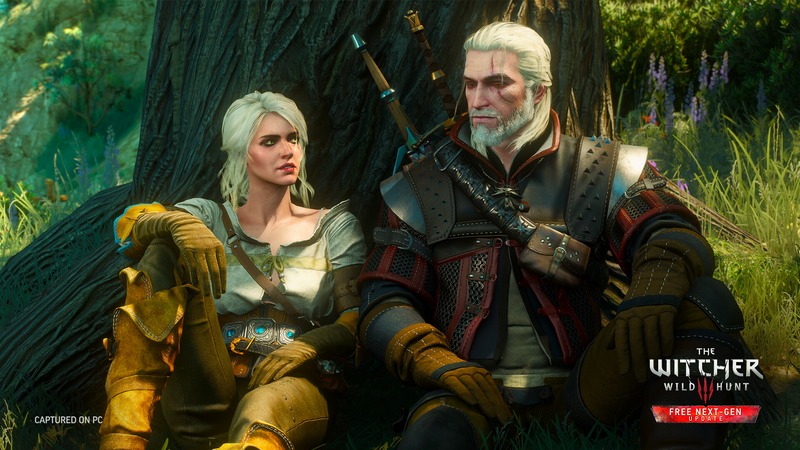
Let’s kick things off with a timeless masterpiece that, even years after its initial release, continues to set the gold standard for open-world RPGs: The Witcher 3: Wild Hunt. And specifically, the Complete Edition – because you absolutely need those phenomenal expansions, “Hearts of Stone” and “Blood and Wine,” which add dozens of hours of top-tier content and some of the best questlines in gaming history. Developed by CD Projekt Red and released in 2015, its enduring quality makes it an essential play even in 2026.
Story & World-Building: A Masterclass in Narrative Choice
You play as Geralt of Rivia, a monster slayer for hire, known as a Witcher. The main quest revolves around finding Ciri, Geralt’s adopted daughter, who is being hunted by the spectral Wild Hunt. But where The Witcher 3 truly shines is in its nuanced storytelling, particularly in its side quests. There are no fetch quests here; every single side quest feels like a mini-narrative with moral ambiguities, unexpected twists, and genuine consequences. The world of the Northern Realms is incredibly rich, inspired by Slavic mythology, and feels lived-in, war-torn, and full of fascinating characters.
KEY POINT
The Witcher 3’s strength lies in its ability to make every choice feel significant, even in seemingly minor side quests, showcasing exceptional narrative design and player agency.
Gameplay Review: Combat, Exploration, and Systems
Combat is a blend of swordplay, magic (Signs), and alchemy. Geralt’s combat prowess isn’t just about mashing attack buttons; it’s about preparation. Before a tough monster hunt, you’ll consult your bestiary, brew potions, apply oils to your swords, and strategically use your Signs. This systematic approach to combat, where knowledge and preparation are key, is something a developer’s mind can truly appreciate. The open world is massive and gorgeous, encouraging exploration, and filled with points of interest, hidden treasures, and dynamic events.
For developers, the sheer scale and seamless integration of its systems are awe-inspiring. Think about the quest tracking: how do they manage hundreds of interconnected quests without breaking the player’s immersion? Or the dynamic weather system, the NPC routines, and how all these elements contribute to a believable world. It’s a masterclass in game engine management and content delivery.
This pseudocode illustrates a simplified decision-making structure for a quest outcome, where player choices (playerChoice) directly influence the narrative path and reputationScore, a common RPG mechanic.
FEATURED RPG
RPG #2: Cyberpunk 2077 (Ultimate Edition)
From the same studio as The Witcher 3, Cyberpunk 2077 had a rocky launch, but with years of dedicated updates, the massive 2.0 overhaul, and the phenomenal “Phantom Liberty” expansion (included in the Ultimate Edition), it has transformed into one of the best open-world RPG experiences available in 2026. Set in the dystopian Night City, it’s a visually stunning and narratively compelling ride.
Story & World-Building: A Glitch in the System
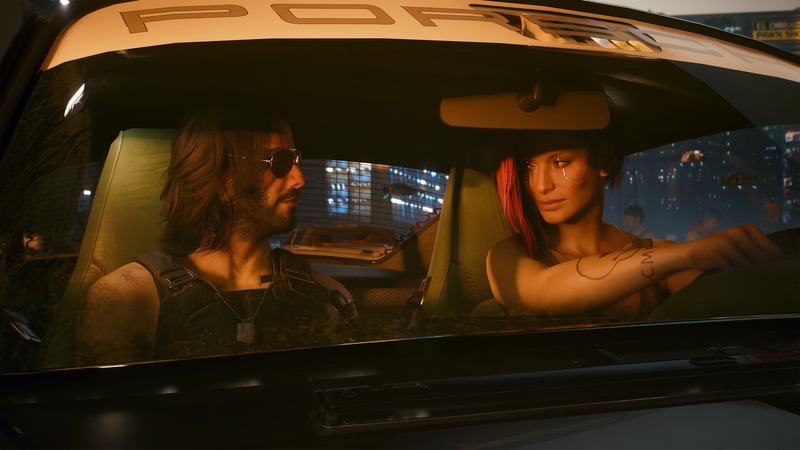
You play as V, a mercenary in Night City, who gets entangled with Johnny Silverhand (portrayed by Keanu Reeves), a rockstar terrorist whose consciousness is imprinted onto a biochip in V’s head. The story is a gripping tale of survival, identity, and defying corporate control, with multiple branching paths and endings. Night City itself is a character – a sprawling, vertical metropolis brimming with distinct districts, neon-drenched streets, and a palpable sense of corporate oppression and street-level struggle. The lore, drawn from the original Cyberpunk tabletop RPG, is incredibly deep.
“Night City isn’t just a backdrop; it’s a meticulously engineered ecosystem of factions, technology, and human ambition. Dissecting its design is as rewarding as living in it.”
— A developer appreciating game design
Gameplay Review: Chrome, Combat, and Code
Cyberpunk 2077 offers an incredible amount of player freedom in combat and character building. You can be a netrunner, hacking enemies and environments; a stealthy assassin; a brawling tank; or a gun-slinging sharpshooter. The revamped perk system (2.0 update) is a joy for anyone who loves optimizing builds, allowing for truly unique playstyles. The game’s use of cyberware – augmentations that enhance V’s abilities – is a core gameplay loop, feeling like an interactive skill tree that literally changes your character’s physical capabilities.
For developers, the intricate systems of character progression, the dynamic AI, and the sheer density of interactive elements in Night City are a marvel. The way quickhacks function as in-world “code injection” offers a meta-narrative for those who appreciate the underlying mechanics. It’s a testament to fixing complex systems post-launch, something many devs can relate to.
KEY POINT
Cyberpunk 2077 stands as a powerful example of a game’s redemption story, demonstrating how dedicated post-launch development, including major overhauls and expansions, can elevate an experience to critical acclaim.
FEATURED RPG
RPG #3: Baldur’s Gate 3
If you’re a fan of classic CRPGs or tabletop Dungeons & Dragons, then Baldur’s Gate 3 from Larian Studios is an absolute must-play. Released in 2023, it took the gaming world by storm, winning numerous Game of the Year awards, and for good reason. It’s a sprawling, unbelievably detailed RPG that offers unparalleled player freedom and reactive storytelling, making every playthrough feel unique.
Story & World-Building: A Grand D&D Saga
The story begins with your custom character and several companions infected by a mind flayer tadpole, which threatens to turn you into one of these horrific creatures. Your quest for a cure quickly spirals into an epic struggle involving gods, devils, and the fate of Faerûn. The writing is witty, often dark, and full of memorable characters who react dynamically to your choices. The world, based on the Forgotten Realms setting of D&D, is incredibly rich with lore, history, and diverse environments, from ancient ruins to bustling cities.
This snippet represents a simplified version of a D&D-style skill check, where a random roll (diceRoll) combined with a character’s skillModifier determines success against a difficultyClass. Baldur’s Gate 3 excels at making these underlying systems transparent and engaging.
Gameplay Review: Unprecedented Freedom and Tactical Combat
Baldur’s Gate 3’s gameplay is turn-based combat combined with exploration and dialogue choices that genuinely branch the narrative. The combat system is deep and tactical, allowing for incredible environmental interactions – push enemies off ledges, ignite oil spills, or use spells to create new paths. The sheer freedom to approach problems in countless ways is astounding. Want to talk your way out of a fight? Pickpocket a key? Sneak past? Or just go in swords blazing? All are viable, and the game reacts to almost everything.
For developers, the game is a masterclass in emergent gameplay and reactive world design. The “if-then-else” logic of how choices cascade through the narrative is mind-bogglingly complex. Larian’s ability to anticipate and respond to player creativity, often with fully voice-acted dialogues, is a monumental technical and creative achievement.
KEY POINT
Baldur’s Gate 3 redefines player agency in RPGs, demonstrating unparalleled reactivity to player choices and environmental interactions, making each playthrough a truly personal story.
FEATURED RPG
RPG #4: Elden Ring
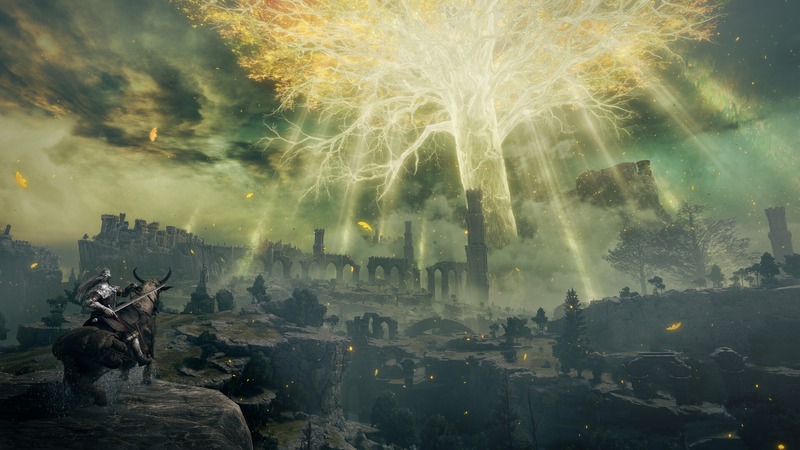
FromSoftware’s Elden Ring, released in 2022, isn’t just a game; it’s an experience, a phenomenon. Merging the punishing difficulty and intricate combat of the Souls-like genre with a vast, awe-inspiring open world, Elden Ring offers an unparalleled sense of discovery and accomplishment. Co-written with George R.R. Martin, its lore is as dense and fascinating as its gameplay is challenging.
Story & World-Building: A Shattered Realm’s Echoes
In the Lands Between, the Elden Ring has been shattered, and its demigod shards are wielded by powerful, corrupted beings. You, a Tarnished, are guided by grace to become the Elden Lord. The narrative is cryptic, delivered through environmental storytelling, item descriptions, and fragmented dialogues, requiring players to piece together the lore themselves. This unique approach to storytelling encourages active engagement and theorizing, much like deciphering complex documentation. The world design is truly breathtaking, with diverse biomes, colossal legacy dungeons, and hidden secrets around every corner.
“The Lands Between is a masterclass in implicit design. No hand-holding, just a world begging to be understood, much like a complex codebase without comments.”
— A developer’s take on Elden Ring’s design philosophy
Gameplay Review: The Thrill of Overcoming
Elden Ring’s combat is precise, demanding, and incredibly rewarding. Every enemy, especially bosses, feels like a puzzle to solve. You’ll learn attack patterns, exploit weaknesses, and utilize a vast arsenal of weapons, spells, and Ashes of War (unique weapon skills). The open world provides freedom to tackle challenges in any order, allowing players to explore, level up, and find better gear if they hit a wall. This iterative process of trying, failing, learning, and finally overcoming is deeply satisfying and mirrors the debugging process for many developers.
For developers, Elden Ring is a testament to meticulous encounter design and player progression. The subtle cues, environmental storytelling, and the way the game guides you without explicit markers are brilliant. It’s an exercise in understanding complex systems through observation and experimentation – skills highly valued in software development.
KEY POINT
Elden Ring excels in its “tough but fair” design, fostering a deep sense of accomplishment through iterative learning and mastery, a philosophy that resonates with problem-solving in development.
FEATURED RPG
RPG #5: Disco Elysium – The Final Cut
If you crave narrative depth, philosophical musings, and a truly unique RPG experience, then Disco Elysium – The Final Cut (released in 2019, with the Final Cut update in 2021) is your jam. Developed by ZA/UM, it’s a detective RPG unlike any other, eschewing traditional combat for dialogue-driven investigations and psychological exploration. It’s pure narrative and system design genius, perfect for those who appreciate intricate logic.
Story & World-Building: A Mind-Bending Mystery
You play as a detective with amnesia, waking up in a rundown hostel with a murder to solve and absolutely no memory of who you are. The game’s world of Revachol is a hauntingly beautiful, post-revolutionary city steeped in political intrigue, economic decay, and profound philosophical currents. The story delves deep into themes of identity, memory, politics, and the human condition. Every character is exquisitely written, and every dialogue choice matters, often leading to surprising and thought-provoking outcomes.
This abstract function represents Disco Elysium’s unique skill system, where internal thoughts and character stats (skillLevel) can “speak” to the player, influencing decisions or revealing insights. It’s a brilliant meta-game design.
Gameplay Review: The Power of Thought and Dialogue
Instead of combat, Disco Elysium uses a unique skill system where your internal thoughts and various aspects of your psyche (e.g., Logic, Electrochemistry, Empathy, Shivers) are personified and literally speak to you, offering advice, critiques, or even conflicting opinions. These skills influence dialogue options, dice rolls for investigation, and how you perceive the world. It’s an RPG that truly puts the “role-playing” front and center, allowing you to craft a detective who is brilliant, insane, compassionate, or utterly depraved.
For developers, Disco Elysium is a masterpiece of branching narrative design and how to gamify internal monologue. The way the skill system integrates seamlessly into every interaction, providing constant feedback and shaping your character’s internal state, is a marvel of complex state management and conditional logic. It’s a game that makes you think about how you build interactive systems.
KEY POINT
Disco Elysium’s innovative skill system transforms internal thoughts into active gameplay mechanics, offering a unique perspective on character development and narrative interaction.
FEATURED RPG
RPG #6: Starfield
Bethesda Game Studios, known for their sprawling open-world RPGs like The Elder Scrolls and Fallout, ventured into the vastness of space with Starfield, released in 2023. While it had its initial critics, Starfield offers an unparalleled sense of cosmic exploration, ship customization, and faction-driven narratives that can captivate any sci-fi enthusiast or developer who loves building complex systems.
Story & World-Building: Your Own Space Opera
You start as a humble miner who discovers a mysterious artifact, thrusting you into the Constellation, a group of space explorers seeking to uncover the universe’s greatest mysteries. The main story is a compelling journey across the stars, but like all Bethesda games, the real magic happens in the side quests and faction storylines. You can join the Freestar Collective, the United Colonies, or even become a space pirate with the Crimson Fleet. The lore of the Settled Systems is vast, filled with intriguing factions, historical events, and unique planets to discover.
“Starfield’s procedural generation, coupled with handcrafted content, presents a fascinating challenge in game development: how to maintain quality and narrative cohesion across a near-infinite canvas.”
— On the scale of Starfield’s universe
Gameplay Review: Exploration, Crafting, and Ship Building
Starfield’s gameplay loop revolves around exploration, combat (both on foot and in space), and deep customization systems. The highlight for many developers will be the incredibly robust ship-building system. You can design your starship from the ground up, piece by piece, affecting its combat capabilities, cargo capacity, and even its interior layout. This modular design system is a dream for anyone who enjoys tinkering with components and optimizing for specific functionalities. Outpost building, research, and crafting also provide extensive avenues for resource management and system optimization.
For developers, Starfield offers a look into managing a truly massive scope. The procedural generation of planets, combined with hand-placed points of interest, showcases a hybrid approach to world design. The sheer number of systems – from space combat to inventory management, companion AI to dialogue trees – provides a rich tapestry for analysis. It’s a game about building, exploring, and discovering both in-game and in its underlying architecture.
KEY POINT
Starfield’s ship-building and outpost customization systems are a developer’s playground, offering deep modularity and optimization challenges that resonate with engineering principles.
FEATURED RPG
RPG #7: Persona 5 Royal
Last but certainly not least on our list is Persona 5 Royal, an enhanced version of the original Persona 5, released by Atlus in 2019 (Royal in 2020). This JRPG is a masterclass in style, narrative, and intricate time management mechanics. It’s a game that blends high school life simulation with dungeon crawling and demon collecting in the most captivating way possible, offering a unique kind of system optimization that developers will appreciate.
Story & World-Building: Rebel Teenagers and Phantom Thieves
You play as a silent protagonist, Joker, who is transferred to a new high school after being falsely accused of assault. He soon awakens to a supernatural power, forming the “Phantom Thieves of Hearts” with fellow students. Their mission: to enter the “Metaverse,” a cognitive world born from humanity’s distorted desires, and steal the corrupt hearts of wicked adults. The story is stylish, mature, and tackles heavy themes like social injustice, abuse of power, and rebellion, all wrapped in a vibrant, jazz-infused aesthetic. The depiction of Tokyo is incredibly detailed and immersive.
“Persona 5 Royal’s calendar system is a perfect example of constrained optimization. Every in-game day is a resource, and managing it efficiently for maximum social links and dungeon progress is a developer’s dream.”
— On Persona’s time management
Gameplay Review: Style, Substance, and Scheduling
Persona 5 Royal’s gameplay is split into two main components: daily life simulation and dungeon crawling. During the day, you attend school, build relationships (Social Links) with various characters, and improve your social stats (Guts, Charm, Knowledge, etc.) through activities like studying, working part-time, or visiting specific locations. These relationships and stats directly impact your combat effectiveness. In the Metaverse, you engage in stylish turn-based combat, recruiting and fusing “Personas” (manifestations of your psyche) to aid you.
For developers, the intricate calendar system is a fascinating challenge in resource management and optimization. Every day presents choices: do you level up your social stats, deepen a Social Link, or tackle a dungeon? The game forces you to prioritize and plan, creating a deeply satisfying loop of progression. The sheer polish, UI/UX design, and seamless transitions between its disparate systems are a masterclass in game development.
KEY POINT
Persona 5 Royal’s sophisticated calendar and Social Link systems offer a unique blend of narrative depth and strategic resource management, appealing to a developer’s love for optimization.
DEEPER DIVE
Why RPGs Are a Developer’s Best Friend
It’s not just about having fun; there’s a unique synergy between the developer mindset and the RPG genre. Here’s why these games often hit different for us:
System Design and Optimization Appreciation
Developers spend their days building and optimizing systems. When we play an RPG, we’re not just experiencing a story; we’re often subconsciously reverse-engineering its mechanics. How does the skill tree work? What’s the optimal build for this boss? How is the economy balanced? This analytical approach turns gameplay into a fascinating study of interactive system design. We appreciate the elegance of a well-implemented inventory system or the subtle balance of a combat loop.
Narrative Structure and Branching Logic
RPGs, especially those with strong narrative choices like Baldur’s Gate 3 or The Witcher 3, are complex state machines. Every decision points to a new branch, every variable changes the outcome. For someone who writes if/else statements and manages complex data flows, seeing a game handle hundreds of these branching paths seamlessly is incredibly impressive. It’s a testament to robust design patterns and meticulous planning.