
SUMMARY
Master Any Language Faster: The Power of Spaced Repetition Systems (SRS) in 2026
Leverage Spaced Repetition Systems (SRS) to dramatically improve your language learning speed and retention as a developer.
Keywords: Spaced Repetition System, SRS, language learning, Anki
TABLE OF CONTENTS
1. Why It Matters: The Developer’s Edge in Language Learning
2. Core Methods: Deconstructing Spaced Repetition Systems
3. Practical Application: Building Your SRS Language Engine
4. Common Pitfalls & How to Avoid Them
5. Frequently Asked Questions (FAQ)
6. Wrap-Up: Your Path to Polyglotism in 2026
WHY IT MATTERS
The Developer’s Edge in Language Learning
As a developer, you’re inherently wired for systems, optimization, and efficiency. You understand that a well-architected framework can save countless hours and yield superior results. Why should language learning be any different? In 2026, the global landscape is more interconnected than ever, and multilingualism isn’t just a soft skill – it’s a superpower that can unlock new career opportunities, cultural experiences, and cognitive benefits.
Many approach language learning with enthusiasm but quickly hit a wall due to inefficient methods. Rote memorization, endless grammar drills, and passive consumption often lead to frustration and high dropout rates. This is where your developer mindset can give you a significant advantage. Instead of blindly following traditional paths, you can apply systematic thinking to optimize your learning process, much like you’d optimize a database query or refactor a codebase.
The core challenge in language acquisition isn’t just about initial exposure; it’s about retention. How do you ensure that the vocabulary and grammar rules you learn today are still fresh in your mind weeks or months from now? The answer lies in understanding how human memory works, and then building a system around it. This is precisely what Spaced Repetition Systems (SRS) do.
Developers are uniquely positioned to excel with SRS due to their inherent understanding of systems and optimization, applying this to overcome the memory retention challenges of language learning.
The scientific foundation of SRS traces back to the work of German psychologist Hermann Ebbinghaus in the late 19th century. Ebbinghaus famously conducted experiments on memory and retention, leading to his discovery of the “Forgetting Curve.” This curve illustrates that without active review, our memory of newly learned information decays rapidly over time. For example, you might remember 80% of new words after an hour, but only 30% after a week if you don’t revisit them.

Ebbinghaus’s subsequent research also showed that relearning information takes less time than the initial learning, and crucially, that repeated reviews can flatten the forgetting curve, leading to long-term retention. However, simply reviewing everything every day is inefficient. The genius of Spaced Repetition lies in optimizing these review intervals. Instead of reviewing everything randomly, an SRS algorithm calculates the optimal time to show you a piece of information again, just before you’re about to forget it.
This intelligent scheduling ensures that you spend your precious study time on the items you’re most likely to forget, while less effort is wasted on items you already know well. For a developer accustomed to optimizing resource allocation and maximizing output, the appeal of such an efficient system is immediate. It transforms language learning from a grueling chore into a streamlined, data-driven process.
CORE METHODS
Deconstructing Spaced Repetition Systems
At its heart, a Spaced Repetition System (SRS) is a learning technique that uses increasing intervals of time between subsequent reviews of previously learned material. It’s designed to exploit the “spacing effect,” a cognitive phenomenon where learning is more effective when study sessions are spaced out over time rather than crammed into a single session. Coupled with “active recall,” where you actively retrieve information from memory rather than passively re-reading, SRS becomes an incredibly potent tool.
Think of it like this: when you learn a new word, say “안녕하세요” (hello in Korean), the SRS will show it to you again after a short interval, perhaps 10 minutes. If you remember it, the interval for the next review expands to an hour, then a day, then three days, a week, a month, and so on. If you forget it, the interval resets or shortens, ensuring you see it more frequently until it sticks. This dynamic adjustment is what makes SRS so powerful and personalized.
The most popular and robust SRS software available today is Anki. Anki is an open-source, cross-platform flashcard program that leverages a highly optimized algorithm to schedule your reviews. It’s incredibly flexible, allowing you to create custom flashcard types, add images, audio, and even integrate with other language tools. For developers, Anki’s extensibility and data-driven approach feel right at home.
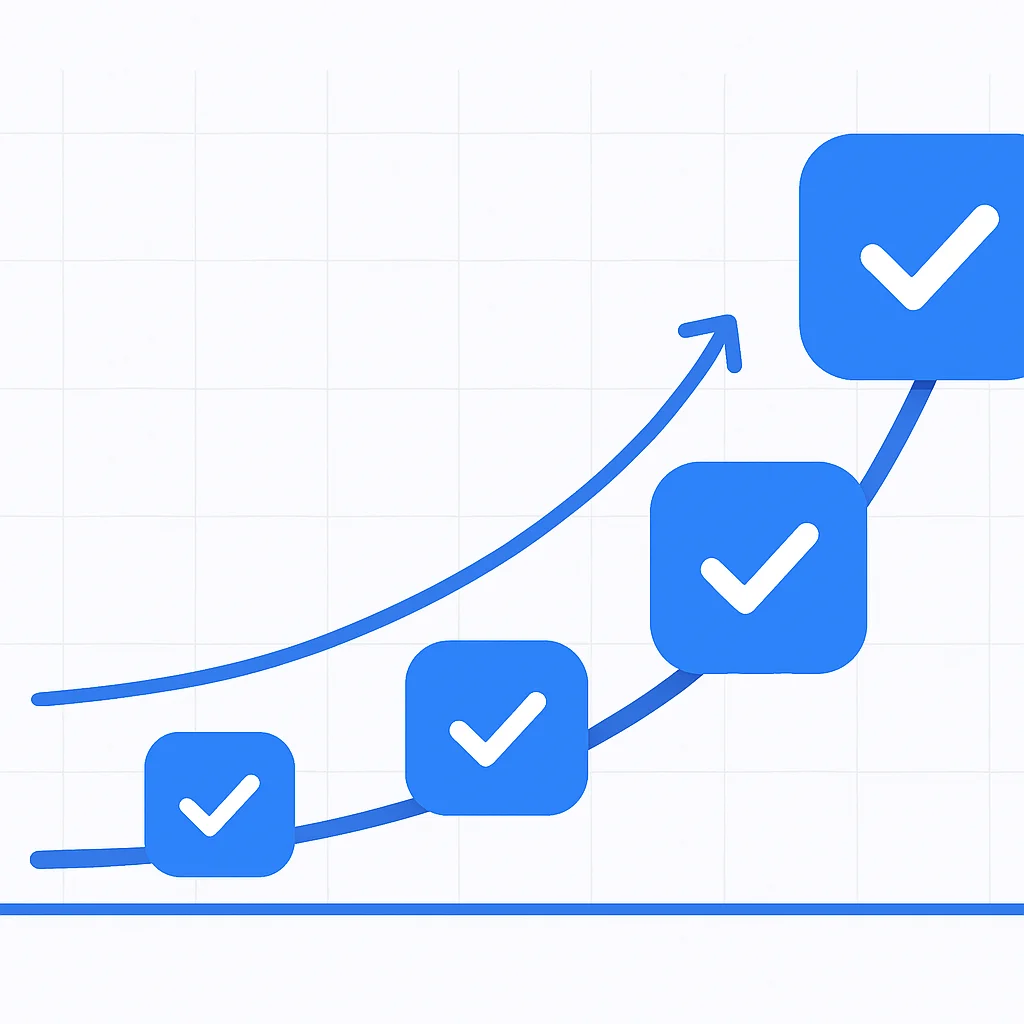
SRS combines the spacing effect with active recall, using an algorithm (like Anki’s) to intelligently schedule reviews for optimal long-term memory retention, showing you information just before you forget it.
Key Principles of Effective SRS Usage
To truly harness the power of SRS, especially with a tool like Anki, understanding its underlying principles is crucial:
Core SRS Principles
1. Active Recall — Always try to retrieve the answer from memory before revealing it. This effort strengthens the memory trace far more than passive recognition.
2. Atomic Information — Each flashcard should test only one piece of information. Don’t cram multiple facts onto a single card. For example, learn “apple” and “red” separately, not “red apple” as a single item initially.
3. Honest Self-Assessment — When reviewing, be brutally honest with yourself. If you struggled even a little, mark it as “Hard” or “Again.” Don’t cheat the algorithm by marking “Easy” when it wasn’t.
4. Consistency Over Quantity — Short, daily review sessions (15-30 minutes) are far more effective than long, infrequent ones. The algorithm works best with consistent input.
5. Contextual Learning — While atomic cards are good for initial learning, integrate new words into example sentences or phrases as you progress to understand their usage in context.
By adhering to these principles, you turn Anki from a simple flashcard app into a powerful, personalized learning machine. It shifts the burden of remembering what to review and when, allowing you to focus purely on the act of learning and recalling.
PRACTICAL APPLICATION
Building Your SRS Language Engine
Now, let’s get practical. How do you set up and use Anki (or any SRS) effectively for language learning in 2026? It’s a structured process, much like setting up a new development environment.
Step-by-Step Guide to SRS Mastery
Download & Install Anki
Anki is available for Windows, macOS, Linux, Android, and iOS. Download it from AnkiWeb. The desktop version is free and fully featured; mobile apps may have a one-time cost but are well worth it for on-the-go reviews. Set up an AnkiWeb account to sync your progress across devices.
Create Your First Deck and Card Type
Start with a simple deck, perhaps named after the language you’re learning (e.g., “Korean Vocabulary”). For card types, a basic “Front & Back” is often enough. As a developer, you might appreciate customizing card templates with HTML and CSS to display information exactly how you want it. For instance, you could have fields for the target word, its phonetic transcription, an example sentence, and an audio clip.
CODE EXPLANATION
This is a simplified Anki card template. The front of the card displays the target language word and its phonetic transcription. The back of the card reveals the English translation, an example sentence, and an audio pronunciation. This structure ensures active recall and provides context.
<!-- Front Template -->
<div style="font-size: 32px; font-weight: bold; color: #d97706;">{{Target Word}}</div>
<div style="font-size: 18px; color: #868e96;">[{{Phonetic}}]</div>

<!-- Back Template -->
<div style="font-size: 32px; font-weight: bold; color: #d97706;">{{Target Word}}</div>
<div style="font-size: 18px; color: #868e96; padding-bottom: 15px;">[{{Phonetic}}]</div>
<hr style="border: none; border-top: 1px solid #ccc; height: 1px; margin-bottom: 15px;">
<div style="font-size: 24px; color: #191F28; padding-bottom: 10px;">{{English Meaning}}</div>
<div style="font-size: 16px; color: #4E5968; padding-bottom: 10px;">Example: <i>{{Example Sentence}}</i></div>
<div>{{Audio}}</div>
Start Adding Cards (Quality Over Quantity)
Focus on creating high-quality, atomic cards. For vocabulary, this means one word/phrase per card. Include relevant information: the word in the target language, its meaning, phonetic transcription, an example sentence, and crucially, an audio pronunciation. Tools like Forvo or native speaker recordings are invaluable. For grammar, break down rules into bite-sized examples.
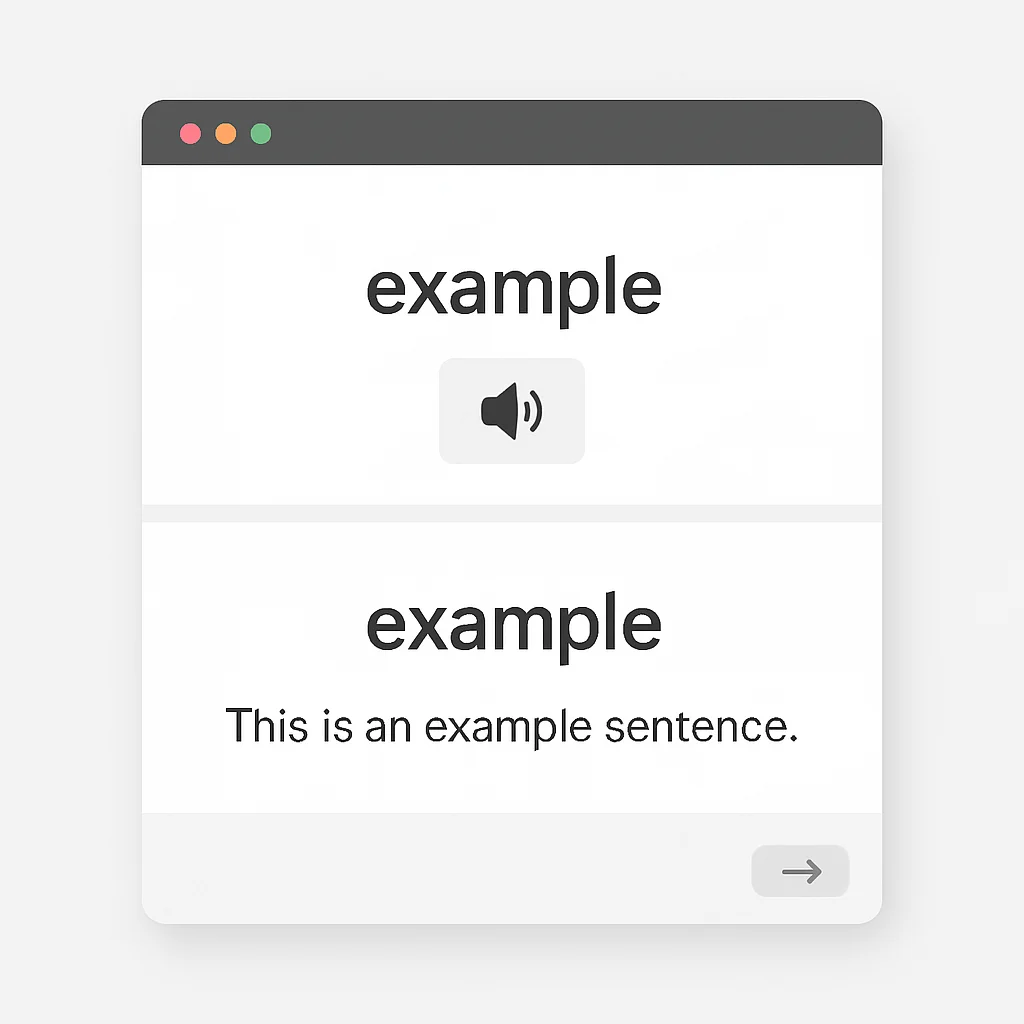
Review Consistently, Every Day
This is the most critical step. Dedicate 15-30 minutes daily to your Anki reviews. The consistency ensures the algorithm works optimally. When a card appears, try to recall the answer before revealing it. Then, honestly rate your recall:
- • Again (1 min): You completely forgot or struggled significantly.
- • Hard (6 min): You remembered, but it took effort.
- • Good (1 day): You remembered easily.
- • Easy (4 days): You remembered instantly, and it felt too easy. (Use sparingly)
The numbers in parentheses are default intervals and will expand over time. The key is to be honest. If you mark “Easy” when it was “Hard,” you’re effectively telling the algorithm to show it to you later than you truly need, leading to forgetting.
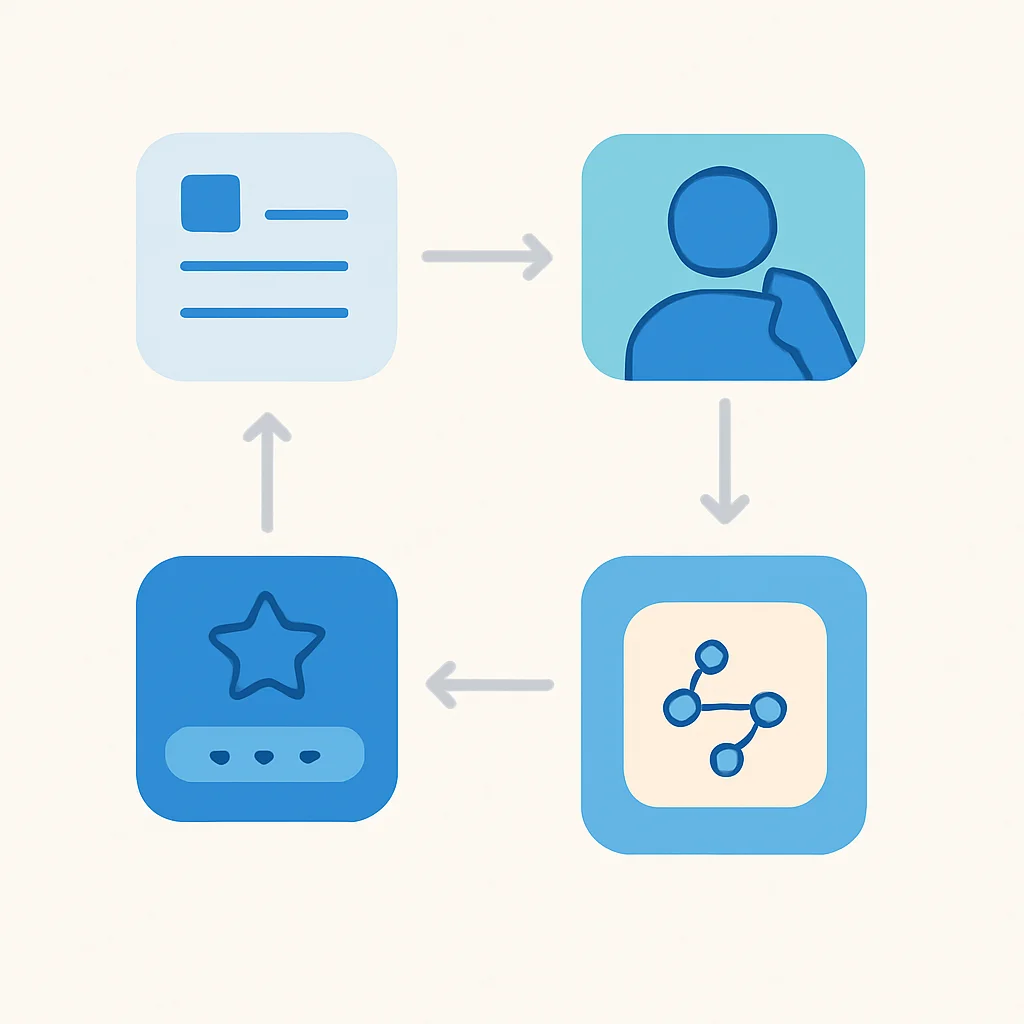
Integrate with Other Learning Activities
SRS is a memory tool, not a complete language course. Use it to solidify what you learn from other sources: textbooks, language exchange partners, podcasts, movies, or even coding documentation in your target language. When you encounter a new word or phrase in your immersion, immediately add it to Anki. This creates a powerful feedback loop.
KEY POINT
The core of SRS success lies in creating atomic, high-quality flashcards, reviewing them daily with honest self-assessment, and integrating this memory reinforcement with broader language exposure.
Inefficient Card Creation
Many learners spend too much time manually creating cards or create “bloated” cards that test too many concepts, hindering effective recall. This often leads to burnout and less effective learning sessions.
SOLUTION — Automate and Streamline Card Generation
Leverage Anki add-ons and external tools. For example, the AwesomeTTS add-on can automatically generate audio for your cards. For sentence mining, tools like MorphMan or browser extensions can extract words and sentences from media, making card creation much faster and more contextual. Focus on creating one “cloze deletion” card for a sentence or one simple “basic” card for a single word.
CODE EXPLANATION
This is a simple Anki “Cloze” card template example, commonly used for sentence mining. The {{cloze:Text}} syntax automatically hides a part of the sentence, requiring you to recall it. This ensures you’re learning words in context.
<!-- Cloze Front Template -->
<div style="font-size: 24px; color: #191F28;">{{cloze:Text}}</div>
<div style="font-size: 16px; color: #868e96; padding-top: 10px;">{{Hint}}</div>

<!-- Cloze Back Template -->
<div style="font-size: 24px; color: #191F28;">{{cloze:Text}}</div>
<div style="font-size: 16px; color: #868e96; padding-top: 10px; padding-bottom: 10px;">{{Hint}}</div>
<hr style="border: none; border-top: 1px solid #ccc; height: 1px; margin-bottom: 15px;">
<div style="font-size: 18px; color: #4E5968;">Meaning: {{Translation}}</div>
COMMON PITFALLS
Common Pitfalls & How to Avoid Them
Even with the most powerful system, missteps can derail your progress. Understanding common pitfalls and proactively avoiding them is key to long-term success with SRS.
1. Overloading Cards & Decks
The Mistake: Trying to learn too much at once. Adding hundreds of new cards daily or cramming multiple pieces of information onto a single card. This leads to an overwhelming number of daily reviews, making consistency impossible.
The Fix: Keep cards atomic (one concept per card). Limit new cards to a manageable number, typically 10-20 per day for beginners. This creates a sustainable daily review load that won’t exceed your dedicated time slot.
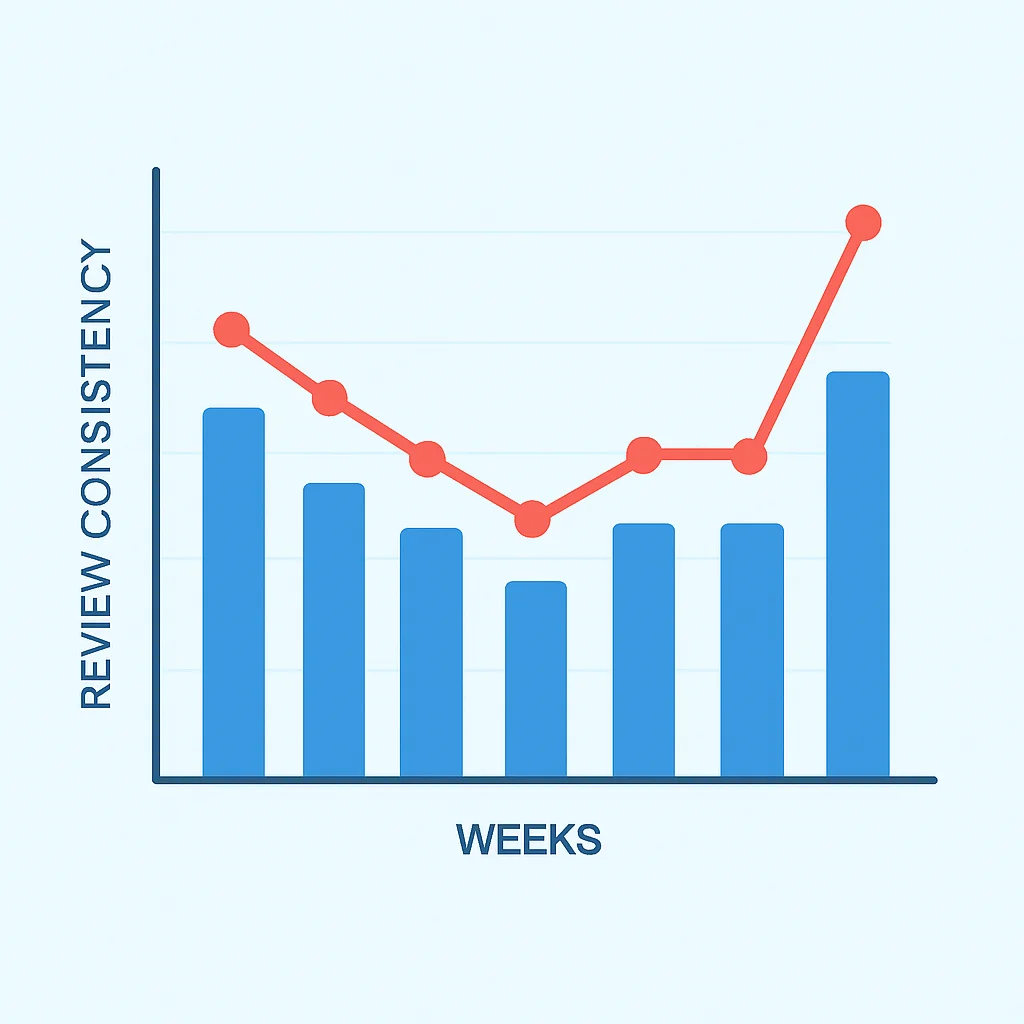
2. Inconsistent Reviews
The Mistake: Skipping review days, especially when your review count is high. This causes cards to pile up, making the next session even more daunting and leading to rapid forgetting of overdue material.
The Fix: Treat your SRS reviews like a non-negotiable daily habit, like brushing your teeth or checking your primary email. Even 5-10 minutes is better than nothing. Use Anki’s mobile app to review on commutes or during short breaks. Consistency is the algorithm’s fuel.
3. Passive Recognition vs. Active Recall
The Mistake: Looking at the front of the card, thinking “Oh, I know that,” and immediately flipping it without truly attempting to recall the answer. This creates an illusion of knowing.
The Fix: Force yourself to verbalize or mentally formulate the answer before revealing the back of the card. If you hesitate, struggle, or get it wrong, mark it “Again” or “Hard.” The struggle itself is a vital part of the learning process.
WARNING
Do not cheat the SRS algorithm by falsely marking cards as “Easy” when you struggled. This will lead to premature forgetting and undermine the entire system’s effectiveness.
4. Ignoring Statistics and Settings
The Mistake: Treating Anki as a black box. Not checking your review statistics or tweaking the learning/review settings to better suit your pace and goals.
The Fix: Periodically check Anki’s statistics (Tools > Statistics). Look at your review count, interval growth, and retention rates. If your retention is consistently below 80-85%, you might be marking cards too easily or your intervals are growing too fast. Adjust your deck options (e.g., “new cards/day,” “maximum interval,” “lapse steps”) to fine-tune the learning process. For example, you might want to increase the “lapse steps” for challenging material to see it more frequently after a mistake.
KEY POINT
Avoiding pitfalls like overloading, inconsistency, passive learning, and ignoring data is crucial. Be disciplined with atomic cards, daily reviews, active recall, and leverage Anki’s statistics to optimize your learning.
Frequently Asked Questions (FAQ)
Q. Is Anki the only SRS tool I can use for language learning?
While Anki is the most popular and customizable SRS, other tools like SuperMemo, Memrise, and various language apps incorporate spaced repetition principles. Anki is highly recommended for its flexibility and powerful algorithm, especially for those who like to customize their learning experience.
Q. How long does it take to see results with SRS?
You’ll start noticing improved retention within a few weeks of consistent daily use. The long-term benefits, like effortlessly recalling thousands of words and complex grammar structures, become profoundly apparent after several months and years of dedicated SRS practice.
Q. Can I use pre-made Anki decks, or should I create my own?
While pre-made decks can be a good starting point, especially for common vocabulary, creating your own cards is generally more effective. The act of creating the card itself is a powerful learning experience, and tailoring content to your specific needs and learning style improves engagement and retention.
Q. Is SRS only for vocabulary, or can it be used for grammar too?
SRS is highly versatile and can be used for much more than just vocabulary. You can create cards for grammar rules, conjugations, sentence structures, cultural facts, and even listening comprehension by embedding audio clips. The key is to break down complex information into atomic, testable units.
WRAP-UP
Your Path to Polyglotism in 2026
You, as a developer, already possess the analytical mind and systematic approach needed to excel with Spaced Repetition Systems. By embracing SRS, particularly with a powerful tool like Anki, you’re not just memorizing words; you’re building a robust, resilient memory system that will serve your language learning goals for years to come.
Imagine effortlessly recalling thousands of words, complex grammar patterns, and nuanced phrases. This isn’t a pipe dream; it’s the reality for countless successful language learners who’ve integrated SRS into their daily routine. In 2026, with the right tools and a disciplined approach, the path to mastering any language is more accessible and efficient than ever before.
Your SRS Language Learning Checklist
☑ Downloaded and installed Anki (or chosen an SRS tool)
☑ Created your first language deck
☑ Understand the principles of active recall and atomic cards
☑ Committed to daily, consistent reviews (even short ones)
☑ Begun integrating new vocabulary from immersion into your SRS
☐ Explored Anki add-ons for enhanced functionality (e.g., AwesomeTTS)
Start small, be consistent, and trust the system. You’ll be amazed at how much you can achieve. Happy learning!
Ready to unlock your language potential?
Embrace the power of Spaced Repetition Systems and transform your language learning journey. Your future polyglot self will thank you!
Got questions about Anki, language learning, or SRS strategies? Drop a comment below, and let’s discuss!