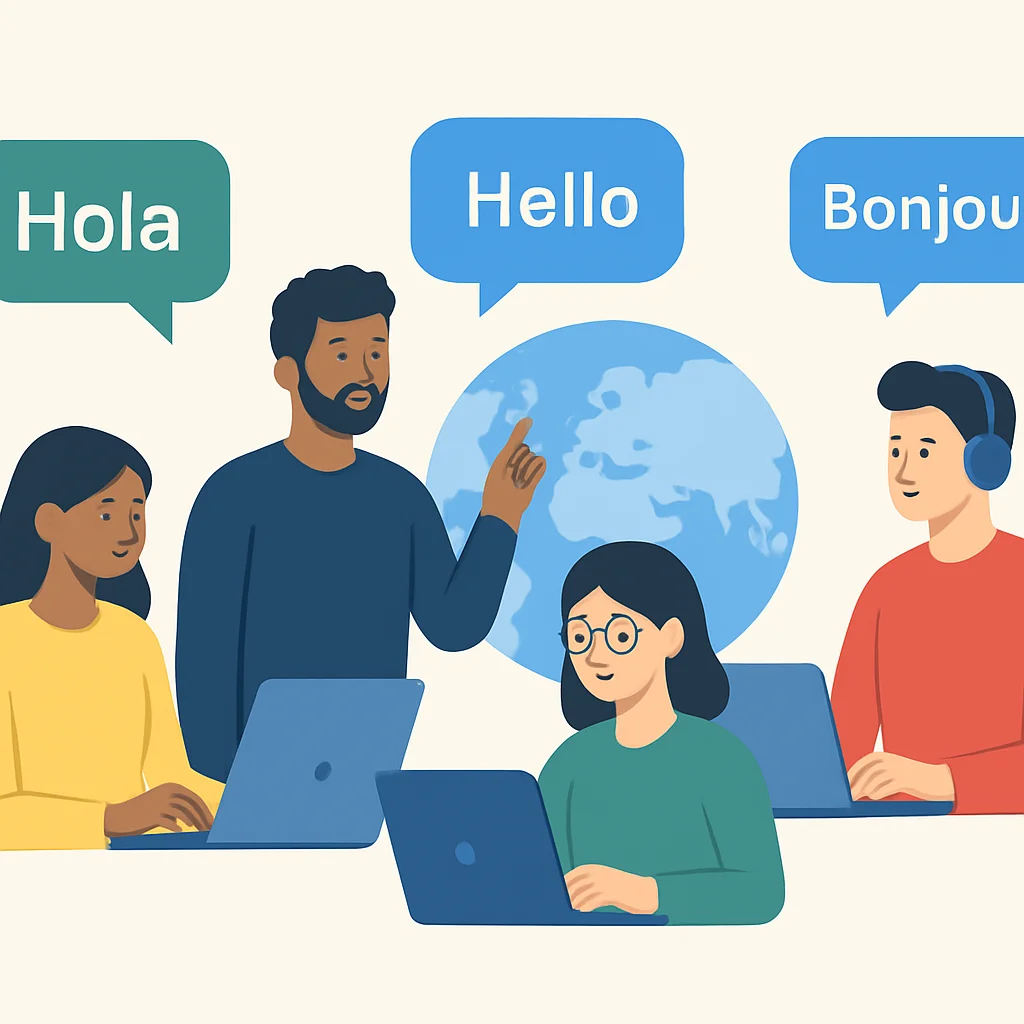

Efficient Language Learning Strategies for Developers

SUMMARY

Learn a New Human Language as a Developer: Practical Tips & Tools in 2026

A developer’s guide to efficiently learning a new human language, covering effective strategies, recommended apps, and how to fit language study into a busy tech schedule.

Keywords: language learning, developer skills, productivity

TABLE OF CONTENTS

1. Why Learning a New Language Matters for Developers

2. Core Methods for Effective Language Acquisition

3. Practical Application: Tools and Techniques for Busy Developers

4. Common Pitfalls to Avoid in Your Language Journey

5. Frequently Asked Questions

6. Wrap-Up: Embrace the Polyglot Dev Within

SECTION 01

Why Learning a New Language Matters for Developers

As developers in 2026, we operate in an increasingly globalized and interconnected world. The boundaries of teams and projects are no longer confined by geography, making cross-cultural communication more vital than ever. While English often serves as the lingua franca in tech, mastering another human language offers a unique suite of advantages that can significantly boost your career, cognitive abilities, and personal growth. It’s not just a hobby; it’s a strategic skill set.

Career Advancement and Global Opportunities

Imagine being able to seamlessly collaborate with a development team in Berlin, discuss project requirements with a client in Tokyo, or contribute to an open-source project managed by contributors from Latin America. Learning a new language opens doors to international job markets, remote work opportunities, and roles in multinational corporations that value diverse skill sets. Companies are increasingly seeking developers who can bridge cultural and linguistic gaps, making you a more valuable asset in a competitive landscape. For instance, according to a 2025 LinkedIn study, job postings requiring proficiency in a second language saw a 15% increase in applications compared to those that didn’t, especially in roles related to software architecture and project management.

Cognitive Benefits: Sharpening Your Developer Brain

Beyond career prospects, language learning is a powerful workout for your brain. Research consistently demonstrates that bilingualism and multilingualism are associated with enhanced cognitive functions, including improved problem-solving skills, better multitasking abilities, and increased creativity. A study published in the journal Nature Scientific Reports in 2019 found that bilingual individuals exhibit greater cognitive flexibility. For developers, this translates directly into tangible benefits:

  • Enhanced Problem-Solving: Constantly switching between language systems trains your brain to approach problems from multiple angles.
  • Improved Debugging Skills: The analytical process of understanding grammar and syntax in a new language mirrors the logical deconstruction required for debugging complex code.
  • Greater Focus and Attention: Bilinguals often show better selective attention and inhibitory control, meaning they can focus on relevant information while filtering out distractions.
  • Increased Creativity: Exposure to different linguistic structures and cultural nuances can foster out-of-the-box thinking, essential for innovative software solutions.

Think of it as upgrading your brain’s operating system with new libraries and frameworks, making it more robust and versatile.

Benefits of learning a new language for software developers

KEY POINT

Learning a new language isn’t just about communication; it’s a powerful tool for cognitive enhancement, directly impacting a developer’s problem-solving, debugging, and overall analytical abilities, while unlocking global career paths.

A Developer’s Unique Advantage

Developers are uniquely positioned to excel at language learning. Our daily work involves understanding complex systems, identifying patterns, debugging syntax errors, and breaking down large problems into manageable components. These are precisely the skills that are highly transferable to language acquisition:

  • Pattern Recognition: Just as we spot patterns in code, we can recognize grammatical structures and vocabulary roots in a new language.
  • Systematic Approach: We’re adept at following documentation and structured learning paths, which are crucial for language study.
  • Debugging Mindset: Making mistakes in a foreign language is like encountering a bug; we learn to identify the error, understand its cause, and correct it.
  • Iterative Learning: We’re used to continuous integration and deployment – building small, testing, and refining. Language learning is an iterative process of building vocabulary, testing it in conversation, and refining pronunciation.

By leveraging these inherent developer strengths, you can approach language learning not as a daunting task, but as an exciting new system to master.

SECTION 02

Core Methods for Effective Language Acquisition

Learning a new language can feel overwhelming, but with the right methods, it becomes an engaging and rewarding process. Forget rote memorization of verb conjugations; modern language acquisition focuses on immersion, active recall, and consistent practice. Here are the core methods that will form the backbone of your language learning journey.

1. Define Your “Why” and Set SMART Goals

Before you even pick an app, understand why you want to learn this specific language. Is it for a promotion, travel, connecting with family, or personal challenge? Your “why” will be your fuel when motivation wanes. Once you have your motivation, set SMART goals (Specific, Measurable, Achievable, Relevant, Time-bound).

  • Specific: “I want to be able to order food and ask for directions in French.”
  • Measurable: “I will complete Duolingo’s French course to Unit 5 and have 5 conversations on HelloTalk.”
  • Achievable: “I will dedicate 30 minutes daily to study.”
  • Relevant: “This will help me on my upcoming trip to Paris in 2026.”
  • Time-bound: “I will achieve this by October 2026.”

Clearly defined goals provide direction and allow you to track progress, which is incredibly motivating.

2. Immerse Yourself (Even Without Travel)

Full immersion is the fastest way to learn, but you don’t need to move to another country. Create an immersion environment around you. Change your phone’s operating system language, watch movies with subtitles in your target language (then without!), listen to podcasts, and find music. Even small changes add up. For example, if you’re learning Spanish, switch your Netflix profile language to Spanish, and watch shows like “La Casa de Papel” with Spanish audio and Spanish subtitles. Once you’re comfortable, try turning off the subtitles.
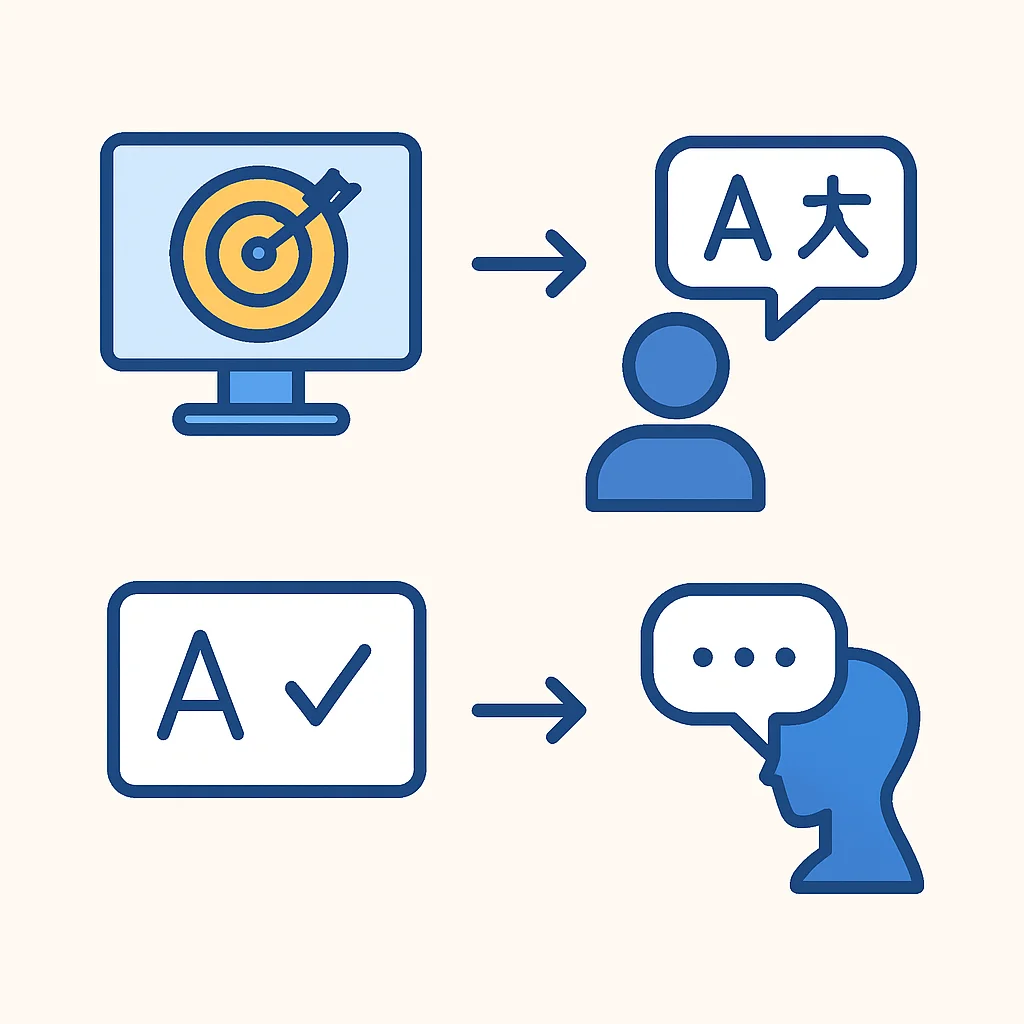
Language learning methodology flowchart

3. Leverage Spaced Repetition Systems (SRS)

This is a game-changer for vocabulary and phrase memorization. SRS algorithms, like those found in Anki or Memrise, show you flashcards at optimal intervals – just before you’re about to forget them. This makes memorization incredibly efficient compared to traditional methods. Instead of reviewing everything daily, SRS focuses your efforts on the words you’re struggling with.

KEY POINT

Consistency is paramount. Just like daily code commits, consistent, even short, daily language sessions using SRS and immersion are more effective than infrequent, long study blocks.

4. Prioritize Active Practice: Speaking and Production

Many learners get stuck in passive learning (reading, listening). To truly become fluent, you must actively produce the language – speaking and writing. This is often the most intimidating step, but it’s where real progress happens.

  • Find Language Partners: Apps like HelloTalk and Tandem connect you with native speakers eager to learn your language in exchange for helping you with theirs.
  • Online Tutors: Platforms like Italki offer affordable one-on-one lessons with native speakers, tailored to your needs.
  • Talk to Yourself: Narrate your day in your target language. Describe objects around you. It sounds silly, but it builds fluency.

Don’t wait until you’re “perfect” to speak. Embrace mistakes; they are learning opportunities.

5. Balance Grammar and Vocabulary in Context

While SRS helps with vocabulary, understanding how words fit together requires grammar. However, avoid getting bogged down in endless grammar drills. Learn grammar rules in context – through sentences, stories, and conversations. Focus on high-frequency vocabulary first (the 1000-2000 most common words can cover 80% of everyday conversation). As a developer, you can think of grammar as the “syntax” and vocabulary as the “keywords” and “libraries” of the language. Both are essential for functional communication.

SECTION 03

Practical Application: Tools and Techniques for Busy Developers

As a developer, your schedule is likely packed with coding, meetings, and continuous learning in your field. Fitting in a new language might seem impossible, but with smart strategies and the right tools, it’s entirely achievable. This section provides concrete action items to integrate language learning seamlessly into your busy life in 2026.

Time Management for Busy Devs: Micro-Learning and Habit Stacking

The key isn’t finding huge blocks of time, but utilizing small, consistent pockets.

  • Micro-Learning: Dedicate 10-15 minutes during your commute, lunch break, or while waiting for code to compile. Apps like Duolingo or Anki are perfect for these short bursts.
  • Habit Stacking: Attach your language learning to an existing habit. For instance, “After I make my morning coffee, I’ll do 10 minutes of Anki reviews.” Or, “While I’m cooking dinner, I’ll listen to a Spanish podcast.” This leverages the momentum of established routines.
  • Scheduled Blocks: Even 2-3 dedicated 30-minute sessions per week can make a massive difference. Treat these like important meetings you can’t miss.

Remember, consistency beats intensity. Five minutes every day is far more effective than an hour once a week.

Leveraging Developer Skills for Language Learning

Your developer mindset is a superpower here.

  • Treat it like a new programming language: Understand the “syntax” (grammar rules), “data types” (nouns, verbs, adjectives), and “control flow” (sentence structure). Break down complex sentences into components.
  • Documentation is your friend: Use online grammar guides, dictionaries, and language learning forums as your documentation.
  • Version Control for Vocabulary: Think of your Anki deck as a git repository for your vocabulary, continuously adding, committing, and reviewing.
  • Automate where possible: Set up calendar reminders, use language learning apps with push notifications, and configure your browser to show ads in your target language.

KEY POINT

Your developer brain is already wired for structured learning and problem-solving. Apply the same logical, iterative approach you use for coding to dissect and master a new language’s rules and patterns.

Recommended Tools & Apps in 2026

The landscape of language learning tools is constantly evolving. Here are some of the top picks for 2026 that cater well to a developer’s learning style:

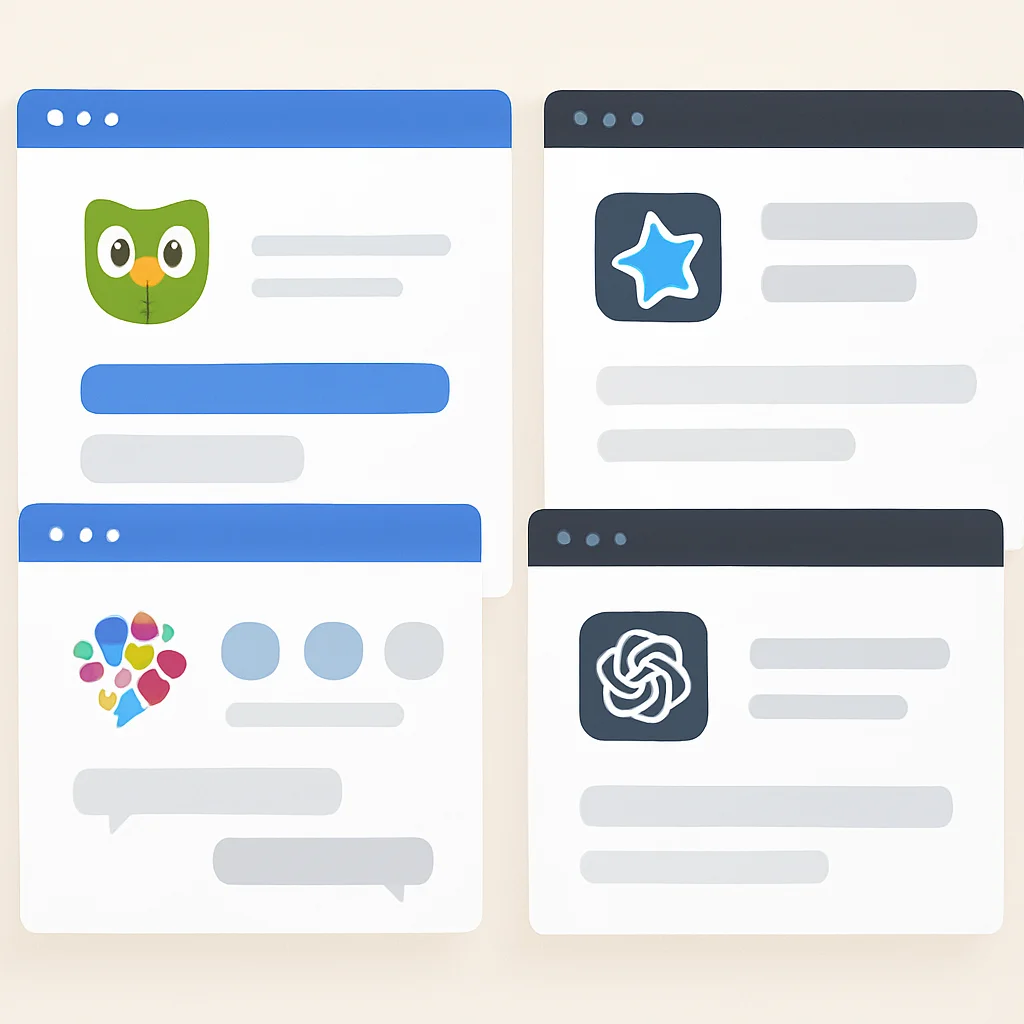
  • Duolingo: (Free/Premium) Great for gamified learning, daily streaks, and building foundational vocabulary and grammar. Perfect for micro-learning sessions.
  • Babbel: (Subscription) Focuses on conversational skills and practical phrases. Its lessons are often structured around real-life scenarios, which can appeal to a practical developer.
  • Pimsleur: (Subscription) Audio-based, excellent for developing listening comprehension and conversational fluency without needing to look at a screen. Ideal for commutes.
  • Anki: (Free desktop, paid mobile) The ultimate SRS tool. Create your own flashcards or download shared decks. Highly customizable for targeted vocabulary and grammar.
  • HelloTalk / Tandem: (Free/Premium) Language exchange apps to connect with native speakers for text, voice, and video chat. Essential for active speaking practice.
  • LingQ: (Free/Premium) Focuses on learning through reading and listening to content. It highlights unknown words and helps you build vocabulary naturally in context.
  • ChatGPT / AI Language Tutors: (Free/Subscription) AI models like ChatGPT have become incredibly sophisticated. Use them for practice conversations, grammar explanations, sentence corrections, and even role-playing scenarios.

Top language learning apps for developers in 2026

Using AI for Language Practice

AI tools like ChatGPT are invaluable resources. They offer a non-judgmental space to practice, ask questions, and get instant feedback. Here’s an example of how you might use ChatGPT for targeted practice:

CODE EXPLANATION

This prompt instructs ChatGPT to act as a Spanish tutor, focusing on common phrases for ordering food. It asks for corrections, explanations, and suggests follow-up questions, mimicking a real conversational partner.


You are an expert Spanish language tutor. I am a beginner (A1/A2 level) learning Spanish.
I want to practice ordering food at a restaurant.
Please act as the waiter. I will start the conversation.
When I respond, please correct any grammatical errors or awkward phrasing, explain *why* it's wrong, and then continue the conversation naturally as a waiter.
Also, occasionally suggest common phrases I could use in that context.
Let's begin!

Me: ¡Hola! Quiero pedir una mesa para dos personas.

This approach allows you to iterate on your language skills, “debug” your sentences, and build confidence before speaking with a human.

SECTION 04

Common Pitfalls to Avoid in Your Language Journey

Embarking on a language learning journey is exciting, but it’s also fraught with common traps that can derail your progress. Being aware of these pitfalls allows you to proactively avoid them and maintain momentum.

1. The “Perfection Paralysis” – Fear of Speaking

Many developers, accustomed to precise code, struggle with the inherent messiness of human language. The fear of making mistakes, sounding foolish, or not being understood can lead to “perfection paralysis,” where learners delay speaking until they feel “ready.” The truth is, you’ll never feel 100% ready. Every fluent speaker was once a beginner who made countless mistakes.

WARNING

Do not wait until you are “perfect” to start speaking. Mistakes are not failures; they are essential data points for learning. Embrace them as part of the process.

Solution: Start small. Use AI tutors, then move to language exchange partners, focusing on simply conveying your message. Remind yourself that native speakers appreciate your effort more than your flawless grammar.

2. Inconsistent Study Habits

This is perhaps the biggest killer of language learning goals. Life gets busy, and it’s easy to let a day of study slip, which then turns into two, then a week. Language acquisition is cumulative; frequent exposure and repetition are critical for solidifying new information in your long-term memory.

Common language learning struggles

KEY POINT

Short, daily bursts of study (10-15 minutes) are far more effective for long-term retention and habit formation than infrequent, marathon sessions. Think of it as continuous integration for your brain.

Solution: Implement habit stacking and micro-learning as discussed earlier. Set achievable daily minimums (e.g., 5 Anki cards, 1 Duolingo lesson) and stick to them no matter what.

3. Over-reliance on Passive Learning

Watching Netflix in your target language or listening to podcasts is fantastic for immersion and comprehension, but it’s not enough on its own. Passive intake must be balanced with active output. You can understand a language perfectly, but if you never practice speaking or writing, your production skills will lag significantly.

Solution: Actively engage with the material. After watching a show, try to summarize the plot in your target language. Pause podcasts and repeat phrases. Crucially, integrate speaking and writing practice from day one.

4. Expecting Instant Fluency or Progress

Learning a language is a marathon, not a sprint. There will be plateaus where you feel like you’re not progressing, or even regressing. This is normal. The “beginner gains” are exciting, but as you advance, progress becomes less linear and more subtle.

Solution: Celebrate small victories. Focus on the journey, not just the destination. Keep a journal of your progress, review old materials to see how far you’ve come, and remind yourself that every little bit of exposure and practice contributes to long-term fluency.

5. Ignoring Cultural Context

Language is inextricably linked to culture. Understanding nuances, idioms, humor, and social conventions of a language’s speakers is just as important as mastering its grammar. Without cultural context, you might understand the words but miss the meaning or inadvertently cause offense.

Solution: Engage with native media (films, music, news), follow social media accounts from your target culture, and ask your language partners about cultural aspects. Embrace the cultural journey alongside the linguistic one.

Frequently Asked Questions

Q. How long does it take for a developer to learn a new language?

The time varies greatly depending on the language’s difficulty relative to your native tongue, your dedication, and your learning methods. For an English speaker, reaching conversational fluency (B1/B2) in a Category I language (like Spanish or French) typically takes 600-750 hours of study, which could be 1-2 years with consistent daily effort. Developers often have an advantage due to their structured thinking.

Q. What’s the best first language for a developer to learn?

There’s no single “best” language; it depends on your goals. For career opportunities, Spanish, German, or Mandarin can be beneficial. For ease of learning for English speakers, Spanish, French, or Italian are good starting points due to shared Latin roots. Ultimately, choose a language that genuinely interests you to maintain motivation.

Q. Can AI tools really help with language learning?

Absolutely! AI tools like ChatGPT are excellent for practice conversations, getting instant feedback on grammar, expanding vocabulary, and even role-playing scenarios. They offer a low-pressure environment to experiment and make mistakes without judgment, supplementing traditional learning methods effectively.

Q. How can I stay motivated when learning a new language?

Revisit your “why” regularly, set small achievable goals, track your progress, and celebrate milestones. Vary your learning activities to keep things fresh, connect with other learners or native speakers, and immerse yourself in enjoyable media (movies, music) in your target language. Consistency, even in small doses, is key.

Q. Is it too late to learn a new language as an adult developer?

Not at all! While children may acquire language faster, adults bring cognitive advantages like stronger analytical skills, greater self-discipline, and a deeper understanding of grammar concepts. Many successful polyglots started learning as adults. Your developer mindset is a significant asset in this journey.

SECTION 05

Wrap-Up: Embrace the Polyglot Dev Within

Learning a new human language as a developer in 2026 is more than just acquiring a new skill; it’s an investment in your cognitive abilities, career trajectory, and personal enrichment. You already possess the analytical mindset, problem-solving skills, and systematic approach necessary to excel. By leveraging micro-learning, habit stacking, and the powerful suite of modern language tools, you can seamlessly integrate language study into your busy tech schedule.

Don’t let the fear of imperfection hold you back. Embrace the process, celebrate small victories, and view every mistake as a debugging opportunity. The journey to becoming a polyglot developer is challenging but incredibly rewarding, opening up new worlds of communication, understanding, and personal growth.

KEY POINT

Start small, stay consistent, and actively engage with the language. Your developer skills are your secret weapon; wield them to unlock a new world of communication and cognitive growth.

Your Next Steps:

  1. Choose Your Language: Pick one that genuinely excites you or aligns with your career goals.
  2. Set SMART Goals: Define what you want to achieve and by when.
  3. Download an App: Start with Duolingo or Babbel for daily micro-learning.
  4. Integrate SRS: Set up Anki for efficient vocabulary acquisition.
  5. Find a Practice Partner: Download HelloTalk or Tandem and commit to one conversation this week.

The world is waiting for your multilingual code!

Polyglot developers collaborating globally

Thanks for reading!

We hope this guide empowers you to embark on your language learning journey with confidence. Remember, every line of code you write and every new word you learn contributes to a richer, more connected world.

Got questions or your own tips to share? Drop a comment below or connect with Kwonglish at kwonglish.com!