
SUMMARY
Fine-Tuning LLMs for Custom Applications
A practical guide for developers to fine-tune Large Language Models (LLMs) for specific use cases and integrate them into custom applications in 2026.
Keywords: LLM Fine-Tuning, Custom AI, Developer Guide
TABLE OF CONTENTS
1 Introduction: The Necessity of Custom LLMs in 2026
2 Understanding Fine-Tuning: Beyond Prompt Engineering
3 Navigating Common Challenges and Solutions
4 Practical Guide: Implementing LLM Fine-Tuning Step-by-Step
5 Conclusion: The Future of Tailored AI
6 Frequently Asked Questions
BACKGROUND
Introduction: The Necessity of Custom LLMs in 2026
The landscape of Artificial Intelligence has undergone a monumental shift, largely driven by the proliferation of Large Language Models (LLMs). In 2026, these powerful models, capable of understanding and generating human-like text, are no longer just research curiosities but essential tools across virtually every industry. From powering sophisticated chatbots to automating content creation and data analysis, LLMs have fundamentally altered how businesses operate and how developers build applications.
However, while general-purpose LLMs like GPT-4.5, Llama 3, or Claude 3.5 excel at broad tasks, their “one-size-fits-all” nature often falls short when confronted with highly specialized, domain-specific requirements. Imagine a legal firm needing an AI to summarize complex case documents, or a healthcare provider requiring an AI to interpret patient notes with clinical precision. In such scenarios, a generic LLM, trained on a vast but diverse internet corpus, might struggle with specific jargon, nuances, or even generate factually incorrect information due to a lack of domain expertise.
“In 2026, the competitive edge isn’t just about using AI, but about tailoring AI to fit the unique contours of your business and data.”
— Kwonglish Blog Analysis
This is where fine-tuning comes into play. Fine-tuning allows developers to take a pre-trained LLM and further train it on a smaller, highly specific dataset relevant to their particular use case. This process adapts the model’s weights, enabling it to better understand and generate text aligned with the target domain’s terminology, style, and factual requirements. The benefits are substantial: improved accuracy, reduced hallucinations, adherence to specific brand voices, and enhanced relevance for niche applications.
The demand for custom AI solutions has surged, with market projections indicating that the fine-tuning and specialized AI services sector will grow by over 45% annually through 2028. This growth is fueled by enterprises seeking to leverage AI without compromising on data privacy or intellectual property, and by startups building innovative products tailored to specific market segments. As a developer in 2026, mastering the art of fine-tuning LLMs is not just an advanced skill but a fundamental requirement for building truly impactful and competitive AI applications.
CORE CONTENT
Understanding Fine-Tuning: Beyond Prompt Engineering
To effectively fine-tune LLMs, it’s essential to first differentiate it from other common methods of customizing LLM behavior, particularly prompt engineering. Both aim to make an LLM perform a specific task, but they operate at fundamentally different levels.
Prompt Engineering vs. Fine-Tuning
Prompt engineering involves crafting specific instructions, examples (few-shot learning), or constraints within the input prompt to guide a pre-trained LLM towards a desired output. It’s like giving precise directions to a highly intelligent assistant who already knows a vast amount of information. The underlying model weights remain unchanged. This method is quick to implement, cost-effective for simpler tasks, and doesn’t require specialized hardware.
Fine-tuning, on the other hand, is a more profound modification. It takes a pre-trained LLM and continues its training process on a new, domain-specific dataset. This process updates a portion or all of the model’s internal parameters (weights), causing the model to learn new patterns, vocabulary, and response styles directly from the provided data. It’s akin to retraining a specialist for a very particular job, teaching them new skills and knowledge that become ingrained. Fine-tuning offers superior performance for complex, niche tasks, better adherence to specific styles, and can reduce prompt length requirements, but it demands more computational resources and data.
Key Differences at a Glance
Prompt Engineering — Modifies input to guide pre-existing knowledge. No model changes.
Fine-Tuning — Modifies model’s internal weights to instill new knowledge or adapt behavior. Requires data and compute.
Fine-Tuning Strategies in 2026
The choice of fine-tuning strategy largely depends on your computational resources, dataset size, and desired performance. In 2026, Parameter-Efficient Fine-Tuning (PEFT) methods have become dominant due to their efficiency.
1. Full Fine-Tuning: This involves updating all parameters of the pre-trained LLM. It offers the highest potential for performance improvement as the entire model adapts to the new data. However, it is extremely resource-intensive, requiring significant GPU memory (e.g., 80GB+ VRAM for a 7B parameter model) and prolonged training times. It’s typically reserved for very large, high-quality custom datasets or when maximum performance is non-negotiable.
2. Parameter-Efficient Fine-Tuning (PEFT): PEFT methods update only a small subset of the model’s parameters or introduce a few new trainable parameters while keeping most of the original model frozen. This drastically reduces computational cost and memory footprint, making fine-tuning accessible with consumer-grade GPUs or smaller cloud instances. The most popular PEFT techniques include:
• LoRA (Low-Rank Adaptation): LoRA injects small, trainable matrices into the transformer layers of the LLM. Instead of updating the original large weight matrices, only these much smaller LoRA matrices are trained. This can reduce the number of trainable parameters by up to 10,000 times compared to full fine-tuning, while maintaining comparable performance. It’s ideal for adapting models quickly and efficiently to new tasks.
• QLoRA (Quantized LoRA): QLoRA builds upon LoRA by quantizing the pre-trained model to 4-bit precision. This means the original model weights are stored using only 4 bits instead of the standard 16 or 32, significantly reducing memory usage (e.g., a 7B model might only require 8-10GB VRAM). LoRA adapters are then trained on top of this quantized model, making it possible to fine-tune even larger models (e.g., 70B parameters) on a single high-end consumer GPU. QLoRA has been a game-changer for democratizing LLM fine-tuning.
• Adapter-based methods: These involve inserting small neural network “adapters” between the layers of the pre-trained model and only training these adapters. While less prevalent than LoRA, they offer similar benefits in parameter efficiency.
KEY POINT: For most developers and use cases in 2026, Parameter-Efficient Fine-Tuning (PEFT) methods like LoRA and QLoRA are the recommended approach due to their significantly lower computational demands and excellent performance.
Choosing Your Base LLM for Fine-Tuning
The selection of the base LLM is critical. In 2026, developers have a rich ecosystem of models to choose from, broadly categorized into open-source and proprietary (API-based) models.
Open-Source Models: These models, often released under permissive licenses, allow for complete control over the model, its weights, and deployment. Popular choices include:
• Meta’s Llama Series (e.g., Llama 3): Highly performant and widely adopted, Llama 3 (released in 2024) offers various parameter sizes (8B, 70B, and forthcoming 400B+ models). It’s a strong contender for fine-tuning due to its robust architecture and large community support. Requires substantial compute for full fine-tuning, but highly effective with QLoRA.
• Mistral AI’s Models (e.g., Mistral 7B, Mixtral 8x22B): Known for efficiency and strong performance, especially on smaller models. Mistral 7B is an excellent choice for fine-tuning on limited hardware, offering a great balance of size and capability. Mixtral, a Sparse Mixture of Experts (SMoE) model, provides even higher quality outputs for its effective parameter count.
• Falcon Models (e.g., Falcon 7B, 40B): Developed by TII, these models have also shown strong performance and are often used in enterprise settings where self-hosting is preferred.
Proprietary (API-Based) Models: While not offering direct access to model weights for traditional fine-tuning, providers like OpenAI and Anthropic offer “API fine-tuning” services. This means you submit your data, and they fine-tune a version of their model (e.g., GPT-3.5 Turbo, Claude 3 Opus) for your account. You then access this custom model via their API. This is convenient and requires no local compute, but you rely on the provider’s infrastructure and data privacy policies. Costs can scale significantly with usage.
Here’s a comparative overview:
LLM Fine-Tuning Model Comparison (2026)
Feature | Open-Source (e.g., Llama 3 8B, Mistral 7B) | Proprietary (e.g., GPT-3.5 Turbo via API)
Access to Weights | Full control, can host locally | None, managed by provider
Fine-Tuning Method | Full, LoRA, QLoRA | API-based (provider handles)
Compute Required | Significant for full, moderate for QLoRA | None for user, managed by provider
Data Privacy | Your infrastructure, your control | Trust in provider’s policies
Flexibility | High (architectural changes possible) | Limited to API capabilities
Cost Model | Upfront hardware/cloud instance + operational | Pay-per-token API usage
Best For | Niche domains, strict privacy, cost optimization at scale | Quick prototyping, less technical overhead, general tasks
For most developers building custom applications, open-source models combined with PEFT offer the best balance of performance, control, and cost-efficiency in 2026. This approach empowers you to truly own your AI solution.
A Glimpse into Fine-Tuning Code (LoRA Example)
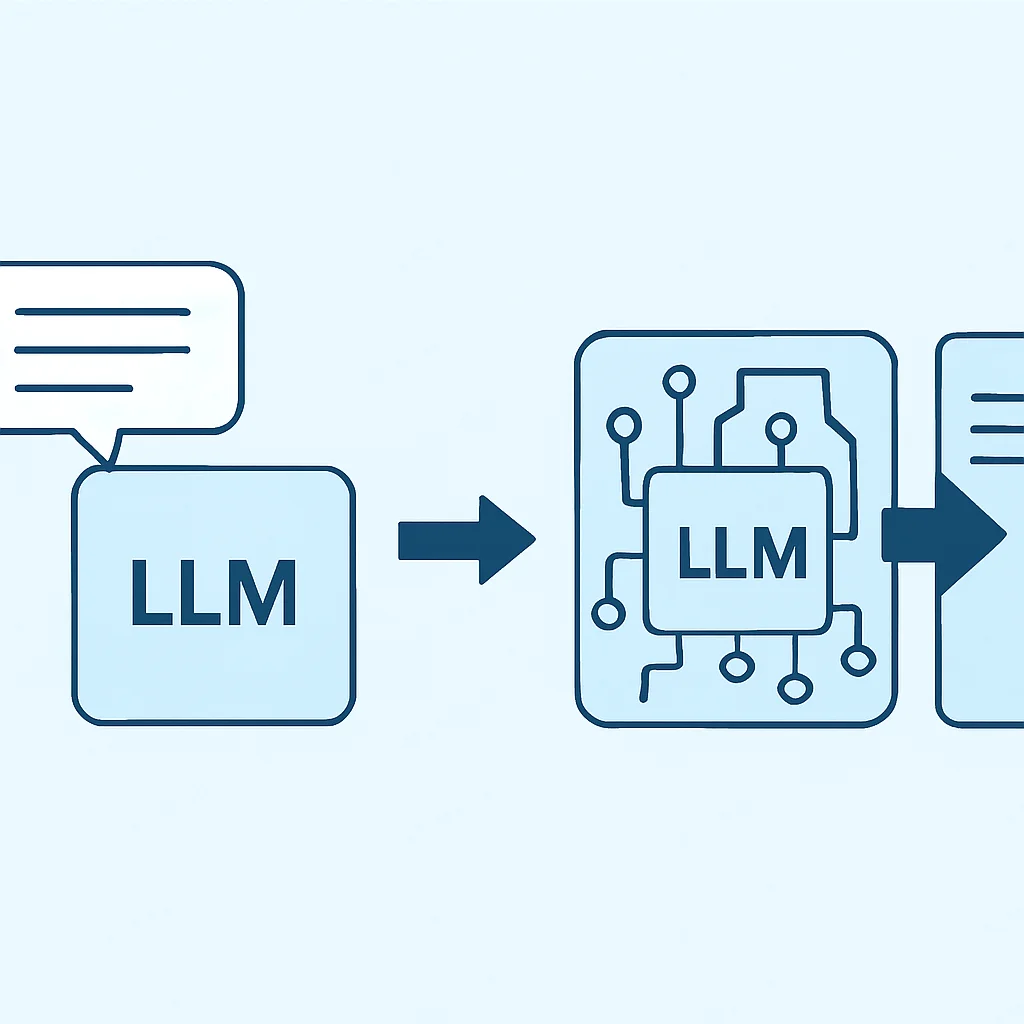
Let’s look at a simplified example of how LoRA fine-tuning might be structured using Python with the Hugging Face transformers and peft libraries. This assumes you have a dataset in a suitable format (e.g., JSONL with “instruction” and “output” fields).
CODE EXPLANATION
This Python code snippet demonstrates the core steps for performing LoRA fine-tuning on a pre-trained LLM. It covers loading the model, setting up the LoRA configuration, preparing a dataset, and initiating the training process using Hugging Face’s SFTTrainer, which simplifies instruction-based fine-tuning.
from transformers import AutoModelForCausalLM, AutoTokenizer, TrainingArguments
from peft import LoraConfig, get_peft_model, prepare_model_for_kbit_training
from trl import SFTTrainer
import torch
from datasets import load_dataset

# 1. Configuration
MODEL_NAME = "mistralai/Mistral-7B-Instruct-v0.2" # Example base model
DATASET_PATH = "my_custom_instruction_dataset.jsonl"
OUTPUT_DIR = "./mistral_fine_tuned_lora"

# LoRA configuration
lora_config = LoraConfig(
    r=16, # LoRA attention dimension
    lora_alpha=32, # Alpha parameter for LoRA scaling
    lora_dropout=0.05, # Dropout probability for LoRA layers
    bias="none", # Do not train bias terms
    task_type="CAUSAL_LM", # Task type for language modeling
)

# Training arguments
training_args = TrainingArguments(
    output_dir=OUTPUT_DIR,
    per_device_train_batch_size=4, # Adjust based on GPU memory
    gradient_accumulation_steps=2,
    learning_rate=2e-4,
    num_train_epochs=3,
    logging_steps=10,
    save_steps=500,
    report_to="none", # Or "tensorboard", "wandb"
    fp16=True, # Use mixed precision for faster training
    max_steps=-1, # Set to a specific number of steps or -1 for epochs
)

# 2. Load Model and Tokenizer
model = AutoModelForCausalLM.from_pretrained(
    MODEL_NAME,
    torch_dtype=torch.bfloat16, # Use bfloat16 for better precision if supported
    device_map="auto", # Automatically distributes model layers across available GPUs
    # load_in_4bit=True # Uncomment for QLoRA to load in 4-bit
)
model.config.use_cache = False # Disable cache for fine-tuning
model = prepare_model_for_kbit_training(model) # Prepares model for k-bit training (e.g., QLoRA)
model = get_peft_model(model, lora_config) # Apply LoRA config to the model

tokenizer = AutoTokenizer.from_pretrained(MODEL_NAME, trust_remote_code=True)
tokenizer.pad_token = tokenizer.eos_token # Set pad token

# 3. Load and Prepare Dataset
# Your dataset should be in an instruction-tuning format, e.g.,
# [{"instruction": "Summarize this document:...", "output": "Summary..."}, ...]
# Or a single text field formatted as "### Instruction:\n{instruction}\n### Response:\n{response}"
dataset = load_dataset("json", data_files=DATASET_PATH, split="train")

def formatting_prompts_func(example):
    # This function formats your dataset into the desired prompt-response structure
    text = f"### Instruction:\n{example['instruction']}\n### Response:\n{example['output']}"
    return {"text": text}

formatted_dataset = dataset.map(formatting_prompts_func)


# 4. Initialize and Train SFTTrainer
trainer = SFTTrainer(
    model=model,
    train_dataset=formatted_dataset,
    peft_config=lora_config,
    tokenizer=tokenizer,
    args=training_args,
    max_seq_length=512, # Max sequence length for training
    packing=False, # Whether to pack multiple samples into one sequence
    formatting_func=formatting_prompts_func, # Use the formatting function
)

trainer.train()

# 5. Save the fine-tuned model and tokenizer
trainer.save_model(OUTPUT_DIR)
tokenizer.save_pretrained(OUTPUT_DIR)

print(f"Fine-tuning complete. Model saved to {OUTPUT_DIR}")

# Example of loading and using the fine-tuned model
# from transformers import pipeline
# from peft import PeftModel
#
# base_model = AutoModelForCausalLM.from_pretrained(MODEL_NAME, torch_dtype=torch.bfloat16, device_map="auto")
# tokenizer = AutoTokenizer.from_pretrained(MODEL_NAME)
#
# # Load the LoRA adapters
# model = PeftModel.from_pretrained(base_model, OUTPUT_DIR)
#
# # Merge LoRA adapters into the base model (optional, for deployment)
# # model = model.merge_and_unload()
#
# # Create a pipeline for inference
# pipe = pipeline("text-generation", model=model, tokenizer=tokenizer, torch_dtype=torch.bfloat16, device_map="auto")
#
# prompt = "### Instruction:\nExplain the concept of quantum entanglement in simple terms.\n### Response:\n"
# result = pipe(prompt, max_new_tokens=200, do_sample=True, temperature=0.7, top_k=50, top_p=0.95)
# print(result[0]['generated_text'])
This code snippet provides a foundational understanding. In a real-world scenario, you’d integrate robust data loading, validation, and advanced evaluation metrics. The trl library (Transformer Reinforcement Learning) simplifies the training loop for instruction tuning, which is often the goal of fine-tuning.
PROBLEM SOLVING
Navigating Common Challenges and Solutions
While fine-tuning LLMs offers immense potential, developers often encounter several hurdles. Understanding these challenges and their corresponding solutions is key to successful implementation.
PROBLEM 01
Data Scarcity and Quality
High-quality, domain-specific datasets are often scarce or expensive to acquire and label. Low-quality data can lead to poor model performance, introducing biases or propagating errors.
SOLUTION — Strategic Data Acquisition and Augmentation
1. Curated Collection: Prioritize collecting data from trusted, authoritative sources within your domain. This might involve internal documents, expert-reviewed articles, or specialized databases. Allocate significant time for data cleaning and validation, often involving human review, to ensure accuracy and consistency.
2. Data Augmentation: Synthesize more data from existing examples. Techniques include paraphrasing, back-translation (translating to another language and back), or using a larger, general-purpose LLM to generate variations of your existing prompts and responses, then filtering these for quality. For instance, if you have 1,000 legal examples, you might be able to augment them to 5,000-10,000 high-quality examples.
3. Active Learning: Start with a small labeled dataset, fine-tune a preliminary model, and then use this model to identify the most “uncertain” or informative unlabeled examples for human annotation. This iterative process can efficiently grow your dataset.
PROBLEM 02
High Computational Resource Requirements
Fine-tuning large LLMs, especially full fine-tuning, demands substantial GPU memory (VRAM) and processing power, making it costly and inaccessible for many developers.
SOLUTION — Leveraging Efficient Techniques and Cloud Resources
1. Parameter-Efficient Fine-Tuning (PEFT): As discussed, methods like LoRA and QLoRA are paramount. QLoRA, for instance, can reduce the VRAM requirement for a 7B parameter model from ~16GB to ~8GB, enabling fine-tuning on a single NVIDIA RTX 3090 or 4090 GPU. For 70B models, QLoRA can reduce requirements from ~140GB to ~60GB, making them accessible on cloud instances with 2-4 high-end GPUs.
2. Gradient Accumulation: This technique allows you to simulate a larger batch size than your GPU memory can handle directly. By accumulating gradients over several smaller batches before updating model weights, you can effectively use a batch size of 64 even if your GPU only supports a batch size of 4, without increasing VRAM significantly.
3. Cloud GPU Services: Platforms like AWS SageMaker, Google Cloud AI Platform, Azure Machine Learning, and Hugging Face Spaces/AutoTrain provide scalable GPU resources. These services often offer specialized instances (e.g., A100, H100 GPUs) that can handle large models and provide managed environments, reducing setup overhead. Always monitor costs closely, as GPU hours can accumulate rapidly (e.g., an A100 GPU can cost $1-3 per hour).
4. Model Quantization: Beyond QLoRA, post-training quantization can further reduce model size and inference latency, although it’s typically applied after fine-tuning for deployment rather than during training.
PROBLEM 03
Overfitting and Catastrophic Forgetting
Overfitting occurs when the model learns the training data too well, losing its ability to generalize to new, unseen data. Catastrophic forgetting refers to the model forgetting its pre-trained general knowledge while learning new, specific information.
SOLUTION — Regularization and Strategic Training
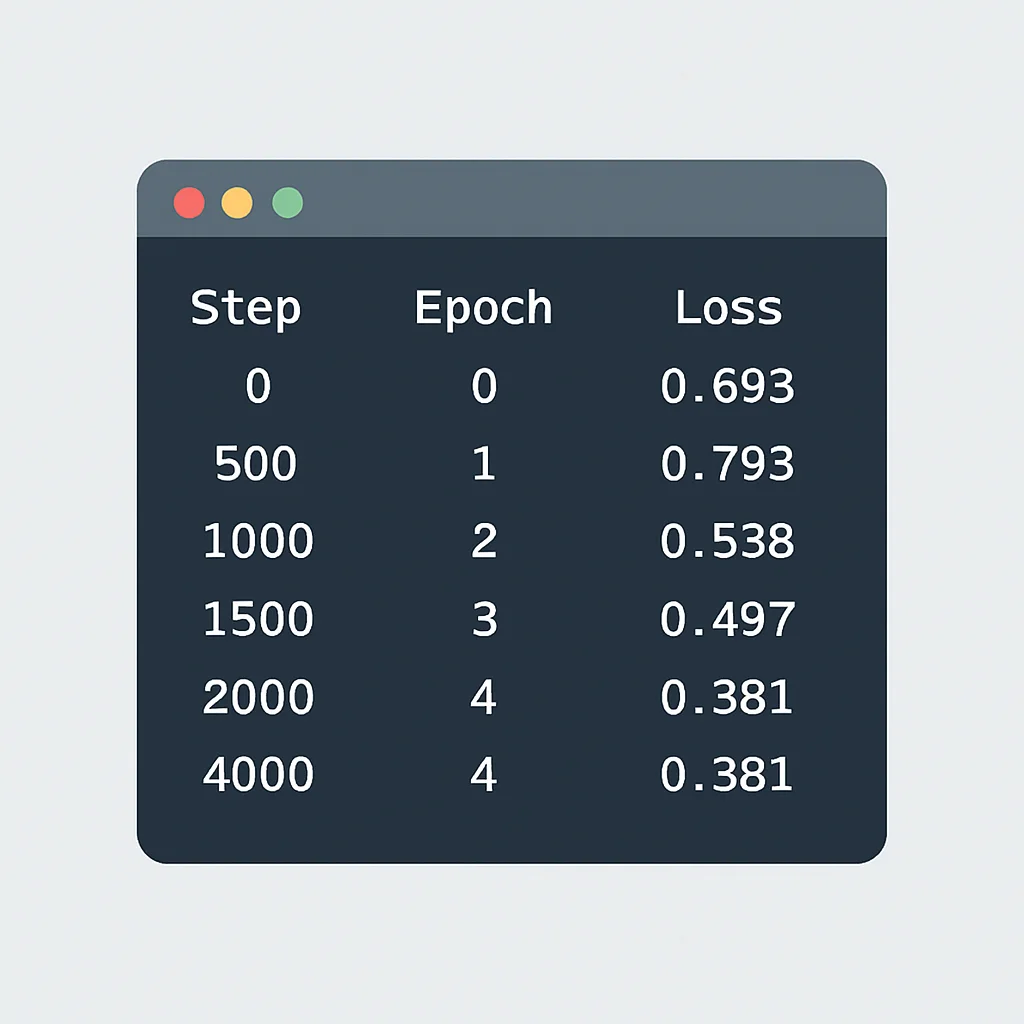
1. Validation Set: Always split your data into training, validation, and test sets (e.g., 80/10/10 split). Monitor the model’s performance on the validation set during training. If validation loss starts increasing while training loss decreases, it’s a clear sign of overfitting. Early stopping (halting training when validation performance plateaus or degrades) is crucial.
2. Regularization Techniques:
• Dropout: Randomly deactivates neurons during training, preventing over-reliance on specific features. LoRA configurations often include a lora_dropout parameter.
• Weight Decay (L2 Regularization): Adds a penalty to the loss function for large weights, encouraging smaller, more generalized weights. This is typically configured in the optimizer or training arguments.
3. PEFT Methods: Techniques like LoRA inherently mitigate catastrophic forgetting because they only update a small number of parameters, preserving most of the pre-trained knowledge. The original model weights remain frozen, acting as a strong prior.
4. Hyperparameter Tuning: Experiment with learning rates, batch sizes, and the number of training epochs. A learning rate that’s too high can cause instability and forgetting, while one that’s too low can lead to slow convergence. Tools like Optuna or Weights & Biases can automate this.
KEY POINT: Effective fine-tuning in 2026 demands a multi-pronged approach to data quality, resource management (especially with PEFT and cloud GPUs), and robust techniques to prevent overfitting and preserve general knowledge.
PRACTICAL APPLICATION
Practical Guide: Implementing LLM Fine-Tuning Step-by-Step
Now that we’ve covered the theoretical underpinnings and potential challenges, let’s walk through a practical, step-by-step guide for fine-tuning an LLM for a custom application in 2026. We’ll use a hypothetical scenario: building an AI assistant for a specialized technical support domain.
Use Case: Technical Support AI Assistant
Our goal is to create an LLM that can understand complex technical queries from users and provide accurate, concise, and context-aware solutions based on an internal knowledge base. A generic LLM might struggle with proprietary product names, specific error codes, or company-specific troubleshooting steps.
1
Define Use Case and Data Requirements
Clearly articulate what the fine-tuned LLM should achieve. For our technical support AI, this means responding to specific product issues, providing troubleshooting steps, and directing users to relevant documentation. Identify the types of data needed: customer support tickets, internal FAQs, technical manuals, knowledge base articles, and expert-annotated solutions. Aim for at least a few thousand high-quality instruction-response pairs; 10,000 to 50,000 pairs are often a good starting point for PEFT.
2
Data Collection and Preprocessing
Gather your raw data. This might involve extracting text from PDFs, scraping web pages, or exporting database records. Normalize the text, remove irrelevant information, and structure it into an instruction-following format. For instance, each data point could be a JSON object like: {"instruction": "How do I reset my X-series router?", "output": "To reset your X-series router, locate the small reset button on the back..."}. Ensure diverse prompts and accurate responses. Split your dataset into training (e.g., 80%), validation (10%), and test (10%) sets.
3
Choose Base Model and Fine-Tuning Method
For our technical support AI, we’d likely choose an open-source model like Mistral-7B-Instruct-v0.2 or Llama-3-8B-Instruct due to their strong performance and manageable size. Given that we want to keep costs down and use available GPUs, QLoRA would be the preferred fine-tuning method. This allows us to train on a single NVIDIA RTX 4090 (24GB VRAM) or a comparable cloud instance.
4
Set Up Environment and Train
Install necessary libraries (transformers, peft, trl, bitsandbytes, accelerate). Configure your LoRA parameters (e.g., r=8 to 32, lora_alpha=16 to 64) and training arguments (learning rate, batch size, epochs). Use the code structure provided earlier. Training typically takes a few hours to a day for a 7B model with a few tens of thousands of examples on a single high-end GPU.
5
Evaluate and Iterate
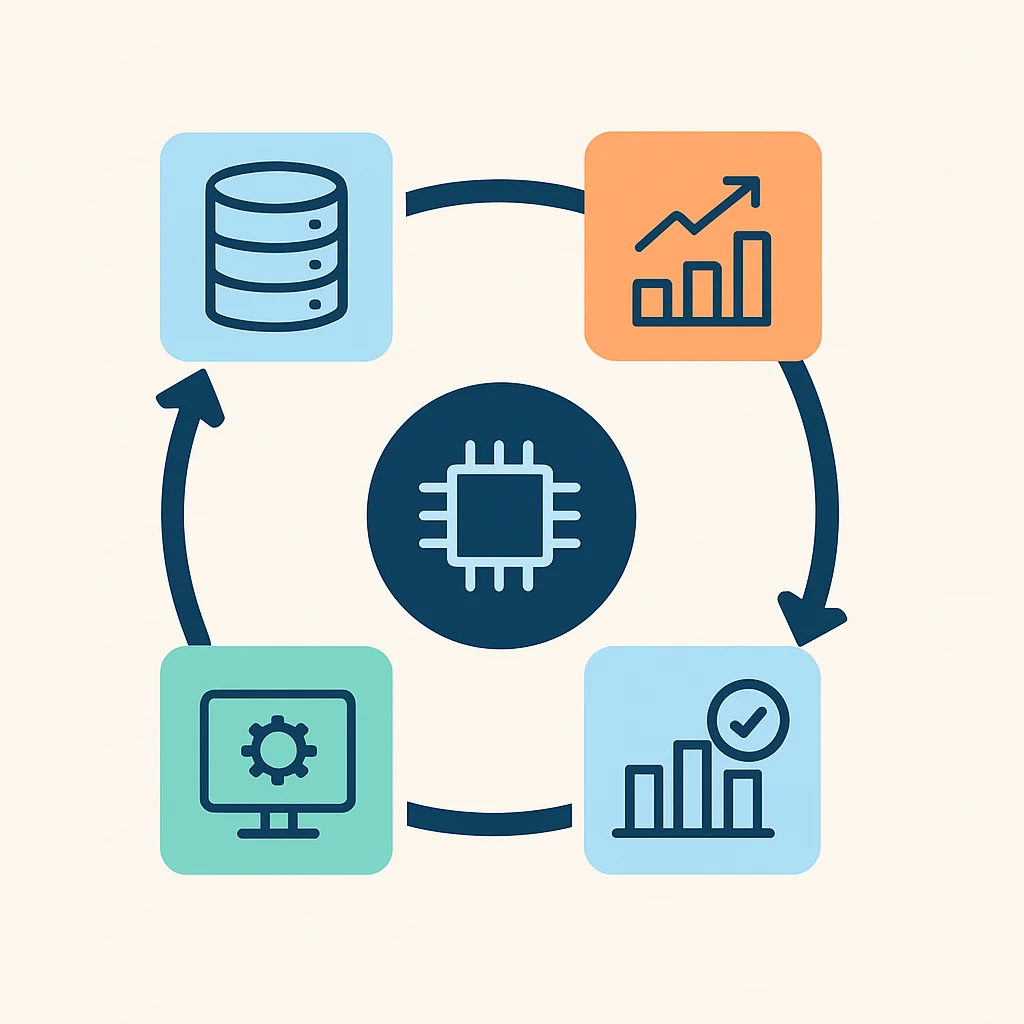
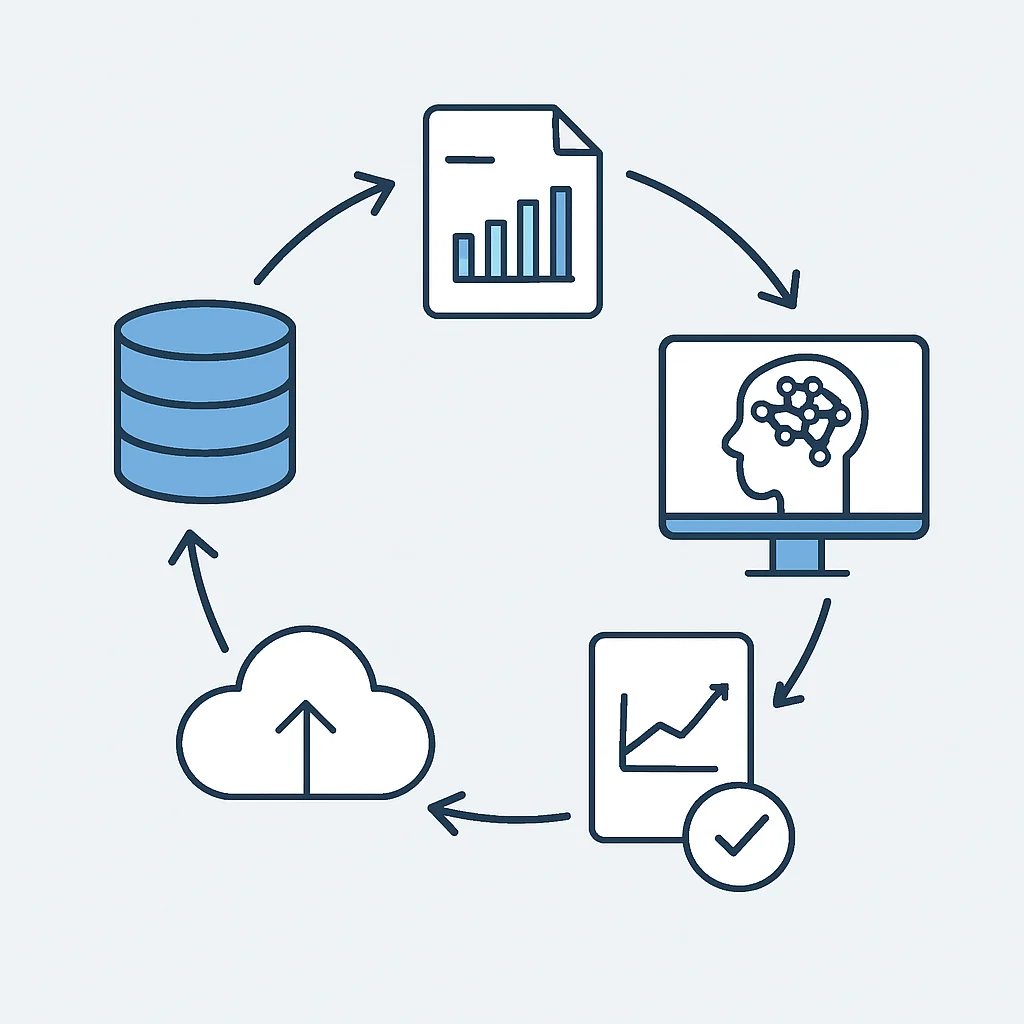
After training, evaluate your model on the unseen test set. Beyond quantitative metrics (like perplexity, which might not directly correlate with task performance), qualitative human evaluation is crucial. Have domain experts review responses for accuracy, relevance, and adherence to style. Identify common failure modes and use these insights to refine your dataset or adjust training parameters. This iterative process of “train-evaluate-refine” is fundamental to achieving high-quality results. You might discover that certain types of queries are consistently handled poorly, indicating a need for more diverse examples in that area of your dataset.
6
Deployment and Monitoring
Once satisfied with the model, deploy it. For open-source models fine-tuned with LoRA, you can merge the LoRA adapters with the base model weights to create a standalone, optimized model. This can then be deployed on cloud platforms (e.g., as a containerized service on Kubernetes, AWS Lambda, or a dedicated EC2 instance) or on-premise. For API-based fine-tuning, you simply switch to calling your fine-tuned model ID via the provider’s API. Post-deployment, continuous monitoring of model performance and user feedback is vital to identify degradation or new data drifts, prompting further fine-tuning iterations.
KEY POINT: Successful fine-tuning is an iterative process requiring meticulous data preparation, strategic model and method selection, rigorous evaluation, and continuous post-deployment monitoring.
This systematic approach ensures that your fine-tuned LLM not only performs well but also remains relevant and accurate in a dynamic operational environment. The initial investment in data and compute pays dividends in the form of superior application performance and user satisfaction.
Frequently Asked Questions
Q. What is the minimum dataset size for effective LLM fine-tuning?
While there’s no strict minimum, for effective fine-tuning with PEFT methods like LoRA, a few thousand high-quality instruction-response pairs (e.g., 1,000-5,000) can yield noticeable improvements. For more complex tasks or higher accuracy, datasets ranging from 10,000 to 50,000 examples are often recommended.
Q. Can I fine-tune an LLM on a CPU instead of a GPU?
Technically possible, but highly impractical for LLMs due to the immense computational requirements. Even with PEFT, fine-tuning an LLM on a CPU would take weeks or months, making it economically unfeasible. GPUs are essential for accelerating the matrix multiplications central to neural network training.
Q. How do I prevent my fine-tuned LLM from “hallucinating” (generating false information)?
To reduce hallucinations, ensure your training data is factually accurate and consistent. Fine-tuning on a highly relevant, curated dataset teaches the model to stick to known facts. Additionally, techniques like Retrieval-Augmented Generation (RAG) can be combined with fine-tuning, allowing the LLM to retrieve information from an external knowledge base before generating a response, grounding its outputs in verified data.
Q. Is fine-tuning always better than advanced prompt engineering?
Not always. For simpler tasks, or when data is scarce, advanced prompt engineering (including few-shot examples) can be sufficient and more cost-effective. Fine-tuning becomes superior when you need deep domain expertise, strict adherence to a specific style, or consistent performance on complex, repetitive tasks where prompt engineering becomes unwieldy or insufficient.
WRAP-UP
Conclusion: The Future of Tailored AI
The journey of fine-tuning Large Language Models in 2026 is a testament to the evolving sophistication of AI development. While general LLMs provide a powerful foundation, the true potential of generative AI is unlocked when these models are meticulously tailored to specific needs. For developers, this means moving beyond generic capabilities and crafting intelligent agents that speak the language of a particular domain, understand its nuances, and deliver precision-engineered solutions.
“Fine-tuning transforms a generalist AI into a specialist, multiplying its value exponentially for targeted applications.”
— Kwonglish Blog Perspective
The advent of Parameter-Efficient Fine-Tuning (PEFT) techniques like LoRA and QLoRA has democratized this capability, making it accessible to a broader range of developers and organizations, even those with limited computational resources. This shift has empowered countless innovators to build custom AI applications that address niche market demands, enhance internal efficiencies, and create unique user experiences that were previously unattainable.
Pros of Fine-Tuning LLMs
✔ Enhanced Accuracy: Significantly improves performance on domain-specific tasks, reducing factual errors and hallucinations.
✔ Contextual Relevance: Adapts to specific jargon, styles, and nuances of a particular industry or brand voice.
✔ Efficiency and Cost Savings: Reduces the need for extensive prompt engineering and can lead to shorter, more efficient prompts, lowering inference costs over time.
✔ Data Privacy and Control: With open-source models, fine-tuning allows full control over your data and model deployment, crucial for sensitive information.
✔ Competitive Advantage: Enables the creation of highly differentiated AI products and services.
Cons of Fine-Tuning LLMs
✖ Data Requirements: Demands high-quality, often labor-intensive, domain-specific datasets.
✖ Computational Resources: Still requires access to GPUs, though PEFT has significantly lowered the barrier.
✖ Complexity: Involves more technical setup and expertise compared to pure prompt engineering.
✖ Risk of Overfitting: If not managed carefully, the model can lose its general capabilities.
Looking ahead, 2026 will see even more advancements in fine-tuning techniques, potentially requiring even less data and compute, and integrating more seamlessly into existing MLOps pipelines. The focus will continue to be on making AI more adaptable, more controllable, and ultimately, more valuable to specific human endeavors. For developers, embracing fine-tuning is not just about keeping pace with AI; it’s about leading the charge in building the next generation of intelligent applications.
KEY POINT: Fine-tuning is a critical skill for developers in 2026, offering significant advantages in building specialized, high-performing, and competitive AI applications across various industries.
Thanks for reading!
We hope this guide empowers you to embark on your LLM fine-tuning journey and build innovative custom AI applications.
Got questions or insights to share? Drop a comment below and let’s discuss the future of tailored AI!