
SUMMARY
Estate Planning for Developers: Wills, Trusts, and Digital Assets in 2026
A comprehensive guide for developers on essential estate planning, covering wills, trusts, and how to secure your valuable digital assets for the future.
Keywords: estate planning, digital assets, wills, trusts, developer finance
TABLE OF CONTENTS
1 Overview: Why Estate Planning is Critical for Developers
2 Core Guide: Essential Estate Planning Tools
3 Core Guide: Navigating Digital Assets in 2026
4 Real-World Scenarios for Developers
5 Important Caveats and FAQs
6 Wrap-Up: Secure Your Legacy
OVERVIEW
Why Estate Planning is Critical for Developers
As developers, we are meticulous about our code, our projects, and our professional growth. We plan for scalability, security, and future maintenance in our digital creations. But how much thought do we put into the scalability, security, and future maintenance of our personal and financial lives? Estate planning might sound like something only for the ultra-rich or the elderly, but it is a crucial step for anyone, especially those of us with complex financial portfolios and, critically, a growing number of valuable digital assets.
“Estate planning isn’t just about planning for death; it’s about planning for life, protecting your loved ones, and ensuring your legacy, both tangible and digital.”
— Kwonglish
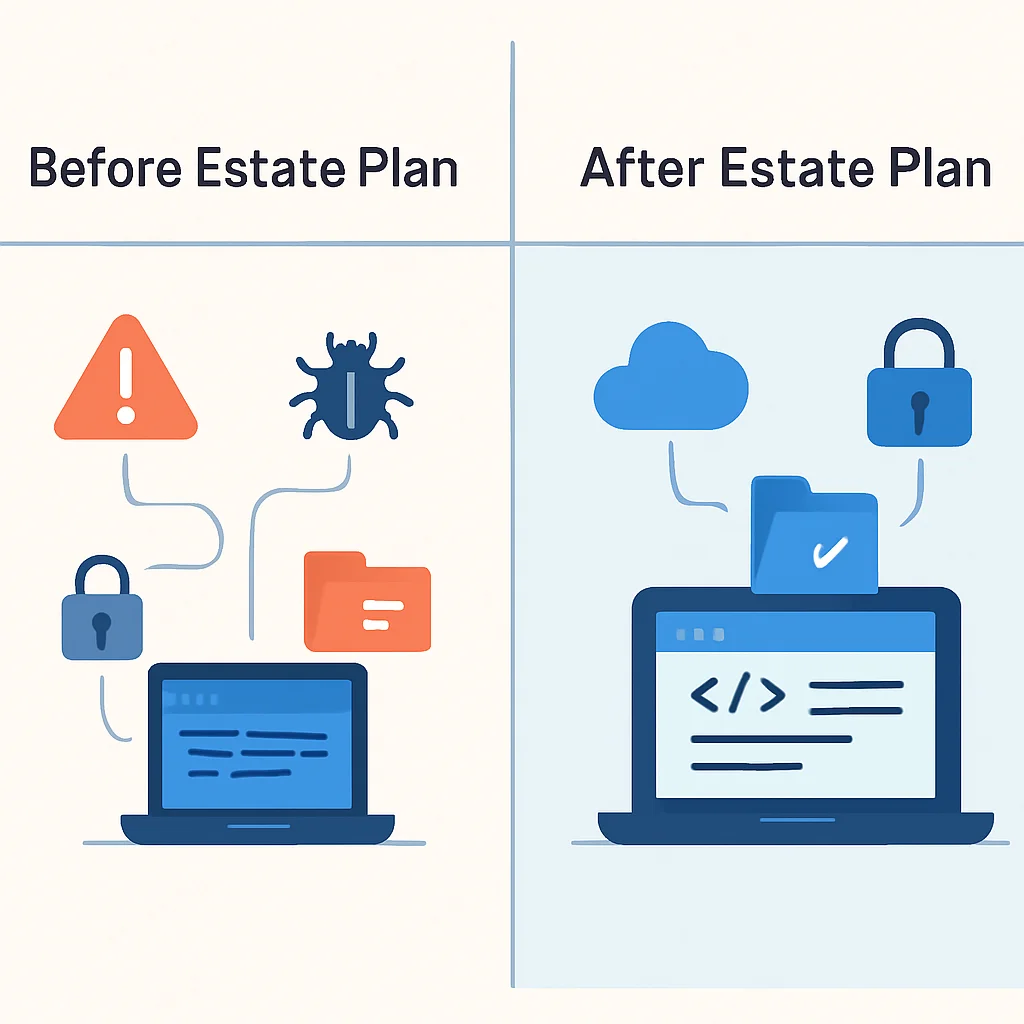
In 2026, the landscape of personal wealth is increasingly digital. For developers, this often means a unique blend of traditional assets (real estate, investments) and a significant accumulation of digital property, intellectual property, and online accounts. Think about your GitHub repositories, your cryptocurrency holdings, your SaaS subscriptions, domain names, cloud server access, and even your professional social media presence. Without a proper plan, these assets can become inaccessible or lost to your heirs, causing immense frustration, financial loss, and legal headaches.
KEY POINT
For developers, traditional estate planning must be augmented with a robust strategy for digital assets, which often hold significant monetary and sentimental value.
This guide will walk you through the essential components of estate planning, tailored for the unique needs of developers. We will cover the basics of wills and trusts, delve deep into the complexities of digital assets in today’s legal environment, and provide practical steps you can take starting today to secure your future and protect your loved ones. Don’t leave your legacy to chance – let’s code a robust estate plan together.

CORE GUIDE
Essential Estate Planning Tools
Before we dive into the specifics of digital assets, it is crucial to understand the foundational tools of estate planning. These documents form the backbone of your plan, ensuring your wishes are honored and your loved ones are provided for, regardless of your digital footprint.
1. The Will: Your Last Testament
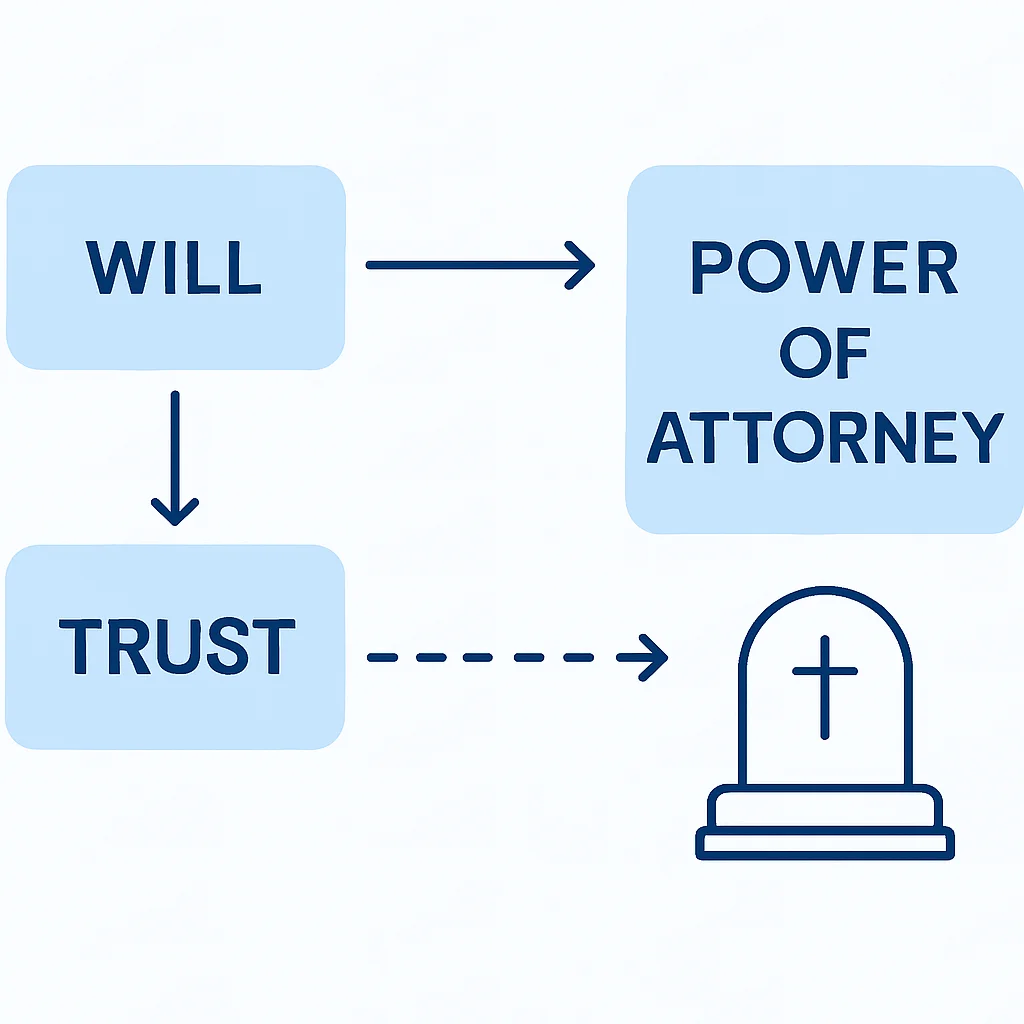
A Last Will and Testament is arguably the most fundamental estate planning document. It dictates how your assets (your “estate”) will be distributed after your death. Without a will, your assets will be distributed according to your state’s intestacy laws, which may not align with your wishes. For developers, a will is essential for several reasons:
Key Functions of a Will
Asset Distribution — Specifies who inherits your property, cash, investments, and even specific digital items.
Executor Appointment — Names the person (your “executor” or “personal representative”) responsible for managing your estate and carrying out your wishes.
Guardianship for Minors — If you have minor children, it designates who will care for them. Absolutely critical for young families.
Digital Asset Instructions — Can include specific clauses or references to a separate document detailing access to your digital accounts and assets.
A well-drafted will can explicitly grant your executor the authority to access, manage, and distribute your digital assets, including code repositories, domain names, and cryptocurrency. Without this explicit permission, service providers (like GitHub or Google) might deny access, citing privacy policies or terms of service. This could lead to your valuable IP being locked away forever.
2. Trusts: Beyond the Will
While a will is foundational, a trust offers additional layers of control, privacy, and probate avoidance. A trust is a legal arrangement where a “grantor” (you) transfers assets to a “trustee” (an individual or institution) to hold and manage for the benefit of “beneficiaries” (your heirs). There are two main types relevant for most individuals:
Revocable Living Trust: This is the most common type. You, as the grantor, typically serve as the initial trustee and beneficiary during your lifetime. You can modify or revoke the trust at any time. Upon your incapacity or death, a successor trustee takes over. Its primary benefit is avoiding probate, a public and often lengthy court process that can cost 3-7% of your estate’s value and take 9-18 months, sometimes longer, depending on the state and complexity.
Irrevocable Trust: Once established, an irrevocable trust generally cannot be modified or revoked without the consent of the beneficiaries. You give up control of the assets once they are placed in the trust. These are often used for advanced estate tax planning, asset protection (shielding assets from creditors), or eligibility for government benefits, but they are less flexible.
KEY POINT
A Revocable Living Trust is excellent for probate avoidance, maintaining privacy, and providing for seamless asset management if you become incapacitated, including your digital assets.
For developers, a trust can be particularly useful for managing complex assets like shares in a startup, significant cryptocurrency holdings, or ongoing revenue streams from SaaS products. The trustee can be given explicit instructions on how to manage these assets, for instance, selling crypto at a certain price, maintaining a server, or transferring ownership of a domain.
3. Powers of Attorney (POA)
Estate planning isn’t just for after you’re gone; it’s also about preparing for potential incapacity during your lifetime. Powers of Attorney are vital for this:
Durable Power of Attorney for Finances: This document appoints an “agent” or “attorney-in-fact” to make financial decisions on your behalf if you become unable to do so. This agent can pay bills, manage investments, and even handle business operations. For developers, this is crucial for maintaining active accounts, renewing domain registrations, or managing cloud infrastructure if you’re temporarily incapacitated.
Durable Power of Attorney for Healthcare (or Advance Directive/Health Care Proxy): This appoints someone to make medical decisions for you if you cannot. It also typically includes a living will, stating your preferences for medical treatment.
WARNING
Without a Durable Power of Attorney, your loved ones may need to go to court to get conservatorship or guardianship, a costly and time-consuming process, to manage your affairs.
4. Beneficiary Designations
Many financial accounts allow you to name beneficiaries directly, which can bypass probate entirely. These include:
Retirement Accounts: IRAs, 401(k)s, etc. (e.g., “Transfer on Death” or TOD designations).
Life Insurance Policies: The payout goes directly to your named beneficiaries.
Bank and Brokerage Accounts: Often allow “Payable on Death” (POD) or “Transfer on Death” (TOD) designations.
Always review and update these beneficiaries regularly, especially after major life events like marriage, divorce, or the birth of a child. Coordinating these designations with your will and trust is crucial to avoid unintended outcomes.
CORE GUIDE
Navigating Digital Assets in 2026
This is where estate planning for developers truly diverges from traditional approaches. Our digital lives are complex, and our digital assets often hold significant value, both economic and personal. In 2026, failing to plan for these assets is akin to leaving a physical safe unlocked but without telling anyone where the key is.
What are Digital Assets for a Developer?
The definition is broad, but for developers, it typically includes:
☑ Code Repositories: GitHub, GitLab, Bitbucket accounts (private and public code, open-source projects, client work).
☑ Cryptocurrency & NFTs: Wallets (hardware, software, exchange accounts), seed phrases, private keys. This is often the most valuable and most challenging to transfer.
☑ Cloud Accounts: AWS, Azure, Google Cloud Platform (GCP) – containing servers, data, and potentially revenue-generating applications.
☑ Domain Names & Websites: Registrars (GoDaddy, Namecheap), hosting providers (Netlify, Vercel, traditional hosts), content management systems (WordPress, Ghost).
☑ SaaS Subscriptions & Accounts: Tools for development, marketing, analytics (e.g., JetBrains, Figma, Mailchimp, analytics dashboards).
☑ Online Marketplaces: Accounts on platforms like Gumroad, Etsy, or App Stores if you sell digital products or apps.
☑ Professional Social Media: LinkedIn, Twitter (X), personal blogs – important for professional reputation and networking.
☑ Email Accounts: Often the gateway to resetting passwords for other services.
“Your digital footprint is your digital legacy. Protect it with the same diligence you apply to your most critical codebases.”
— Kwonglish
Legal Frameworks: The RUFADAA Act
The legal landscape for digital assets is still evolving, but a significant development has been the Revised Uniform Fiduciary Access to Digital Assets Act (RUFADAA). As of 2026, RUFADAA has been adopted by a majority of U.S. states. It provides a legal framework for fiduciaries (like executors or trustees) to access and manage a deceased person’s digital assets. Key aspects:
● User’s Directions Prevail: If you provide specific instructions (e.g., in a will, trust, or online tool), those instructions generally override a service provider’s terms of service.
● Terms of Service (TOS) are Secondary: If you haven’t provided specific instructions, the service provider’s TOS generally governs. This is where many digital assets become inaccessible.
● Default Access: If neither your instructions nor the TOS address fiduciary access, RUFADAA grants fiduciaries limited access to digital assets, primarily for management and closing accounts, not necessarily full content access (e.g., they can see who you communicated with, but not the content of messages).
KEY POINT
Explicitly stating your wishes for digital asset access in your will or trust is paramount. Relying solely on RUFADAA or service provider TOS is risky and can limit access for your heirs.
Strategies for Planning Your Digital Assets
Here’s how developers can proactively plan for their digital legacy:
1
Create a Digital Asset Inventory
This is a comprehensive list of all your digital accounts, assets, and their associated platforms. Do NOT include passwords directly in this document. Instead, note the service, your username/email, and instructions on where to find the password (e.g., “See LastPass entry for X”). Categorize by importance: financial, professional, personal, social.
2
Utilize a Secure Password Manager
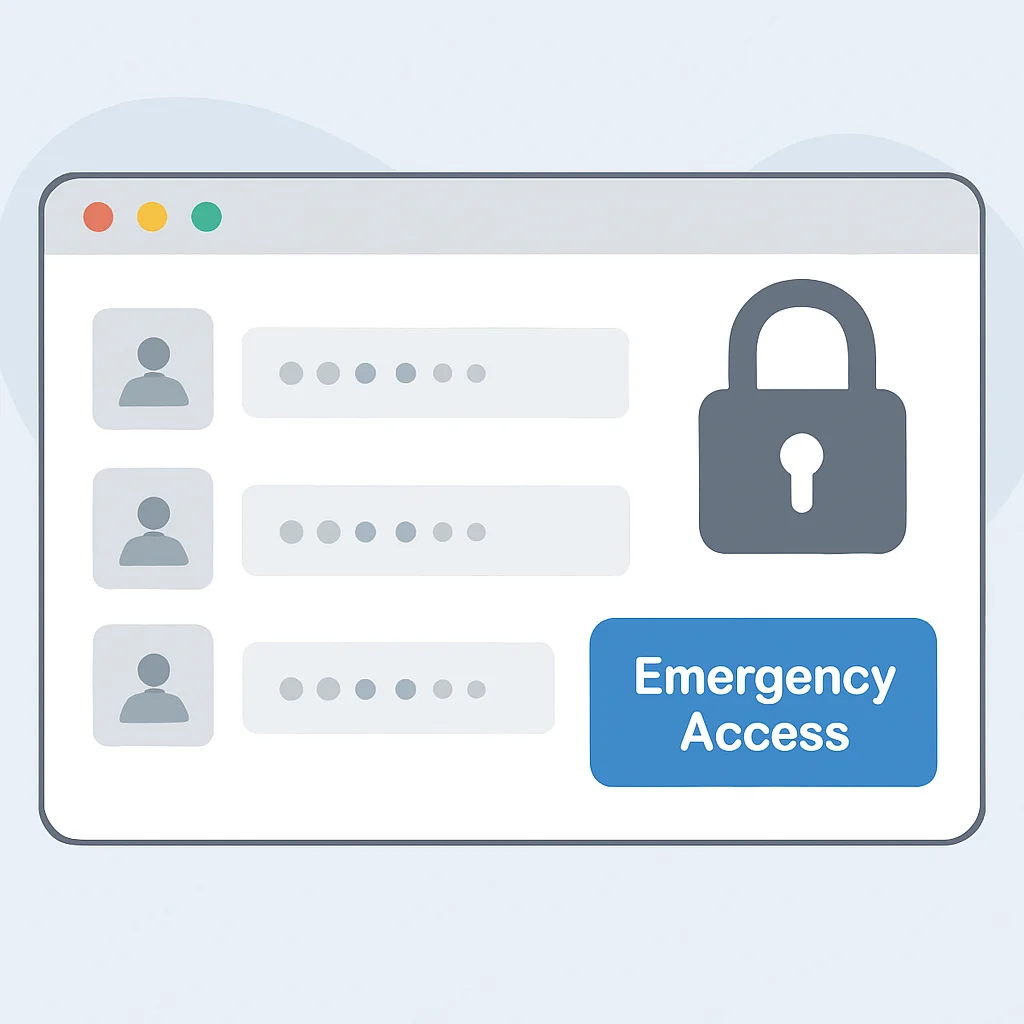
Tools like LastPass, 1Password, or Bitwarden are essential. Most offer emergency access features or secure sharing options that can be configured for a trusted individual (your digital executor). Ensure your master password and emergency access instructions are clearly outlined in your estate plan documents, with a physical backup if necessary.
3
Appoint a Digital Executor
This can be the same person as your general executor, but it should be someone tech-savvy and trustworthy. They will be responsible for following your instructions regarding your digital assets. Grant them explicit authority in your will or trust to access, manage, transfer, or delete your digital property.
4
Specific Instructions for Key Assets
For critical assets like cryptocurrency, cloud infrastructure, or revenue-generating projects, provide detailed instructions. For example, for crypto: “Transfer all Bitcoin from X wallet to Y address.” For a SaaS product: “Transfer ownership of domain Z and codebase on GitHub to [successor developer].”
Here’s an example of what a simplified digital asset inventory might look like, which you would store securely and reference in your legal documents:
CODE EXPLANATION
This YAML snippet outlines a basic structure for a digital asset inventory. It categorizes assets and provides essential details without directly storing sensitive passwords. The password_manager_entry field refers to the specific entry in your secure password manager, ensuring security.
digital_assets:
  # Financial Accounts
  - name: Coinbase Pro
    type: Cryptocurrency Exchange
    url: https://pro.coinbase.com
    username: [email protected]
    password_manager_entry: Coinbase Pro Login
    instructions: |
      Transfer all holdings to the designated beneficiary's Coinbase account (email: [email protected]) or liquidate and transfer funds.
  - name: Kraken
    type: Cryptocurrency Exchange
    url: https://www.kraken.com
    username: [email protected]
    password_manager_entry: Kraken Login
    instructions: |
      Liquidate all holdings and transfer USD to linked bank account, then distribute as per will.
  - name: Hardware Wallet (Ledger Nano X)
    type: Cryptocurrency Wallet
    seed_phrase_location: Physical safe, document ID #123
    pin_location: Physical safe, document ID #124
    instructions: |
      Access wallet using seed phrase and PIN. Transfer all cryptocurrencies to beneficiary's designated wallets.

  # Professional & Intellectual Property
  - name: GitHub
    type: Code Repository
    url: https://github.com/your_username
    username: your_username
    password_manager_entry: GitHub Login
    instructions: |
      Transfer ownership of private repositories (e.g., 'ProjectA', 'SaaS_Backend') to [email protected].
      Public repositories (e.g., 'OpenSourceLib') should remain public or be transferred to a community maintainer if possible.
  - name: AWS Management Console
    type: Cloud Provider
    url: https://aws.amazon.com/console/
    username: aws_admin_user
    password_manager_entry: AWS Root Account
    instructions: |
      Critical for running 'MySaaSApp'. Transfer root account access to designated successor ([email protected]).
      Ensure billing information is updated.
  - name: Domain Registrar (Namecheap)
    type: Domain Management
    url: https://www.namecheap.com
    username: [email protected]
    password_manager_entry: Namecheap Login
    instructions: |
      Transfer ownership of 'mysaasapp.com' and 'personalblog.dev' to beneficiary.

  # Personal & Social
  - name: Gmail
    type: Email Service
    url: https://mail.google.com
    username: [email protected]
    password_manager_entry: Gmail Primary
    instructions: |
      Access for communication and password resets. Inform contacts of passing, then archive and delete after 6 months.
  - name: LinkedIn
    type: Professional Social Media
    url: https://www.linkedin.com/in/yourprofile
    username: [email protected]
    password_manager_entry: LinkedIn Login
    instructions: |
      Update profile to 'In Memoriam' or close account as per family's wishes.
Remember, this inventory should be a living document, updated regularly as you acquire new accounts or assets. The physical location of this document (or a secure digital copy) should be known only to your digital executor and mentioned in your will or trust as a Memorandum of Digital Assets, which is a non-binding but helpful guide for your executor.
REAL-WORLD EXAMPLES
Real-World Scenarios for Developers
Let’s consider a few specific scenarios to illustrate why comprehensive estate planning is vital for developers.
Case 1: The Crypto Enthusiast Developer
A developer with substantial cryptocurrency holdings across multiple exchanges and hardware wallets.
Problem: Sarah, a 32-year-old software engineer, accumulated over $500,000 in various cryptocurrencies. She used a Ledger Nano X, a Trezor, and had funds on Coinbase and Binance. Her seed phrases and private keys were scattered or memorized. She passed away unexpectedly without a will or digital asset plan.
Outcome: Her family, unfamiliar with crypto, had no idea where to even begin. They knew she had “digital money” but couldn’t access it. The exchanges required extensive legal documentation and proof of death, and without account access, they couldn’t initiate transfers. Her hardware wallets were impenetrable without the seed phrases or PINs, which were lost forever. The majority of her crypto assets became permanently inaccessible, a significant financial loss for her heirs.
Solution: Sarah should have included explicit instructions for her crypto assets in her will, naming a digital executor. She should have securely stored her seed phrases and PINs in a physical safe (e.g., a bank safety deposit box) with clear instructions on their location and use in a Memorandum of Digital Assets. Her password manager should have had emergency access configured for her digital executor to handle exchange accounts.
Case 2: The Indie SaaS Founder
A developer running a small but profitable SaaS application.
Problem: David, 45, built a niche SaaS product generating $10,000/month in recurring revenue. The application ran on AWS, the domain was registered with Namecheap, the codebase was on a private GitHub repo, and customer payments were handled via Stripe. He had no formal business succession plan, and his estate plan only covered his house and investments. He suffered a debilitating stroke, leaving him incapacitated.
Outcome: His wife, who knew nothing about the technical side, couldn’t access the AWS account to pay the bills, leading to server downtime. The domain registration was due for renewal, which was missed, and the domain was lost. Customer payments through Stripe eventually failed due to lack of management. The entire business collapsed within weeks, losing a significant income stream and a valuable asset.
Solution: David needed a Durable Power of Attorney for Finances, explicitly granting his wife (or a trusted business partner) the authority to manage his business assets. His digital asset inventory should have detailed all critical SaaS infrastructure, including AWS root access, domain registrar logins, and Stripe account details, with instructions for his agent. A trust could also have been used to hold the business assets, with a successor trustee designated to manage or sell the business.
Case 3: The Open-Source Contributor
A developer with a strong online presence and contributions to many open-source projects.
Problem: Emily, 28, was a prolific open-source contributor, maintaining several popular libraries on GitHub and participating actively in developer communities. Her personal blog was well-regarded, and her professional reputation was tied to her online presence. She died suddenly in an accident, leaving behind her husband and young child.
Outcome: Her husband couldn’t access her GitHub account to transfer maintenance rights for her open-source projects, leading to unmaintained software and disappointed users. Her blog eventually went offline because he couldn’t access the hosting provider or domain registrar. Her professional legacy, built over years, slowly faded away.
Solution: Emily’s will should have designated a digital executor with instructions for her GitHub account: either transfer specific projects to co-maintainers or archive them. Her blog’s hosting and domain information should have been in her digital asset inventory, with instructions to either keep it running for a period or archive it. This preserves her professional legacy and ensures continuity for projects she cared about.
CAVEATS + FAQ
Important Caveats and FAQs
Estate planning can be complex, and there are several important considerations and common questions that often arise.
The Importance of Professional Legal Counsel
WARNING
This guide provides general information and is NOT legal advice. Estate laws vary significantly by state and country. Always consult with a qualified estate planning attorney.
While online templates and DIY services exist, they rarely account for the nuances of your specific situation, especially with complex digital assets. An experienced estate planning attorney can:
● Ensure Legal Validity: Draft documents that comply with your state’s laws, preventing costly errors.
● Minimize Taxes: Help structure your estate to reduce potential estate or inheritance taxes.
● Address Unique Assets: Provide tailored solutions for cryptocurrency, intellectual property, business interests, and other developer-specific assets.
● Avoid Probate: Implement strategies like trusts to keep your estate out of public court proceedings.
● Coordinate Documents: Ensure your will, trust, beneficiary designations, and digital asset instructions work seamlessly together.
KEY POINT
Think of an estate planning attorney as your “senior architect” for your life’s legacy. Their expertise is invaluable in building a robust and resilient plan.
FAQ
Frequently Asked Questions About Estate Planning
Q. How often should I review my estate plan?
A. It’s recommended to review your estate plan at least every 3-5 years, or immediately after significant life events such as marriage, divorce, birth of a child, a major career change, or a substantial change in assets (like acquiring significant cryptocurrency or starting a new business).
Q. Can I just put my passwords in my will?
A. No, directly including passwords in your will is highly discouraged. Wills become public documents during probate, exposing your sensitive information. Instead, use a secure password manager with emergency access features and reference it in a separate, non-legal document (like a Memorandum of Digital Assets) that is securely stored and known to your digital executor.
Q. What happens to my GitHub repositories if I don’t plan for them?
A. Without specific instructions and access provided to your executor, your private repositories may become permanently inaccessible. Public repositories might remain online but unmaintained. Your professional work, intellectual property, and contributions could be lost or orphaned, potentially impacting your legacy and the projects you cared for.
Q. Are digital assets subject to estate taxes?
A. Yes, valuable digital assets such as cryptocurrency, NFTs, or intellectual property with monetary value are generally considered part of your taxable estate. Proper valuation and planning with an attorney can help minimize potential estate tax liabilities, especially for significant holdings.
WRAP-UP
Wrap-Up: Secure Your Legacy
As developers, we build for the future. We write resilient code, design scalable architectures, and anticipate potential failures. It’s time to apply that same foresight to our personal lives and legacies. Estate planning, far from being a morbid topic, is an act of profound care and responsibility towards your loved ones and your life’s work.
“Your code leaves a footprint, but your estate plan ensures your entire digital and physical legacy endures.”
— Kwonglish
In 2026, with our lives increasingly intertwined with digital platforms and assets, a comprehensive estate plan must go beyond traditional wills and trusts to explicitly address your digital footprint. By taking the proactive steps outlined in this guide – drafting a will, considering a trust, establishing powers of attorney, and meticulously planning for your digital assets – you can provide peace of mind for yourself and your family.
REFERENCES
Revised Uniform Fiduciary Access to Digital Assets Act (RUFADAA)
Investopedia: Estate Planning
Forbes Advisor: What Is Probate?
Thanks for reading!
Don’t delay securing your future. Start planning your estate today and ensure your digital legacy is protected.
Got questions or your own estate planning tips for developers? Drop a comment below!