
SUMMARY
Top Roguelike Games to Play in 2026
Unleash endless replayability and challenge with the best roguelikes for developers in 2026.
Keywords: Roguelike, Replayability, Challenging
TABLE OF CONTENTS
1 Welcome to the Loop: Why Roguelikes Are Devs’ Best Friend
2 Roguelike vs. Roguelite: Understanding the Core Loop
3 Our Top Roguelike & Roguelite Picks for 2026
4 Hades: God-Tier Storytelling Meets Flawless Combat
5 Dead Cells: The Rush of ‘Just One More Run’
6 Slay the Spire: Deck-Building Perfection
7 The Binding of Isaac: Rebirth: A Modern Classic’s Dark Depths
8 Cult of the Lamb: Adorable Cult Management Meets Dungeon Crawling
9 Why Roguelikes Are a Developer’s Zen Garden
10 The Future of Roguelikes: What’s Next in 2026 and Beyond?
11 Verdict & Rating
INTRODUCTION
Welcome to the Loop: Why Roguelikes Are Devs’ Best Friend
Hey Kwonglish crew! Kwonglish here, and today we’re diving headfirst into a genre that has absolutely captured my heart and countless hours of my life: roguelikes (and roguelites!). As developers, we spend our days crafting intricate systems, debugging complex logic, and iterating on designs. When it’s time to unwind, sometimes you don’t want a sprawling RPG that demands 100+ hours or a competitive shooter that raises your blood pressure. What you often crave is a game that respects your time, offers immediate gratification, and provides an almost meditative flow state, even in defeat. Enter the roguelike!
In 2026, the roguelike genre is absolutely thriving, pushing boundaries with innovative mechanics, stunning art styles, and compelling narratives. Whether you’re a seasoned coding wizard looking for a quick, challenging escape or someone just dipping their toes into the world of procedural generation and permadeath, this list is for you. We’ll explore some of the absolute best roguelike and roguelite experiences available right now, games that offer infinite replayability and that satisfying loop of getting just a little bit better with each attempt.
“The beauty of a roguelike isn’t just in winning, but in the journey of countless failures that slowly carve you into a master.”
— Kwonglish, on the appeal of roguelikes
GENRE EXPLAINED
Roguelike vs. Roguelite: Understanding the Core Loop
Before we dive into the games, let’s clear up some terminology. The terms “roguelike” and “roguelite” are often used interchangeably, but there’s a subtle yet important distinction that influences how you experience these games. Both genres share core characteristics derived from the 1980 classic, Rogue:
The “Roguelike” Experience (Traditional)
A true roguelike adheres strictly to the “Berlin Interpretation” of genre-defining features. Key elements include:
- Procedural Generation: Every run generates new levels, item placements, and enemy layouts.
- Permadeath: When your character dies, it’s game over. You lose all progress, items, and experience from that run.
- Turn-Based Gameplay: Often, actions are taken in turns, allowing for strategic planning.
- Grid-Based Movement: Characters and enemies move in discrete steps on a grid.
- High Difficulty: These games are notoriously challenging, requiring mastery and luck.
- Resource Management: Scarcity of health, mana, and items is common.
Examples of traditional roguelikes include Nethack, Angband, and Dungeon Crawl Stone Soup. They are often ASCII-based or have very simplistic graphics, focusing entirely on deep mechanics and brutal challenge.
The “Roguelite” Evolution (Modern)
Roguelites take the core concepts of procedural generation and permadeath but relax the strict rules, introducing persistent progression systems. This means that while you still start each run relatively fresh, some elements carry over or unlock:
- Meta-Progression: You might unlock new characters, weapons, abilities, or permanent upgrades that make subsequent runs easier or offer new strategic options.
- Real-Time Combat: Most modern roguelites feature action-oriented, real-time combat, making them more accessible and dynamic.
- Narrative Elements: Many roguelites integrate story progression that unfolds across multiple runs, making death a part of the narrative.
The games we’ll be discussing today largely fall into the roguelite category, as they represent the modern evolution of the genre that has found immense popularity. They offer the thrill of permadeath with the satisfaction of gradual, overarching progress, making the grind feel less punishing and more rewarding.
“While roguelikes demand perfection from run one, roguelites offer a more forgiving learning curve, letting you build power over time even as you face countless defeats.”
— Gaming critics on genre evolution
GAME PICKS
Our Top Roguelike & Roguelite Picks for 2026
Alright, let’s get to the good stuff! These are the games that, in 2026, continue to offer unparalleled replayability, challenging gameplay, and an addictive loop that will keep you coming back for “just one more run.” Each of these titles brings something unique to the table, ensuring there’s a perfect fit for every type of gamer.
GAME 1
Hades: God-Tier Storytelling Meets Flawless Combat
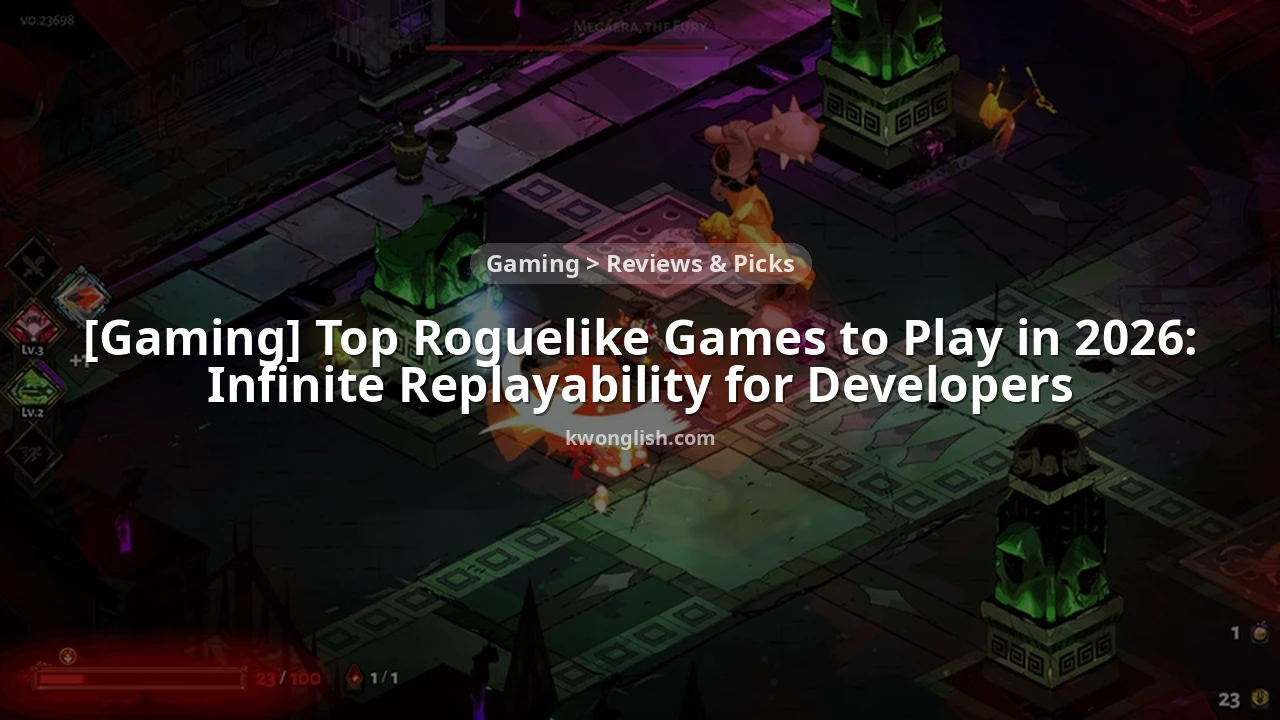
If you haven’t played Hades by Supergiant Games yet, stop what you’re doing and go download it. Seriously. This game isn’t just a masterpiece of the roguelite genre; it’s a masterclass in game design, storytelling, and art direction. You play as Zagreus, the immortal Prince of the Underworld, who is determined to escape his father’s realm. Each death isn’t a failure, but an opportunity to return to the House of Hades, interact with a cast of incredibly charming and well-voiced mythological figures, and progress the overarching narrative.
The combat is fluid, fast-paced, and incredibly satisfying. You choose from a variety of infernal weapons, each with its own unique playstyle, and then customize your build with “Boons” from the Olympian gods. These boons offer powerful upgrades and synergize in fascinating ways, making every run feel fresh and strategic. The sheer number of viable builds means you’re constantly experimenting, adapting, and discovering new ways to conquer the Underworld’s ever-changing chambers.
Why Hades is a Must-Play in 2026
Dynamic Narrative — Story progresses with each death, making failure feel like part of the journey.
Flawless Combat — Responsive, deep, and satisfying action with diverse weapon and boon combinations.
Stellar Art & Voice Acting — Gorgeous hand-drawn art and some of the best voice work in gaming.
Developer’s Delight — See how meta-progression and emergent narrative can be flawlessly integrated.
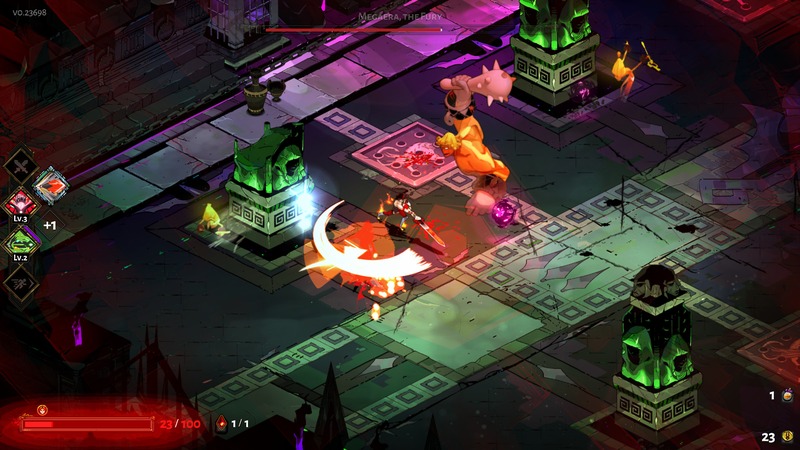
For developers, Hades is a masterclass in how to implement meta-progression and emergent narrative. Every time Zagreus dies, you return to the House of Hades, where new dialogue options open up, relationships deepen, and clues about the story are revealed. This genius design ensures that even a “failed” run feels productive, as you’re always advancing something. It’s truly a game that understands how to leverage the roguelite loop for maximum engagement.
“Hades proves that a roguelite can have a compelling, unfolding narrative that makes every single run, win or lose, feel meaningful.”
— Gaming critics praise Hades’ narrative design
KEY POINT
Hades excels by integrating its narrative directly into the roguelite cycle, using permadeath not as a penalty, but as a mechanism to advance character relationships and story progression, making every run feel valuable.
GAME 2
Dead Cells: The Rush of ‘Just One More Run’
If you crave lightning-fast action, pixel-perfect platforming, and a constant sense of progression, then Dead Cells by Motion Twin is your jam. This game blends roguelite mechanics with Metroidvania elements, creating a unique and incredibly addictive experience. You play as a headless protagonist (known as the Prisoner) who must fight their way through a constantly changing, cursed island to defeat the King.
The combat is brutal, precise, and deeply rewarding. Every enemy encounter feels like a mini-puzzle, demanding quick reflexes, pattern recognition, and smart use of your diverse arsenal of weapons and skills. From swords and bows to grenades and turrets, the sheer variety of tools at your disposal ensures that no two runs ever feel quite the same. The meta-progression here is fantastic: you collect “cells” from defeated enemies, which you can then spend between runs to unlock new weapons, mutations, and permanent upgrades, expanding your options for future attempts.
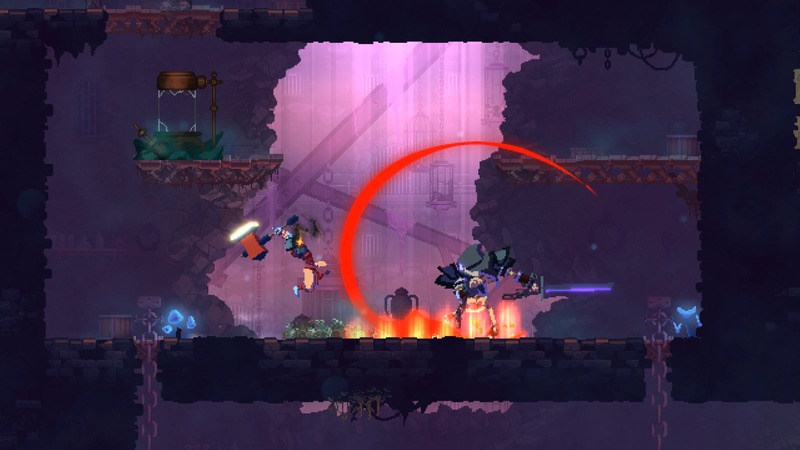
What truly sets Dead Cells apart is its incredible pacing. The game constantly pushes you forward, encouraging aggressive play and rewarding speed. There’s a palpable rush that comes from chaining together kills, dodging attacks, and carving a path through hordes of enemies. It’s a game that respects your time by offering short, intense runs, but also provides a deep well of content for those who want to master its intricacies, including multiple difficulty levels (Boss Cells) that truly test your skill.
“Dead Cells is a masterclass in responsive combat and satisfying meta-progression, making every death a stepping stone to a stronger, smarter player.”
— Player reviews on the addictive gameplay loop
KEY POINT
Dead Cells masterfully blends Metroidvania progression with roguelite permadeath, offering a fast-paced, challenging combat system and a robust meta-progression system that constantly expands your strategic options.
GAME 3
Slay the Spire: Deck-Building Perfection
For those who prefer mental gymnastics over twitch reflexes, Slay the Spire by MegaCrit is an absolute revelation. This game single-handedly revolutionized the deck-building roguelike genre, inspiring countless imitators but rarely being surpassed. You choose one of several unique characters, each with their own starting deck and abilities, and then ascend a spire, battling monsters, discovering powerful relics, and building an increasingly formidable deck of cards.
The genius of Slay the Spire lies in its exquisite balance of strategy, luck, and emergent synergy. Every turn is a puzzle: how do you best mitigate damage, deal lethal blows, and set up for future turns with the cards you’re dealt? As you progress, you’ll add new cards, remove weak ones, and find “relics” that grant passive bonuses, often completely changing your strategy on the fly. Discovering powerful card combinations and relic synergies is incredibly satisfying, leading to runs where your deck feels like an unstoppable force.
Why Slay the Spire is a Strategic Gem
Deep Strategic Combat — Every turn is a complex puzzle of resource management and card play.
Infinite Replayability — Different characters, relics, and card choices ensure unique runs every time.
Satisfying Progression — Unlocking new cards and relics between runs constantly expands strategic options.
Perfect for Devs — Engages the logical, problem-solving part of the brain in a relaxing, turn-based environment.
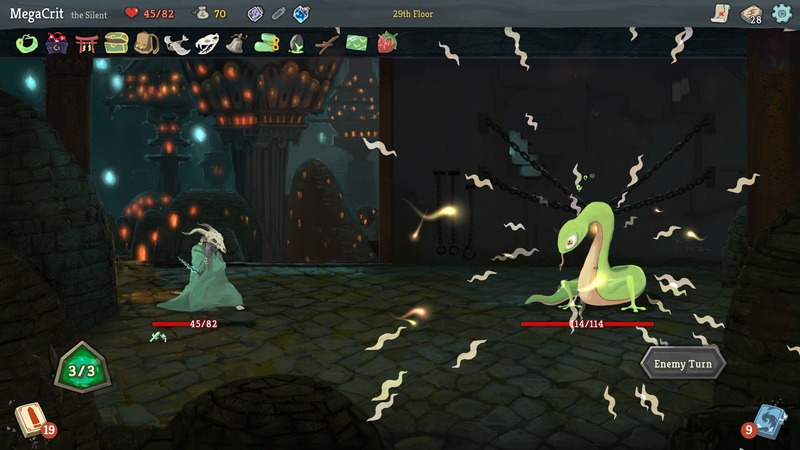
For developers, the intricate systems at play in Slay the Spire are a marvel. The way seemingly disparate cards and relics can combine into game-breaking synergies is a testament to brilliant design. It’s a game that rewards careful planning, risk assessment, and adaptability – skills that translate directly from the coding desk to the virtual battlefield. The turn-based nature also makes it a fantastic game to pick up and put down, perfect for short breaks or longer, focused sessions.
“Slay the Spire is less about reflexes and more about pattern recognition and strategic optimization – a true delight for the analytical mind.”
— Game design analysis on Slay the Spire
KEY POINT
Slay the Spire is the quintessential deck-building roguelike, offering unparalleled strategic depth through card synergies, character variety, and emergent gameplay, making it a highly addictive and intellectually stimulating experience.
GAME 4
The Binding of Isaac: Rebirth: A Modern Classic’s Dark Depths
Prepare for a deep dive into the bizarre, grotesque, and utterly addictive world of The Binding of Isaac: Rebirth. This game, and its numerous expansions, remains a cornerstone of the roguelite genre, captivating players for over a decade with its seemingly endless content and intricate item synergies. You play as Isaac, a young boy fleeing his religiously zealous mother, descending into a basement filled with monsters, strange items, and unsettling secrets.
At its core, Isaac is a twin-stick shooter with dungeon-crawling elements, heavily inspired by the original Legend of Zelda. Each floor is procedurally generated, filled with rooms of enemies, item shops, and boss fights. The true magic, however, lies in its item system. There are literally hundreds of passive and active items that you can collect, and they combine in incredibly unpredictable ways. Finding the right combination of items can turn a weak run into an overpowered rampage, leading to truly unique and often hilarious gameplay experiences. The sheer volume of content – characters, items, enemies, bosses, and secrets – is staggering, ensuring you’ll still be discovering new things even after hundreds of hours.
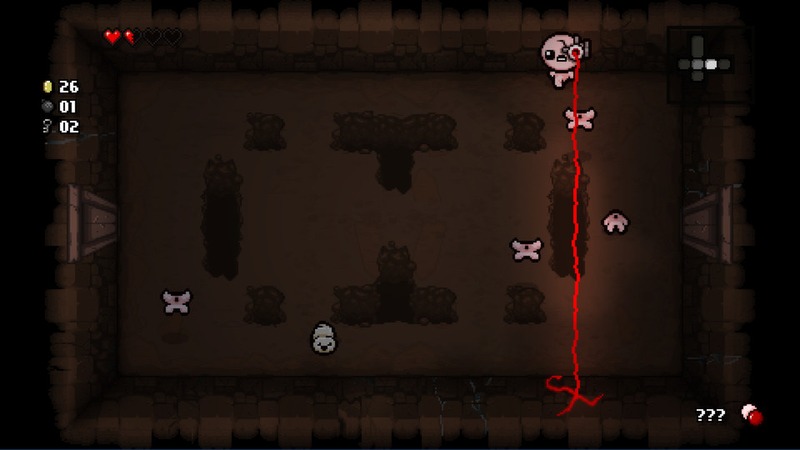
The game is notoriously difficult, but every death feels like a learning experience. You’ll gradually unlock new characters, items, and challenges, expanding the already vast pool of content. The art style, while dark and unsettling, is iconic, and the soundtrack is phenomenal. For developers, Isaac is a testament to how a simple core loop can be expanded to near-infinite complexity through clever item design and emergent gameplay. The way items interact with each other, creating new visual effects and gameplay mechanics, is a masterclass in modular design.
“The Binding of Isaac: Rebirth offers a depth of item synergy and content that few games can match, ensuring every run is a wild, unpredictable ride.”
— Long-time players on Isaac’s enduring appeal
KEY POINT
The Binding of Isaac: Rebirth stands out for its immense content, deeply intricate item synergy system, and dark, compelling atmosphere, providing an unmatched sense of discovery and replayability through its emergent gameplay.
GAME 5
Cult of the Lamb: Adorable Cult Management Meets Dungeon Crawling
Looking for something a little different? Cult of the Lamb by Massive Monster offers a unique blend of roguelite action and base-building/management simulation. You play as a possessed lamb saved from sacrifice by an ominous stranger, who tasks you with building a loyal following in their name. This means venturing out into procedurally generated dungeons to gather resources and defeat rival cult leaders, while also managing your growing cult back at your home base.
The dungeon crawling segments are fast-paced, hack-and-slash roguelite action, where you collect new weapons, curses (spells), and tarot cards (buffs) to power up your lamb. The combat is satisfying and challenging, with distinct enemy types and engaging boss fights. But the real charm comes when you return to your cult. Here, you’re responsible for constructing buildings, performing rituals, giving sermons, indoctrinating new followers, and ensuring their faith remains high. Neglect your cult, and dissent will spread, leading to rebellion and chaos.
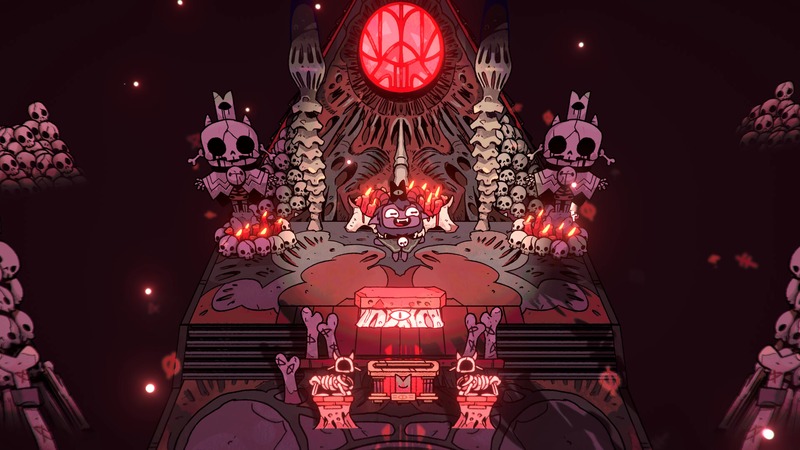
This duality is what makes Cult of the Lamb so compelling. The resources and power-ups you gain in the dungeons directly feed into your cult’s growth, and a thriving cult, in turn, provides benefits for your dungeon runs. It’s a beautifully interwoven loop that keeps both halves of the game feeling essential. The art style is a delightful blend of cute and creepy, and the dark humor is spot on. For developers, it’s a fantastic example of how to successfully merge two distinct genres, creating a cohesive and highly engaging experience that constantly offers different types of gameplay challenges.
“Cult of the Lamb brilliantly merges two addictive loops – fast-paced roguelite combat and charming cult management – into a cohesive, adorable, and darkly humorous package.”
— Reviewers on the game’s unique blend
KEY POINT
Cult of the Lamb offers a fresh take on the roguelite genre by seamlessly integrating a compelling cult management simulation, creating a unique gameplay loop where dungeon crawling directly fuels base building and vice versa.
DEVELOPER PERSPECTIVE
Why Roguelikes Are a Developer’s Zen Garden
It’s no coincidence that many developers, including myself, find immense satisfaction in roguelikes. There’s something inherently appealing about the genre that resonates with the programming mindset. Think about it:
- System Mastery: Just like understanding a complex codebase, roguelikes challenge you to master their intricate systems. You learn enemy patterns, item interactions, and optimal strategies through trial and error.
- Iterative Improvement: Every failed run is a “bug report.” You analyze what went wrong, tweak your approach, and try again. This iterative process mirrors the development cycle perfectly.
- Emergent Gameplay: The procedural generation and vast item pools lead to unexpected synergies and challenges. This “emergent” property is fascinating for anyone who builds systems, as it showcases how simple rules can lead to complex outcomes.
- Flow State: When you’re in the zone, reacting to threats, making quick decisions, and executing perfectly, you enter a flow state. This is incredibly similar to the deep concentration achieved during intense coding sessions, but without the stress of deadlines!
- Respect for Time: Many roguelikes offer satisfying runs that can be completed in 30-60 minutes, perfect for a quick break. Even longer runs have clear checkpoints, allowing you to step away without feeling lost.

The genre forces you to adapt, to think on your feet, and to constantly learn – all skills that are highly valued in the development world. It’s a low-stakes environment to exercise those mental muscles, providing both a challenge and a release. In 2026, the sheer variety and quality of roguelikes mean there’s an endless supply of these perfect brain-teasers.
“For a developer, a roguelike is a playground of systems, a constant invitation to understand, exploit, and master its intricate rules, much like a well-designed API.”
— Software developer and gamer perspective
FUTURE OUTLOOK
The Future of Roguelikes: What’s Next in 2026 and Beyond?
The roguelike and roguelite genres show no signs of slowing down in 2026. Developers are constantly finding new ways to innovate on the core formula, blending it with other genres and pushing the boundaries of procedural generation and meta-progression. We’re seeing more games incorporating:
- Deeper Narrative Integration: Moving beyond just environmental storytelling, more roguelites are weaving complex, character-driven narratives that evolve with each run, much like Hades pioneered.
- Genre Blending: Expect to see even more creative combinations, like the base-building of Cult of the Lamb, or roguelites mixed with farming sims, tactical RPGs, or even grand strategy elements.
- Accessibility Options: While difficulty is a hallmark, many games are now offering more robust accessibility features, from custom difficulty sliders to assist modes, allowing a wider audience to enjoy the core loops.
- Community-Driven Content: Modding support and user-generated challenges are becoming more prevalent, extending the lifespan of these already infinitely replayable games.
Looking ahead, the future is bright for fans of permadeath and procedural generation. Indie developers continue to be the driving force behind much of this innovation, proving that a strong core concept and creative execution can lead to some of the most compelling and long-lasting gaming experiences out there. Keep an eye on new releases throughout 2026; you might just find your next obsession!
“The roguelike genre is a perpetual motion machine of innovation, constantly evolving and surprising players with fresh takes on its core principles.”
— Industry analysts on genre growth
Frequently Asked Questions About Roguelikes
Frequently Asked Questions About Roguelikes
Q. What is the main difference between a roguelike and a roguelite?
A. Roguelikes strictly enforce permadeath with no persistent progression between runs, meaning each game starts completely fresh. Roguelites, while still featuring permadeath, incorporate meta-progression, allowing players to unlock permanent upgrades, characters, or items that carry over and make subsequent runs incrementally easier or more varied.
Q. Are roguelike games typically very difficult?
A. Yes, both roguelikes and roguelites are generally known for their high difficulty and challenging gameplay. They are designed to test player skill, adaptability, and strategic thinking, often requiring many attempts and failures before achieving victory.
Q. Why do roguelikes have “infinite replayability”?
A. The core reason is procedural generation, which ensures that levels, item layouts, and enemy encounters are randomized with each new run. Combined with diverse character builds, item synergies, and meta-progression systems in roguelites, this creates a unique experience every time you play, preventing stagnation.
Q. Which roguelike is best for beginners in 2026?
A. For beginners, Hades is highly recommended. It offers a forgiving meta-progression system, a compelling narrative that makes death feel productive, and highly polished, accessible combat that gradually introduces complexity. Slay the Spire is also great if you prefer turn-based strategy over action.
VERDICT
Verdict & Rating
The roguelike and roguelite genres are more vibrant and innovative than ever in 2026. For developers, these games offer a perfect blend of challenging system mastery, iterative problem-solving, and pure, unadulterated fun. Whether you’re seeking fast-paced action, deep strategic card battles, or a unique blend of genres, there’s a roguelike out there waiting to become your next obsession. The titles listed above represent the cream of the crop, providing hundreds, if not thousands, of hours of engaging gameplay.
They are a testament to brilliant game design, where simple mechanics can lead to complex and emergent experiences, and where “failure” is just another step on the path to mastery. So, if you’re looking for games that truly respect your intelligence and time while offering endless enjoyment, dive into these fantastic roguelikes!
9.5
/ 10
An essential genre for endless challenge and rewarding growth.
Thanks for reading, Kwonglish Fam!
I hope this deep dive into the best roguelikes of 2026 helps you find your next gaming addiction. There’s truly nothing like the thrill of a perfect run!
Got questions about these games or want to share your own top roguelike picks? Drop a comment below! Let’s keep the conversation going.