

SUMMARY
Selling Your Home in 2026: A Developer’s Legal Checklist & Smart Strategies
A practical guide for developers navigating the 2026 real estate market to sell their home effectively.
Keywords: selling home, real estate market 2026, legal checklist
TABLE OF CONTENTS
1. Overview: Why This Guide for Developers in 2026?
2. The Essential Legal Checklist for Selling Your Home
3. Smart Strategies to Maximize Your Home’s Value
4. Real-World Examples: Developer Home Sales
5. Caveats, FAQs, and Market Considerations
6. Wrap-Up: Your Successful 2026 Home Sale
OVERVIEW
Why This Guide for Developers in 2026?
As a developer, you possess a unique understanding of property value, construction, and market dynamics. This intrinsic knowledge can be a significant advantage when it comes to selling your own home. However, the process isn’t just about curb appeal and square footage; it’s a complex blend of legal obligations, strategic timing, and financial planning, especially in the evolving real estate landscape of 2026. This guide is tailored for you, the developer, to leverage your expertise while navigating the specific challenges and opportunities of the current market.
The year 2026 presents a dynamic environment for home sellers. Interest rates, while potentially stabilizing, still influence buyer affordability. Inventory levels can vary wildly by region, affecting pricing power. Moreover, regulatory changes and increased buyer scrutiny around property disclosures mean that a meticulous approach is more crucial than ever. For a developer, understanding these nuances isn’t just about compliance; it’s about optimizing your sale for maximum return and minimal stress.
“Leveraging your developer’s insight into construction quality and market trends can give you a distinct edge, but only if you pair it with a solid legal and strategic framework for your home sale.”
This post will break down the essential legal steps you must take to ensure a smooth, compliant transaction. We’ll also dive into smart strategies, from pre-sale renovations with high ROI to effective marketing tactics, all designed to help you command the best possible price for your property. Whether it’s your primary residence or an investment property, preparing thoroughly is the key to success. Let’s get started on making your 2026 home sale a resounding success!
LEGAL CHECKLIST
The Essential Legal Checklist for Selling Your Home
Selling a home involves a significant legal framework that protects both the buyer and the seller. For developers, who are often familiar with commercial real estate transactions, residential sales have their own unique set of rules, particularly concerning consumer protection and disclosure. A well-prepared legal foundation ensures a smooth process, prevents costly delays, and mitigates potential liabilities. Here’s a comprehensive checklist to guide you through the legal requirements in 2026.
1. Title Search and Clear Title
Before you even list your home, ensuring you have a clear title is paramount. A title search investigates the property’s history to uncover any liens, encumbrances, easements, or other claims that could cloud ownership. Common issues include unpaid property taxes, mechanic’s liens from previous renovations, or judgments against the owner. It’s wise to order a preliminary title report early in the process.
A clean title is non-negotiable for a successful sale. Any title issues discovered late in the process can delay closing by weeks or even months, costing you time and potentially the sale itself. Address these proactively.
2. Disclosure Requirements
State and local laws mandate that sellers disclose known material defects of the property. What constitutes a “material defect” can vary, but generally includes issues that significantly affect the property’s value or desirability. Examples include structural problems, water damage, pest infestations, environmental hazards (like lead paint or asbestos), and major appliance malfunctions. As a developer, your knowledge of construction means you’re likely aware of many potential issues, making your disclosure duties even more critical.
Failure to disclose known defects can lead to legal action, financial penalties, and even the reversal of a sale. When in doubt, disclose. Consult with your real estate attorney regarding specific state disclosure forms and requirements.
Typical disclosures include:
- ☑ Seller’s Disclosure Statement: A comprehensive form detailing known property conditions.
- ☑ Lead-Based Paint Disclosure: Required for homes built before 1978.
- ☑ Natural Hazard Disclosure: For properties in flood zones, earthquake zones, etc.
- ☑ HOA Documents: If applicable, provide Covenants, Conditions & Restrictions (CC&Rs), bylaws, and financial statements.
3. Contracts and Agreements
The core legal document is the Purchase and Sale Agreement (PSA). This legally binding contract outlines the terms of the sale, including price, contingencies (e.g., financing, inspection, appraisal), closing date, and any specific inclusions or exclusions. It’s typically drafted by your real estate agent or attorney and reviewed by all parties.
Other key agreements:
- Listing Agreement: Your contract with your real estate agent, defining commission, duration, and marketing efforts.
- Escrow Instructions: Directives to the escrow or closing agent on how to handle funds and documents.
- Addendums: Any modifications or additions to the main PSA, such as for repairs or specific conditions.

4. Tax Implications
Selling your home can have significant tax consequences. Understanding these upfront is crucial for financial planning. The primary concern is capital gains tax.
Capital Gains Exclusion: For your primary residence, you may be able to exclude up to $250,000 (single) or $500,000 (married filing jointly) of capital gains from your taxable income. To qualify, you must have owned the home and used it as your primary residence for at least two of the five years preceding the sale. Consult IRS Publication 523 for full details. This is an important consideration for developers who might frequently move or use properties for mixed purposes.
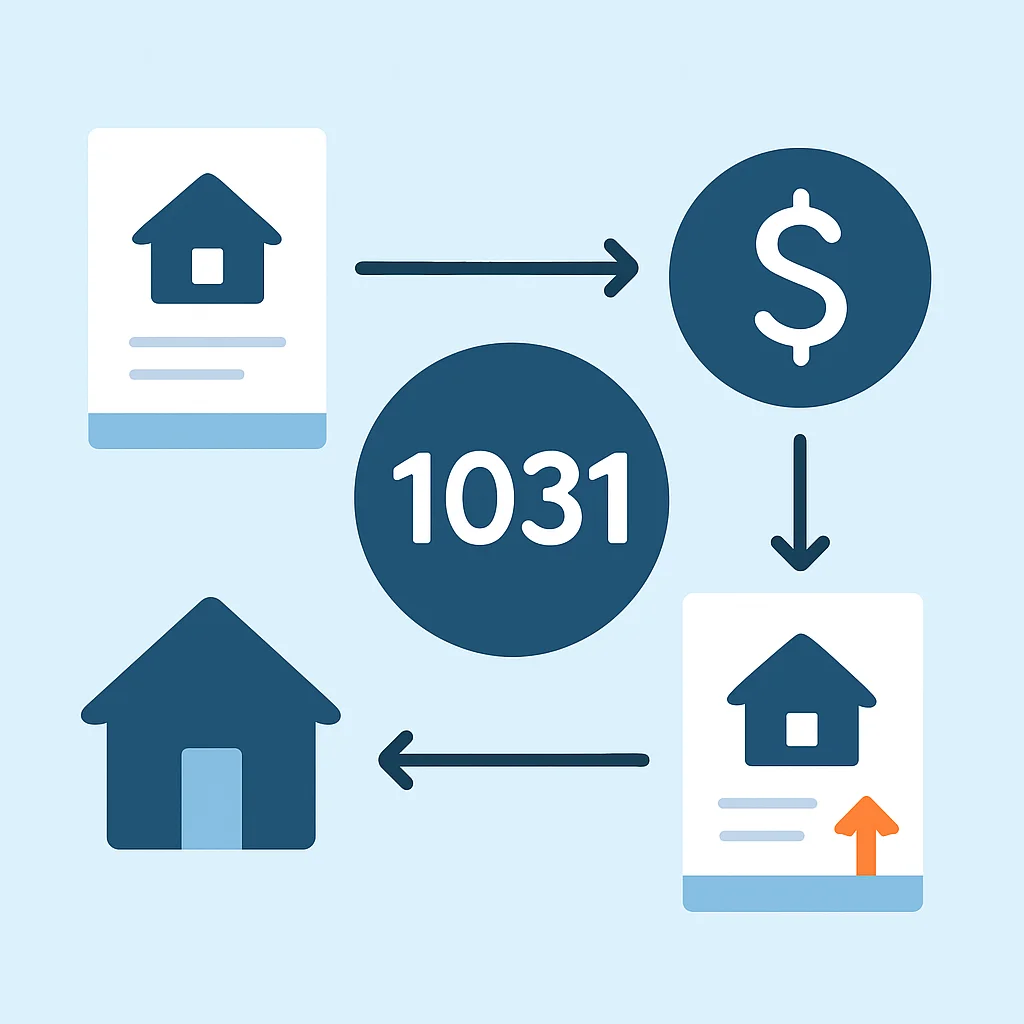
1031 Exchange (for Investment Properties): If you’re selling an investment property, a 1031 exchange allows you to defer capital gains taxes by reinvesting the proceeds into a “like-kind” property. This is a complex strategy that requires strict adherence to IRS rules regarding identification and acquisition timelines (e.g., 45 days to identify, 180 days to close). Your developer background might make this a familiar concept, but ensure you work with a qualified intermediary.
Always consult a qualified tax advisor or financial planner well before selling, especially if your property has been used for both personal and business purposes, or if you anticipate significant capital gains.
5. Permits and Certifications
As a developer, you know the importance of proper permitting. Ensure all major renovations or additions to your home have the necessary permits and that final inspections were completed. Buyers’ inspectors will often check for this, and unpermitted work can lead to requests for repairs, price reductions, or even legal issues post-sale. Have all Certificates of Occupancy (COs) and inspection reports readily available.
Essential Documents to Gather
- Deed and Title Report — Proof of ownership and clear title history.
- Property Survey — Outlines boundaries and easements.
- Renovation Permits & COs — Documentation for all major work.
- Appliance Manuals & Warranties — Can add value and ease buyer concerns.
- Utility Bills & Maintenance Records — Demonstrate upkeep and typical costs.
SMART STRATEGIES
Smart Strategies to Maximize Your Home’s Value
As a developer, you’re accustomed to adding value to properties. Now, apply that same strategic thinking to your own home sale. Maximizing your home’s value in the 2026 market isn’t just about listing it; it’s about intelligent preparation, presentation, and pricing. Here are some smart strategies.
1. Strategic Pre-Sale Renovations with High ROI
Not all renovations are created equal when it comes to resale value. Focus on projects with proven high return on investment (ROI). In 2026, buyers continue to prioritize functional, updated spaces and energy efficiency.
Kitchen Refresh: A minor kitchen remodel (e.g., new countertops, cabinet refacing, updated hardware, modern sink) can yield an ROI of 70-80%. A full gut renovation might only return 50-60% of its cost. Focus on cosmetic updates that provide a fresh, modern feel.
Bathroom Updates: Similar to kitchens, minor bathroom remodels (new vanity, fixtures, paint, regrouting) offer strong returns, often 65-75%. Focus on cleanliness and modern aesthetics.
Curb Appeal: First impressions are crucial. Landscaping, a fresh coat of exterior paint, a new front door, or garage door replacement can significantly boost perceived value. A new garage door, for instance, often recoups 90-95% of its cost.
Energy Efficiency: Upgrades like smart thermostats, LED lighting, and improved insulation are increasingly attractive to buyers due to rising energy costs. While the direct ROI might be lower, they can be strong selling points.
Pros of Strategic Renovations
- ✓ Increased perceived value and higher asking price.
- ✓ Faster sale time due to broader buyer appeal.
- ✓ Fewer buyer objections and negotiation points.
Cons of Unwise Renovations
- ✗ Over-improving for the neighborhood (negative ROI).
- ✗ Personalizing too much, limiting buyer appeal.
- ✗ Unexpected costs and delays in the renovation process.
2. Professional Staging and Photography
In the digital age, your home’s online presence is its first and most important showing. Professional staging makes a property feel welcoming, spacious, and aspirational. It helps buyers visualize themselves in the space, rather than focusing on your personal belongings.
Staging: Studies show staged homes sell 7% faster and for up to 17% more than unstaged homes. This involves decluttering, depersonalizing, cleaning, and arranging furniture to highlight the home’s best features. As a developer, you might already have an eye for design, but a professional stager brings an objective, buyer-focused perspective.
Photography & Videography: High-quality, professional photos are non-negotiable. Consider aerial drone shots for properties with significant land or unique architectural features. 3D virtual tours (like Matterport) are also highly effective, especially for out-of-town buyers, allowing them to “walk through” the property remotely. This investment often pays for itself in increased interest and higher offers.

3. Intelligent Pricing Strategy
Pricing your home correctly from the outset is critical. Overpricing can lead to your home sitting on the market, requiring price reductions that signal desperation to buyers. Underpricing leaves money on the table. Your developer’s analytical skills are invaluable here.
Comparative Market Analysis (CMA): Work with your real estate agent to conduct a thorough CMA. This involves analyzing recent sales of similar homes (comparables or “comps”) in your immediate area. Look at sales within the last 3-6 months, considering factors like square footage, number of beds/baths, lot size, condition, and upgrades.
Market Trends: Factor in current market conditions. Is it a seller’s market (low inventory, high demand) or a buyer’s market (high inventory, low demand)? In 2026, many markets are seeing balanced conditions, meaning competitive pricing is key.
“Sweet Spot” Pricing: Often, pricing just below a common search bracket (e.g., $499,000 instead of $500,000) can attract more buyers. Discuss this strategy with your agent.
KEY POINT
An accurately priced home often generates more interest, multiple offers, and can ultimately sell for more than an overpriced home that lingers on the market and eventually requires price cuts.
4. Effective Marketing and Negotiation
Your marketing strategy should be as robust as your development project launches. For negotiation, remember your developer’s poker face.
Digital Marketing Mastery
Ensure your listing is on all major real estate portals (Zillow, Realtor.com, Redfin) with excellent descriptions and high-quality visuals. Utilize social media marketing and targeted online ads. A dedicated property website or virtual tour link can also be powerful.
Open Houses & Private Showings
While online presence is key, in-person showings are still vital. Ensure your home is immaculate for every viewing. Consider strategic timing for open houses to maximize attendance.
Leverage Your Network
As a developer, you likely have a robust network. Share your listing with industry contacts, fellow developers, and investors. Word-of-mouth and private sales can sometimes bypass traditional market competition.
Masterful Negotiation
Be prepared for negotiations on price, contingencies, and closing dates. Your agent will handle the direct communication, but your insight into property value and market conditions will inform your strategy. Don’t be afraid to hold firm on a fair price, especially if your home is well-prepared and the market is strong.
REAL-WORLD EXAMPLES
Real-World Examples: Developer Home Sales
Let’s look at a couple of hypothetical scenarios that illustrate how developers can apply these strategies in 2026.
Case Study 1: Selling a Primary Residence in a Competitive Market
Scenario: The Urban Modernist
John, a developer specializing in boutique urban infill projects, decided to sell his 3-bedroom, 2.5-bath primary residence in a desirable, but highly competitive, city neighborhood in April 2026. He bought the home for $700,000 in 2018 and invested approximately $100,000 in high-end, energy-efficient upgrades over the years.
John’s Strategy:
- Legal Due Diligence: John immediately ordered a title search and gathered all permits for his renovations (HVAC, solar panels, smart home integration). He proactively prepared a detailed disclosure statement, highlighting the high-quality materials and energy savings, and obtained a pre-listing inspection to address minor issues upfront. This cost him about $1,500 but prevented buyer objections later.
- Strategic Upgrades: Instead of a full kitchen remodel, he opted for a minor refresh: new quartz countertops, a modern backsplash, and repaint of existing cabinets for $8,000. He also invested $2,500 in professional landscaping to enhance curb appeal. Total pre-sale investment: $10,500.
- Professional Presentation: John hired a professional stager ($3,000) and photographer ($800) to showcase the home’s unique architectural features and smart home technology. They also created a 3D virtual tour.
- Pricing & Marketing: Based on a CMA, similar homes were selling for $900,000-$920,000. John decided to list at $915,000, emphasizing the energy efficiency and smart home features in the listing description. He also leveraged his developer network, sending out an exclusive preview to interested parties.
Outcome: John received three offers within 5 days, two of which were above asking price. He accepted an offer for $930,000 with minimal contingencies, closing in 30 days. His net profit, after commissions and pre-sale costs, was significantly higher due to his proactive approach and strategic investments. His capital gain of $230,000 ($930,000 sale price – $700,000 purchase price – $100,000 improvements – $10,500 pre-sale costs – $55,800 commission = $63,700 taxable gain) was well within the $250,000 capital gains exclusion for a single filer, meaning no federal capital gains tax.
CODE EXPLANATION
This JSON-like structure represents a simplified transaction summary, useful for tracking key financial metrics in a property sale. It highlights the initial investment, sale price, and various costs, leading to the final profit.
{
  "property_id": "URBANMODERNIST_001",
  "purchase_price": 700000,
  "total_improvements": 100000,
  "pre_sale_costs": {
    "legal_due_diligence": 1500,
    "kitchen_refresh": 8000,
    "landscaping": 2500,
    "staging": 3000,
    "photography": 800
  },
  "listing_price": 915000,
  "final_sale_price": 930000,
  "commission_rate": "6%",
  "calculated_commission": 55800,
  "net_profit": 930000 - (700000 + 100000 + 1500 + 8000 + 2500 + 3000 + 800 + 55800),
  "capital_gain_exclusion_status": "Eligible for $250,000 exclusion"
}
Case Study 2: Selling an Investment Property with a 1031 Exchange
Scenario: The Savvy Investor
Maria, a developer with a portfolio of rental properties, decided to sell a duplex she owned for 10 years in a growing suburban market in May 2026. She purchased it for $450,000 and had made $50,000 in capital improvements over the decade. Its current market value was estimated at $750,000.
Maria’s Strategy:
- 1031 Exchange Planning: Maria’s primary goal was to defer capital gains tax. She immediately engaged a Qualified Intermediary (QI) and her real estate attorney to set up a 1031 exchange. She had already identified a potential “like-kind” replacement property (a commercial retail space) before listing the duplex.
- Tenant Management & Disclosures: Since the property was tenant-occupied, Maria carefully managed tenant communication, ensuring proper notice for showings and adhering to lease agreements. She provided thorough landlord disclosures, including rental history and maintenance records.
- Minor Cosmetic Updates: Knowing investors look at cash flow, Maria focused on cost-effective updates that would appeal to future landlords or owner-occupants. She spent $5,000 on fresh paint and professional cleaning for both units, and minor repairs identified during a pre-listing inspection.
- Targeted Marketing: Her agent marketed the duplex specifically to investors, highlighting rental income potential, low vacancy rates in the area, and recent property value appreciation. They also showcased the property’s strong foundation and recent roof replacement (a previous capital improvement).
Outcome: Maria listed the duplex at $750,000 and received an offer for $740,000 within two weeks from an investor. Due to her meticulous 1031 exchange planning, the sale successfully closed, and the proceeds were transferred directly to the QI. Maria then successfully acquired her replacement property within the 180-day window, deferring approximately $70,000 in potential capital gains tax (assuming a 20% long-term capital gains rate on $350,000 gain: $750k sale – $450k purchase – $50k improvements = $250k gain, plus depreciation recapture). This proactive planning saved her significant tax liability in 2026.
CAVEATS & FAQ
Caveats, FAQs, and Market Considerations for 2026
While this guide provides a robust framework, remember that real estate is inherently local and subject to change. Here are some important caveats and frequently asked questions for selling your home in 2026.
Market Volatility and Regional Differences
The 2026 real estate market, while potentially more stable than previous years, can still be influenced by economic factors like inflation, interest rate adjustments by the Federal Reserve, and employment rates. Specific regions and even neighborhoods can experience vastly different conditions. A booming tech hub might see sustained demand, while a smaller, more rural area could have slower sales. Always rely on current local market data provided by your real estate agent.
Never assume national real estate trends directly apply to your local market. Hyper-local data is crucial for accurate pricing and strategy. Work with an agent who has deep knowledge of your specific area.
Legal and Tax Professional Advice
This guide provides general information. Real estate laws, tax codes, and disclosure requirements are state-specific and complex. It is imperative to consult with a qualified real estate attorney and a tax professional (CPA or financial advisor) for personalized advice tailored to your specific situation and jurisdiction. Their expertise will ensure compliance and optimize your financial outcomes.
KEY POINT
Your team of professionals (agent, attorney, tax advisor) is your greatest asset. Do not hesitate to leverage their specialized knowledge to navigate the intricacies of your home sale.

Frequently Asked Questions (FAQ)
Q. What are the most common legal pitfalls for sellers in 2026?
A. The most common pitfalls include inadequate property disclosures, unresolved title issues, and unpermitted renovations. These can lead to buyer litigation, delayed closings, or even the collapse of a sale. Thorough preparation and professional legal advice are essential to avoid these.
Q. How long does it typically take to sell a home in 2026?
A. The average time on market varies significantly by location and market conditions. In a balanced market, it could be 30-60 days to go under contract, with another 30-45 days for closing. Highly desirable properties in hot markets might sell in days, while slower markets could take several months. Proper pricing and presentation can expedite the process.
Q. Is it worth investing in smart home technology upgrades before selling?
A. Yes, smart home technology is increasingly attractive to buyers in 2026, particularly for younger demographics. Small, integrated upgrades like smart thermostats, video doorbells, and intelligent lighting systems can enhance perceived value and act as strong selling points, often with a good return on investment.
Q. What is the best season to sell a home in 2026?
A. Historically, spring (April to June) is often considered the best time to sell due to favorable weather, peak buyer activity, and families looking to move before the new school year. However, local market dynamics can shift this, and a well-prepared home can sell successfully in any season.
Q. Should I offer a home warranty to buyers?
A. Offering a home warranty (typically costing $400-$600) can be a wise move. It provides buyers with peace of mind regarding potential repairs to major systems and appliances after closing, which can make your offer more attractive and reduce buyer apprehension, especially for older homes.
WRAP-UP
Wrap-Up: Your Successful 2026 Home Sale
Selling your home in 2026, especially with your developer’s eye for detail and value, can be a highly rewarding experience. The key takeaway from this guide is the power of proactive preparation and strategic execution. By meticulously addressing the legal checklist, making intelligent pre-sale investments, and implementing effective marketing and pricing strategies, you position your property for optimal success.
Remember, your unique understanding of property development is a distinct advantage. Use it to highlight the quality, craftsmanship, and potential of your home. Combine this with the guidance of experienced real estate professionals, and you’ll navigate the 2026 market with confidence, securing the best possible outcome for your home sale.

REFERENCES
IRS Publication 523: Selling Your Home
National Association of Realtors (NAR)
Investopedia: 1031 Exchange
Thanks for reading, Kwonglish!
We hope this guide empowers you to achieve a successful home sale in 2026.
Got questions or your own developer insights? Drop a comment below!