
Edge AI is revolutionizing how data is processed, analyzed, and acted upon, bringing intelligence closer to the source.
This report provides an in-depth analysis of Edge AI, comparing its capabilities against traditional cloud-based systems, exploring its enabling technologies, and detailing its transformative impact across various industries. We will also address the challenges and present practical solutions for its implementation in 2026.
04Transformative Use Cases Across Industries
05Overcoming Challenges in Edge AI Deployment
06Practical Steps for Implementing Edge AI
07The Future Landscape of Decentralized Intelligence
Introduction to Edge AI: Why Now?
The proliferation of IoT devices, coupled with the demand for real-time data processing and enhanced privacy, has propelled Edge Artificial Intelligence into the forefront of technological innovation in 2026. Unlike traditional cloud AI, which relies on centralized data centers, Edge AI processes data directly on the device or a local server, minimizing latency and bandwidth usage.
This paradigm shift is critical as the volume of data generated by connected devices continues to explode. Cisco projects that by 2025, over 75% of data will be processed outside the traditional data center or cloud. This trend underscores the imperative for robust Edge AI solutions capable of handling complex computational tasks closer to the data source.
The essence of Edge AI in 2026 is its ability to deliver immediate insights and autonomous decision-making at the point of data generation.
Defining Edge AI
Edge AI refers to artificial intelligence systems that perform computations and data analysis on a local device, or “edge,” rather than sending all data to a central cloud server. This includes tasks like machine learning inference, model training (in some advanced cases), and real-time data filtering. The ‘edge’ can be anything from a smartphone or smart camera to a local gateway or a small data center.
The core principle is decentralization, enabling faster responses, reduced network traffic, and enhanced privacy by processing sensitive data locally.
Edge AI vs. Cloud AI: A Comparative Analysis
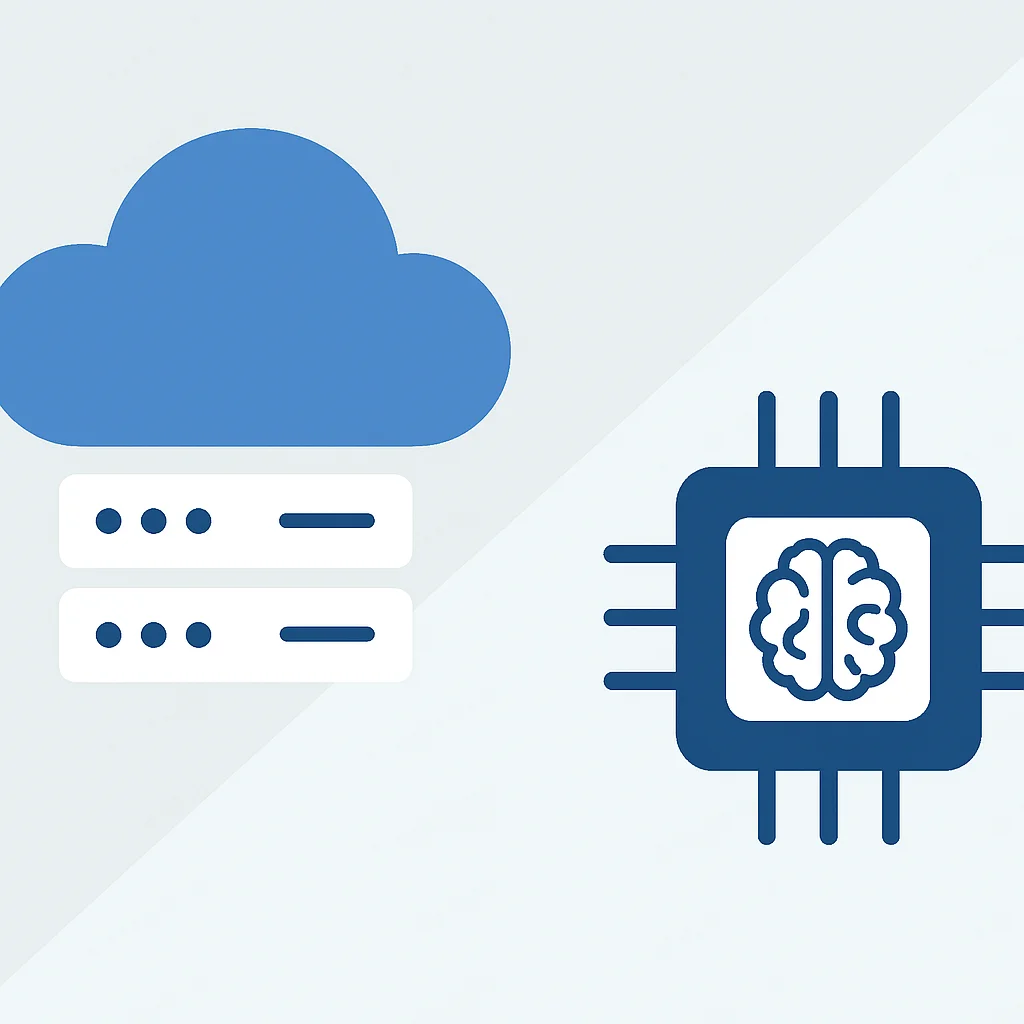
Understanding the fundamental differences between Edge AI and Cloud AI is crucial for strategic deployment. While Cloud AI offers immense computational power and scalability, Edge AI excels in specific scenarios where these advantages are outweighed by factors like latency, bandwidth, and data privacy.
Performance and Latency
Edge AI: By processing data locally, Edge AI dramatically reduces latency. For applications requiring immediate responses, such as autonomous vehicles or industrial automation, latency can be as low as 1-5 milliseconds. This near-instantaneous processing is vital for safety-critical systems and real-time control.
Cloud AI: Cloud AI systems typically incur higher latency due to the round-trip time for data transmission to and from a centralized data center. Latency can range from 50 milliseconds to several seconds, depending on network conditions and geographical distance. This makes it less suitable for applications where even a slight delay can have significant consequences.
Bandwidth and Cost Efficiency
Edge AI: Reduces the need to transmit raw data to the cloud, significantly lowering bandwidth consumption. A factory floor with hundreds of sensors generating terabytes of data daily can process much of it locally, sending only aggregated insights or anomalies to the cloud. This translates to substantial cost savings on network infrastructure and data transfer fees.
Cloud AI: Requires high bandwidth for continuous data transfer, which can become prohibitively expensive for large-scale IoT deployments. The cost of storing and processing vast amounts of raw data in the cloud also escalates rapidly.
In 2026, the cumulative savings from reduced bandwidth and cloud egress fees for large enterprises adopting Edge AI can exceed 30% annually compared to purely cloud-centric models.
Data Privacy and Security
Edge AI: Offers inherent privacy advantages by keeping sensitive data localized. Personal identifiable information (PII) or proprietary operational data can be processed and anonymized on the edge device before any non-sensitive aggregates are sent to the cloud. This compliance with regulations like GDPR and CCPA is a major driver.
Cloud AI: While cloud providers offer robust security, centralizing vast amounts of data creates a larger attack surface and potential single point of failure. Data in transit and at rest in the cloud remains a target for cyber threats.
Key Technologies Driving Edge AI Adoption
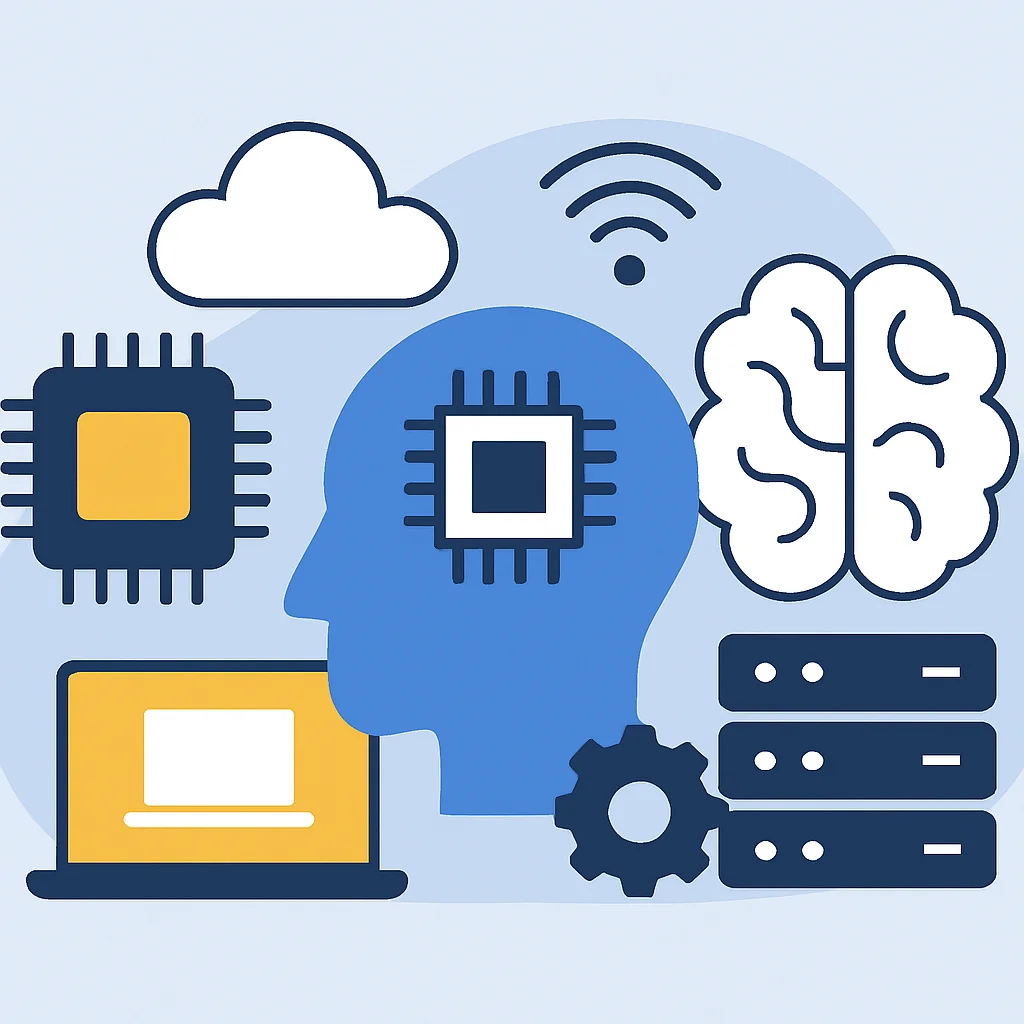
The rapid advancement of several key technological pillars has made Edge AI not just feasible, but highly effective in 2026. These include specialized hardware, optimized software frameworks, and robust connectivity solutions.
Specialized Hardware
The demand for powerful yet energy-efficient computing at the edge has led to the development of purpose-built hardware. This includes:
• AI Accelerators: Chips like Google’s Edge TPU, NVIDIA’s Jetson series, and Intel’s Movidius VPU are designed for efficient neural network inference with low power consumption. These accelerators can perform billions of operations per second (BOPS) with power budgets often under 10 watts.
• Low-Power Microcontrollers: For “TinyML” applications, ultra-low-power microcontrollers (MCUs) can run sophisticated machine learning models, enabling AI on devices with limited power and memory, such as smart sensors in agriculture or environmental monitoring. A typical TinyML model on an MCU might consume less than 1 milliwatt.
The innovation in edge hardware in 2026 is pushing the boundaries of what’s possible, making advanced AI capabilities accessible to devices with minimal power and form factor constraints.
Optimized Software Frameworks and Algorithms
Software plays a crucial role in making AI models efficient for edge deployment. This involves:
• Model Quantization and Pruning: Techniques to reduce the size and computational requirements of neural networks without significant loss of accuracy. For example, converting 32-bit floating-point weights to 8-bit integers can reduce model size by 75% and speed up inference by 2-4x.
• Edge-Optimized ML Frameworks: Frameworks like TensorFlow Lite and PyTorch Mobile are specifically designed to deploy and run ML models on resource-constrained devices. They provide tools for model conversion, optimization, and deployment across various edge platforms.
Robust Connectivity
While Edge AI aims to reduce reliance on continuous cloud connectivity, robust communication protocols are still essential for initial model deployment, updates, and sending aggregated data or alerts. 5G and Wi-Fi 6/7