

Unlock clearer English communication by mastering pronunciation, a crucial skill often overlooked by non-native speakers.
This guide offers practical, actionable strategies specifically tailored for Korean speakers to overcome common pronunciation challenges, from distinct vowel and consonant sounds to intonation patterns. Dive into detailed explanations and exercises to refine your spoken English and boost your confidence in any conversation.
Contents
01Why English Pronunciation Matters
02Bridging the Phonetic Gap: Korean vs. English Sounds
03Common Pronunciation Hurdles for Korean Speakers
Why English Pronunciation Matters
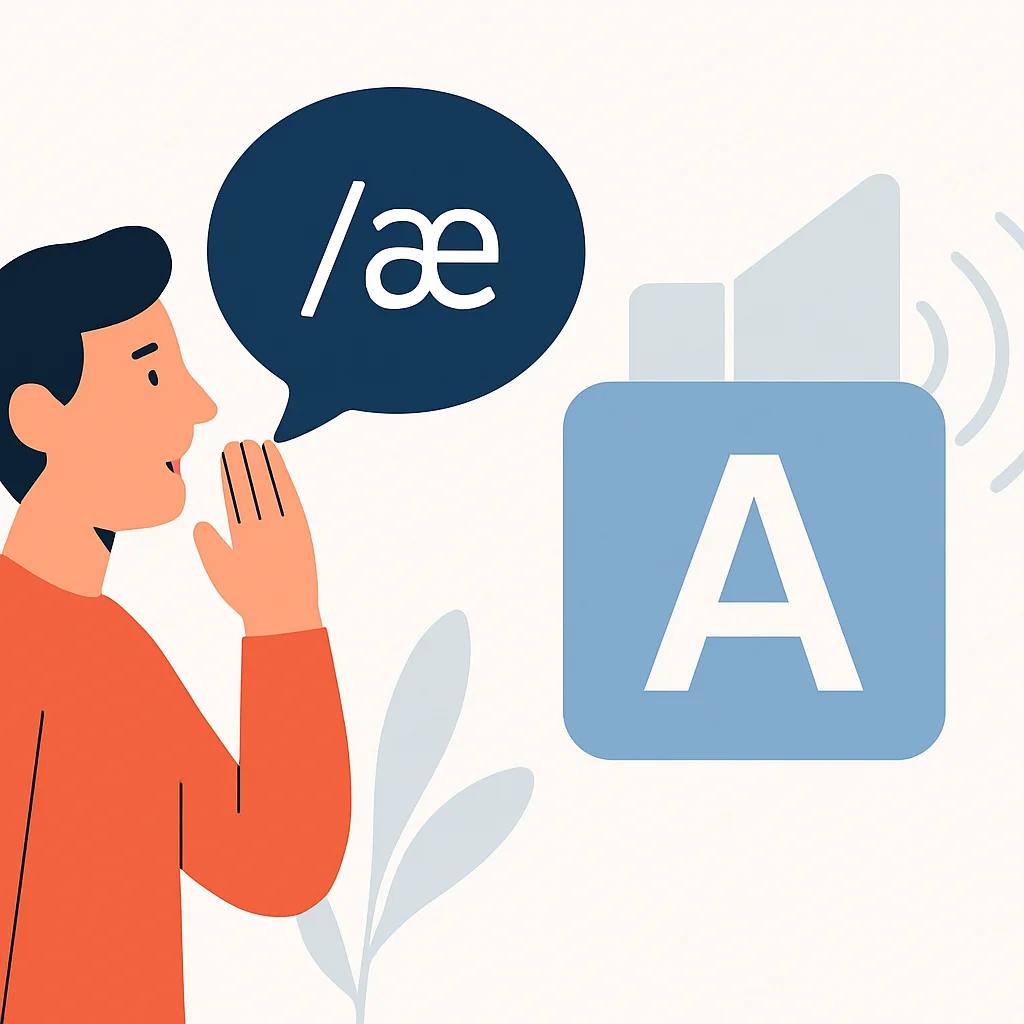
Many English learners, especially those from Korea, prioritize grammar and vocabulary, often overlooking the critical role of pronunciation. While a strong vocabulary and grammatical understanding are undoubtedly important, poor pronunciation can significantly hinder effective communication, regardless of your linguistic knowledge.
Imagine having a deep conversation where you constantly have to repeat yourself, or worse, being misunderstood entirely. This can lead to frustration for both speakers and listeners, eroding confidence and creating barriers in professional and social settings.
The core benefit of improving your English pronunciation is enhanced clarity and confidence in every interaction.
For example, mispronouncing a single vowel sound can change the meaning of a word entirely. Consider the difference between “sheet” and “shit,” or “beach” and “bitch.” These aren’t just minor errors; they can lead to awkward or offensive misunderstandings. In a business context, unclear speech might be perceived as a lack of professionalism or competence, even if your ideas are brilliant.
Beyond simply being understood, good pronunciation helps you sound more natural and fluent. It allows you to express nuances, participate more actively in discussions, and build stronger rapport with native speakers. This guide will help you understand specific areas to focus on and provide actionable steps to make noticeable improvements.
Bridging the Phonetic Gap: Korean vs. English Sounds

The fundamental differences between Korean and English phonetics are often the root cause of pronunciation challenges for Korean speakers. Korean is a syllable-timed language with a relatively simple phonetic inventory, while English is stress-timed and boasts a much wider range of vowel and consonant sounds.
Understanding these core differences is the first step towards targeted improvement. Instead of simply trying to imitate sounds, you need to grasp why certain sounds are difficult and how your native tongue’s habits interfere.
Vowel Differences
English has approximately 15-20 distinct vowel sounds (depending on dialect), including diphthongs, whereas Korean has 10 basic vowels and 11 diphthongs, but many English distinctions don’t exist in Korean. This often leads to neutralization, where several English vowels are pronounced as a single Korean equivalent.
For instance, the English short ‘i’ sound (as in sit) and the long ‘ee’ sound (as in seat) are often merged into a sound similar to the Korean ‘이’ (i). This can lead to significant confusion, as demonstrated by the “sheet” vs. “shit” example.
A key challenge is distinguishing between long and short vowels, which are crucial for meaning in English.
Another common challenge is the English ‘schwa’ sound (ə), an unstressed, neutral vowel found in words like about or banana. Korean doesn’t have a direct equivalent, leading speakers to over-articulate unstressed syllables, disrupting natural English rhythm.
Consonant Differences
English has a variety of consonant sounds that either don’t exist in Korean or are pronounced differently. The most notorious include the ‘r’ and ‘l’ sounds, ‘f’ and ‘v’, and the ‘th’ sounds.
The Korean ‘ㄹ’ sound is an alveolar flap, a single tap of the tongue against the alveolar ridge, which can sound like either an English ‘r’ or ‘l’ depending on its position. This causes difficulty in distinguishing words like rice vs. lice or collect vs. correct.
The English ‘f’ and ‘v’ sounds are labiodental fricatives (lips and teeth), which don’t have direct counterparts in Korean. Korean speakers often substitute them with ‘p’ and ‘b’ sounds (bilabial stops), leading to confusion between words like fan and pan, or vest and best.
Furthermore, English has both voiced and unvoiced ‘th’ sounds (e.g., think vs. this), which are interdental fricatives. Korean speakers typically substitute these with ‘s’, ‘t’, ‘d’, or ‘z’ sounds, making words like three sound like tree.
Syllable Structure and Stress
Korean syllables generally follow a consonant-vowel (CV) pattern, and words are pronounced with relatively equal stress on each syllable. English, however, is a stress-timed language, meaning certain syllables are emphasized while others are reduced, affecting both vowel quality and duration.
This difference leads Korean speakers to pronounce every syllable with equal weight, making their speech sound choppy or robotic to native English speakers. For example, in a word like photography, the stress falls on the second syllable, and the other vowels are reduced. If pronounced with equal stress, it loses its natural rhythm.
Mastering word stress and intonation is as important as individual sound production for natural-sounding English.
Common Pronunciation Hurdles for Korean Speakers

Building on the phonetic differences, let’s explore specific sounds and patterns that commonly pose challenges for Korean learners. Recognizing these specific hurdles is key to targeted practice.
R/L Distinction
As mentioned, the Korean ‘ㄹ’ sound is a single flap. English ‘r’ (retroflex or bunched) and ‘l’ (alveolar lateral approximant) are distinct. The ‘r’ sound requires curling the tongue back or bunching it in the middle of the mouth without touching the roof, while ‘l’ requires the tip of the tongue to touch the alveolar ridge, allowing air to flow around the sides.
Practice Tip: Exaggerate the tongue movement. For ‘l’, feel your tongue tip firmly touch behind your upper teeth. For ‘r’, make sure your tongue never touches the roof of your mouth. Practice minimal pairs like light/right, collect/correct, glass/grass.
F/P, V/B Distinction
The English ‘f’ and ‘v’ sounds are made by placing your upper teeth on your lower lip and pushing air through (fricatives). ‘P’ and ‘b’ are made by closing both lips and releasing air (stops).
Practice Tip: For ‘f’ and ‘v’, feel the vibration on your lower lip. For ‘p’ and ‘b’, notice the slight puff of air (for ‘p’) or the vocal cord vibration (for ‘b’) when your lips open. Use minimal pairs: fan/pan, very/berry, fine/pine.
Th Sounds (Voiced/Unvoiced)
These sounds require placing the tip of your tongue between your upper and lower teeth. For the unvoiced ‘th’ (as in think), only air passes. For the voiced ‘th’ (as in this), your vocal cords vibrate.
Practice Tip: Look in a mirror to ensure your tongue is visible between your teeth. Place your hand on your throat to feel the vibration for the voiced ‘th’. Minimal pairs: thin/tin, bath/bat, they/day.
Long vs. Short Vowels
This is a common source of confusion. English distinguishes words based on vowel length, which Korean does not. For example, the vowel in sheep is held longer than the vowel in ship.
Practice Tip: Exaggerate the length difference. For long vowels, stretch the sound for about 0.5 to 1 second. For short vowels, make it crisp and quick. Focus on pairs like feel/fill, leave/live, pull/pool.
Focusing on minimal pairs is an extremely effective method for training your ear and mouth to differentiate these subtle but critical sounds.
Word Stress and Intonation
Korean’s relatively flat intonation and equal syllable stress contrast sharply with English’s melodic nature. Word stress involves emphasizing one syllable in a multi-syllable word, making it louder, longer, and higher in pitch. Sentence intonation refers to the rise and fall of pitch across a sentence, conveying meaning or emotion.
Practice Tip: When learning new vocabulary, always note the stressed syllable. Many dictionaries indicate this with an apostrophe (e.g., pho'tography). For intonation, listen to native speakers and try to mimic their pitch patterns in questions, statements, and exclamations. Tools like YouTube’s playback speed control can be very helpful here.
Understanding these specific challenges allows you to move beyond general practice to targeted exercises that yield faster, more significant improvements in your English pronunciation.
Practical Strategies for Improvement

Knowing the challenges is one thing; actively working to overcome them is another. Here are concrete strategies you can implement starting today to improve your English pronunciation.
Active Listening and Mimicry
Don’t just listen passively. Choose a short audio clip (1-2 minutes) from a podcast, news report, or YouTube video by a native speaker. Listen intently, focusing on individual sounds, word stress, and sentence intonation. Then, pause and try to mimic exactly what you heard, paying attention to rhythm and pitch as much as individual sounds.
Example Routine:
1. Select a 30-second audio segment.
2. Listen 3-5 times for overall meaning and flow.
3. Listen again, specifically for a challenging sound (e.g., 'th' or 'r').
4. Pause after each sentence or phrase and repeat aloud.
5. Record your repetition and compare it to the original.
6. Identify 1-2 specific areas for improvement in that segment.
7. Repeat the segment 5-10 more times, focusing on those areas.
Utilizing Phonetic Transcriptions (IPA)
The International Phonetic Alphabet (IPA) provides a universal, unambiguous representation of speech sounds. Learning basic IPA symbols for English vowels and consonants can be incredibly helpful, especially for sounds that don’t exist in Korean.
Many online dictionaries (e.g., Cambridge Dictionary, Merriam-Webster) provide IPA transcriptions. Use these to clarify the exact pronunciation of new or challenging words. For example, knowing that sheep is /ʃiːp/ (long ‘ee’) and ship is /ʃɪp/ (short ‘i’) helps you see the distinction visually.
Even a basic understanding of IPA can demystify English sounds and guide your tongue placement.
Recording and Self-Correction
You can’t fix what you can’t hear. Regularly recording your speech and listening back is one of the most effective self-correction tools. Your own voice sounds different to you than it does to others, and recordings help bridge that gap.
Use your smartphone’s voice recorder or a free online tool. Read a paragraph aloud, then play it back. Compare it to a native speaker’s recording of the same text if possible. Focus on specific sounds, stress, and overall flow. Don’t be discouraged if it sounds “bad” initially; this is how you identify areas for improvement.
Aim for short, consistent recording sessions, perhaps 5-10 minutes daily, rather than infrequent long ones. This builds a habit of self-awareness.
Consistent Practice Routines
Like any skill, pronunciation requires consistent practice. Short, daily sessions are far more effective than sporadic long ones. Dedicate 10-15 minutes each day to focused pronunciation exercises.
Sample Daily Routine (15 minutes):
- 3 minutes: Warm-up (tongue twisters, vocal exercises).
- 5 minutes: Minimal pair practice (e.g., R/L, F/P).
- 5 minutes: Shadowing a short audio clip (mimicking immediately after hearing).
- 2 minutes: Record yourself reading a short paragraph.
Consistency is key. Even on busy days, try to fit in 5 minutes of focused practice. The cumulative effect over weeks and months is significant.
Leveraging AI Tools and Apps
In 2026, technology offers incredible resources for pronunciation practice. Many apps and online platforms use AI to analyze your speech, provide instant feedback, and even show you how to move your tongue and lips.
Popular apps like ELSA Speak, Speechify, or even Google Translate’s speech-to-text function can be highly beneficial. ELSA Speak, for example, identifies specific mispronunciations and offers targeted exercises. Google Translate can help you check if a native speaker’s voice recognition system understands your pronunciation.
Integrate these AI-powered tools into your routine for personalized and immediate feedback, accelerating your progress.
Avoiding Common Mistakes

While practicing, it’s easy to fall into traps that hinder progress. Being aware of these common pitfalls can help you steer clear and optimize your learning journey.
Over-reliance on Romanization
Many Korean learners rely on Romanized versions of English words (e.g., writing “coffee” as “커피” or “computer” as “컴퓨터”). While this is convenient for initial recognition, it ingrains Korean phonetic habits. English sounds cannot be perfectly represented by Korean letters, leading to persistent mispronunciations.
Correction: Shift away from Romanization as soon as possible. Focus on listening to native audio and learning IPA for accurate sound representation. Try to “unlearn” the Korean pronunciation you might have absorbed from early exposure.
Ignoring Intonation and Stress
Focusing solely on individual sounds (e.g., ‘r’ vs. ‘l’) without considering word stress and sentence intonation is a common mistake. English is a melodic language; a flat delivery, even with perfect individual sounds, can still make you sound unnatural and harder to understand.
Correction: Always practice words in context. When learning new vocabulary, identify the stressed syllable. When practicing sentences, pay attention to which words are emphasized and how the pitch rises and falls. Shadowing entire sentences and paragraphs is excellent for this.
Remember, pronunciation is more than just individual sounds; it’s also about rhythm and music.
Fear of Making Mistakes
Many learners avoid speaking due to fear of mispronouncing words and sounding “bad.” This fear is a major barrier to improvement. Pronunciation is a physical skill, like playing an instrument or sports; you have to make mistakes to learn.
Correction: Embrace mistakes as learning opportunities. Actively seek out speaking opportunities, whether with a language partner, a tutor, or even just talking to yourself. The more you speak, the more feedback you’ll get (from others or yourself), and the faster you’ll improve. Focus on progress, not perfection.
It’s better to speak with an accent and be understood than to stay silent out of fear.
Your Journey to Clearer English
Improving English pronunciation is a marathon, not a sprint. It requires patience, persistence, and a willingness to make and learn from mistakes. By understanding the specific phonetic differences between Korean and English, focusing on common hurdles, and consistently applying practical strategies, you can make significant strides.
Remember that the goal isn’t to eliminate your accent entirely, but to achieve clarity and intelligibility. A unique accent is part of your identity, but being clearly understood is paramount for effective communication. Start small, stay consistent, and celebrate every improvement along the way.
With targeted effort, you can transform your spoken English, opening doors to more confident and impactful conversations in 2026 and beyond.
Start your pronunciation journey today!
Don’t let pronunciation hold you back. Implement these strategies, practice regularly, and watch your English fluency and confidence soar. Share your progress with us at Kwonglish.com.