

Edge AI is revolutionizing real-time data processing, bringing intelligence closer to the source and unlocking unprecedented efficiency and innovation.
In 2026, the shift from centralized cloud processing to distributed edge intelligence is not just a trend but a fundamental architectural evolution. This report delves into the core aspects of Edge AI, its transformative potential, and the practical implications for businesses and developers.
Contents
01Understanding Edge AI: The New Frontier of Intelligent Processing
02Architectural Shifts: From Cloud Centralization to Distributed Intelligence
03Key Technologies Powering the Edge AI Revolution
04Comparative Analysis: Cloud vs. Edge AI
05Navigating the Challenges: Solutions for Edge AI Deployment
06Real-World Impact: Practical Applications of Edge AI
07The Future is at the Edge: Concluding Thoughts and Outlook
Understanding Edge AI: The New Frontier of Intelligent Processing
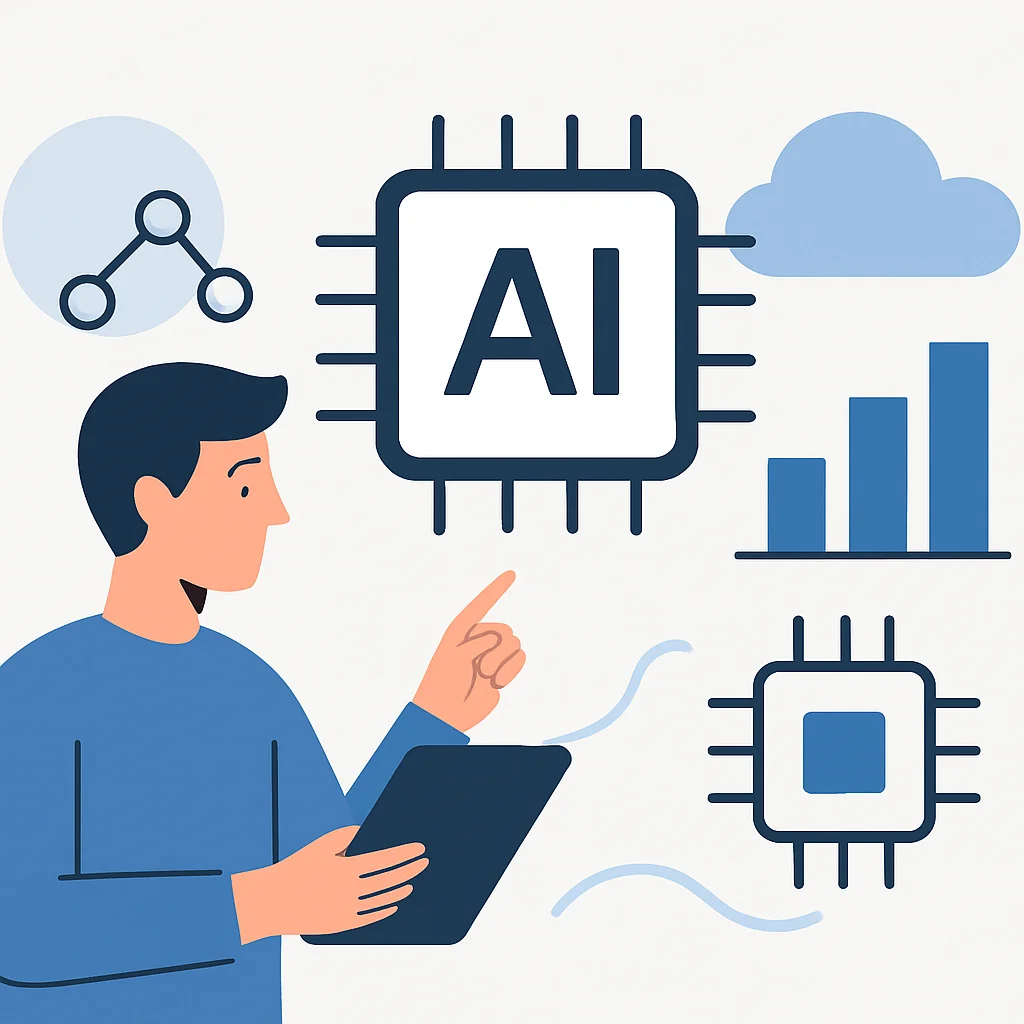
Edge AI refers to the deployment of artificial intelligence models directly on edge devices, such as IoT sensors, smartphones, industrial cameras, or local servers, rather than relying solely on centralized cloud infrastructure. This approach processes data where it is generated, minimizing latency and bandwidth usage.
The fundamental premise of Edge AI is to empower devices to make intelligent decisions autonomously and in real-time, even when disconnected from the internet. This capability is becoming increasingly vital in scenarios where immediate response is critical, such as autonomous vehicles or predictive maintenance systems.
The core value proposition of Edge AI lies in its ability to enable instantaneous decision-making and enhanced privacy by processing sensitive data locally.
Prior to this paradigm shift, most AI computations were offloaded to powerful cloud data centers. While effective for large-scale training and batch processing, this model introduced inherent delays and data transmission costs that are prohibitive for many modern applications.
In 2026, the proliferation of billions of connected devices demands a more distributed and efficient computing model. Edge AI directly addresses these demands, fostering innovation across various sectors by enabling truly intelligent and responsive systems at the periphery of networks.
Architectural Shifts: From Cloud Centralization to Distributed Intelligence
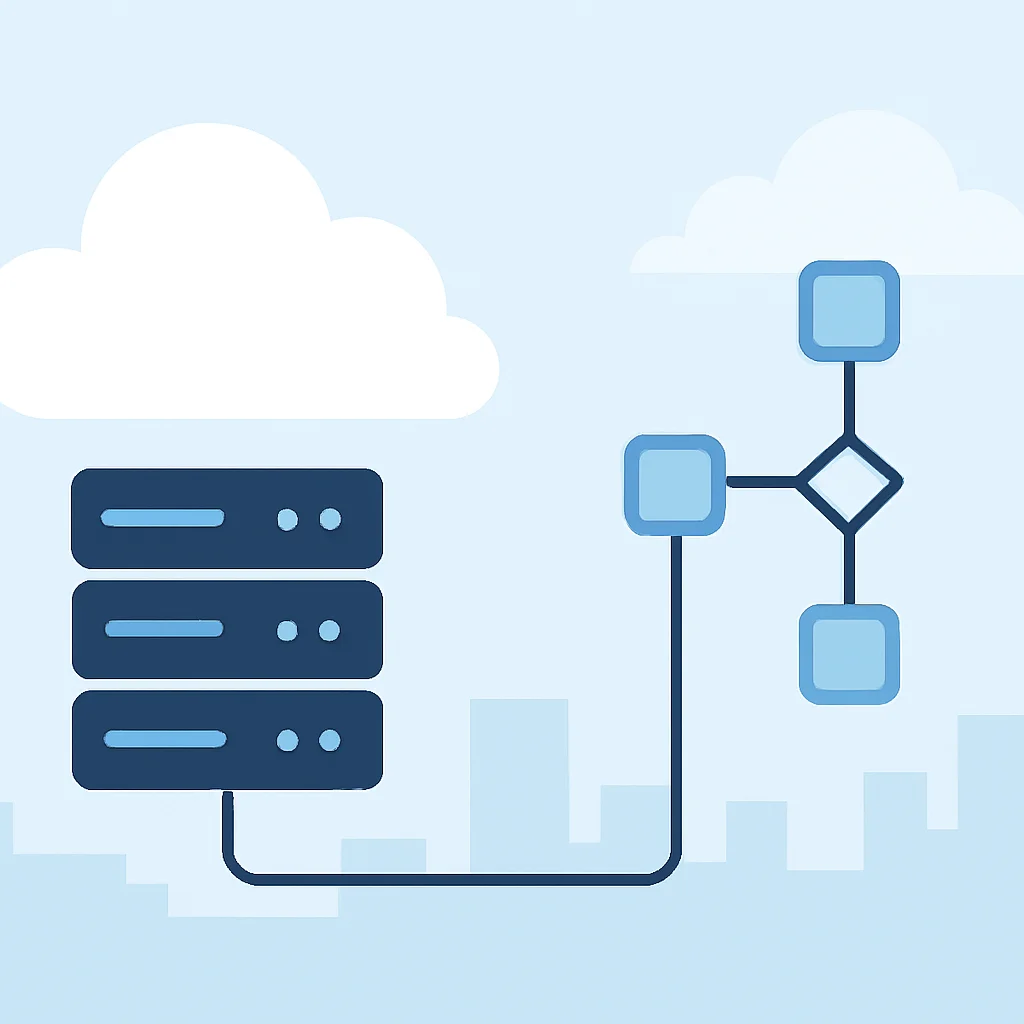
The evolution of computing architectures has seen a continuous ebb and flow between centralized and distributed models. The rise of cloud computing represented a powerful centralization, consolidating compute resources and data in massive data centers. However, the sheer volume and velocity of data generated by IoT devices have pushed the limits of this model.
Edge AI introduces a paradigm where processing capabilities are pushed closer to the data source. This doesn’t mean the cloud becomes obsolete; rather, it implies a hybrid architecture where the cloud retains its role for model training, large-scale data aggregation, and long-term storage, while the edge handles immediate inference and localized decision-making.
This hybrid approach optimizes resource utilization, leveraging the cloud for heavy computational tasks and the edge for real-time, low-latency operations.
Traditional Cloud-Centric Architecture
In a traditional cloud-centric model, all raw sensor data is transmitted to a central cloud server for processing. This includes tasks like data filtering, anomaly detection, and AI inference. While this offers scalability and centralized management, it’s prone to network congestion and high latency.
Consider a scenario with thousands of cameras streaming video for security surveillance. Sending all this raw video footage to the cloud for real-time object detection is incredibly resource-intensive and expensive, leading to potential delays in critical event detection.
Edge-Cloud Hybrid Architecture
The Edge-Cloud hybrid model redefines this. Edge devices perform preliminary processing and AI inference locally. For instance, a smart camera might detect motion or identify a known object in real-time. Only relevant data, such as alerts or compressed metadata, is then sent to the cloud.
This significantly reduces the data load on network infrastructure by as much as 90% in some industrial IoT applications, cutting down bandwidth costs and improving system responsiveness. The cloud is then used for aggregated analytics, long-term storage, and retraining of AI models based on the insights gathered from the edge.
This distributed intelligence model ensures that critical operations remain functional even with intermittent connectivity, a common challenge in remote industrial settings or rural areas.
Key Technologies Powering the Edge AI Revolution
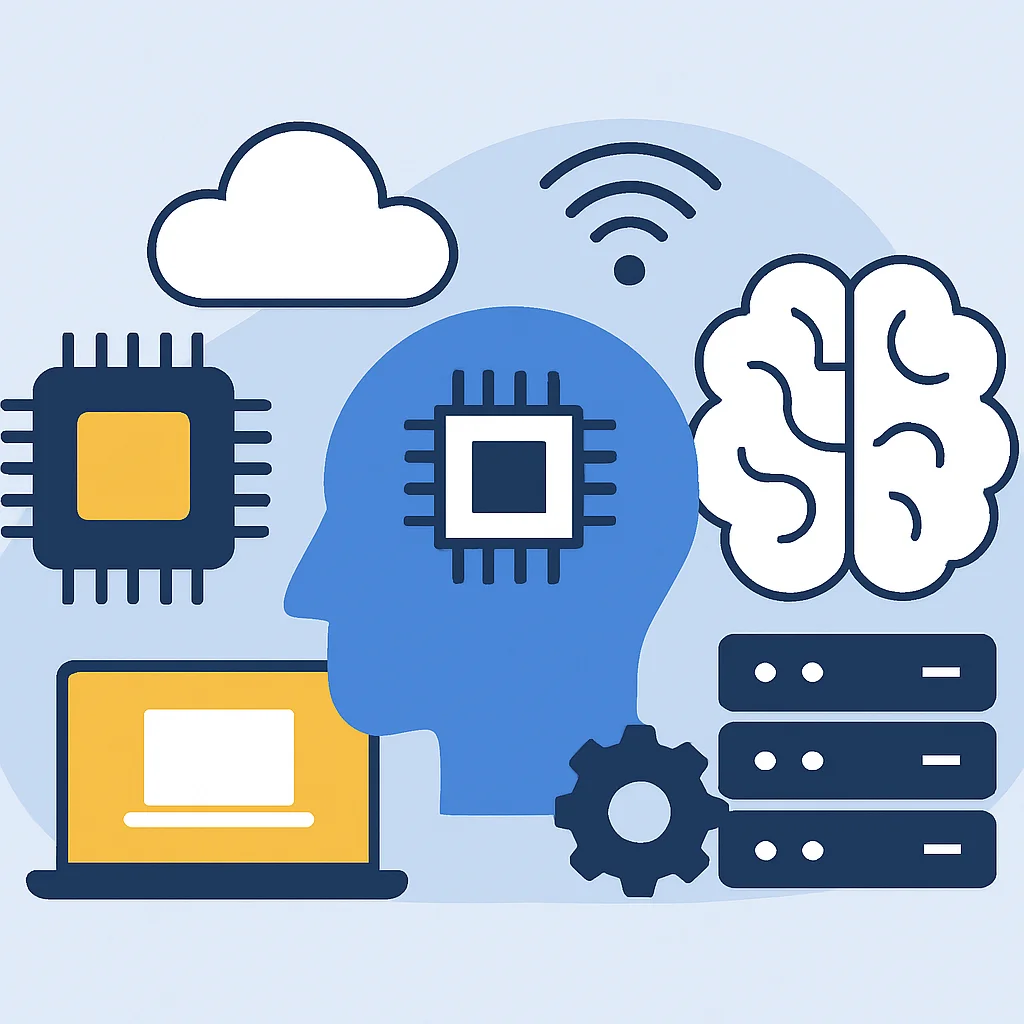
The rapid advancement of Edge AI in 2026 is not a standalone phenomenon but a culmination of synergistic technological developments. These include specialized hardware, optimized AI frameworks, and robust connectivity options.
The convergence of TinyML, 5G connectivity, and purpose-built hardware is accelerating Edge AI adoption across industries.
TinyML: AI on Microcontrollers
TinyML is an emerging field that brings machine learning to highly constrained devices, such as microcontrollers, which typically have only kilobytes of memory and operate on milliwatts of power. This allows for always-on AI applications at the very edge, like keyword spotting or simple gesture recognition, without needing cloud connectivity.
For example, a device might have a TinyML model continuously listening for a specific wake word, consuming only a few milliwatts. Only upon detecting the wake word does it activate more power-hungry components or send data to the cloud.
5G and Beyond: Enhanced Connectivity
The rollout of 5G networks provides the high bandwidth and ultra-low latency necessary to support more complex Edge AI deployments. While Edge AI aims to reduce reliance on constant connectivity, 5G enhances the capabilities of hybrid edge-cloud systems, enabling faster model updates, telemetry data offloading, and collaborative AI tasks across multiple edge nodes.
With theoretical latencies as low as 1ms, 5G facilitates real-time communication between edge devices and localized edge servers, crucial for applications like robotic control and augmented reality.
Specialized Edge Hardware
The demand for efficient on-device AI inference has spurred the development of specialized hardware accelerators. These include GPUs optimized for embedded systems (e.g., NVIDIA Jetson series), AI-specific chips (Application-Specific Integrated Circuits or ASICs like Google’s Edge TPU), and Field-Programmable Gate Arrays (FPGAs).
These accelerators are designed to perform AI model inference with high throughput and low power consumption, making them ideal for integration into a wide range of edge devices, from smart cameras to industrial robots. Their efficiency allows for running complex neural networks locally that would otherwise require cloud-level compute power.
Comparative Analysis: Cloud vs. Edge AI
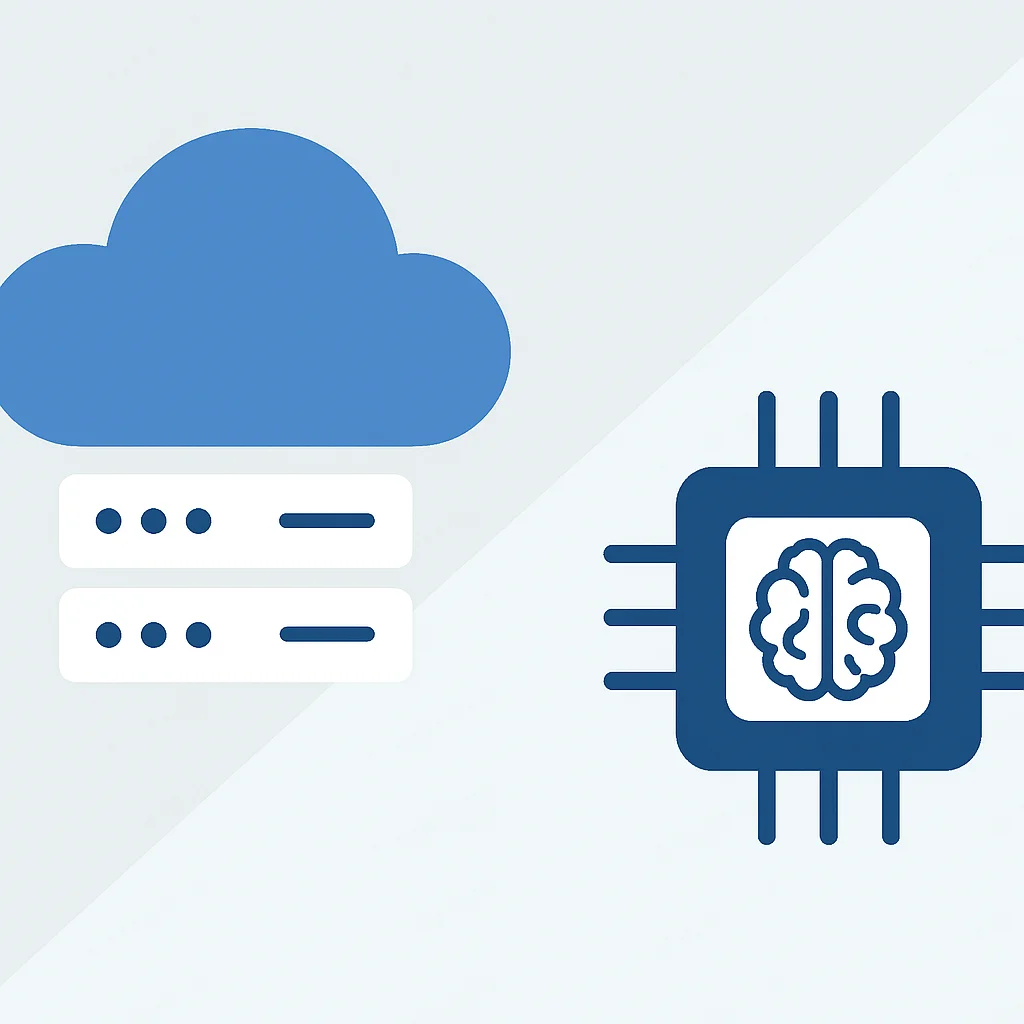
Understanding the distinct advantages and disadvantages of Cloud AI versus Edge AI is crucial for strategic deployment. It’s not a matter of one replacing the other, but rather identifying the optimal use case for each, often in a complementary fashion.
While Cloud AI excels in scalability and complex model training, Edge AI dominates in real-time processing, privacy, and operational resilience.
Latency and Real-time Processing
Cloud AI: Data must travel from the edge device to the cloud and back. This round-trip can introduce latencies ranging from tens to hundreds of milliseconds, making it unsuitable for applications requiring immediate responses, such as collision avoidance in autonomous vehicles or real-time control of machinery.
Edge AI: Processing occurs directly on the device or a nearby edge server. Latency is dramatically reduced, often to single-digit milliseconds or even microseconds, enabling true real-time decision-making. This is paramount for safety-critical systems and responsive user experiences.
Data Privacy and Security
Cloud AI: Transmitting raw data to the cloud raises significant privacy concerns, especially with sensitive information like medical records or personal identifiers. Data is vulnerable during transit and at rest in third-party cloud data centers, requiring stringent encryption and compliance measures.
Edge AI: By processing data locally, Edge AI minimizes the need to transmit raw, sensitive data to the cloud. This enhances privacy by keeping data within the local network or on the device itself, reducing the attack surface and simplifying compliance with regulations like GDPR or HIPAA. Only anonymized or aggregated insights might be sent to the cloud.
Bandwidth and Cost Efficiency
Cloud AI: Continuous transmission of large volumes of raw data to the cloud incurs substantial bandwidth costs. This can become prohibitive for deployments with thousands of sensors generating data 24/7, such as smart city infrastructure or large manufacturing plants.
Edge AI: By filtering and pre-processing data at the edge, only critical or summarized information needs to be transmitted. This can reduce bandwidth usage by over 90% in many IoT scenarios, leading to significant cost savings on network infrastructure and cloud egress fees. For example, instead of streaming raw video, an edge device might only send an alert and a timestamp when an anomaly is detected.
Scalability and Model Training
Cloud AI: Offers unparalleled scalability for training complex AI models on massive datasets. Cloud providers offer vast computational resources (GPUs, TPUs) that can be provisioned on demand, making it ideal for developing and refining AI models.
Edge AI: Edge devices typically have limited computational resources, making them unsuitable for training large, complex models from scratch. Their strength lies in running pre-trained models efficiently. Scaling involves deploying more edge devices, each running local inference, and managing these deployments can be complex.
Navigating the Challenges: Solutions for Edge AI Deployment
Despite its numerous benefits, implementing Edge AI comes with its own set of challenges. These often revolve around resource constraints, deployment complexity, and the lifecycle management of models. Addressing these requires a thoughtful approach to software, hardware, and operational processes.
Overcoming Edge AI challenges requires a blend of optimized model design, robust device management, and secure updates.
Challenge 1: Resource Constraints on Edge Devices
Edge devices, by definition, have limited compute power, memory, and energy budgets. Running complex AI models on these devices can quickly deplete resources, impacting performance and battery life.
A typical deep learning model might require gigabytes of memory and billions of operations per inference, far exceeding the capabilities of a microcontroller with only a few hundred kilobytes of RAM.
Solution: Model Optimization and Quantization
Techniques like model quantization, pruning, and knowledge distillation are crucial. Quantization reduces the precision of model weights (e.g., from 32-bit floating-point to 8-bit integers), significantly decreasing model size and computational requirements with minimal accuracy loss. Pruning removes redundant connections in neural networks, while knowledge distillation trains a smaller “student” model to mimic the behavior of a larger “teacher” model.
Frameworks like TensorFlow Lite and OpenVINO are specifically designed to optimize models for edge deployment, providing tools for these transformations.
Challenge 2: Complex Deployment and Management
Deploying and managing AI models across potentially thousands or millions of geographically dispersed edge devices presents significant operational challenges. This includes initial provisioning, remote updates, monitoring performance, and troubleshooting.
Manually updating models on hundreds of devices in a factory setting, for instance, is impractical and prone to errors.
Solution: Centralized Edge Orchestration Platforms
Cloud providers and specialized vendors offer edge orchestration platforms (e.g., AWS IoT Greengrass, Azure IoT Edge, Google Cloud IoT Edge). These platforms allow centralized management of edge devices, secure deployment of AI models and software updates, and remote monitoring of device health and model performance. They often support containerization for consistent deployment environments.
These platforms enable over-the-air (OTA) updates, ensuring that edge devices can receive the latest models and security patches without manual intervention, drastically reducing operational overhead.
Challenge 3: Data Drift and Model Retraining
Real-world data patterns can change over time (data drift), causing deployed AI models to become less accurate. This is particularly critical at the edge, where models are often making critical decisions based on local, evolving conditions.
A model trained to detect specific anomalies in factory equipment might degrade in performance if environmental conditions or raw material suppliers change, leading to false positives or missed detections.
Solution: Federated Learning and Continuous Integration/Delivery (CI/CD) for AI
Federated learning allows models to be trained collaboratively across multiple decentralized edge devices without exchanging raw data. Each device trains a local model, and only model updates (weights) are sent to a central server for aggregation. This preserves privacy and helps adapt models to local data variations.
Implementing robust MLOps (Machine Learning Operations) practices with CI/CD pipelines ensures that models are continuously monitored for performance, retrained with new data (often aggregated from the edge), and securely redeployed to edge devices.
Real-World Impact: Practical Applications of Edge AI
The theoretical advantages of Edge AI translate into tangible benefits across a multitude of industries. In 2026, we are seeing widespread adoption of Edge AI solutions, addressing critical operational needs and creating new opportunities for innovation.
From enhancing industrial efficiency to revolutionizing healthcare, Edge AI is fundamentally changing how intelligent systems interact with the physical world.
Smart Manufacturing and Industrial IoT (IIoT)
In smart factories, Edge AI enables real-time anomaly detection in machinery, predictive maintenance, and quality control. Sensors on assembly lines can use AI models to identify defects in products instantly, preventing costly rework and material waste. Robots can use computer vision at the edge for precise navigation and object manipulation, improving efficiency and safety.
For example, a major automotive manufacturer reported a 15% reduction in production line downtime by implementing Edge AI for real-time vibration analysis on critical machinery, detecting potential failures hours before they occurred.
Healthcare and Wearable Devices
Edge AI is transforming patient monitoring and diagnostics. Wearable health devices can run AI models locally to detect irregular heart rhythms, fall detection, or sleep apnea in real-time, alerting users or caregivers immediately. This ensures prompt intervention, especially for elderly patients or those with chronic conditions, without constantly streaming sensitive health data to the cloud.
Portable diagnostic tools also benefit, performing rapid analysis of medical images or samples at the point of care, which is particularly valuable in remote or underserved areas.
Smart Cities and Public Safety
Edge AI plays a crucial role in smart city initiatives, from optimizing traffic flow to enhancing public safety. Smart cameras with on-device AI can detect traffic congestion, identify abandoned packages, or count pedestrians in real-time, providing actionable insights without constant video streaming to central servers.
A city in Europe deployed Edge AI-powered cameras at intersections, reducing traffic delays by an average of 12% during peak hours through dynamic signal adjustments based on real-time vehicle detection.
Example: Simple Edge AI Inference with TensorFlow Lite
To illustrate the simplicity of running an AI model on an edge device, consider a basic image classification task using TensorFlow Lite. This framework allows converting full TensorFlow models into a lighter, optimized format suitable for mobile and embedded devices. Here’s a conceptual Python example for an edge device:
CODE EXPLANATION: Image Classification on Edge Device
This Python snippet demonstrates how an edge device might load a pre-trained TensorFlow Lite model, preprocess an input image, and perform inference to classify it. The model output is then interpreted to provide a result, all happening locally on the device.
import tensorflow as tf
import numpy as np
from PIL import Image

# 1. Load the TFLite model
# Ensure 'model.tflite' is a pre-trained and quantized model for image classification
interpreter = tf.lite.Interpreter(model_path="model.tflite")
interpreter.allocate_tensors()

# Get input and output details
input_details = interpreter.get_input_details()
output_details = interpreter.get_output_details()
input_shape = input_details[0]['shape']

# 2. Prepare input image (e.g., from a camera feed)
# For demonstration, we'll create a dummy image
# In a real scenario, this would come from a camera or sensor
image_size = (input_shape[1], input_shape[2]) # e.g., (224, 224)
dummy_image = Image.new('RGB', image_size, color = 'red') # Simulate a red image
image_np = np.array(dummy_image).astype(np.float32)

# Normalize image to [0, 1] if the model expects it, and add batch dimension
image_np = image_np / 255.0
input_data = np.expand_dims(image_np, axis=0) # Add batch dimension

# 3. Set the tensor and invoke the interpreter
interpreter.set_tensor(input_details[0]['index'], input_data)
interpreter.invoke()

# 4. Get the output tensor
output_data = interpreter.get_tensor(output_details[0]['index'])

# 5. Process the output (e.g., get the highest probability class)
# Assuming output_data is a single batch with class probabilities
predicted_class_index = np.argmax(output_data[0])

# For a real application, you would map this index to a human-readable label
labels = ["cat", "dog", "car", "person", "unknown"] # Example labels
predicted_label = labels[predicted_class_index] if predicted_class_index < len(labels) else "unlabeled"

print(f"Detected object: {predicted_label} (Confidence: {output_data[0][predicted_class_index]:.2f})")

# Example of a simple action based on detection
if predicted_label == "person":
    print("Security alert: Person detected!")
    # Trigger a local alarm, log event, or send a small alert to cloud
elif predicted_label == "car":
    print("Traffic monitoring: Car observed.")
This code runs entirely on the edge device. The interpreter.invoke() call executes the neural network locally. Only if a specific event (e.g., “person detected”) occurs might a minimal data packet be sent to the cloud for further action or logging, demonstrating the efficiency and privacy benefits of Edge AI.
The Future is at the Edge: Concluding Thoughts and Outlook
The trajectory of Edge AI in 2026 is one of continued expansion and sophistication. As devices become smarter and more interconnected, the ability to process intelligence at the source will only grow in importance. This shift is not merely a technological upgrade but a fundamental reimagining of how we build and deploy intelligent systems.
Edge AI will increasingly empower autonomous systems, enhance privacy, and unlock new levels of efficiency by bringing intelligence to every corner of our digital and physical worlds.
Looking ahead, we can anticipate even more advanced capabilities, such as collaborative Edge AI where multiple devices collectively infer and learn, and further integration with emerging technologies like digital twins and quantum computing at the edge (though the latter is still in very early stages).
The journey of Edge AI is still unfolding, but its foundational impact on real-time data processing, privacy, and operational resilience is undeniable. Businesses and developers who embrace this distributed intelligence paradigm will be best positioned to thrive in the increasingly complex and data-rich environment of the coming decades.
Embrace the Edge, Transform Your Future.
Stay tuned to Kwonglish for more in-depth analyses and practical guides on cutting-edge technologies. Your insights and questions drive our exploration into the future of tech!