
Unlock your potential by cultivating a powerful habit of continuous learning, transforming how you acquire knowledge and skills.
In today’s fast-evolving world, static knowledge is a liability. This guide from Kwonglish will walk you through practical strategies to make learning an integral, enjoyable part of your daily life, ensuring you stay relevant and grow continuously. We’ll cover everything from mindset shifts to actionable techniques that stick.
Contents
01Why Consistent Learning is Your Superpower
02The Kwonglish Framework: 5 Steps to Continuous Growth
03Practical Application: Integrating Learning into Your Day
Why Consistent Learning is Your Superpower

In 2026, the world moves at an unprecedented pace. Industries are disrupted overnight, new technologies emerge constantly, and the skills deemed essential just a few years ago might already be outdated. The ability to consistently acquire new knowledge and adapt isn’t just a nice-to-have; it’s a fundamental requirement for personal and professional success.
Think about it: the average lifespan of a skill is decreasing. A study by Deloitte estimated that in some tech-heavy fields, half of what you learn becomes obsolete in just five years. This isn’t meant to scare you, but to highlight the immense value of a proactive learning mindset.
The true power of consistent learning lies in its ability to foster adaptability and resilience in an ever-changing landscape.
Personal Growth Beyond the Classroom
Learning isn’t confined to formal education. It’s about curiosity, exploration, and the deliberate effort to expand your understanding of the world and yourself. This could mean picking up a new language, delving into a historical period, or mastering a complex software tool. Each new piece of knowledge enriches your perspective and broadens your capabilities.
Beyond the tangible skills, consistent learning sharpens your critical thinking, problem-solving abilities, and even your creativity. It teaches you how to approach challenges from multiple angles and connect seemingly disparate ideas, leading to innovative solutions.
Career Advancement and Future-Proofing
From a career perspective, those who embrace continuous learning are often the ones who get promoted, pivot successfully, and remain highly marketable. Employers actively seek candidates who demonstrate a commitment to lifelong learning, understanding that such individuals are invaluable assets.
For example, a software developer who consistently learns new frameworks like React or Vue.js, even when their current project uses an older stack, is not only more valuable to their current company but also better positioned for future opportunities in 2026’s competitive tech market.
The Kwonglish Framework: 5 Steps to Continuous Growth
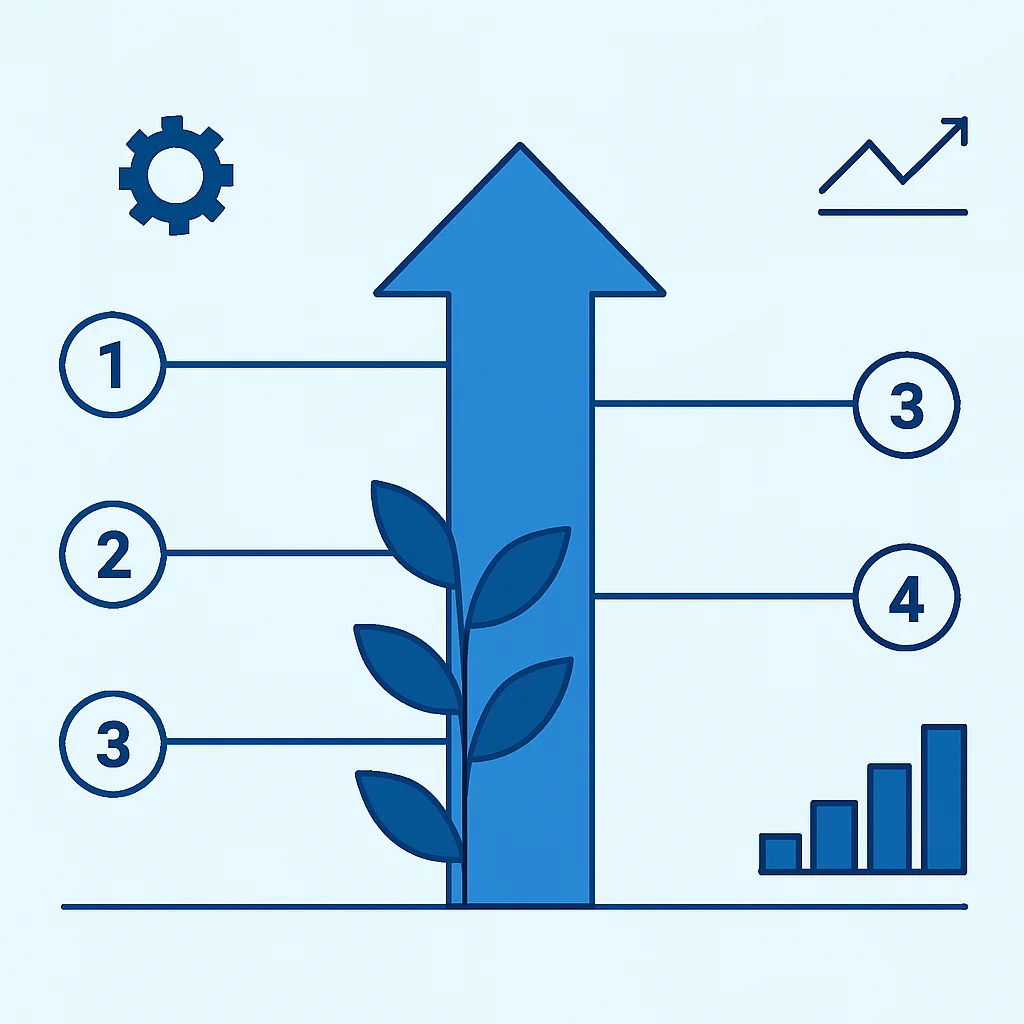
Building a consistent learning habit isn’t about grand gestures; it’s about small, deliberate actions repeated over time. Our Kwonglish framework breaks it down into five manageable steps that you can implement starting today.
The secret to making learning stick is to make it relevant, consistent, and enjoyable.
Step 1: Define Your “Why” and Set Clear Goals
Before you dive into any subject, ask yourself: Why do I want to learn this? What specific outcome am I hoping to achieve? Your “why” provides motivation, especially when you face challenges. Setting clear, measurable goals (SMART goals) helps you track progress and stay focused.
Instead of “I want to learn coding,” try “I want to learn Python to build a simple web scraper by the end of July 2026.” This makes your goal tangible and provides a clear direction for your learning efforts.
Step 2: Curate Your Learning Resources
The internet offers an overwhelming amount of information. Don’t fall into the trap of endless searching. Once you have your goal, identify 2-3 high-quality resources that align with your learning style. This could be a specific online course (Coursera, edX), a well-regarded book, a series of YouTube tutorials, or a community forum.
For example, if you’re learning graphic design, you might choose a specific Adobe Illustrator course on Udemy and a dedicated design blog for inspiration, rather than randomly browsing Pinterest.
Step 3: Schedule Dedicated Learning Time (Even if it’s Short)
Consistency is king. It’s far more effective to learn for 15-30 minutes every day than to cram for 3 hours once a week. Block out specific times in your calendar, treating them as non-negotiable appointments. This builds a routine and reduces the mental friction of deciding when to learn.
Consider leveraging “found time” – your commute, lunch breaks, or the first 30 minutes after waking up. These small pockets of time add up significantly over weeks and months.
Step 4: Actively Engage and Apply What You Learn
Passive consumption (just reading or watching) leads to poor retention. To truly internalize knowledge, you must actively engage with it. This means taking notes, summarizing concepts in your own words, teaching others, or, most importantly, applying what you learn.
If you’re learning a new programming language, write code. If it’s a new language, practice speaking. If it’s a historical topic, try to explain it to a friend. The act of doing solidifies understanding and reveals gaps in your knowledge. This is where the concept of “deliberate practice” comes in.
Step 5: Reflect, Review, and Adjust
Learning is an iterative process. Regularly review what you’ve learned to reinforce memory and identify areas that need more attention. Reflection helps you understand what’s working and what isn’t in your learning process. Are your resources effective? Is your schedule realistic? Are your goals still relevant?
Periodically adjust your approach based on these reflections. Don’t be afraid to switch resources, change your schedule, or even modify your goals if your interests evolve or you hit a roadblock. This flexibility ensures your learning journey remains engaging and productive.
Practical Application: Integrating Learning into Your Day

Knowing the steps is one thing; actually doing them is another. Here’s how you can weave learning seamlessly into the fabric of your daily life without feeling overwhelmed.
Small, consistent efforts are more impactful than infrequent, intense sessions when building a sustainable learning habit.
The “Micro-Learning” Approach
Micro-learning involves breaking down complex topics into bite-sized chunks that can be consumed in 5-10 minute sessions. This is perfect for busy schedules.
For example, instead of committing to an hour-long lecture, watch one short video lesson, read a single article, or complete one exercise. This makes learning feel less daunting and more achievable.
Leveraging Technology for Reminders and Tracking
Utilize your smartphone or computer to set daily reminders for your learning sessions. Apps like Todoist, Google Calendar, or even simple alarms can serve as powerful nudges. Tracking your progress can also be incredibly motivating.
Here’s a simple Python script you could use to set up a daily learning reminder. You could schedule this script to run at a specific time using your operating system’s task scheduler (e.g., Cron on Linux, Task Scheduler on Windows).
import time
import os
import sys

def send_notification(title, message):
    if sys.platform == "darwin": # macOS
        os.system(f'osascript -e \'display notification "{message}" with title "{title}"\'')
    elif sys.platform == "linux": # Linux with notify-send
        os.system(f'notify-send "{title}" "{message}"')
    elif sys.platform == "win32": # Windows (requires WinToast or similar, simpler is to just print)
        # For a full notification, you might need a third-party library or Windows specific APIs
        # This example just prints to console for Windows
        print(f"Reminder: {title} - {message}")
    else:
        print(f"Reminder: {title} - {message}")

if __name__ == "__main__":
    learning_topic = "Python for Data Analysis"
    message = f"It's time for your daily {learning_topic} session! Open your course or book."
    title = "Kwonglish Learning Reminder"

    print(f"Setting up daily learning reminder for: {learning_topic}")
    print("This script is intended to be run via a task scheduler (e.g., Cron, Task Scheduler).")

    # For demonstration, we'll just send one notification immediately.
    # In a real-world scenario, you'd integrate this with a scheduler.
    send_notification(title, message)
    print("Reminder sent!")
This simple script, when configured with your system’s scheduler, can provide a consistent reminder. The key is to make it easy to start your learning session once the reminder pops up.
Creating a Dedicated Learning Environment
Designate a specific space, even a small corner of a room, solely for learning. This helps train your brain to associate that environment with focused work. Keep it tidy, free from distractions, and stocked with your learning materials.
If a dedicated physical space isn’t possible, create a “digital learning environment” by closing unnecessary tabs, silencing notifications, and using focus apps during your scheduled learning time.
Common Hurdles and How to Overcome Them

Even with the best intentions, building a consistent learning habit isn’t always smooth sailing. You’ll encounter obstacles, but recognizing them and having strategies to overcome them is crucial.
Anticipating challenges and having a plan to navigate them is key to sustaining your learning momentum.
Problem 1: Lack of Motivation
We all have days when our motivation wanes. It’s a natural part of any long-term endeavor. The key is to not let a single dip derail your entire habit.
Solution: Revisit your “why.” Remind yourself of the goals you set in Step 1. Break down your learning into even smaller chunks (5 minutes instead of 15). Reward yourself for showing up, even if it’s just a small win. Sometimes, just starting is enough to reignite the spark.
Problem 2: Information Overload
With so many resources available, it’s easy to feel overwhelmed by the sheer volume of information. This can lead to analysis paralysis, where you spend more time choosing resources than actually learning.
Solution: Stick to your curated resources (Step 2). Avoid jumping between multiple courses or books on the same topic simultaneously. Focus on mastery of one chunk of information before moving to the next. Remember, depth often trumps breadth, especially when you’re just starting.
Problem 3: Forgetting What You’ve Learned
It’s frustrating to invest time in learning only to find yourself forgetting key concepts a few weeks later. This is a common challenge, but one that can be addressed with effective strategies.
Solution: Implement active recall and spaced repetition. Instead of rereading notes, test yourself. Use flashcards (digital or physical) to quiz yourself on concepts at increasing intervals. Tools like Anki are excellent for this. Applying what you learn (Step 4) is also a powerful way to solidify memory.
Your Journey Starts Now: A Call to Action

The journey of consistent learning is not a sprint; it’s a marathon of curiosity, perseverance, and growth. By adopting the Kwonglish framework, you’re not just acquiring new skills; you’re cultivating a mindset that will serve you throughout your life.
Don’t wait for the “perfect” time or the “right” course. Start small, start today. Pick one skill or topic you’re genuinely interested in and commit to just 15 minutes of focused learning. The momentum you build from that small start can lead to incredible transformations.
Embrace the habit of learning, and watch your world expand.
What will you learn next? Share your learning goals with us on Kwonglish Community and let’s grow together in 2026!